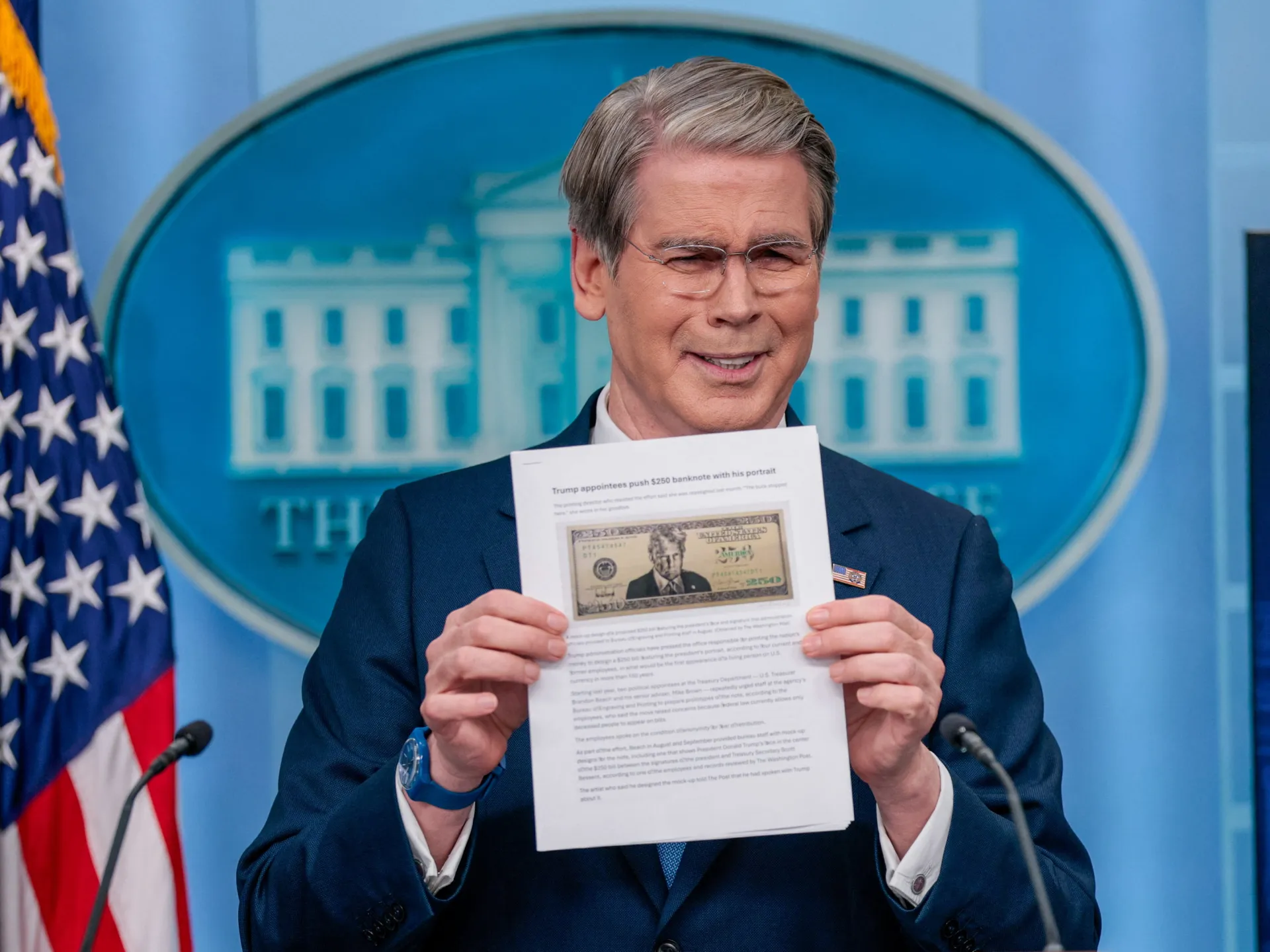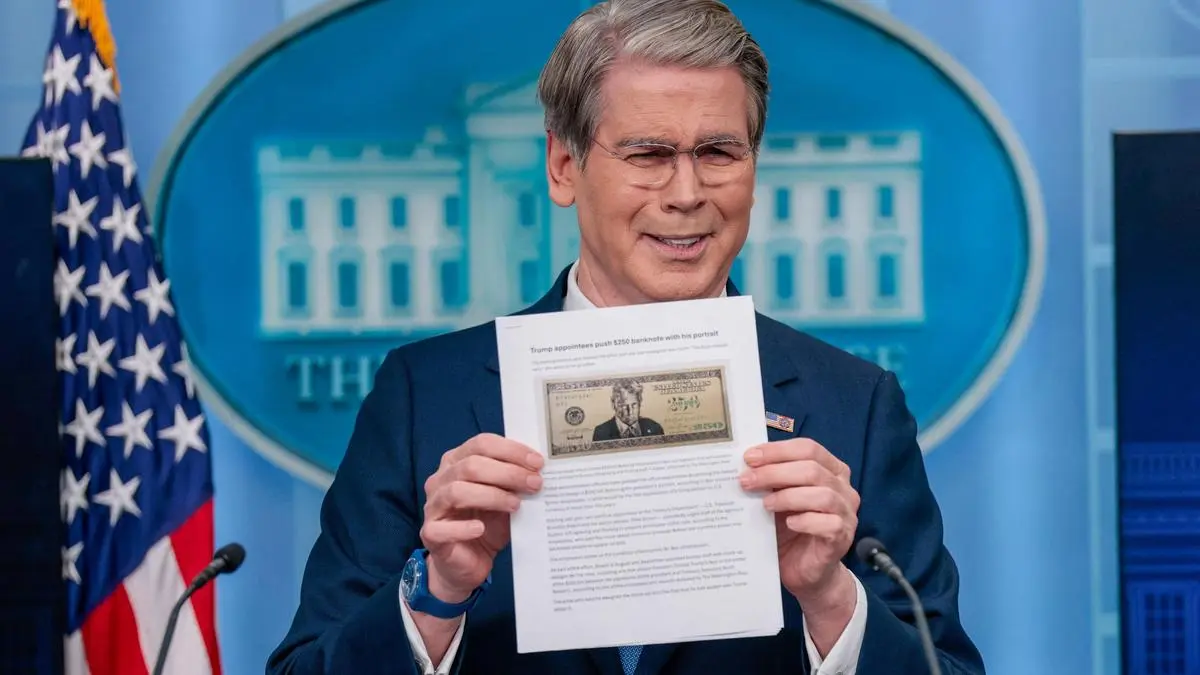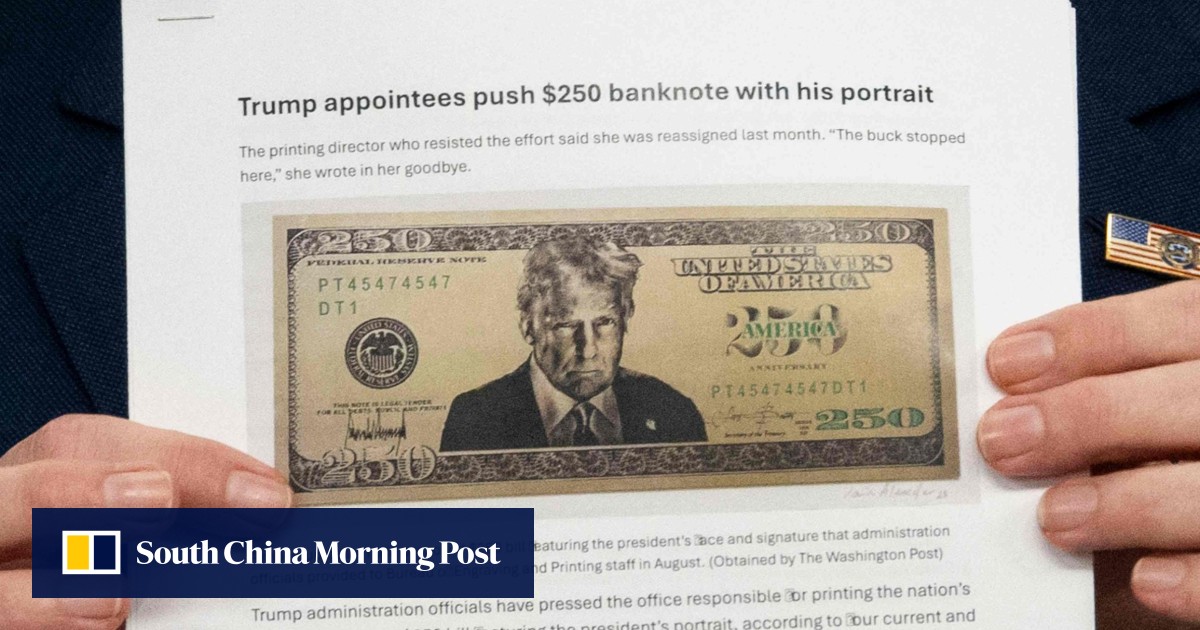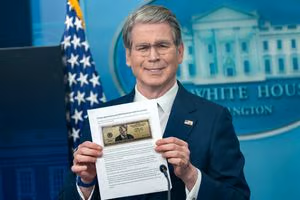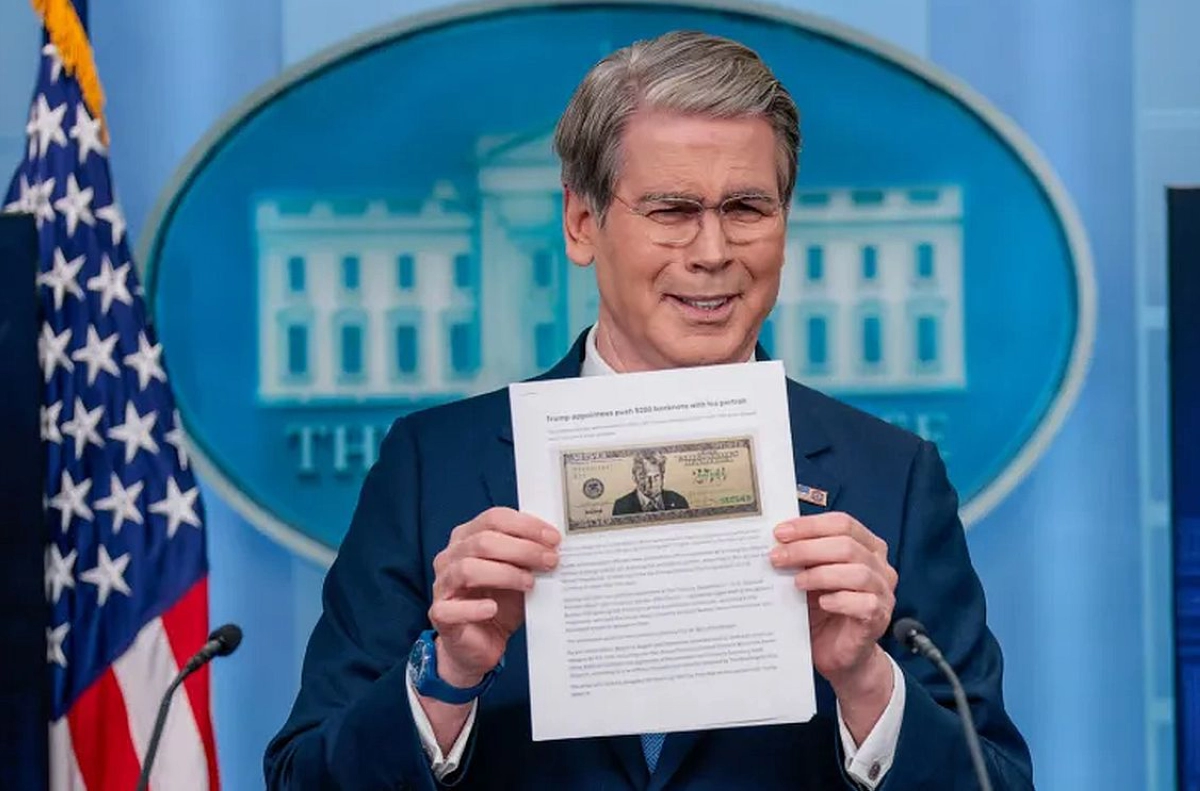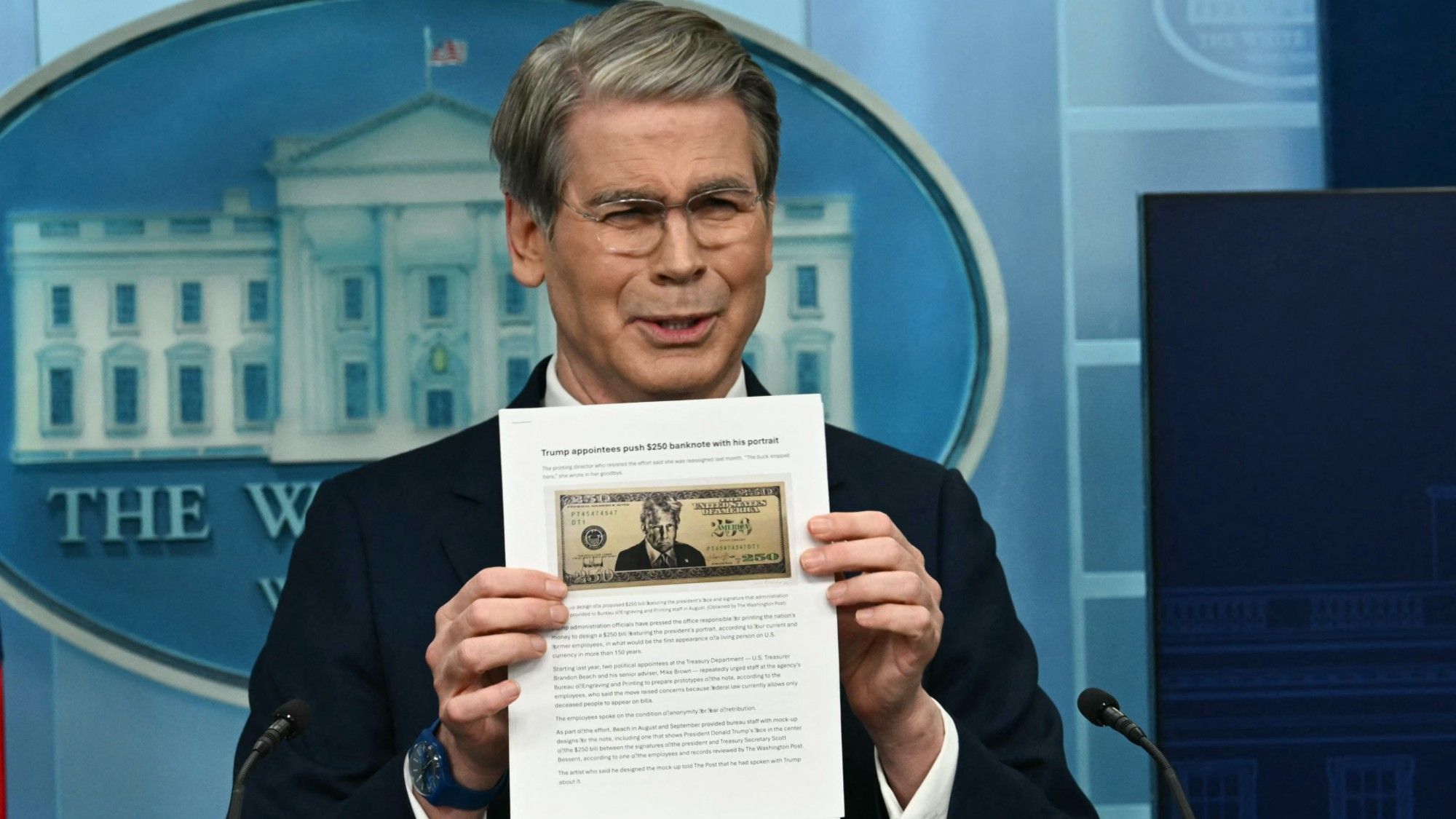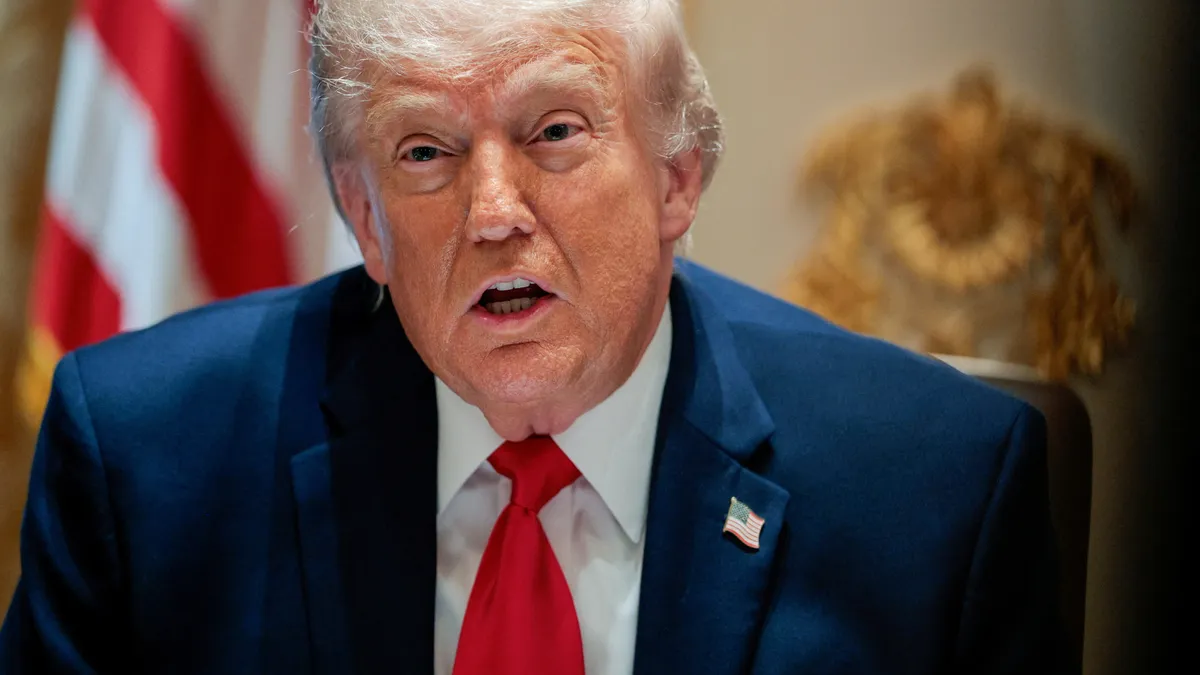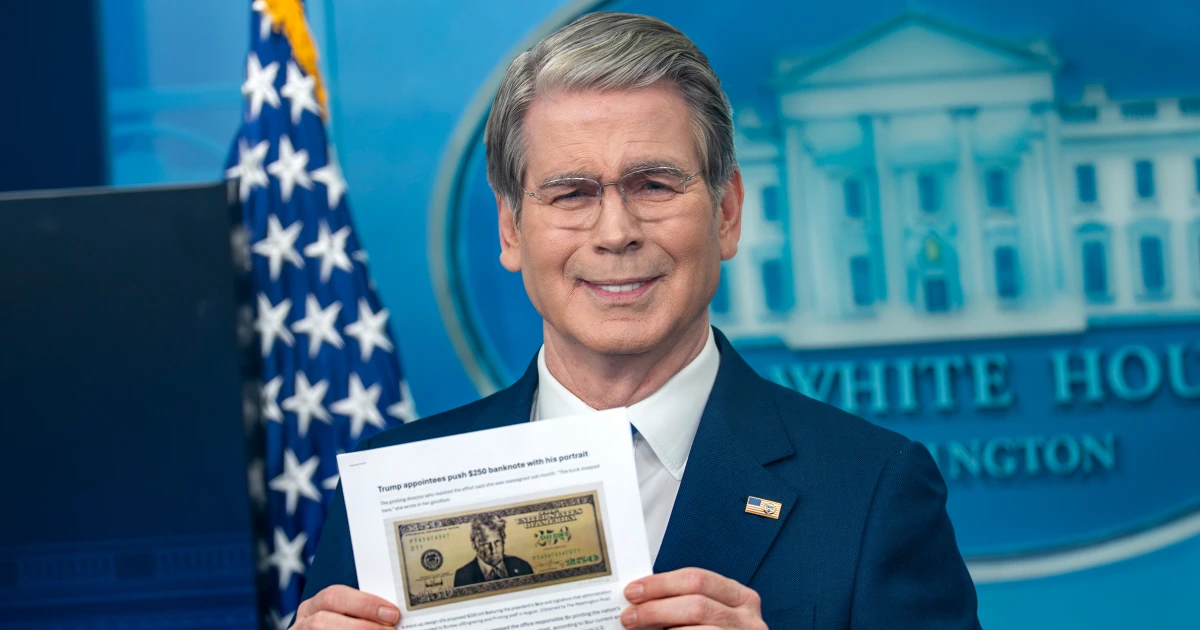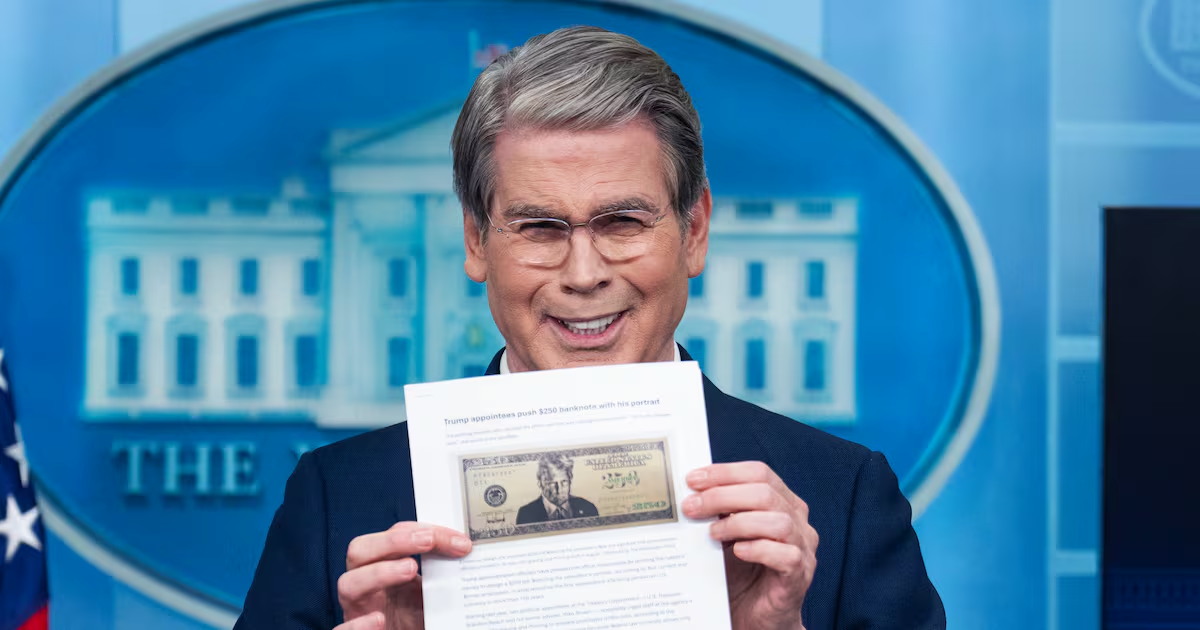
US treasury secretary Scott Bessent said on Thursday that his agency had been working on a mock-up of a $250 note bearing the face of president Donald Trump in preparation for an addition to the nation’s paper currency that would for the first time include the portrait of a living president.Such a move would represent a dramatic remaking of American money, which currently is only allowed to bear the image of the deceased. Trump has also pushed for the creation of a $1 coin bearing his image and is having his signature added to US currency this year. The initiatives are part of an effort by Trump to honour himself while commemorating the nation’s 250th birthday.“I don’t think that there’s anything untoward about having the person who is president of United States on the 250th anniversary bill,” Bessent said at the White House.The Treasury secretary noted that “at present, no living person can be on US currency” and said there would be no changes to that policy unless Congress passed proposed legislation allowing Trump’s portrait to appear on a $250 note. Bessent acknowledged that political appointees at the treasury department had asked the Bureau of Engraving and Printing to begin preparations for the new currency.US secretary of treasury Scott Bessent shows a proposed $250 bill featuring president Donald Trump. Photograph: Kent Nishimura / AFP via Getty Images The push to create a new note on the fly has stirred controversy within the bureau, which is part of the treasury department, and coincided with the abrupt reassignment last month of its former director, Patricia Solimene. In a note to staff, Solimene wrote that her move to another part of treasury was not her choice.“I have never sacrificed the values or character of myself or the organisation and always prioritised the US Currency Programme and the value each employee brings to the mission,” Solimene said, before signing off with: “The buck stopped here.”Plans for the new $250 note and Solimene’s departure were reported earlier on Thursday by The Washington Post.Trump has not been shy about his desire to leave his imprint on the nation’s economy or its money.Last autumn, the US treasurer released designs for a commemorative coin bearing Trump’s image. The plan stirred accusations that the administration was violating the law so that Trump could honour himself by putting his face on a coin. The 1866 law enshrined a tradition that individuals could appear on US currency only posthumously, to avoid the appearance that the US was a monarchy.Trump’s handpicked arts commission voted in March to approve a commemorative, 24-karat gold coin bearing Trump’s image. It shows Trump with his fists pressed against a desk and a glowering expression on his face. The back of the coin features an eagle.Separately in March, the treasury department said that Trump would become the first sitting US president to have his signature on the greenback, appearing beside the signature of Bessent. Trump’s John Hancock would appear in place of that of the US treasurer, who has traditionally signed US currency alongside the treasury secretary.Significant changes to US currency tend to be controversial and can take years because of its intricate security features.A planned redesign of the $20 note that would have replaced Andrew Jackson with a portrait of Harriet Tubman was stalled during Trump’s first term. Steven Mnuchin, who served as Trump’s Treasury secretary then, said that the delay stemmed from the need to focus on anti-counterfeiting features on the currency.The push for a new $250 bill bearing Trump’s likeness drew backlash from some Democrats in the US Congress on Thursday.“If this White House put even half as much energy into working to lower costs as it does into stoking the president’s ego, American families wouldn’t need that new $250 bill just to fill up their gas tanks,” said Democrat senator Mark Warner. – This article originally appeared in The New York Times.
US treasury prepares to make Trump the face of a new $250 Bill
It would be the first time the country's paper currency includes the portrait of a living president
649 words~3 min read