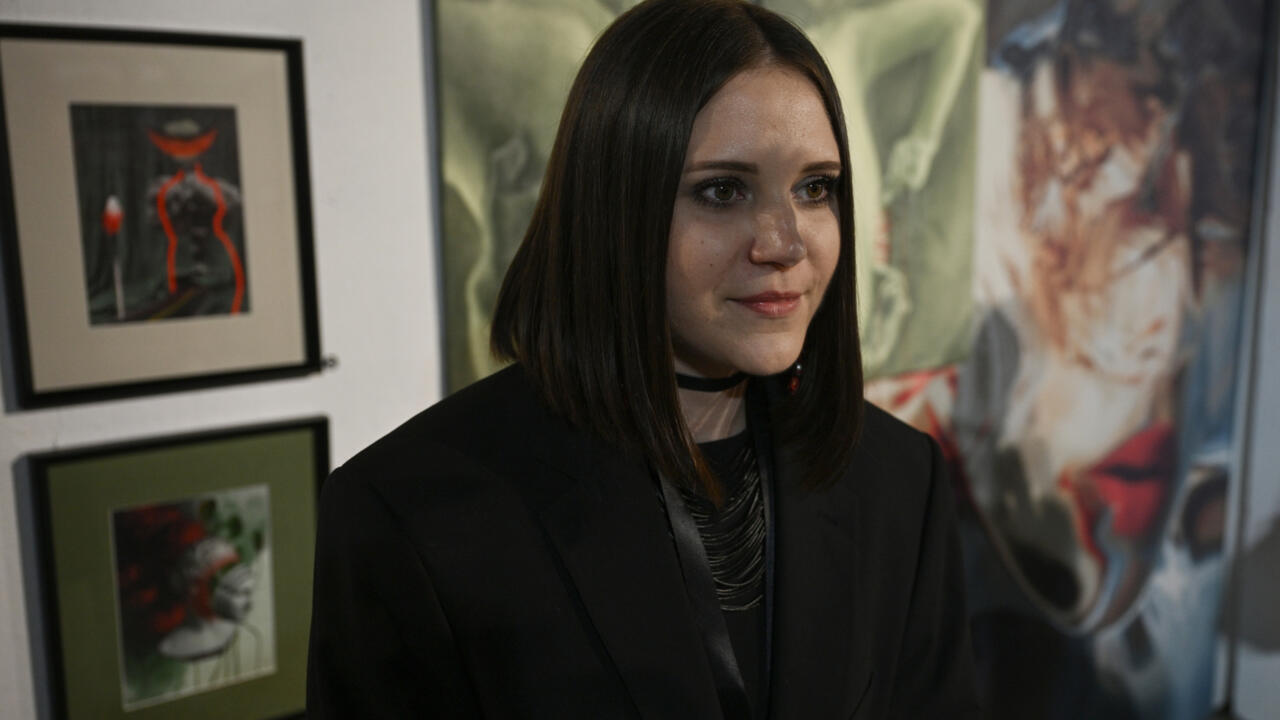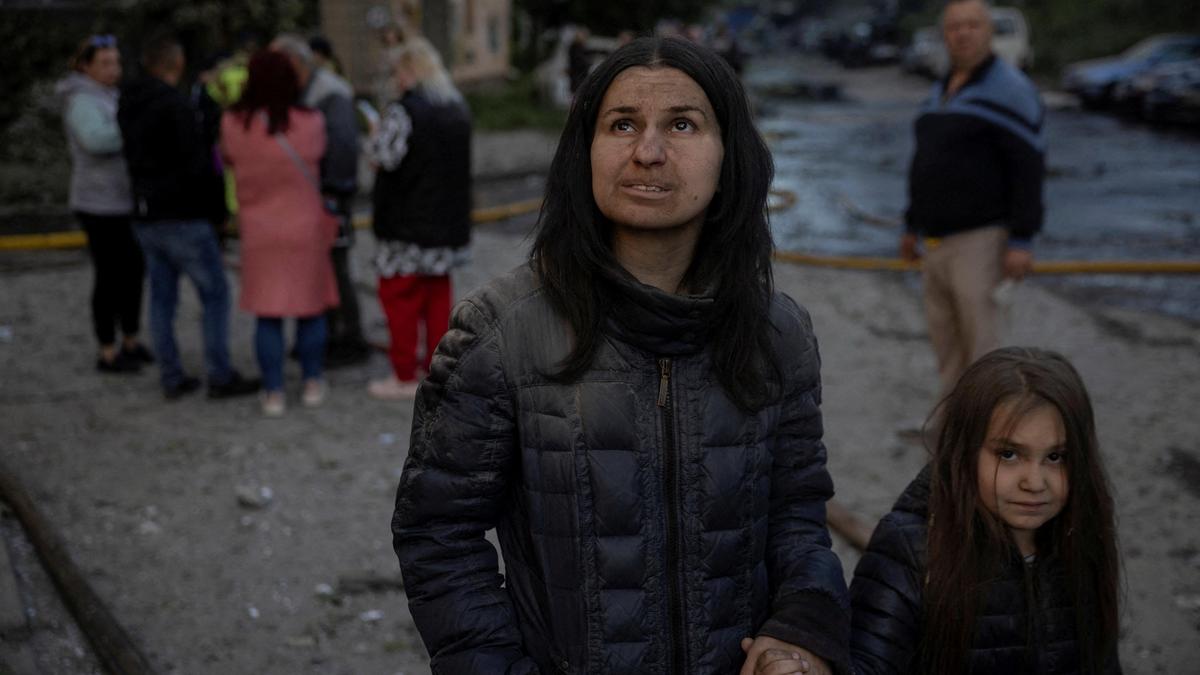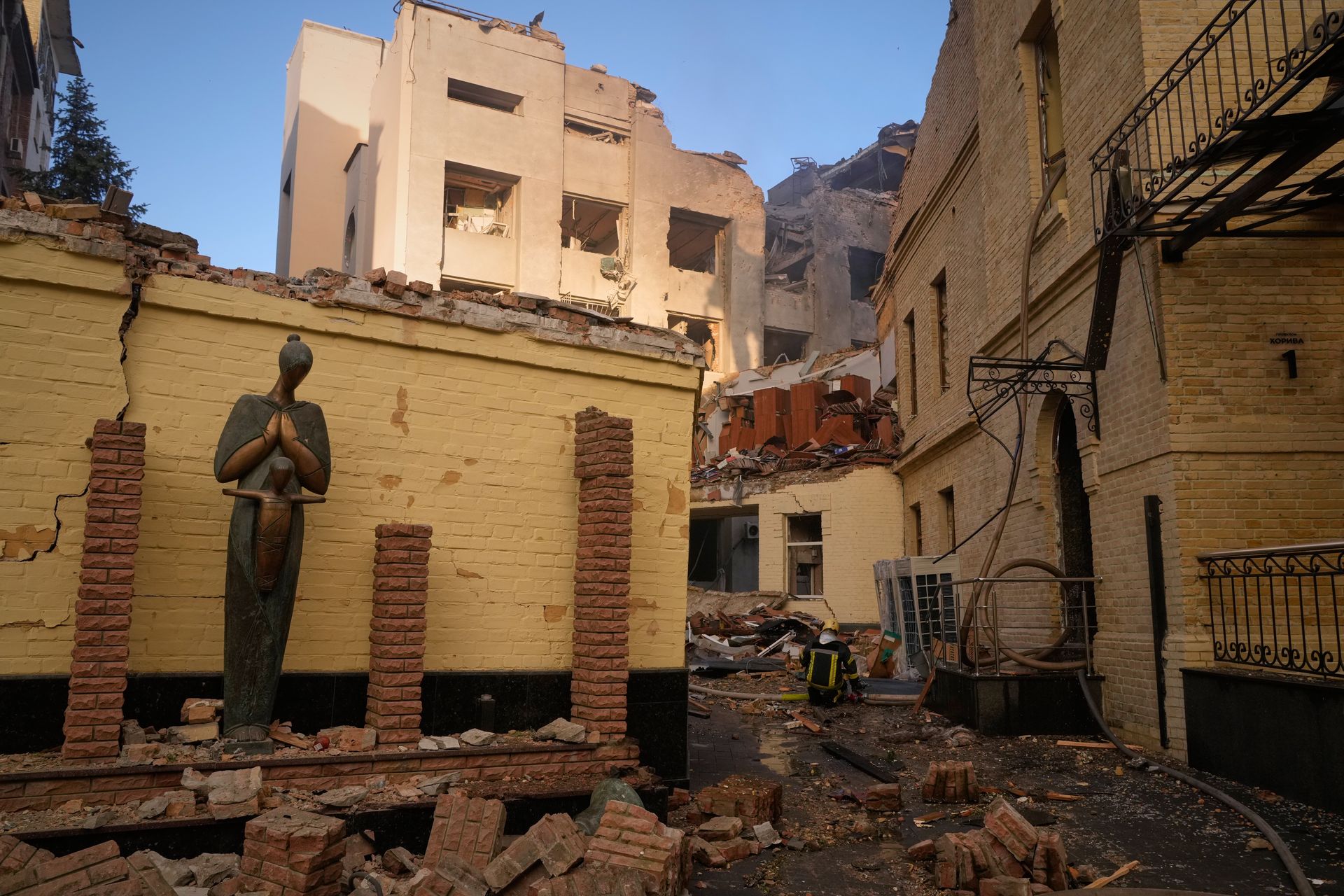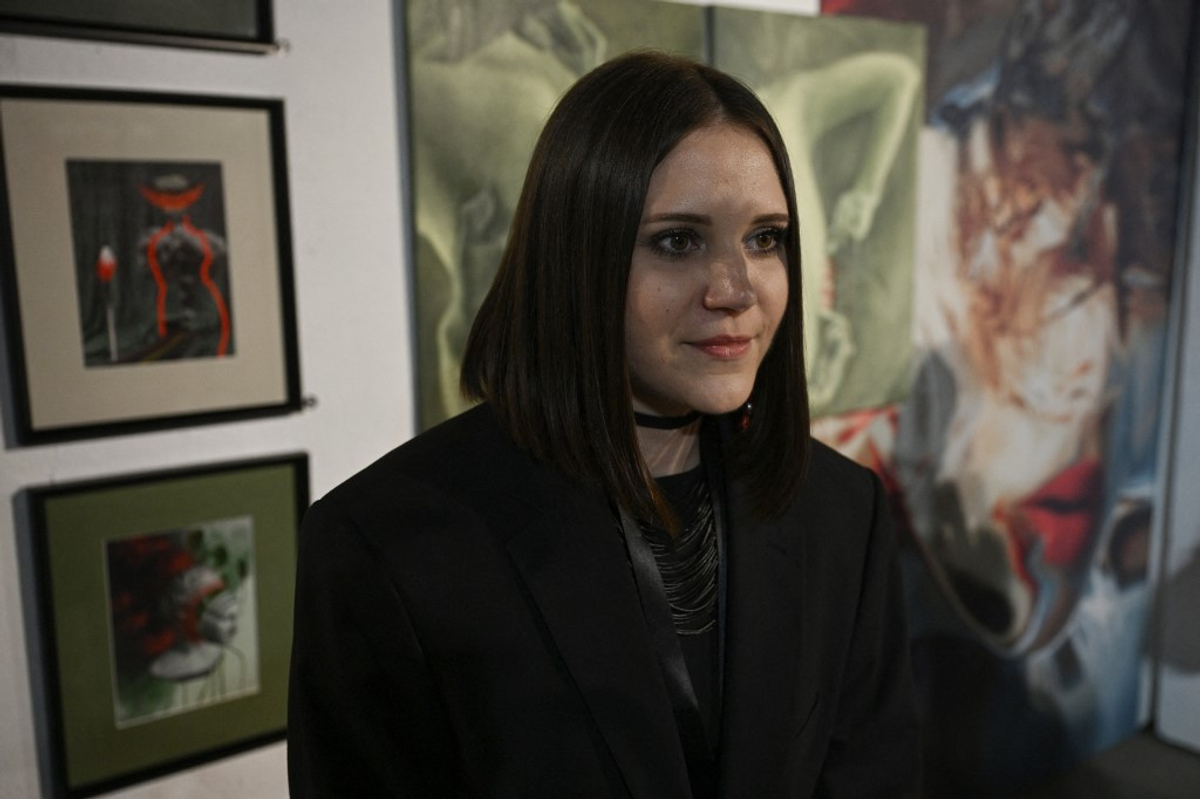
For years, 36-year-old Ukrainian artist Olena Kharakhulakh had put her art on hold, choosing instead a steady job designing glass objects for a company. That changed when a Russian missile hit an apartment block 300 metres from her home in eastern Ukraine, killing 45 people.JOIN US ON TELEGRAMFollow our coverage of the war on the @Kyivpost_official. Choking back tears when recalling the attack, she said that was the moment she decided to go into art full-time. “I realised that there would never be a convenient moment and that you have to do what you want right now,” said Kharakhulakh, one of many Ukrainian artists for whom Russia’s invasion was a turning point. “To be reborn, we need to get rid of something –- not literally, not physically, but we need to destroy or even kill something within ourselves,” Kharakhulakh told AFP from Kyiv’s Lavra art gallery. Her latest collages -- part of the second edition of the Kyiv Art Fair -- show classical statues with sliced faces, sharp blades and ominous smoke: a reflection of her own transformation. - ‘Love letter’ - Another artist, Vlada Lobus, whose works were also displayed at the fair, was forced to leave Dnipro and seek refuge in Poland. A graduate in political economy, she turned to painting and then analogue photography to process the shock of war and displacement. In one self-portrait, she reassembles cyanotype photographs of herself in a disjointed order: an eye, hands, an elbow, the soft curves of a body.
War Trauma Pushes More Ukrainians to Become Artists
At Kyiv Art Fair, Olena Kharakhulakh and Irina Cheremisina describe how Russia’s invasion pushed them from stability into full-time artistic work, using collage, photography, and mixed media to process loss and survival.
TL;DRAI
Russia's war has pushed many Ukrainians into full-time art; Art Kyiv, now in its fifth year, is drawing international attention despite at least 346 artists killed since the invasion began. Ukraine's wartime art scene is gaining global reach, with works exhibited in Japan, the US and Spain — turning collective trauma into a recognized cultural export.
826 words~4 min read