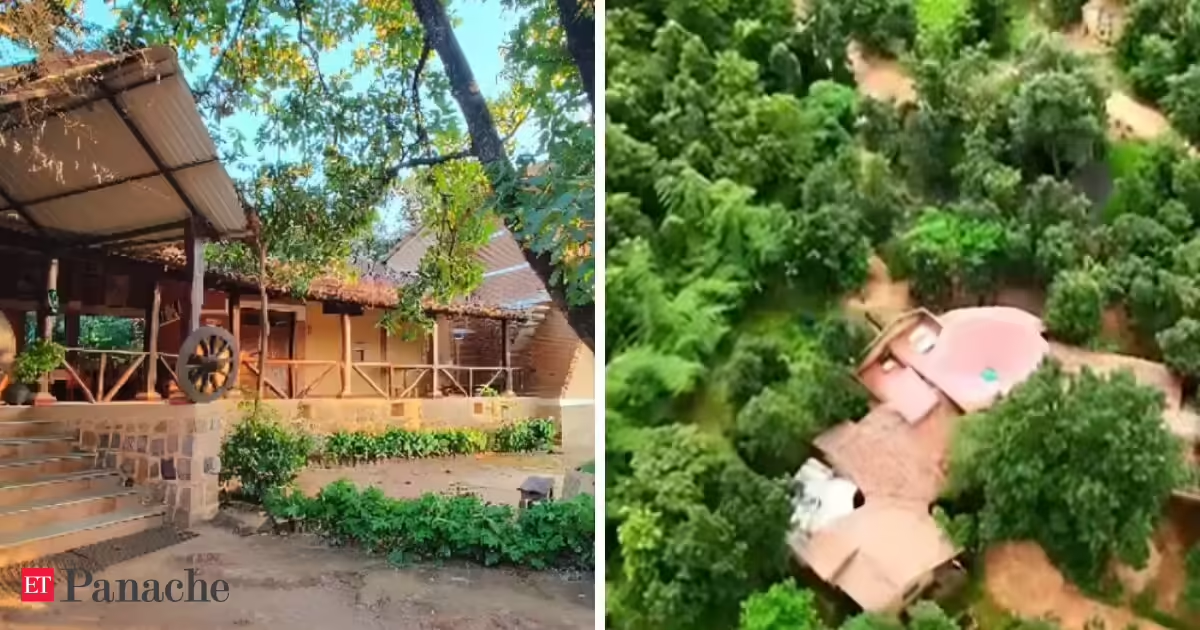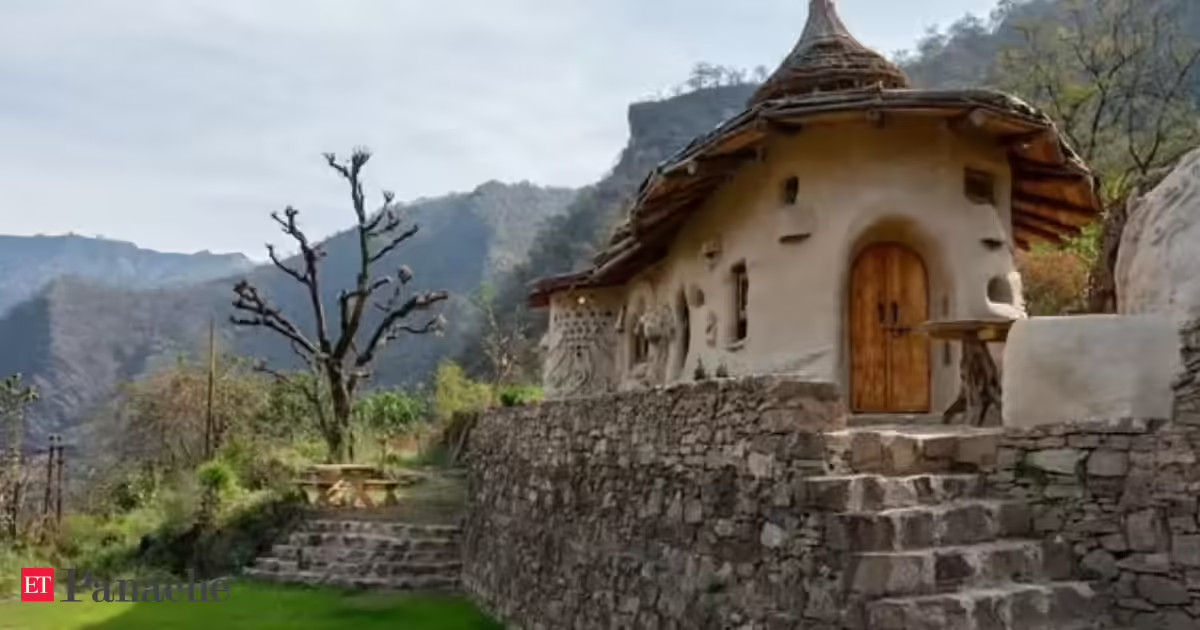
Far away from noisy traffic, endless notifications and crowded city life, a magical mud house hidden in the forests of Rishikesh is drawing attention online for looking straight out of the Harry Potter universe. Perched on a ridge near the Ganga, the cave-like Tiny Farm Fort offers sweeping views of emerald-green waters, dense valleys and forest trails. There are no proper roads leading to the property and no WiFi waiting inside. Instead, guests hike through forests, wake up to birdsong and experience a slower life surrounded by nature.The enchanting mud house has been built by architect brothers Raghav and Ansh Kumar, who left behind urban chaos to create something rooted in simplicity, sustainability and natural living. The property, now listed on Airbnb, has become popular among travellers for its resemblance to Hagrid’s hut and its fairytale-like atmosphere tucked away in the mountains of Rishikesh.Tiny Farm Fort sits quietly amid thick greenery overlooking the Ganga. The structure itself feels untouched by modern excess. Small windows bring in plenty of sunlight during the day, naturally brightening the interiors. The rooms have a cave-like design with earthy textures, curved walls and rustic details that remind visitors of fantasy films and storybooks.According to details shared on Airbnb, the experience is intentionally raw and immersive. The listing mentions that guests may hear barking deer calls and other animals in the surrounding forest. Elephants have also reportedly been spotted nearby. A solar fence has been installed around the property for protection.You Might Also Like:Stay connected to nature: No wifiThe Airbnb information also makes it clear that reaching the property is an adventure in itself. Visitors must be comfortable hiking nearly 1.5 kilometres through a forest trail with a backpack because the house is inaccessible by car. The listing further notes that there is no WiFi in the forest, making it an ideal escape for people wanting to disconnect from screens and reconnect with nature.The story behind the house began during the pandemic when Raghav found himself stuck at home in New Delhi. At the time, he had started planting vegetables in his parents’ backyard and was increasingly drawn towards the idea of rural living and self-sustainable communities. What began as curiosity slowly transformed into a life-changing decision. Sustainable constructionTogether, Raghav and his brother Ansh started experimenting with alternative building materials while quarantining at home. As reported by Business Insider, the duo explored making their own sustainable construction materials. They tested mycelium grown from mushrooms and learned how to create cob, a natural material made using soil, straw and water. That phase eventually inspired them to move away from corporate city life and start building in the mountains.Today, through their initiative Tiny Farm Lab, the brothers are working towards creating a self-sustainable community model that focuses on natural harmony, biomaterials and resource-sharing among villagers. Their project combines architecture, sustainability and local living practices in a way that feels both modern and deeply rooted in nature.As reported by Business Insider, Raghav shared that different visitors interpret the house differently. Some see it as a Harry Potter house, while others compare it to a Hobbit home or a fairytale cottage hidden in the woods.Their educational backgroundsBoth brothers come from architecture backgrounds and have explored creative fields beyond conventional careers. Ansh studied architecture at the University School of Architecture and Planning. Over the years, he has worked as a freelance graphic designer, artist and augmented reality artist. Raghav pursued architecture at Chandigarh College of Architecture and later became the co-founder of Tiny Farm Lab.Electrical work in mud houseApart from its magical appearance, the mud house also challenges common assumptions people have about sustainable construction. In a separate LinkedIn post, Raghav Kumar explained that electrical work in a mud house is not very different from what is done in conventional red brick and RCC structures. Many people believe mud houses cannot support concealed wiring, switches or modern electrical systems. However, the same safety principles still apply. Proper circuits, load calculations, earthing systems, MCBs and electrical protection remain essential. Conduits can be placed inside the walls and the structure can later be refilled with cob.The process typically happens after the base coat and before the finish coat. However, the builders pointed out that excessive wall chasing can weaken the structure, poor refilling may lead to cracks and using cement patches can create compatibility issues with natural materials.The vibe of the placeThe property has also caught the attention of travel creators and content platforms. Curly Tales described Tiny Farm Fort as an enchanting 600-square-foot escape that instantly reminds Harry Potter fans of Hagrid’s hut. The platform highlighted the stone-arched entrance and fantasy-like atmosphere that transport visitors back to childhood imagination and magical worlds.Beyond the house itself, the surrounding area offers several outdoor experiences. The trails around the property are popular among runners and hikers. Visitors can explore nearby village life, hike to the Kota Temple located above the property or go rafting on the Ganga.What more does the stay offer?As per more information on Airbnb, the forest landscape is also a paradise for bird watchers. Guests may spot species like the white-crested Himalayan forest laughing thrush, white-throated kingfisher, red-billed blue magpie, striated laughingthrush, orange-flanked bush robin and even peacocks.For travellers tired of crowded resorts and luxury hotels, Tiny Farm Fort offers something completely different. No traffic noise. No endless scrolling. Just forests, mountain air, birdsong and a mud house that feels like it belongs in a fantasy novel.
No WiFi, no proper roads: In Rishikesh, architect brothers built a Harry Potter-inspired mud house using biomaterials, complete with jungle trails and Ganga views
A magical mud house in Rishikesh, inspired by Harry Potter's Hagrid's hut, offers a unique escape from urban life. Built by architect brothers, this cave-like 'Tiny Farm Fort' emphasizes sustainability and natural living, accessible only by a forest hike. Guests experience a slower pace, surrounded by nature and wildlife, disconnecting from technology.
905 words~4 min read