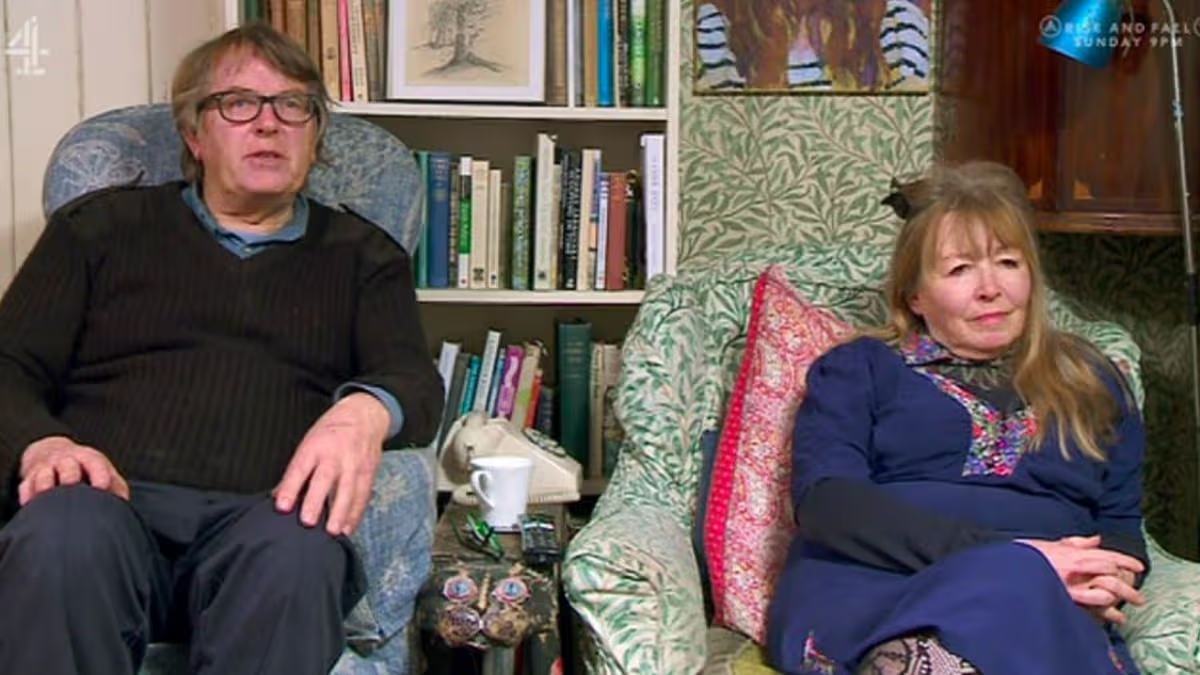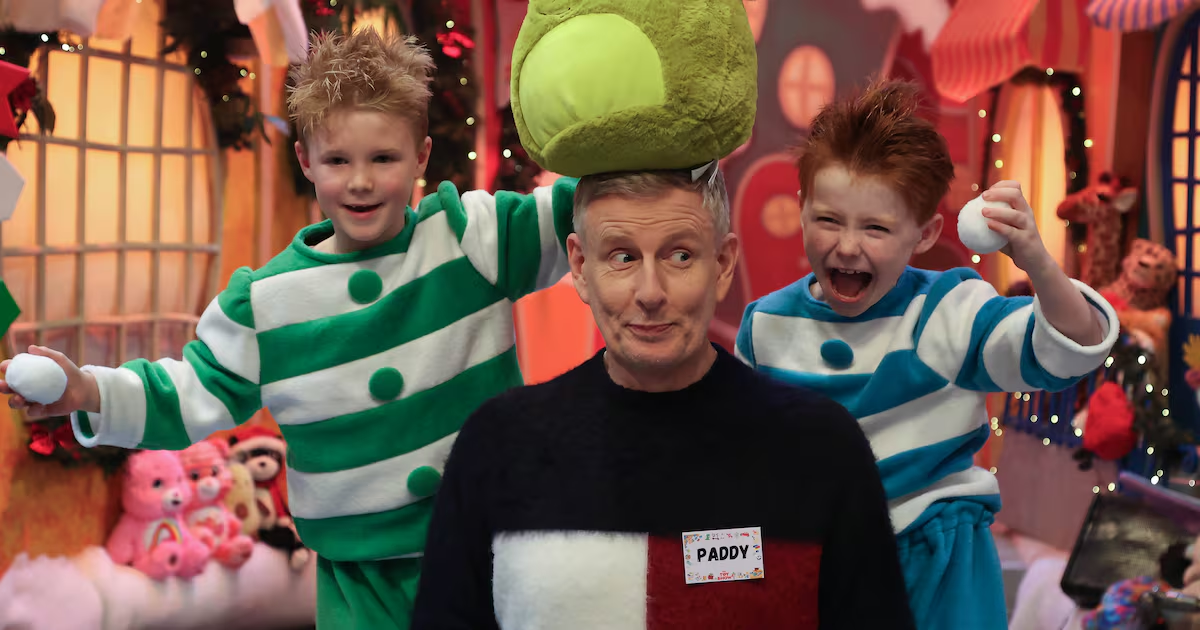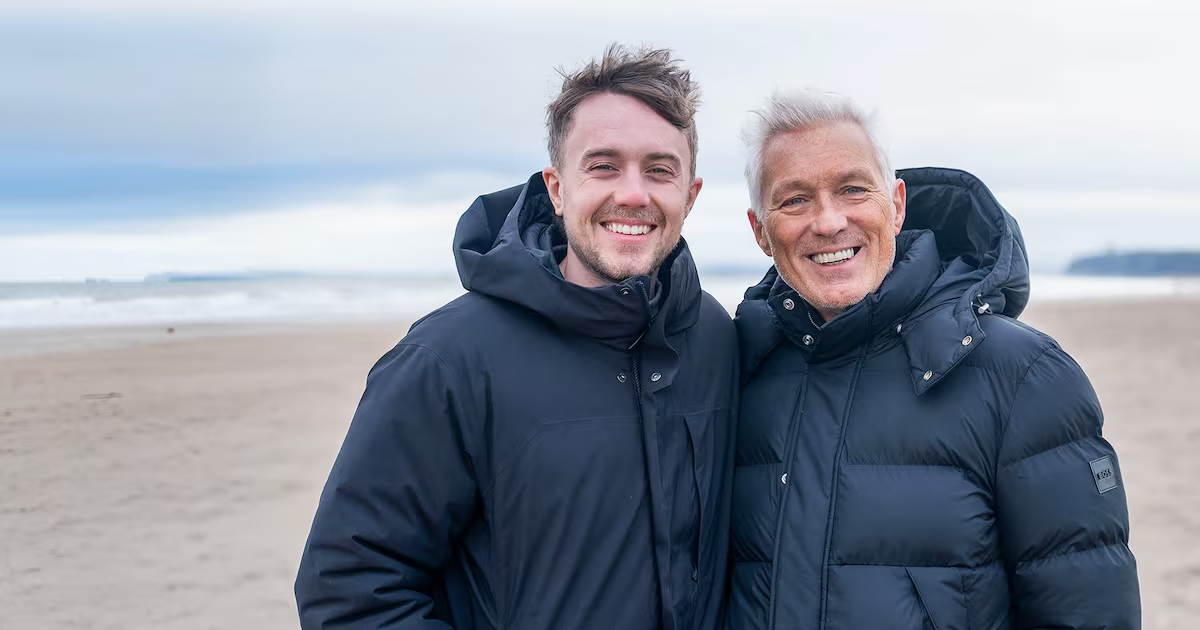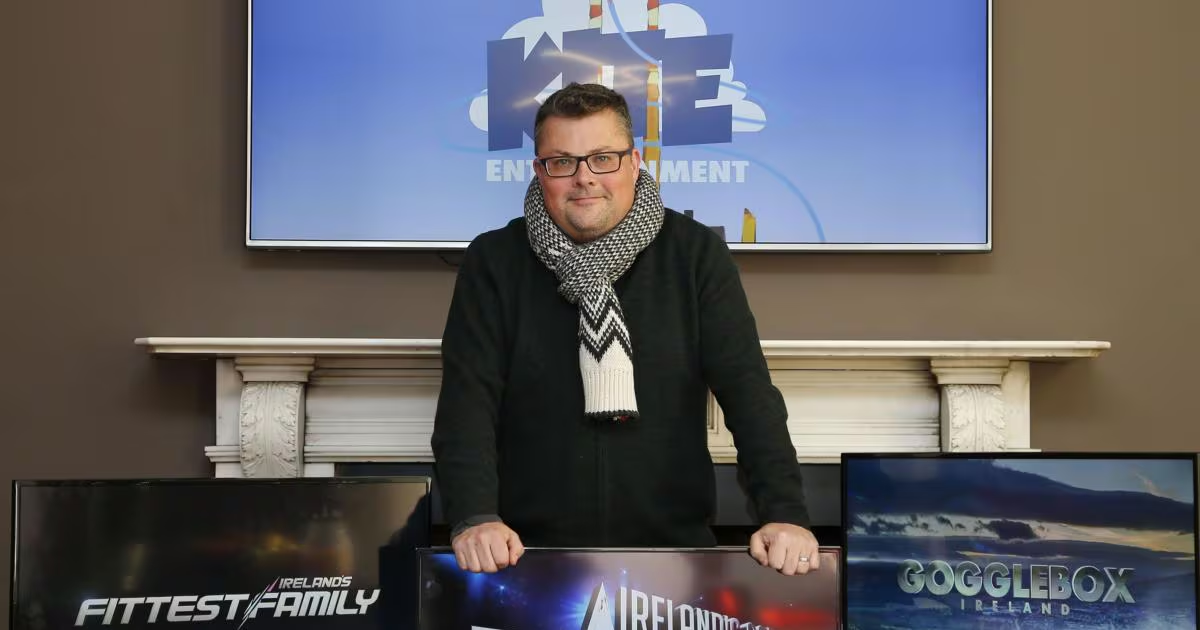
Though not a household name, Darren Smith entertains the nation. His production company Kite Entertainment is the driving force behind TV hits such as Traitors Ireland, Ireland’s Fittest Family and Gogglebox Ireland. He set up the business in 2004, having previously worked in the music industry. The company has gone from strength to strength and is currently riding an updraught. “Things are very good at the moment – but it’s been a 22-year moment,” he tells Dave Winterlich on the Inside Marketing podcast.It’s not just that we now live in a world of wall-to-wall entertainment, whether via terrestrial TV, streamers or social media, but that the industry here has a valuable and growing talent base.That includes success stories such as ex-Virgin Media TV boss Pat Kiely’s BiggerStage, which partners with Fox Alternative Entertainment to produce “shiny floor shows” – big-budget, glossy, studio-based entertainment programmes for the American market.The industry is now also supported by the new tax credit for unscripted programming, similar to the Section 481 provision for scripted film and TV. The Unscripted Production Corporation Tax Credit, or Section 487A, is groundbreaking, representing a first in Europe. It enables producer companies to reclaim up to 20 per cent of their production costs. It is worth up to €15 million per project, covering anything from documentaries and reality TV to gameshows and cookery programmes.Announced in January 2026, it was followed four months later by the Visual Effects Uplift, enabling the VFX sector benefit from an even bigger tax break, of 40 per cent.Darren Smith, managing director of Kite Entertainment, on the Traitors Ireland set at Slane Castle. Photograph: Andres Poveda/RTÉ “The VFX people lobbied really smartly and want to turn Ireland into a centre of excellence, which is really smart because it doesn’t matter if your VFX is being done here or in the Philippines or in LA – it can happen remotely. And the quality of work here is really, really good, like it is in the animation sector,” he says.The unscripted tax credit is already making a difference at Kite. “We engage with a lot of UK and American companies and we meet them at markets and always get a nice welcome. But the conversation changes when you say ‘Can I tell you about our new tax credit and how it can make your shows cheaper?’,” says Smith.“Suddenly they’re taking notes and want to know more, and that’s good. It potentially opens a lot of revenue stream for a company like Kite that does production services work on big international shows.”Hunting down hitsThat helps in a sector in which success is notoriously elusive. After all, no one has a cast iron recipe for a hit show, making it a game of numbers.For Smith, a veteran at pitching his own IP as much as he is at picking international franchises, asking broadcasters what it is they want is “a reasonable question” but also “kind of unanswerable, because all they want is hits, and what is a hit?” he asks. “Who knows? If we knew, we’d only make hits.” Not alone are there turkeys but there are the unlikely hits no one predicted, he points out, such as Father Ted. While the Netherlands has a strong slate of high-profile international successes, including The Traitors, The Voice, Big Brother and Deal or no Deal, that success belies a tough strike rate. “It has this culture of create but it’s based on a culture of risk, because it also has hundreds of new shows you’ve never heard of, that never travel. For every one of those four mega hits, there’s probably 40 that haven’t worked,” he tells Winterlich.As well as developing its own intellectual property, Kite Entertainment’s favourite recipe for success is to take proven formats, such as The Traitors, and make them for an Irish audience. The Traitors Ireland’s first outing, featuring breakout star Paudie Maloney, was as close to appointment TV as we’ve seen for years, and got the whole country talking.Loving localAudiences’ growing desire for local culture, perhaps a reaction to the wall-to-wall content we all now contend with, is particularly clear in music, with charts around the world now routinely topped by local artists. It’s also evident in TV, including news. “Do you ever go home and turn on CNN to watch Asia Business Report? No, you turn up Virgin or RTÉ News, because you want to find out what’s happening locally,” says Smith.In entertainment terms it’s why Gogglebox Ireland and First Dates Ireland are so beloved. “It’s the perfect example of Irish people wanting to see their own,” he says. “It’s an international format but its sensibility is local.”It’s why he opens Gogglebox Ireland with the Angelus, or flanks Siobhán McSweeney with Irish wolfhounds on Traitors Ireland. What’s more, if it’s inherently Irish, audiences will forgive the fact that the production budgets aren’t typically as big as for those in other markets, he reckons, which helps.The TV show he is most excited about currently is a baking show for RTÉ Kids, in which the twist is that it’s not the best baking being judged, but each child’s ability to best blow up their cake afterwards.Hit TV shows are something brands are always keen to associate with. Such partnerships are much more subtle, sophisticated and successful these days. That’s thanks to an understanding now that brands have to spend as much again on marketing campaigns to leverage their TV appearance, rather than simply demand a star turn. Such a partnership might just help Smith get his own personal favourite show, which has been on the back burner for 15 years, its chance to finally shine. “It’s six pairs of celebrities in ice cream vans racing each other around Ireland, but they have to fund their race – fuel, accommodation, everything – through ice cream sales,” he explains. “It’s a comedy version of Race Across the World or The Amazing Race. We call it Flaking It.”Discover more Inside Marketing podcast episodes and content
How the right recipe is putting success back on the schedule for local TV makers
Supported by a welcome new tax break, Ireland’s unscripted production sector is all set for prime time, Darren Smith tells Dentsu’s Dave Winterlich
994 words~5 min read