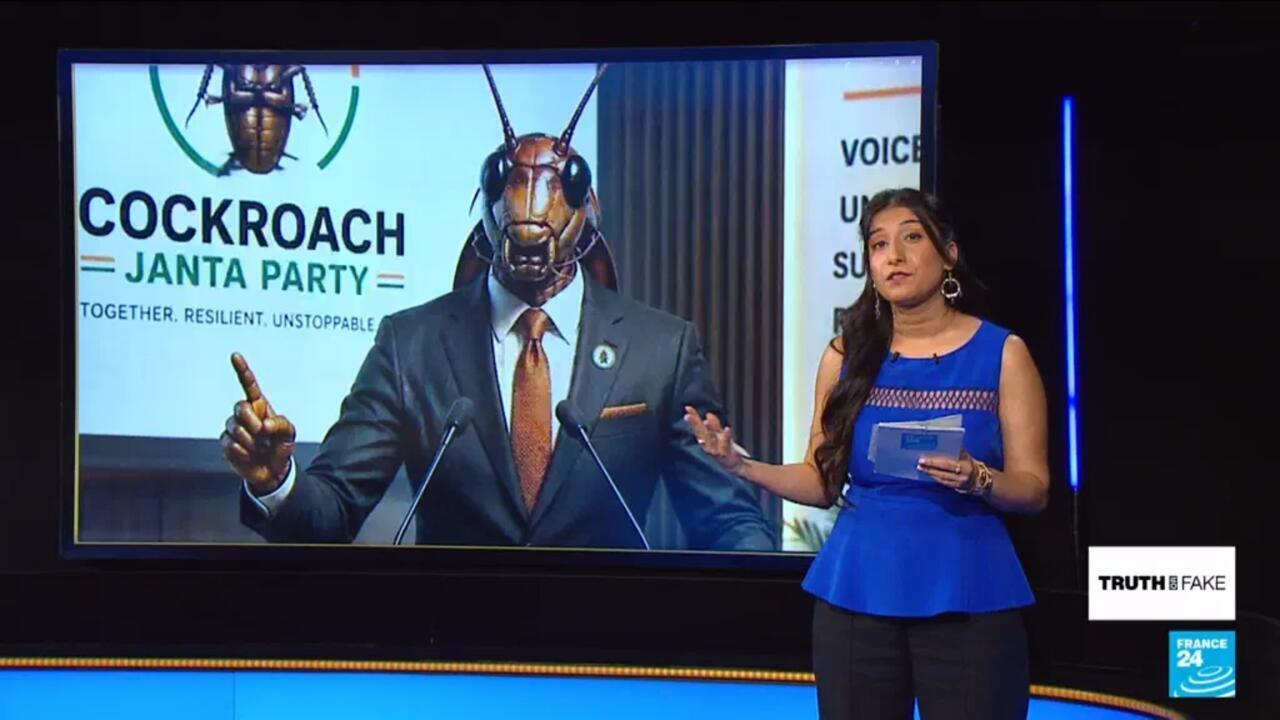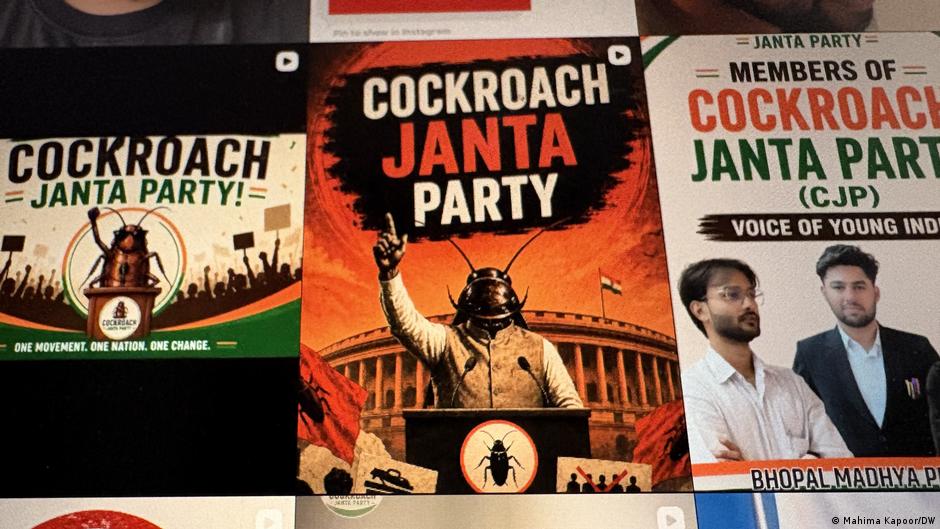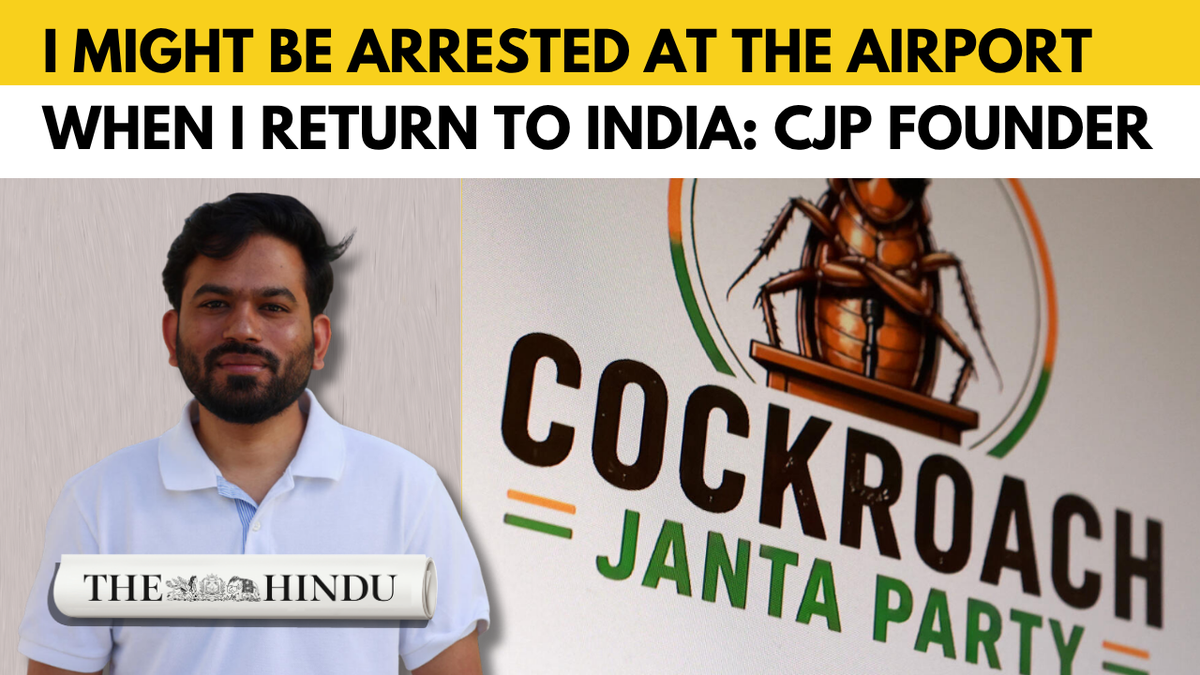
The astonishing rise of the Cockroach Janta Party in India has captured the country’s imagination. An initiative that began as a satirical response to a judge’s reported remarks in court has quickly become a digital symbol of the anger and frustration of the country’s youth.Millions of Indians have embraced the cockroach as an ironic emblem of survival in a political system that many increasingly view as dismissive, arrogant and indifferent to their future.The anger behind this phenomenon is unquestionably real. Youth unemployment remains a crisis, examination leaks have shattered trust in merit-based opportunity and the rising cost of living has deepened insecurity among an already anxious generation.The emotional energy behind this movement is not manufactured, nor should it be casually dismissed.Yet political history offers a difficult but essential lesson. Anger, however intense, does not automatically create political transformation. Viral outrage may generate attention, but attention alone does not change political systems.The central confusion surrounding the Cockroach Janta Party is the assumption that digital popularity equals political power. Social media can create extraordinary visibility in a short time, but visibility is not organisation and followers are not necessarily participants.Political systems are not destabilised by online excitement unless that excitement is converted into disciplined collective action.As I argued in my book Struggle Against the State (2010), grievances alone never produce successful protest movements. Shared anger exists in almost every society at almost every moment. What determines success is whether that anger is transformed into organised collective action through strong social networks, effective leadership, shared political identity, coordinated strategy and sustained pressure on the state.That has not happened in the case of the Cockroach Janta Party. For now, there is a highly visible digital expression of frustration but not an organised social movement. Unless this changes fundamentally, the Cockroach Janta Party will remain a short-lived cyberspace sensation that fades as quickly as it emerged.One of the greatest illusions of the digital age is that symbolic participation feels like meaningful participation. Clicking follow, sharing a meme, posting sarcastic comments or adopting a trending hashtag creates a sense of engagement without demanding sacrifice.This emotional satisfaction often creates the illusion of political action while leaving underlying power structures entirely untouched.Real movements demand much more. They require people willing to leave their comfort zones, commit time, accept risk and repeatedly participate in coordinated and sustained collective action. The transition from emotional expression to organised resistance is precisely where most online eruptions collapse.My research in Struggle Against the State emphasised the critical role of social networks in successful protest mobilisation. People join risky collective action when trust exists, when they believe others will show up and when local networks sustain participation. Without these formal and informal structures of trust, even widely shared grievances remain politically inert.The Cockroach Janta Party currently lacks that infrastructure. It has impressive digital reach, but digital reach is not the same as embedded social networks capable of mobilising collective defiance. That distinction explains why comparisons with Bangladesh and Nepal are both premature and flawed.The youth mobilisations in Bangladesh succeeded not because of clever memes alone. They succeeded because organisers were physically present, strategically adaptive and deeply embedded in student networks and local protest structures. Social media amplified those movements, but it did not substitute for organisation on the ground.The same holds true for Nepal’s youth-led mobilisations. Protest success there depended on leadership rooted in local realities, trusted organisational relationships and sustained physical presence in public space. Political movements succeed when people organise where grievances are actually lived, not merely where hashtags circulate.This is where the Cockroach Janta Party faces its most serious weakness. Political mobilisation does not happen spontaneously through digital emotion alone. It requires strategic actors who can recruit participants, frame demands, coordinate actions, manage risks, build coalitions and sustain momentum under pressure.A movement mobiliser cannot effectively perform this role from a foreign country. A serious challenge to entrenched political power in India cannot be remotely managed by someone based in Boston while millions of supposed supporters remain digitally dispersed across India.Effective movement mobilisers must be embedded in campuses, neighborhoods, housing societies, workplaces and communities where political anger can be transformed into organised civic action.Proximity matters because political mobilisation is built on trust. Trust cannot be manufactured through satire alone nor can it be sustained through remote symbolism. People are more willing to accept risks when leaders stand beside them rather than speak to them from another continent.India presents particularly difficult terrain for protest mobilisation. This is not a socially unified political environment waiting for a single spark to ignite collective action. India has long remained deeply fragmented by caste, class, religion, language, regional loyalties, and partisan identities, all of which complicate efforts to transform common frustration into unified resistance.The present ruling dispensation has not merely inherited these fractures but has systematically deepened them, using polarisation, majoritarian politics and partisan institutional control to sharpen social divisions and weaken the possibility of broad-based collective mobilisation.In such an environment, converting widespread anger into a unified youth led political movement becomes far more difficult and demands exceptionally sophisticated organisational strategy.Shared anger over unemployment does not automatically erase these divisions. In fragmented societies, people often experience similar grievances while remaining politically isolated because trust across social boundaries remains weak. That is why movement mobilisers become even more essential, because someone must actively construct bridges across fragmented constituencies.At present, the Cockroach Janta Party has not done this. Its support appears concentrated among digitally connected urban youth who are culturally fluent in meme politics and online satire. That creates visibility, but visibility confined to a narrow demographic rarely produces structural political pressure.The movement could become relevant only if it connected with unemployed graduates, examination aspirants, teachers, farmers, workers, lower middle-class families, women’s organisations, informal labour groups and marginalised religious and ethnic communities confronting similar forms of systemic exclusion.Political systems become vulnerable when grievances converge across several sectors rather than remaining socially compartmentalised.Another weakness lies in the movement’s strategic ambiguity. Ambiguity helps viral growth because different groups can project their own frustrations onto a flexible symbol. But successful protest mobilisation requires clarity, because citizens mobilise most effectively around specific, understandable and actionable demands.Generalised rage against corruption, institutional arrogance, democratic erosion or economic injustice may create broad emotional sympathy but political establishments rarely respond to abstract dissatisfaction alone. Successful movements create leverage when they articulate clear, concrete and transformative demands that are capable of unifying otherwise fragmented constituencies, giving participants a shared political purpose and a defined objective around which sustained mobilisation can be organised.The political establishment is not a passive observer in this process. It actively shapes the terrain on which protest movements operate, creating openings in some moments while imposing severe constraints in others. Successful movements must understand this reality and prepare strategically for confrontation, disruption and delegitimisation.We are already witnessing this process unfold in India. Accounts have been blocked, digital platforms disrupted and national security narratives invoked. A movement built entirely on digital infrastructure is structurally fragile because its operational environment remains vulnerable to direct intervention.Satire itself also has limits. Humor can puncture authority and expose elite arrogance in powerful ways, but satire alone rarely sustains disciplined political mobilisation. What feels electrifying and subversive today can become repetitive and politically exhausted tomorrow.The movement could remain a brilliantly entertaining expression of generational frustration, or it can attempt the far harder work of becoming a serious transformational force. That makeover requires abandoning the illusion that virality itself constitutes victory.History changes only when outrage stops performing and starts organising.Ashok Swain is a professor of peace and conflict research at Uppsala University, Sweden, and author of the book: Struggle Against the State: Social Networks and Protest Mobilization in India.
Cockroach Janta Party is doomed to fade fast – unless it goes beyond meme politics
The satirical movement is a highly visible digital expression of frustration but cannot substitute for collective action and organisation on the ground.
1,291 words~6 min read