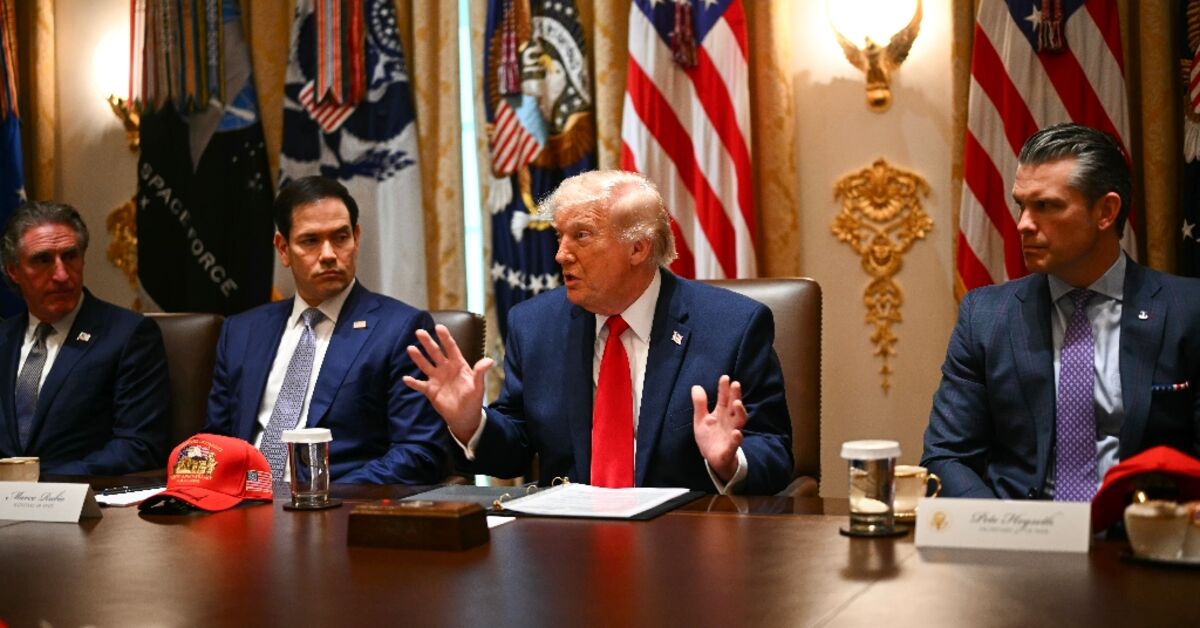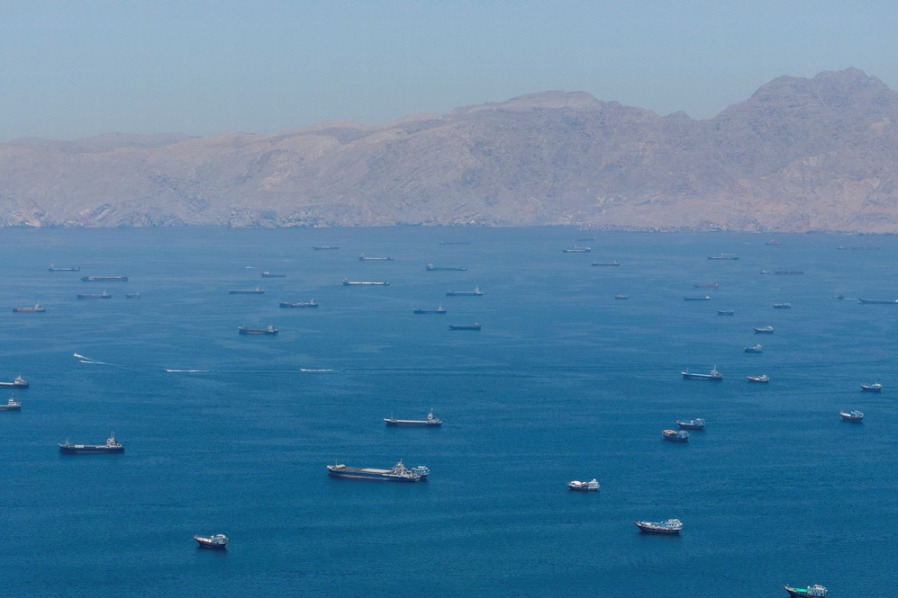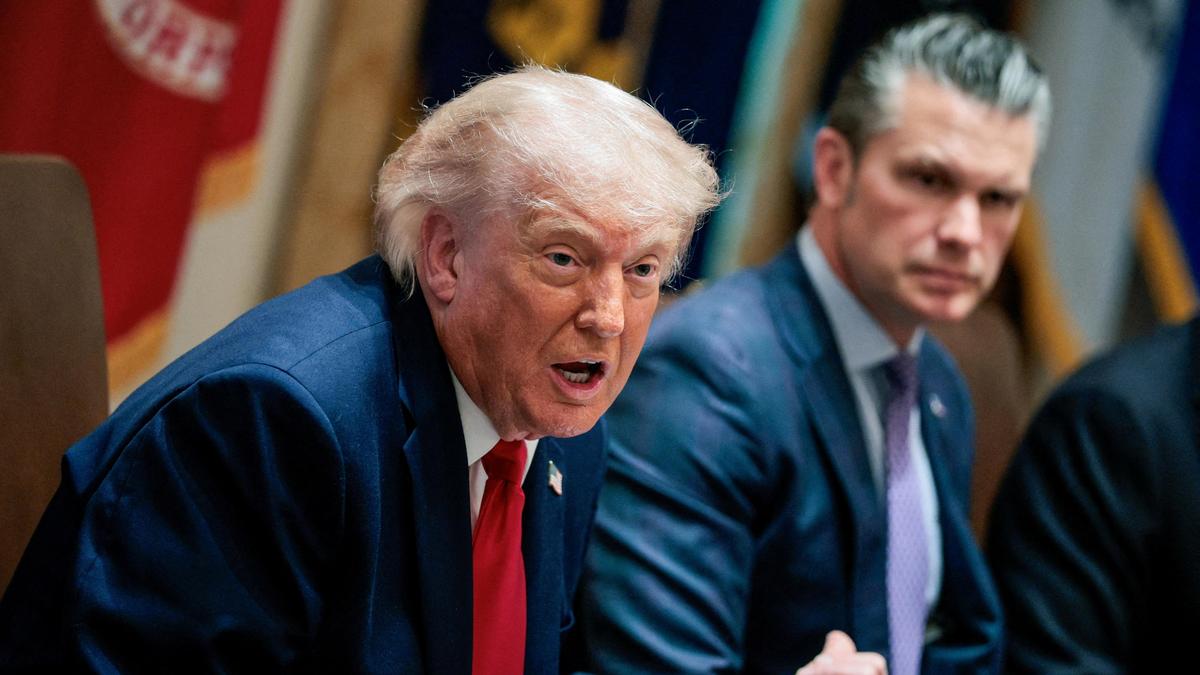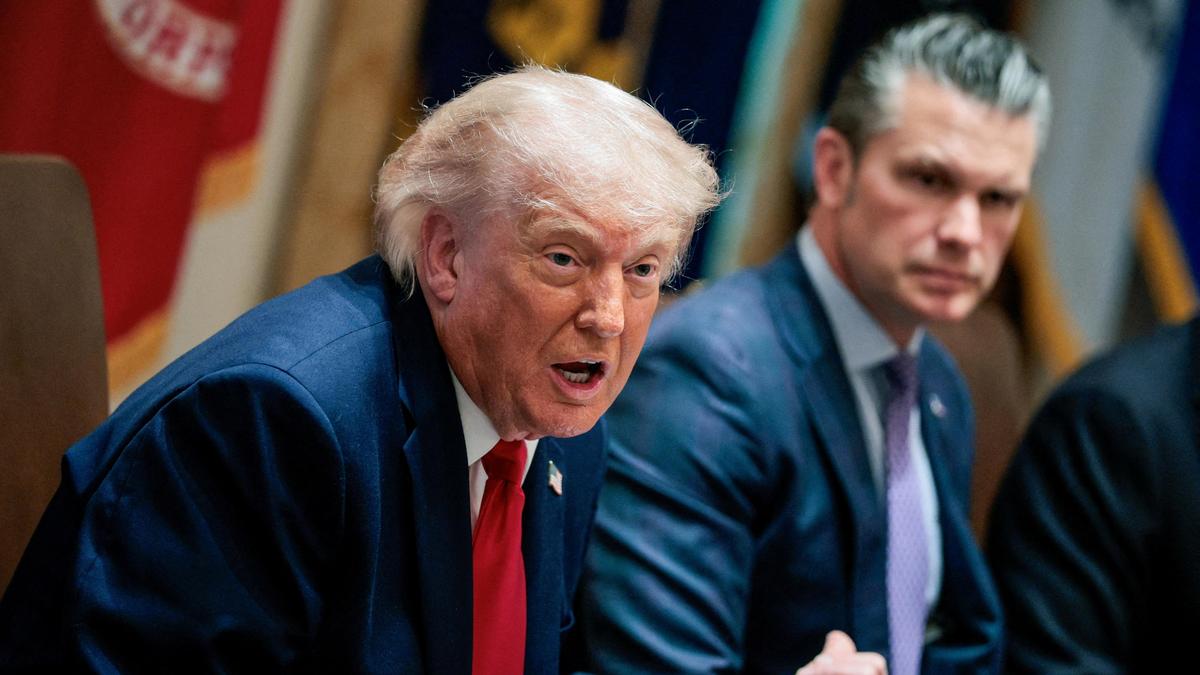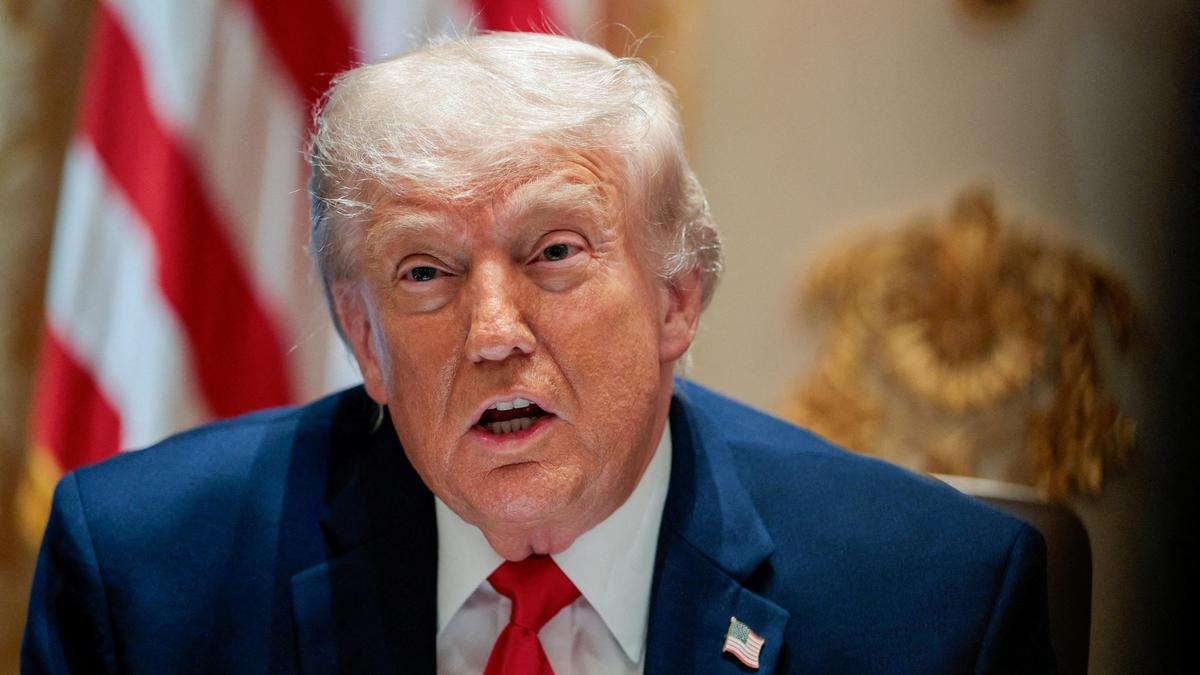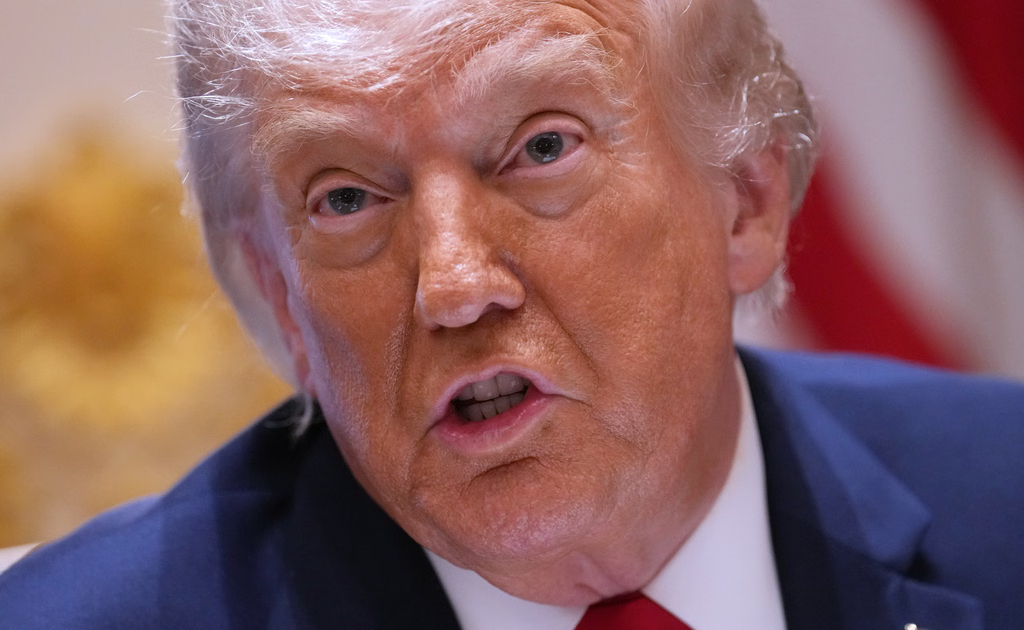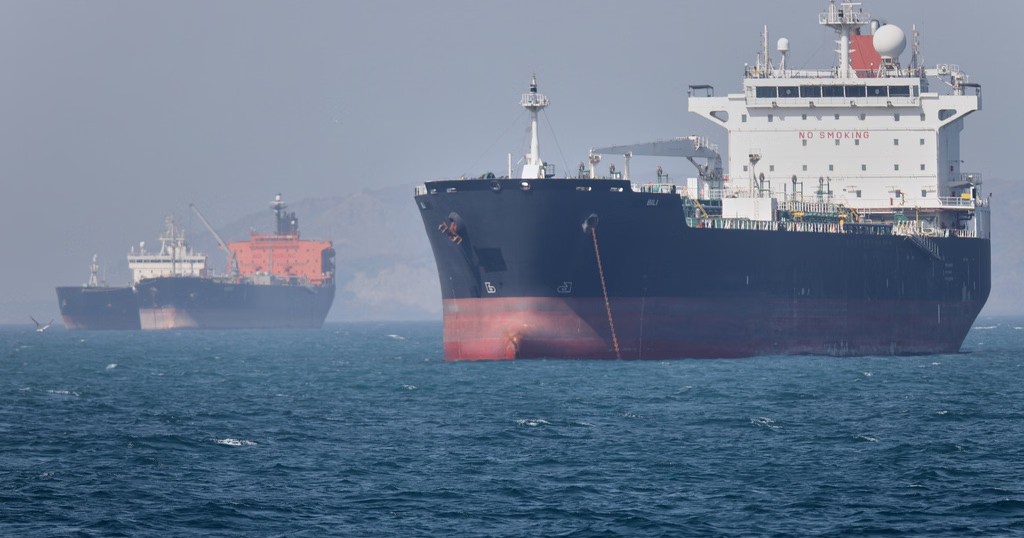
LIVEProposed 60-day ceasefire framework could ease Gulf shipping disruptionsLast updated: May 29, 2026 | 07:05Gulf News ReportUAEiran nuclear programmeAmericaLebanonUS-Israel-Iran warus-iranPresident Donald Trump listens during a Cabinet meeting at the White House, Wednesday, May 27, 2026, in Washington. (AP Photo/Jacquelyn Martin)The United States and Iran appeared closer to extending their fragile ceasefire after negotiators reportedly agreed on a 60-day framework to launch nuclear talks and reopen the Strait of Hormuz. However, key hurdles remain, with President Donald Trump yet to approve the deal, Tehran disputing reports of a final agreement, and Washington continuing to impose fresh sanctions while insisting Iran surrender its highly enriched uranium. Follow our live coverage for the latest updates.Highlights07:03 AM, 29 May 2026Fibre-optic drones used by Iran-backed Hezbollah 'rewriting rules of war'06:38 AM, 29 May 2026Trump won't accept 'bad deal' with Iran: US Treasury SecretaryUS Treasury Secretary Scott Bessent said that President Donald Trump would not accept a "bad deal" with Iran, insisting that any agreement must address Tehran's nuclear programme and guarantee open shipping lanes through the Strait of Hormuz.Discussions with Iran were continuing, but Treasury Secretary Scott Bessent repeatedly declined to confirm reports of a tentative agreement, telling reporters at the White House that any deal would depend on President Donald Trump's approval."The teams have been going back and forth and President Trump has made it very clear," Bessent said. He added that Iran "has to turn over their highly enriched uranium", "cannot pursue a nuclear weapon" and that "the Strait of Hormuz has to free transit. Navigation of the seas has to be free and open as it was before"."He's not going to take a bad deal. He's going to make a great deal for the American people," Bessent said.04:25 AM, 29 May 2026US, Iran made 'a lot of progress' towards deal: VanceThe United States and Iran have made good progress towards a ceasefire extension deal but President Donald Trump is not yet ready to approve it, US Vice President JD Vance said Thursday."We're going back and forth on a couple of language points. We've made a lot of progress here," Vance told reporters, hours after US sources said Washington and Tehran had agreed a deal."Hopefully, we'll continue to make progress and the president will be in a position where he can endorse the agreement, but obviously that's still TBD (to be determined)," he added. 06:54 AM, 29 May 2026US sanctions more Iranian oil sales despite tentative dealThe U.S. Treasury Department on Thursday announced additional sanctions on Iran's military oil sales even as one U.S. official said that Tehran and Washington had reached a tentative agreement to extend the ceasefire and start nuclear negotiations.The latest penalties -- first reported by The Associated Press -- are part of the Trump administration's sprawling and ever-growing economic pressure campaign to get Iran to capitulate to its demands. But both Republican and Democratic administrations have levied countless sanctions against Iran for decades to no avail.The action puts additional sanctions on Sepehr Energy Jahan -- the oil sales arm of Iran's armed forces -- which facilitates the shipment of millions of barrels of Iranian crude oil to China. In a news release, Treasury claimed that Iran's military generates revenue through these sales "via an array of front companies to help fund its reconstitution and threaten its neighbors.""The Treasury Department will continue to increase pressure on Iranian oil sales to deprive the Iranian regime and its military of the financial resources it needs to threaten U.S. allies and partners in the Middle East," Secretary Scott Bessent said.04:00 AM, 29 May 2026Iran World Cup team still waiting for US visas: ambassador saysIran's football team still lacks US visas and is not competing in World Cup on "equal terms" because of its difficulty in training ahead of the tournament, its ambassador to Mexico said Thursday. Ambassador Abolfazl Pasandideh visited the northwestern Mexican border city of Tijuana, where Iranians have relocated their training camp. They were originally planned to be based in Tucson in the US state of Arizona.The ambassador told a news conference that "the country to the north" -- meaning the US -- had not followed through on its responsibility of hosting the Iranian team. "We don't know whether or not they're going to give the players their visas," he added.Get updated faster and for FREE: Download the Gulf News app now - simply click here.03:49 AM, 29 May 2026'Initial framework': US, Iran edge toward 60-day deal to prevent further escalation US and Iranian negotiators have reportedly agreed in principle to an initial framework that would extend a fragile ceasefire for 60 days and open formal negotiations over the future of Iran’s nuclear program, according to US officials familiar with the talks.The proposed agreement, reported by the BBC, has not yet received final approval from President Donald Trump or Iran’s leadership, including Supreme Leader Ali Khamenei. American officials described the arrangement as an "initial framework" aimed at preventing further escalation after weeks of military confrontation in the Gulf region.The deal would open the Strait of Hormuz and start a 60-day negotiation period on Iran’s nuclear program, CNN reported.But uncertainty quickly emerged from Tehran.Iran’s semi-official Tasnim cited a source close to the negotiations who denied that any final agreement had been completed or formally confirmed, highlighting continuing divisions and mistrust between the two longtime adversaries.Both sides have accused each other of violating an already shaky ceasefire announced earlier this week following US strikes on Iranian military targets and retaliatory attacks by Tehran-aligned forces.On Thursday, Iran’s powerful Islamic Revolutionary Guard Corps said it had targeted a US military base in the region after fresh overnight American strikes hit southern Iran. Iranian state-linked media described the attacks as retaliation for what Tehran called “continued aggression” against its territory.03:35 AM, 29 May 2026Middle East war leads to 3.4% fall in air passenger demand in April: IATA
US-Iran truce deal awaits Trump as strikes test fragile ceasefire
US strikes Iranian drones near Strait of Hormuz as Trump warns Tehran to make a deal, amid new sanctions and rising tensions over Gulf shipping routes.
2,194 words~10 min read