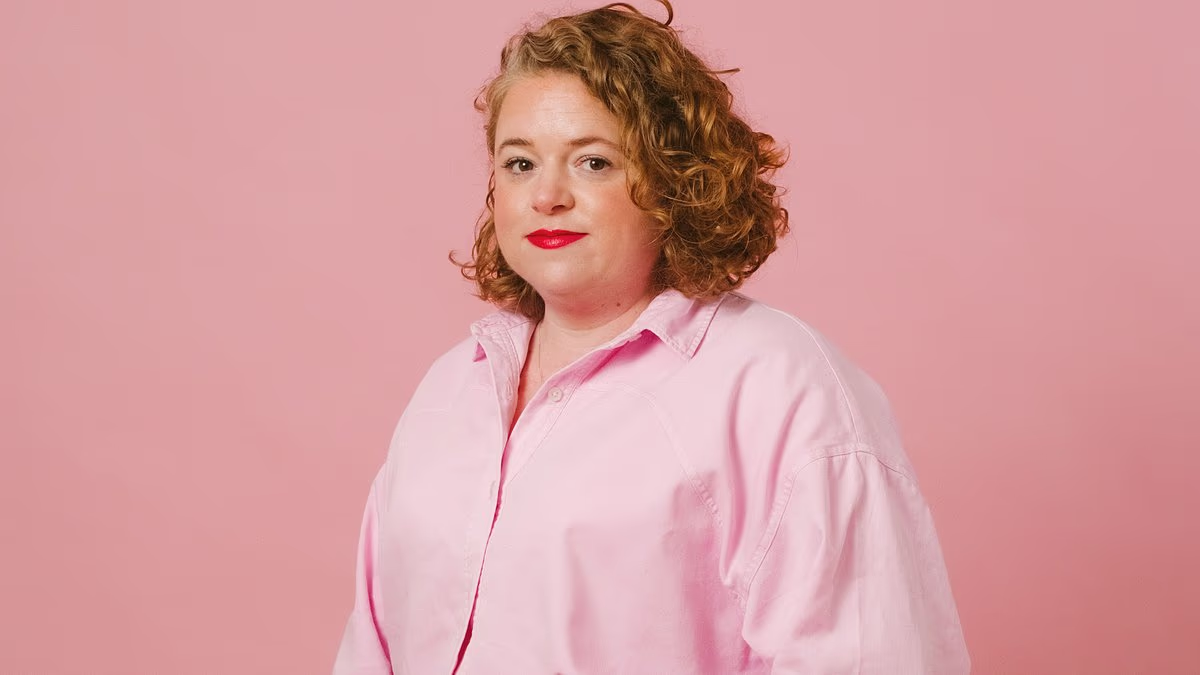
'I just don’t think I can do this any more.’ I’m with my boss standing outside a building in central London where we’re due to have a meeting in a few minutes and tears are rolling down my face.The industrial-strength concealer I hoped would cover my obscene under-eye bags is a thing of the past.Clinging on to the railings, every muscle is clenched. I can’t even look at her for fear she’ll say ‘don’t be silly, just get on with it’. But I can’t get on with anything any more. I can’t even step inside the building.I haven’t slept through the night in months. I can’t recall the last time I brushed my teeth in the morning or looked at my work diary without feeling sick. Even the thought of holding a conversation feels impossible. I feel like my brain has broken.Aged 30, I’ve gone from being an incredibly competent woman with my dream job as head of communications at a major British firm, to crying on the street. I’m so ashamed.Though I didn’t realise it then, this was to be my first of two breakdowns over the next year.At that moment, I thought I had ‘failed’. After years of conflating work with ambition, of always going ‘above and beyond’ in the mistaken belief this was the only route to success, this sudden inability to do anything made me feel like I didn’t know who I was any more.Now nine years on, I realise I had all the warning signs of burnout. But like so many women, I had pushed them down until my body wouldn’t let me any more.Though it’s little talked about, I’m not alone. Just last week, Green MP Carla Denyer announced she was taking a leave of absence after a decade working in politics had left her suffering from burnout.Since I was first trusted to open up my local WH Smith on Saturdays at the tender age of 16, I’ve always loved work. I loved feeling accomplished and earning my own money.After graduating during a recession in 2008, I moved to London for my first PR job at 22. Aged 30, I’d gone from being an incredibly competent woman with my dream job as head of communications at a major British firm, to crying on the street, says Jo Hooper My mental health sank and sank. I was full of panic, constantly sweaty, feeling sick and jumpy. I barely sleptFrom the off, the hours were crazy and the pressure constant. I’d spend my 11-hour days calling journalists to tell them about everything from new jewellery collections to eco-friendly shower heads. In between calls, I’d be managing my boss’s diary and printing reports for meetings.It was expected that you would get in early, stay late and not blink at giving up your evenings.If you got in at 9am, left at 5pm and didn’t answer your phone out of hours, you were seen as a slacker – as someone who wasn’t ambitious. And boy, was I ambitious. Yet that ambition quickly morphed into an unhealthy addiction to work. I told myself the pressure was fun. That I liked to get in early so I could ‘crack through lots of work’, and stay late ‘to get stuff finished’.But within a year of working at that PR firm, all boundaries between work and life had vanished. Work was my life.I never said no to a request and would answer my phone at any time of day or night, even over Christmas. Once, I left the theatre during a performance of the hot ticket musical Hamilton to answer a work call.I even picked my boss’s children up from school.I became a shamefully terrible friend and girlfriend; I once missed a drumming competition my boyfriend had spent months preparing for to rewrite a speech that was re-rewritten by someone else the next day anyway.Yet the payoff was addictive. The more I gave, the more I was rewarded. Corporate workplaces love overworkers. Glowing feedback about my ‘can-do attitude’, promotions and pay rises all helped me feel better.Working all the time, it seemed, was the way to get ahead. But those feelings never stuck. I continued to believe I was a failure.Ever since my dad had died when I was 16, I’d had this mantra: ‘The only person you can rely on is yourself.’ Not being ‘perfect’ at work made me feel like I couldn’t even rely on me. Whenever I got a shirty email or someone pushed back on my advice, my brain would tell me: ‘That’s it. They know you’ve been pretending to know what you’re doing. This is the beginning of the end.’So I had to keep working to get more praise, more opportunities, more proof I was good enough.And so the cycle continued. Though I’d yet to recognise the extent of the problem, I knew I was deeply stressed.I moved jobs every few years – getting a promotion each time – believing a new workplace would be better. But each time, I took my instinct to overwork with me.By 30, I was managing a team of 12, a hefty budget and advising the board of a household name firm on communications strategy. My life became squeezed into the time around the edges of work.My mental health sank and sank. I was full of panic, constantly sweaty, feeling sick and jumpy. I barely slept.I spent a lot of time in the pub with colleagues, all of us moaning and sinking glasses of sauvignon blanc. We perpetuated our work stress by dissecting it constantly.I came to believe all I was experiencing was normal. That everyone with a fast-paced job felt this way. I had no idea I was ill.Which is how I came to find myself clinging to those railings in the summer of 2017.My boss was, thankfully, brilliant. She gently suggested I see a GP. I took two weeks off to rest... then got straight back into work.Over the next eight months, I carried on as I had before.Though I had started seeing a therapist weekly, it didn’t help; I was just told to leave my job. But I was good at it, my job made me feel important. That couldn’t be the answer. Women are particularly prone to overwork because it’s harder to be taken as seriously as men, so we think working harder is the answer [Picture posed by model]One morning in March 2018, aged 31, less than a year after my first breakdown, I was sitting on the Bakerloo Line at 7am heading into the office, trying not to vomit from my rising panic and saying the same thing to myself I’d said to my boss the year before: ‘I can’t do this any more.’After a decade of pushing my body and brain to its limits, I’d finally hit rock bottom.Once at the office, I walked through the side door so no one would see me and went to HR. I wouldn’t return for four months.I was diagnosed with anxiety and depression, found a new therapist and agreed to take medication, having begrudgingly admitted that rest alone had done nothing to solve my first mental health crisis.I started to remember who I was other than my job title. I started to hope I could change things.It took some tough conversations and apologies, but I reconnected with family and friends after years of neglecting them. I even went to see a musical without my phone going off once.In August 2018, I started a phased return back to the office but, within months, I knew I couldn’t balance the job and my mental health. So when the firm was going through a restructure I asked to take redundancy.Now aged 39, I work as an ethical business coach helping other women changing their habits and relationship to work.Women are particularly prone to overwork, firstly because it’s harder to be taken as seriously as men, so we think working harder is the answer. And secondly, because we’re taught we should be kind, so to say no feels wrong. But your work life shouldn’t come to define you.While running my own business isn’t exactly stress-free, it’s a stress I am in charge of.I’m still ambitious but I know I don’t need to work myself into the ground to fulfil my ambition. I also know my worth and feel proud of myself most days.Occasionally, I catch myself in that old drive to work my way through worry, to show that I’m capable. The difference now is I know what’s going on and how to manage it.So to any woman reading this who finds it all familiar, please know you do not need to push yourself to the brink to ‘prove’ you’re deserving of success.Because life is way too precious to waste it on a job that is only making you miserable.
What work stress really does to you- and how to protect your health
I'm with my boss standing outside a building in central London where we're due to have a meeting in a few minutes and tears are rolling down my face.
1,467 words~7 min read