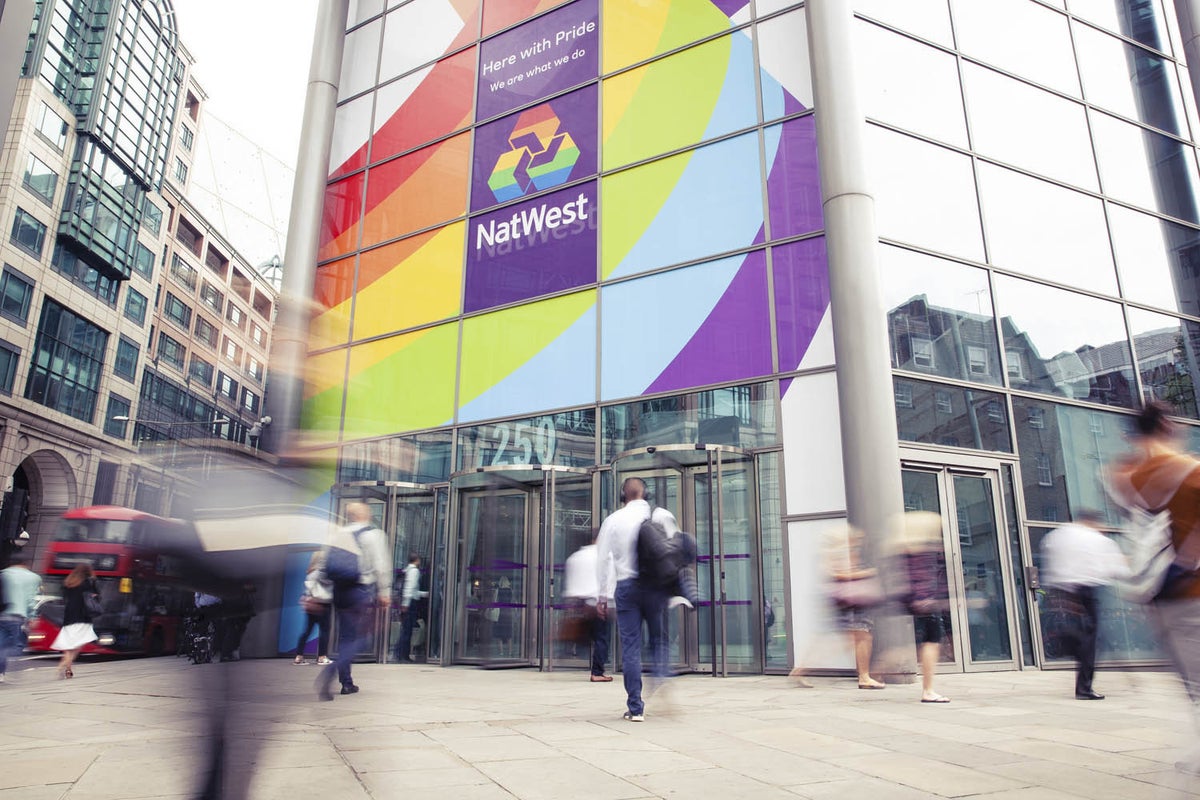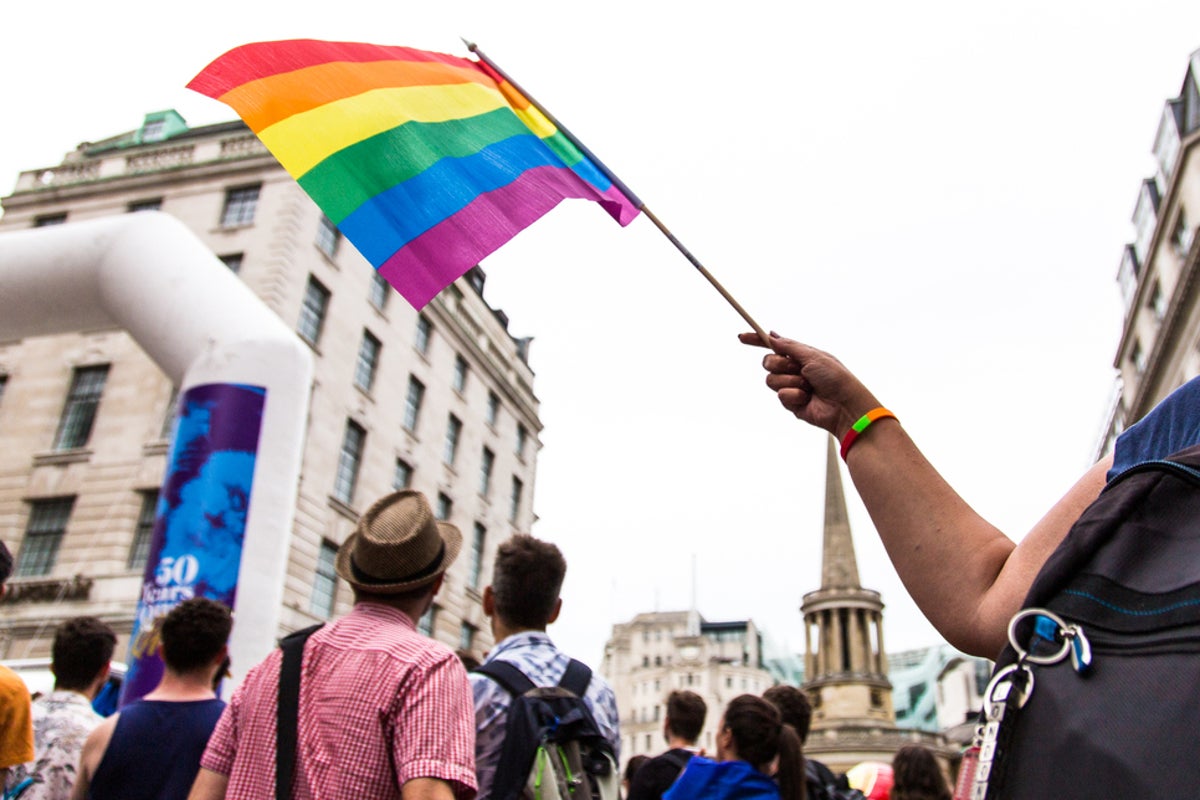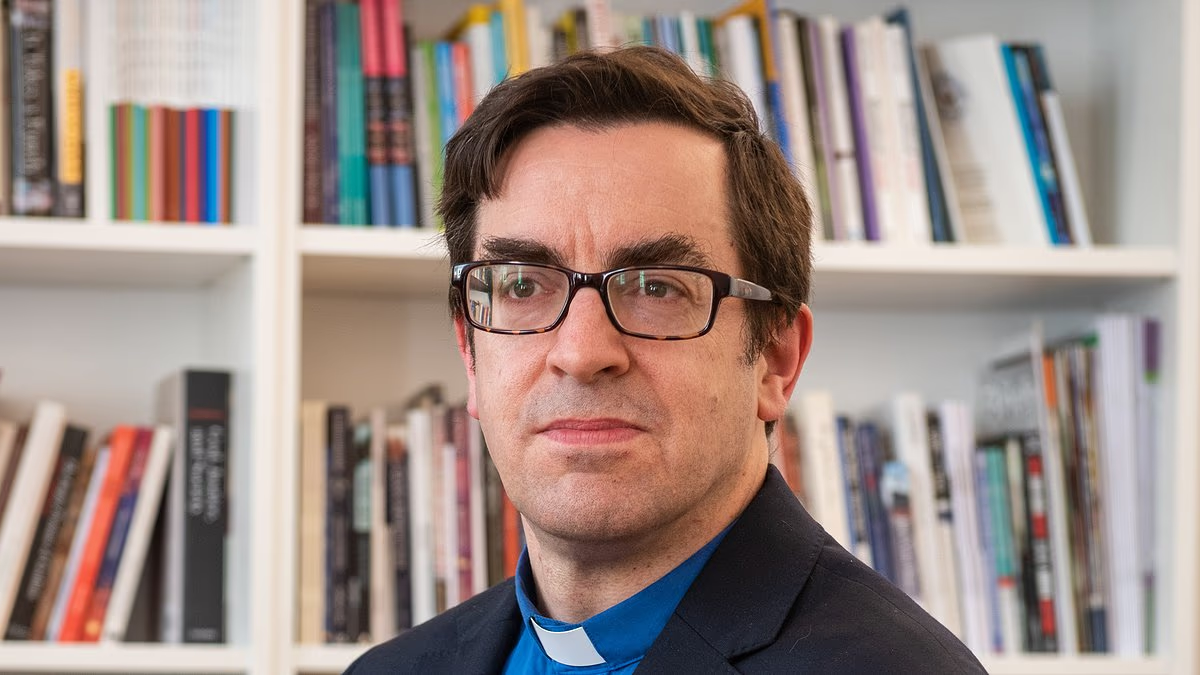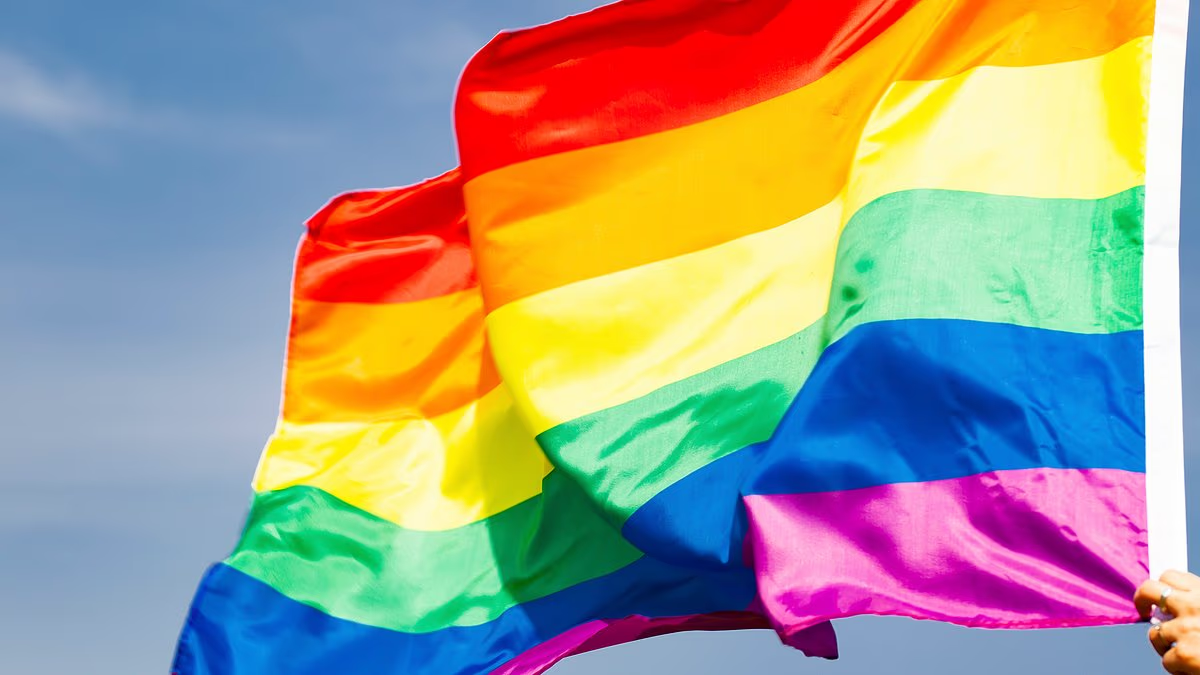
A Christian man who sued the government after claiming he has a phobia of Pride flags has lost his 'religious discrimination' case.Mark Jennings was told he could not work from home during Pride Month - despite his belief that gender ideology is 'the work of the devil'.He had accepted a job with the Department for Work and Pensions (DWP) in June 2024 after applying for a work coach position at a Job Centre in November 2023.However, while receiving his job offer on a phone call he began making 'unreasonable demands'.The DWP insisted it could not accommodate Mr Jennings' requests - such as not being subjected to Pride imagery or hearing people 'using different pronouns' at work.Therefore Mr Jennings turned the job down - but then tried to sue for discrimination.His claims have now been dismissed at an Employment Tribunal in Ashford.The tribunal heard: '[Mr Jennings requested] that no–one in the Canterbury office of the Job Centre, the centre to which he had been assigned, should promote the use of different pronouns, and that no visible imagery of the Pride or LGBTQ+ movements be displayed or celebration of those causes be permitted.' Mark Jennings was told he could not work from home during Pride Month - despite his belief that gender ideology is 'the work of the devil' (file image)Mr Jennings explained over the following days that as a Roman Catholic and evangelical Christian, 'his faith dictated that gender ideology and the promotion of "trans ideology" caused him great anxiety'.The tribunal heard: 'It is his view, in line with many others within the faith, that homosexuality and transgenderism is a sin contrary to the laws of God, and that a Christian should not promote LGBTQ+ activities.'He also sees the use of the rainbow by the LGBTQ+ community as co–opting, a symbol of God and Christianity (referencing the promise made to Noah after the flood), which is offensive to him.'Mr Jennings also claimed that because of his 'mental health conditions, particularly autism and a history of gender dysphoria as a child, Pride iconography caused him distress'.He said: 'Every time I see the visual imagery of the Pride movement, it reminds me of my childhood trauma.'He went on to describe this aversion as 'a phobia of Pride symbols'.The applicant said his phobia was of such severity so as to trigger 'autistic shutdowns', and claimed this had happened when he had seen a Pride flag near his home that had been placed by the Council or seeing flags on buses and in shops.Mr Jennings also said that some had been 'triggered by seeing rainbow laces on football boots on Match of the Day and to a shutdown being triggered by viewing a Drag Act'.Mr Jennings's demands included that 'no one use pronouns'.He said he had been to the Job Centre a few times and once seen a single Pride flag - but added he would feel 'extremely uncomfortable' challenging anyone about having a Pride flag or lanyard.The DWP said they could not guarantee any policy change as because of their diversity schemes there may be information about Pride on the office notice boards, as there would be for Black History Month.Mr Jennings therefore suggested the office could be divided into 'zones' to keep him protected from the 'iconography' – or that he could work from home, even if just during Pride Month.He also suggested colleagues could be gently asked to remove Pride symbols but this was found to be 'naive' on his part.The DWP had told him they could not accommodate his demands because they had requirements to allow people to express their support for Pride, but they left the job offer open in case Mr Jennings changed his mind.He did not – and took the organisation to an employment tribunal alleging indirect religious belief discrimination and a failure to make reasonable adjustments, a form of disability discrimination.Employment Judge Daniel Wright at an Ashford Employment Tribunal dismissed the claims.Judge Wright said: 'As the [DWP] points out... the suggestion that [Mr Jennings] puts forward of preventing and or restricting the ability of employees to display their support for Pride would leave the [DWP] open to claims of direct or indirect sexual orientation discrimination, harassment and direct or indirect belief discrimination.'As such, the indirect religious discrimination claim is dismissed.'Judge Wright added: 'We do feel that [Mr Jennings] was being somewhat naive to assume that all members of the Pride community would have agreed to remove their symbols for his disability.'Addressing the suggestion to work from home, the judge said: 'Whilst on the face of it, the request for working from home during Pride celebrations may not be an unreasonable one, particularly in the post–covid world, where remote working is more common, we did hear evidence that for this role it was not possible.'It was heard that Mr Jennings has filed cases on similar grounds against other organisations previously - including Stagecoach and NatWest.
Christian man with 'Pride phobia' loses tribunal against firm
Mark Jennings was told he could not work from home during Pride Month - despite his belief that gender ideology is 'the work of the devil'.
817 words~4 min read