Most teams treat SSH keys like passwords from 2010 — created once, never rotated, and scattered everywhere. Here's how to fix that.
You onboard a new engineer. They generate an SSH key, paste the public key into five servers, and get to work. Six months later they leave the company. You remember to remove their key from two of the five servers. Maybe three.
This is how breaches happen. Not through sophisticated attacks — through forgotten keys on forgotten servers, quietly waiting.
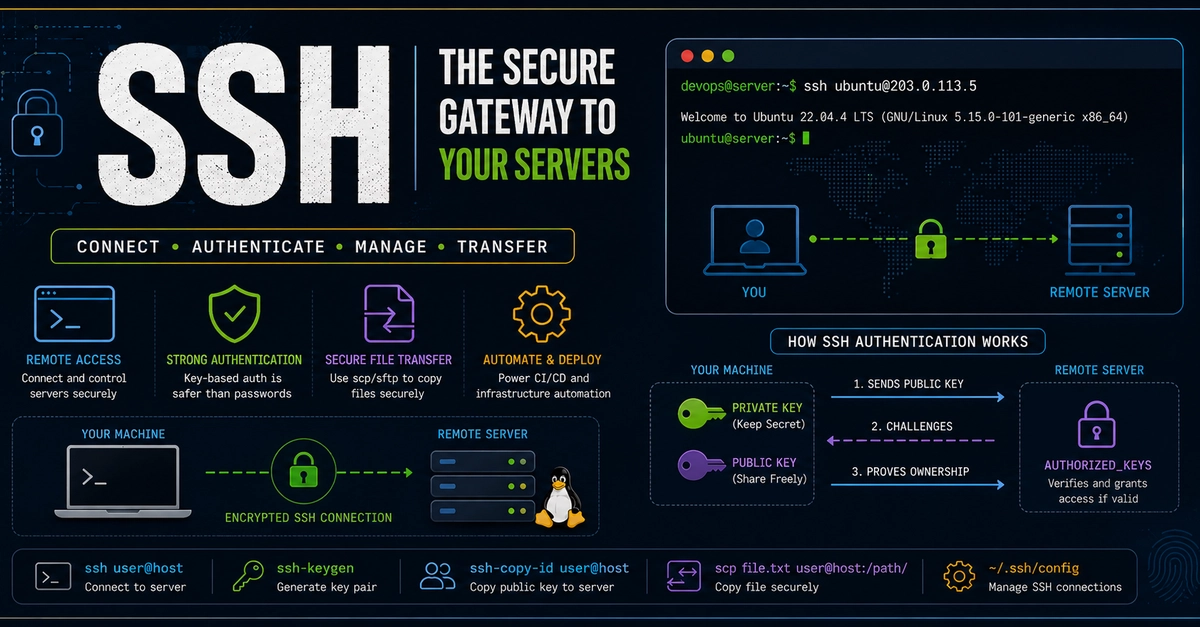
SSH key management sounds boring until it isn't. This article covers everything you need to do it properly: key generation best practices, how to organize keys across teams, rotation strategies that won't break production, and clean revocation when someone leaves.
Why SSH Key Management Breaks Down