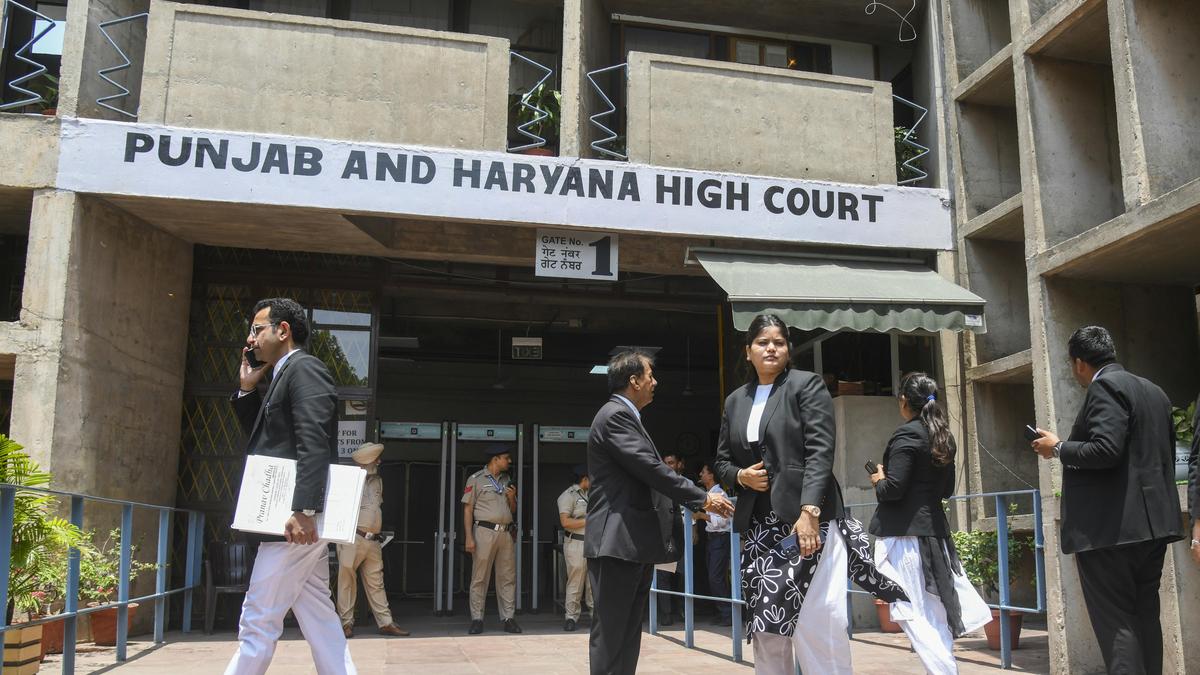
Chandigarh The Punjab and Haryana high court has stayed the Haryana government order of suspending four senior medical officers over “poor monitoring” of sex-ratio measures.The suspended doctors had approached the HC against the decision terming it wholly arbitrary, punitive, non-speaking and violative of Articles 14 and 21 of the Constitution of India. (HT Photo for representation)On May 18, Haryana health department suspended three senior medical officers (SMOs) and one medical officer (MO) for “poor performance” and “failure to ensure” effective monitoring measures related to improving the sex ratio of the state.Those suspended were Dr Tina Anand (SMO), posted at community health centre (CHC) Purkhas in Sonepat; Dr Vijay Parmar, SMO at CHC Radaur in Yamunanagar; Dr Satpal, SMO at CHC Chiri in Rohtak; and Dr Prabha, MO at CHC Sehlang in Narnaul.The reported trigger for the move was stated to be a drastic dip in the sex ratio at birth (SRB) that Haryana registered in the last four months. In 2025, the state’s SRB stood at 923 females per 1,000 male births. However, the health department had not disclosed the current SRB status.The suspended doctors had approached the HC against the decision terming it wholly arbitrary, punitive, non-speaking and violative of Articles 14 and 21 of the Constitution of India. “The suspension order has been passed without assigning any specific act of misconduct, without any complaint, inquiry, inspection report or allegation of violation under the Pre-Conception and Pre-Natal Diagnostic Techniques Act, 1994 (PC-PNDT Act) and without affording any opportunity of hearing to the petitioners,” the plea said.“Operational guidelines issued by the Union ministry of women and child development, government of India, under the Beti Bachao Beti Padhao (BBBP) programme, recognises improvement of sex ratio as a multi-sectoral, district-driven indicator involving coordinated efforts of the district administration, police, women and child development, health department, education department, panchayati raj institutions and community bodies,” it said.Under the PCPNDT Act, the statutory responsibility for enforcement lies with the district appropriate authority, headed by the civil surgeon. A medical officer posted at a prime health centre (PHC) has no statutory role or independent authority to conduct PCPNDT raids, suspend ultrasound registrations, prosecute offenders, or enforce demographic targets.“Therefore, fastening exclusive liability upon the petitioner for demographic outcomes such as sex ratio is legally untenable and amounts to imposing vicarious liability for systemic issues. No misconduct, dereliction of duty or violation of any statutory provision has ever been attributed to him,” the petition of one of the doctors, Parmar argued.It was also argued that disciplinary proceedings have been initiated under Rule 7 of the Haryana Civil Services (Punishment and Appeal) Rules, 2016. If these proceedings are allowed, merely on the basis of data, there is a very likelihood of false implication and fabricated cases being registered under the PC and PNDT Act, the plea said.“The impugned order, devoid of reasons and unsupported by any material, constitutes a colorable exercise of power, being aimed merely at projecting administrative action against declining sex-ratio without any real culpability of the petitioner. The impugned order, therefore, deserves to be set aside as being violative of the statutory scheme, settled judicial principles and the fundamental rights of the petitioner,” Parmar’s petition argued.The petitions were taken up by the bench of justice Sandeep Moudgil on May 27. “..till the next date of hearing, further proceedings pursuant to the suspension order dated 18.05.2025 against the petitioners shall remain stayed,” the bench said while seeking response from the state government by October 27.
‘Poor monitoring’ of sex ratio: HC stays suspension of Haryana medical officers
On May 18, Haryana health department suspended three senior medical officers (SMOs) and one medical officer (MO) for “poor performance” and “failure to ensure” effective monitoring measures related to improving the sex ratio of the state
578 words~3 min read