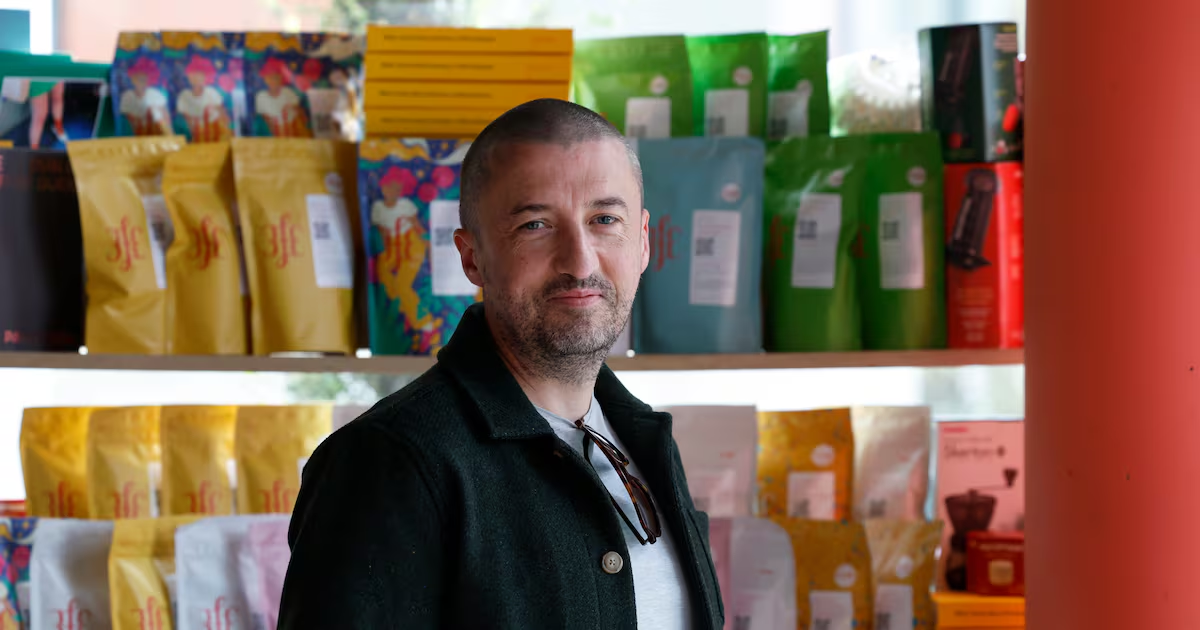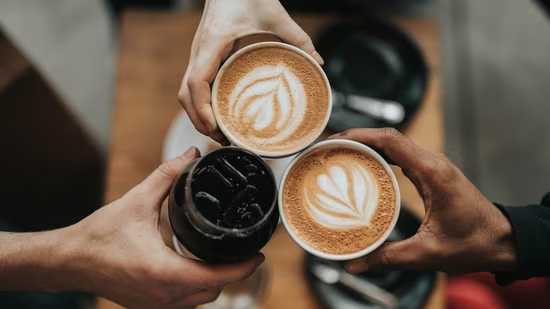
Some people are making coffee their entire personality. Wake up and smell the pretension. Top coffee-drinking nations are actually more chill Coffee snobs, we see you. You were buying jars of instant coffee a decade ago, chugging the swill and getting on with the day. Here you are, in 2026, claiming that the Nescafe jingle – pupp parappa paa paa paa – is cringe, and that Bru is “not even really coffee”.Finland, which consumes the most coffee, is chill. They drink cheap Arabica. (SHUTTERSTOCK)Sure, coffee beans deliver a richer flavour than cheaper chicory mixes. Sure, a good roast, a fresh brew, and Starbucks getting your name right on the cup is the holy trinity. But come on. No one wants to be trapped in a conversation about Liberica and Excelsa beans that they didn’t start. No one wakes up, expecting to hear about the difference between a Slayer or La Marzocco (they’re coffee machines, BTW). No one believes that a refractometer will make their lives complete. (No, Ayaan. Not even the ‘cheaper’ ₹20,000 one).No one wakes up expecting to hear about the difference between a Slayer or La Marzocco.“Social media has certainly played a role in turning coffee into a hobby in recent years, but it was always somewhat of a niche cult,” says Delhi-based Binny Varghese, 37, coffee consultant, educator and processing expert. India has been commercially growing coffee for a little more than 200 years. Café Coffee Day, India’s first homegrown coffee shop chain, has been serving cappuccino and espresso for 30 years. Both represent landmark shifts in the way we consume the brew.It’s the third wave where the fuss is currently at. Chic little cafes now serve single-estate beans, and have complicated flavour charts and specific roast profiles – your preference is your personality. And making a cup is now complicated enough to require international brewing certifications, and new awards for every stage of the coffee-making process.Crop-to-Cup workshops can cost up to ₹50,000. (INSTAGRAM/@MUMBAICOFFEECOLLECTIVE)Nothing about good coffee is cheap or simple – it’s like wine, but with social sanction and no hangover. And that’s exactly what’s drawing obsessive types. Crop-to-Cup’s workshops can cost upwards of ₹30,000 to ₹50,000 – to learn how climate affects the bean, how heat affects the roast, how extraction methods affect the taste, how grinding affects the texture, how superheated milk affects the foam.Most specialty-food-appreciation workshops – for cheese, chocolate, olive oil, even rice – are geared to help people make sense of why something is worth the effort (and the price). “That education or knowledge teaches you how to not like generic things,” Varghese says. But with coffee culture, things escalated so quickly, there’s a whole Instagram series, Brooklyn Coffee Shop, to spoof it all. Snooty barista? Check. Oat-milk-medium-roast-matcha-turmeric-decaf-no-foam-stevia? Check. Weekend pop-up by a coffee brand that does exactly the same thing as your local café, but in a faraway city? Check. Collectible special-edition reusable cup you’ll never actually reuse? Check. Circle of privileged hipsters pretending they’re a community? Check. Wishlists that include Panama Geisha and Pink Bourbon? Check.Chic cafes and chains such as Blue Tokai now sell single-estate beans.In Finland, which consumes the most coffee globally per person (four cups a day, every day, compared to India’s 30 cups a year), coffee breaks are mandated by law. And yet, it’s chill: Locals drink inexpensive Arabica, light roasts, from basic drip machines. Grabbing a coffee with a cardamom bun is about warming up and loosening up. Japan, famously obsessive about everything, prefers a low-fuss approach too. Unlike cold brew, which steeps for hours, it flash heats the brew directly over ice and sweetens it with a sugar-water syrup. The Vietnamese, who drink the strongest coffees, think nothing of adding a drop of fish sauce to make their drink salty.India, for all its newfound love for cafes and coffee, still exports 70% of the coffee it produces. Even at those chic cafes, the most ordered drink is still a sweet, milky cappuccino. “Instant coffee still is the majority consumption in India,” says Varghese. For aficionados, “it is exciting mostly when there is an entry barrier for the majority”. Or, simply put, it’s a way to stay “a cup above the rest”.From HT Brunch, May 30, 2026Follow us on www.instagram.com/htbrunchSee Less
Grande delusion: Why is the world overrun with coffee snobs?
Some people are making coffee their entire personality. Wake up and smell the pretension. Top coffee-drinking nations are actually more chill
TL;DRAI
India's third-wave coffee scene now features specialty workshops priced up to ₹50,000 and social-media communities turning bean origin into identity. Instant coffee still dominates Indian consumption and 70% of domestic output is exported — vocal niches rarely predict mass-market shifts.
707 words~3 min read