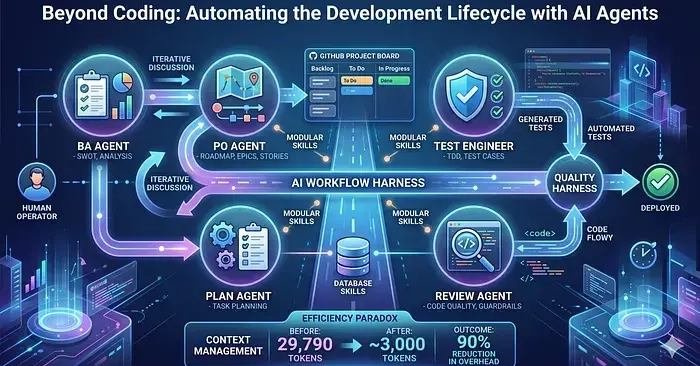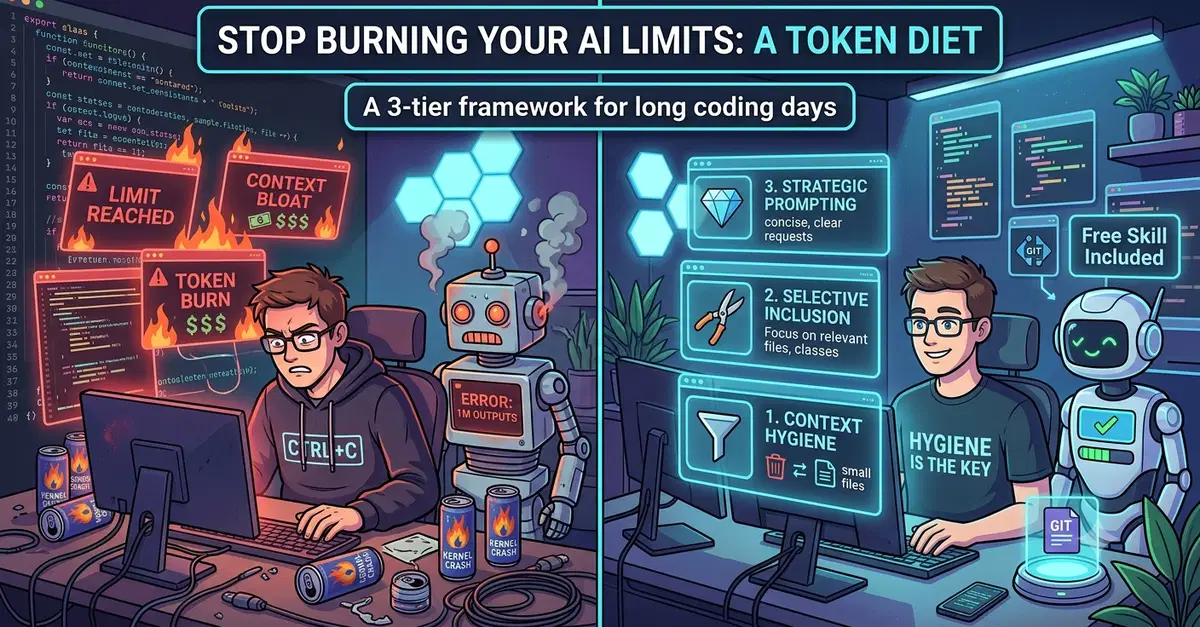
The right consistent process saves your time and energy and your AI collaborator's context window and token budget.
Many AI coding sessions follow the same arc. The first hour is great. The model is sharp, the code is clean, the direction is clear. By hour three, something has gone wrong. The model contradicts an earlier decision. The file structure it's generating doesn't match what exists. The test it writes assumes a pattern that was deprecated two features ago. You didn't change models. You didn't change your prompting style. What happened?
Context decay happened. The model's working memory filled up with recent work, and the architectural decisions from the beginning of the session got buried. The model is not stupid. It just forgot what it agreed to.
Context window management is the key to solving this problem, but I've found that shifting the problem even further left can make all the difference. My thinking has evolved to a strategy where I try to spend my cycles in creating a mental model of the problem we're solving in collaboration with the AI. Then I have the AI create an extremely detailed spec from that mental model that it can follow in context-bounded parallel sessions. If I do that up-front work well, the problem is broken into chunks small enough that context is never overwhelmed.