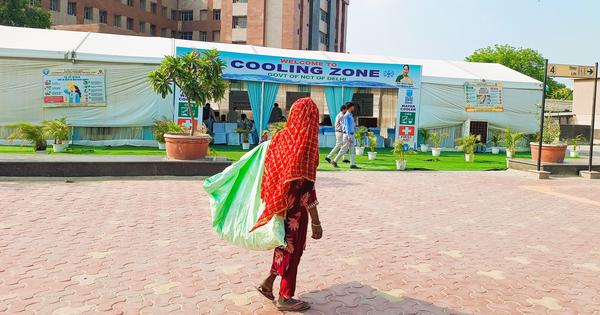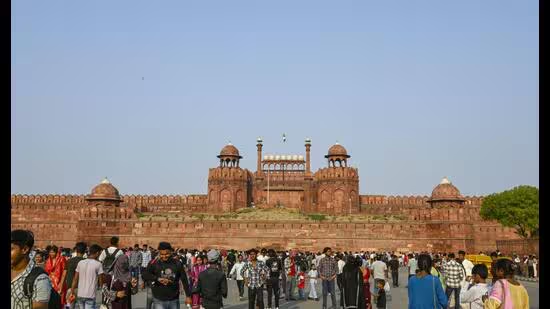
Special cooling zone set up near Red Fort by Delhi Government in New Delhi on May 10, 2026.
| Photo Credit: SHASHI SHEKHAR KASHYAP
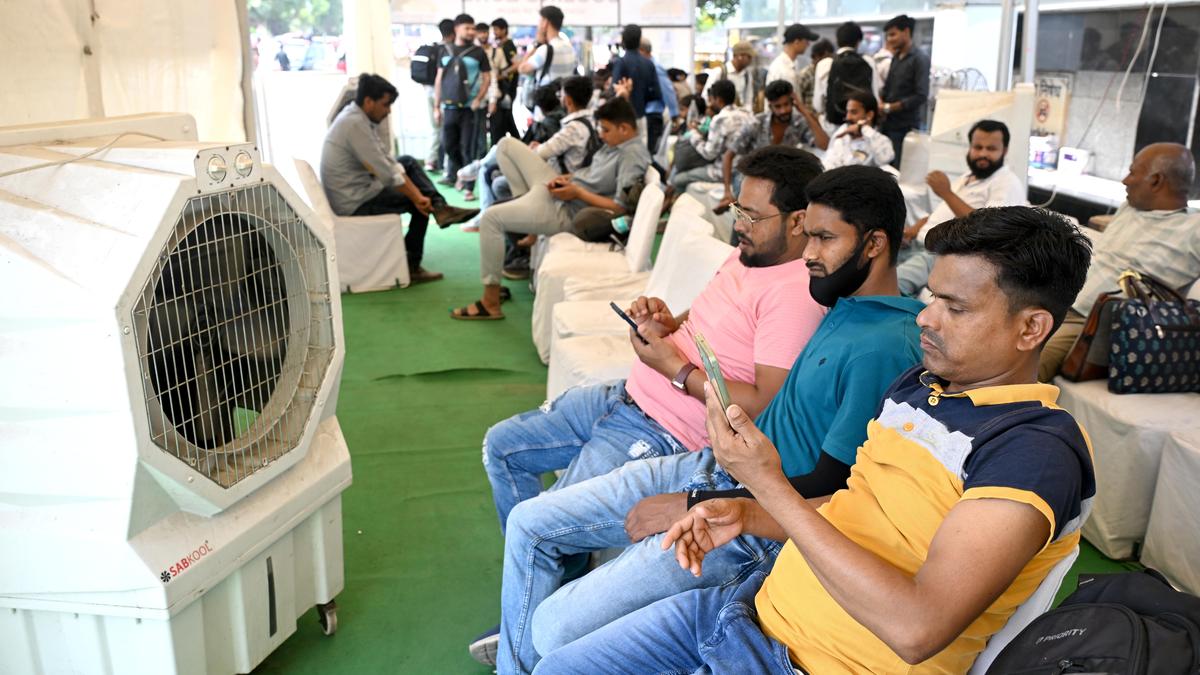
On a scorching May afternoon, an off-white temporary ‘Cooling Zone’ set up by the Delhi government near the Karampura bus stand offers a brief break from the heat, with a giant cooler, mist water sprayers, and khus screens on all four windows providing relief to passers-by.Ajit Srivastava, Controller, North Zone, Delhi Disaster Management Authority, said the zones currently host about 700–800 visitors daily, a figure estimated based on water cup distribution.Typically, two volunteers operate each zone during the day, while only one volunteer remains on duty at night. At present, 15 Cooling Zones are operational across the city.When The Hindu visited three such centres near Jama Masjid, Karampura bus stand, and GTB Nagar metro station, most visitors expressed satisfaction with the initiative. However, some pointed to the need for separate spaces for women and children, better monitoring.For Ravi Singh, 38, a bus driver, and Nar Singh, 44, his conductor, the zone in central Delhi has become a regular stop at the end of their route.“There are no restrooms, resting areas, drinking water facilities, or even a place to sit on any of our three designated routes, except for this Cooling Zone, which we came across while passing by,” Mr. Ravi said, adding that more such centres were needed across high-footfall areas.Given its proximity to a government hospital and the bus stand, the Karampura Cooling Zone regularly serves drivers and passengers.Manoranjan Kumar, Executive Magistrate, Patel Nagar, and in charge of the camp, said the temperature inside the Cooling Zone is about 12–13 degrees Celsius lower than outside.The Cooling Zone near the GTB Nagar metro station in north Delhi is a larger white tent that operates 24x7 and is equipped with five to six high-powered coolers, standing fans, and around 100 cushioned chairs. The unit also provides caps and gamchas (towels) to protect visitors from direct sunlight.Local autorickshaw drivers have found it to be a sanctuary. “We no longer have to sit in our boiling autos or carry multiple water bottles,” said Kapil Singh, 30.A government tanker ensures a continuous supply of drinking water, while a mobile ORS vehicle supports heat-stressed visitors.Higher footfallAt the Cooling Zone near the Jama Masjid metro station, footfall is higher than at the other centres, with approximately 1,000 visitors daily. It is equipped with coolers, standing fans, chilled drinking water, and ORS packets.However, caretaker Mumtaaz Ahmed acknowledged operational pressures. “Occasional security concerns involving unruly individuals persist, and maintaining order in high-footfall locations remains a challenge,” he added.(With inputs from Mahima Rao) Published - May 29, 2026 01:37 am IST