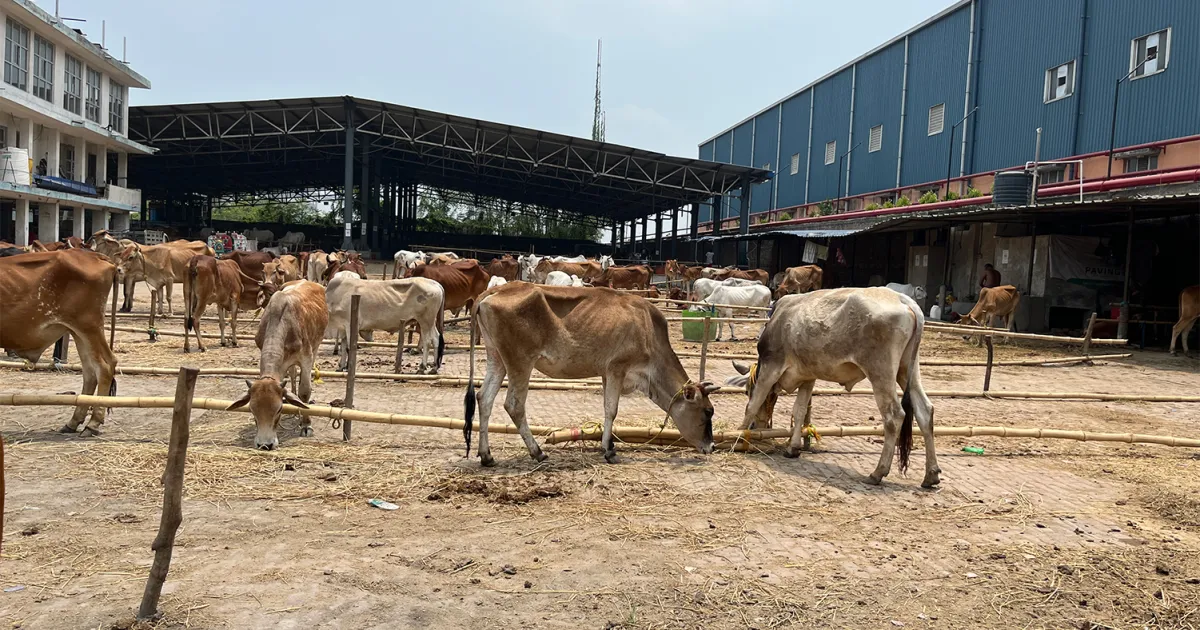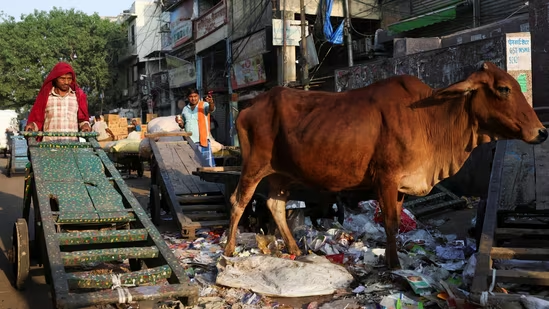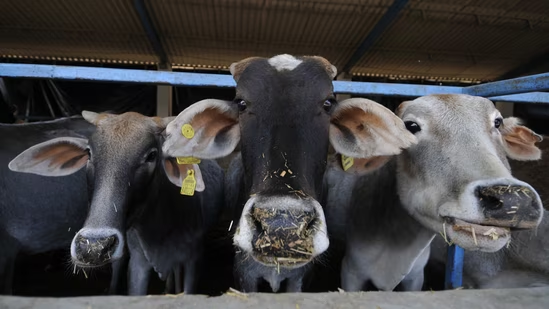
The recent discovery of hundreds of cow carcasses at a dumping site in Jaisalmer, Rajasthan, rightly triggered an outrage on social media. A few years ago, a similar incident involving the mass starvation deaths of cows was reported from Chhattisgarh. The new Bharatiya Janata Party (BJP) government in West Bengal issued a public notice on May 13, 2026, laying down stringent conditions for the slaughter of animals under the West Bengal Animal Slaughter Control Act, 1950.Last week, a two-judge Bench of the Calcutta High Court upheld the notice, observing that the conditions mentioned in the impugned order were issued in compliance with the High Court’s order of August 16, 2018. Consequently, no cow, bull, bullock or even buffalo can be slaughtered without first obtaining a “certificate of fitness” from government officials. Despite all the rhetoric, the notification permitted the slaughter of cows older than 14 years, which justifiably annoyed Hindutva supporters.Over 20 States in India have laws prohibiting cow slaughter. Only Arunachal Pradesh, Meghalaya, Nagaland, Sikkim, Tripura, Manipur, Mizoram and Kerala do not have such laws. But what is the efficacy of these laws? Have the stringent provisions and enhanced punishments introduced over the last 12 years helped preserve cows, or could such laws ultimately contribute to their decline? Whether cow reverence constitutes an essential Hindu practice and whether such laws violate the right to privacy are issues that require a ruthlessly objective assessment.Politics, faith and cowsCow protection has long been a central Hindutva issue and which explains the contents of the Bengal notice. Yet, the Congress too has historically benefited from cow protection campaigns. Viceroy Lord Lansdowne famously observed that the cow protection movement had transformed the Indian National Congress from “a foolish debating society into a real political power”. The cow and calf were the Congress’s symbols for decades. Whenever the BJP comes to power in a State, amending cow slaughter prohibition laws to make them more stringent — by enhancing punishments, criminalising possession of beef, and restricting the transport of cattle within or outside the State — becomes a priority. The Gujarat law of 2017 even provides for life imprisonment, and in 2025, three persons were reportedly sentenced to this extreme punishment, ordinarily reserved for heinous offences such as murder, terrorist acts and dacoity. True, cow reverence among Hindus is ancient and enjoys near-unanimous acceptance, though scholars such as D.N. Jha have disputed this assertion citing scriptural material. He pointed to instances in Dharmashastric traditions where Yajnavalkya appears to endorse the consumption of beef, and highlighted the inconsistencies and polymorphic nature of Indian dietary practices. He also argued that the “holy” status accorded to the cow was largely a much later development, and noted that several prescriptive Hindu texts classified cow slaughter as a minor sin (upapataka) rather than a major offence (mahapataka). Strikingly, even the prominent Hindutva ideologue Vinayak Damodar Savarkar held views that differed significantly from those of many present-day Hindutva activists. Consequently, cow reverence may not satisfy the parameters of the essential religious practices test which requires practice to be mandatory from the time of origin of a religion.In Mohd. Hanif Quareshi vs State of Bihar (1958), the Supreme Court of India rightly held that cow slaughter on Bakr-Eid is not an essential Islamic practice either. Several Muslim rulers had also restricted cow slaughter. Babur advised Humayun to do so in his will, Jahangir’s Edict No. 10 too prohibited animal slaughter on certain days out of respect for Hindu and Jain sentiments. The influential Deoband Islamic seminary too issued multiple fatwas discouraging cow slaughter. Even in the Constituent Assembly debates on November 24, 1948, Muslim members such as Z.H. Lari and Mohammad Saadullah insisted that “it is better to come forward and incorporate a clause in fundamental rights that cow slaughter is henceforth prohibited, rather than it being left vague in the directive principles.…”What cattle census data revealDr. B.R. Ambedkar eventually placed cow protection within the non-justiciable Directive Principles under Article 48 of the Constitution, following which several States enacted laws after Independence prohibiting cow slaughter. Yet, cattle census data suggest that the objective of preserving and increasing the cow population has not been achieved. West Bengal, for instance, was among the few States where culling and sale of cows and bulls were not entirely prohibited. By conventional logic, its cow population should therefore have been far lower than that of States such as Gujarat, Uttar Pradesh and Maharashtra. However, since 1951, the cow population in the country has grown by only 49.63%, while the buffalo population has risen by 153.8% and the female buffalo population by 161.9%. The figures speak for themselves: cows face the risk of decline.Ironically, the unprotected buffalo population has grown far more rapidly, especially in the so-called cow-belt States. A comparison of cattle growth rates shows that West Bengal, despite lacking stringent cow slaughter laws, has performed better than States with strict prohibitions. Even though male cattle are protected in these States, their population has declined sharply — by 38.3% in Gujarat, 31.4% in Maharashtra and 58.27% in Uttar Pradesh. In contrast, the decline in male cattle population in West Bengal was only 22.8%. The data also suggest that stringent prohibition laws may be pushing farmers in these States towards buffalo rearing, reflected in the declining cattle-to-buffalo ratio between 2012 and 2019. In West Bengal, by contrast, buffaloes remain insignificant in number and their population sharply declined in 2019. In 1997, the cattle to buffalo ratio was 144:1 but in 2019 it became 295:10. In Uttar Pradesh, the cattle-to-buffalo ratio fell from 105:100 in 1997 to 56:100 in 2019. West Bengal, despite lacking stringent prohibitions, witnessed a comparatively stronger growth in cow population and, therefore, mere laws will not protect cows.Cattle populations grow in a compounded manner because, unlike humans, a cow gives birth to its first calf at around three years and, to remain productive, must calve every 14-16 months. Calves born during a census period also mature and begin reproducing within a few years. According to growth forecasting models, if no cattle were culled or slaughtered and all calves survived except for natural deaths, the cattle population would increase by 2.5 to three times within five years — something that has never occurred in any State. Such growth is economically unsustainable, as farmers cannot support such numbers due to fodder scarcity.Undermining the farmerWhen farmers are legally allowed to exercise their judgment in culling unproductive cattle, they earn additional income to meet expenses such as weddings, children’s education and health care. According to simulation models, farmers in West Bengal earned nearly ₹35,000 crore between 2012 and 2019 from the lawful sale of cattle for slaughter, apart from their dairy income. Farmers in States with strict prohibition laws also appear to have sold cattle for slaughter as is reflected in declining cattle populations, but likely to have earned far less because of the illegality of such sales and the possibility of bribery and middlemen. In effect, these laws do not penalise butchers or beef consumers, but farmers themselves. West Bengal appears to have recognised this reality with Muslim refusal to purchase cows for Eid slaughter. In India’s agrosilvopastoral economy, livestock remains a vital component of rural livelihoods.In the privacy judgment of K.S. Puttaswamy (2017), Justice J. Chelameswar had observed “I do not think that anybody would like to be told by the State as to what they should eat or how they should dress or whom they should be associated with either in their personal, social or political life.” Justice Chandrachud said that what one eats is one’s personal affair and it is a part of privacy under Article 21, i.e., right to life and personal liberty In view of the politicisation of the issue, Muslims in Bengal prudently refrained from cow slaughter during Eid. One hopes that this will promote social harmony and counter communal hate campaigns. Maulana Arshad Madani, president of the Jamiat Ulama-e-Hind (Arshad Madani faction), has also called for the cow to be declared the national animal. The first writer of this article, though not a veterinary expert, believes that Muslims across India should support a central law banning cow slaughter and imposing stringent punishment, especially on those who sell cows for slaughter.Faizan Mustafa is Vice-Chancellor, Chanakya National Law University, Patna, Bihar. Abdul Samad is Former Dean, Mumbai Veterinary College. The views expressed are personal
Contradictions within India’s cow protection regime
Politics and sentiment continue to overshadow the realities of cattle preservation in India
TL;DRAI
India's cow population grew just 49.6% since 1951 vs. 153.8% for buffalo, despite 20+ states banning slaughter, some with life imprisonment penalties. States with the harshest laws post the steepest cattle declines — Uttar Pradesh -58%, Gujarat -38% — and a measurable farmer shift toward unprotected buffalo rearing.
1,390 words~6 min read