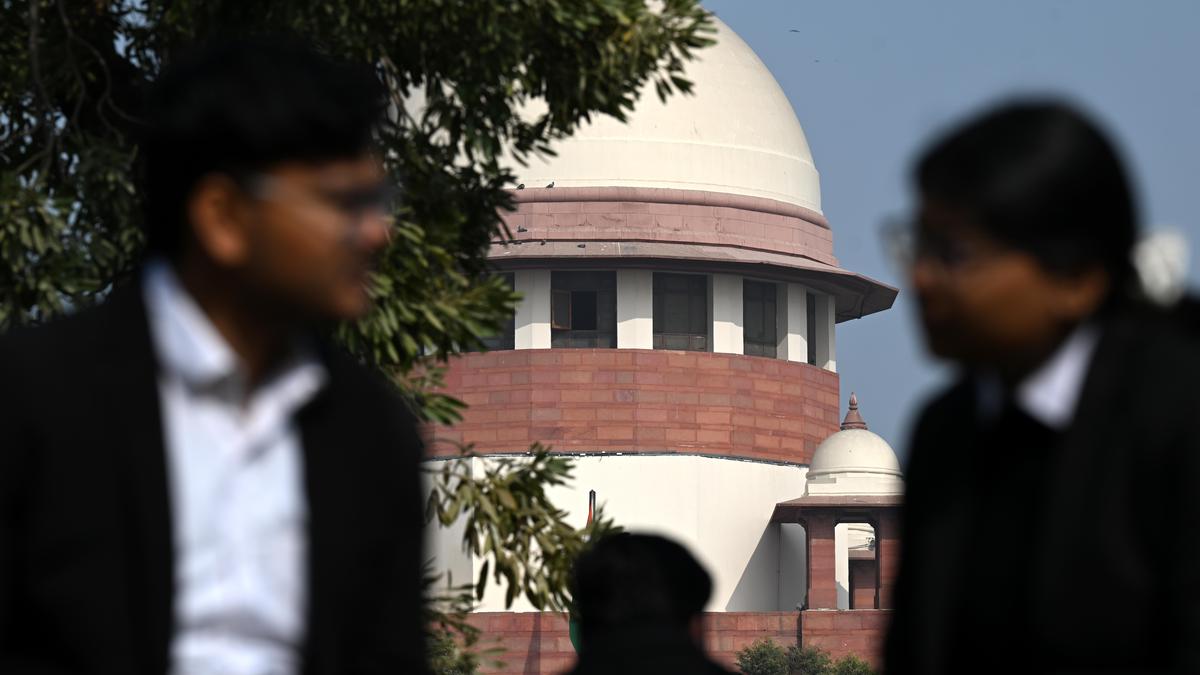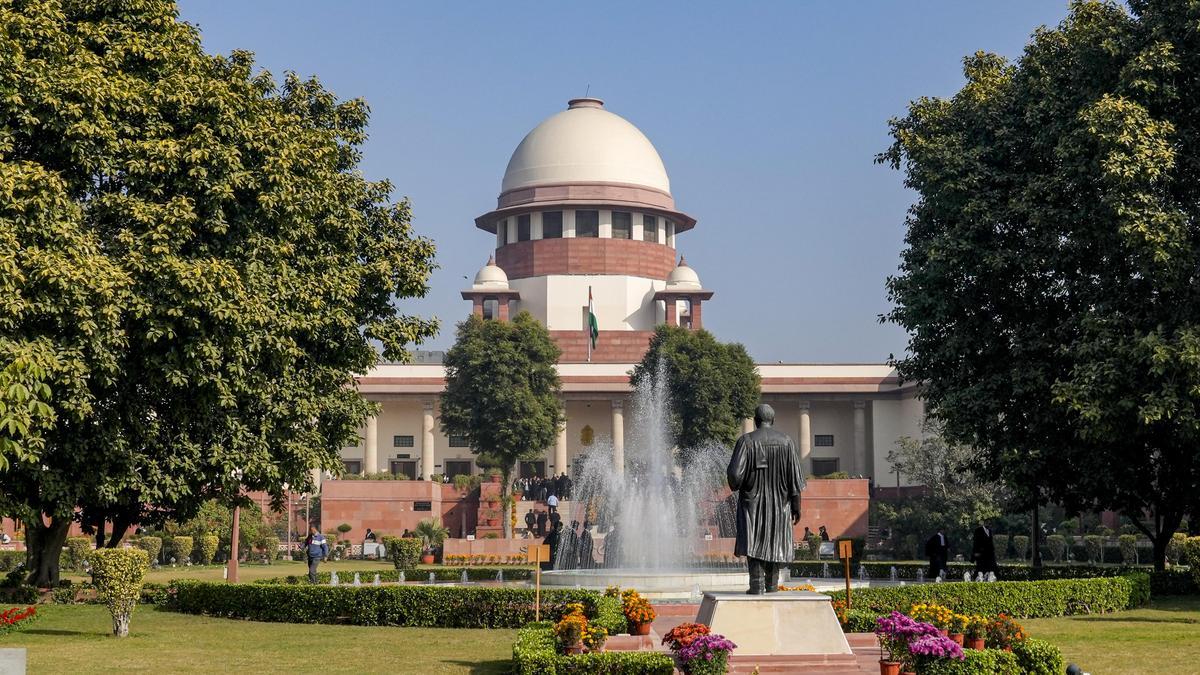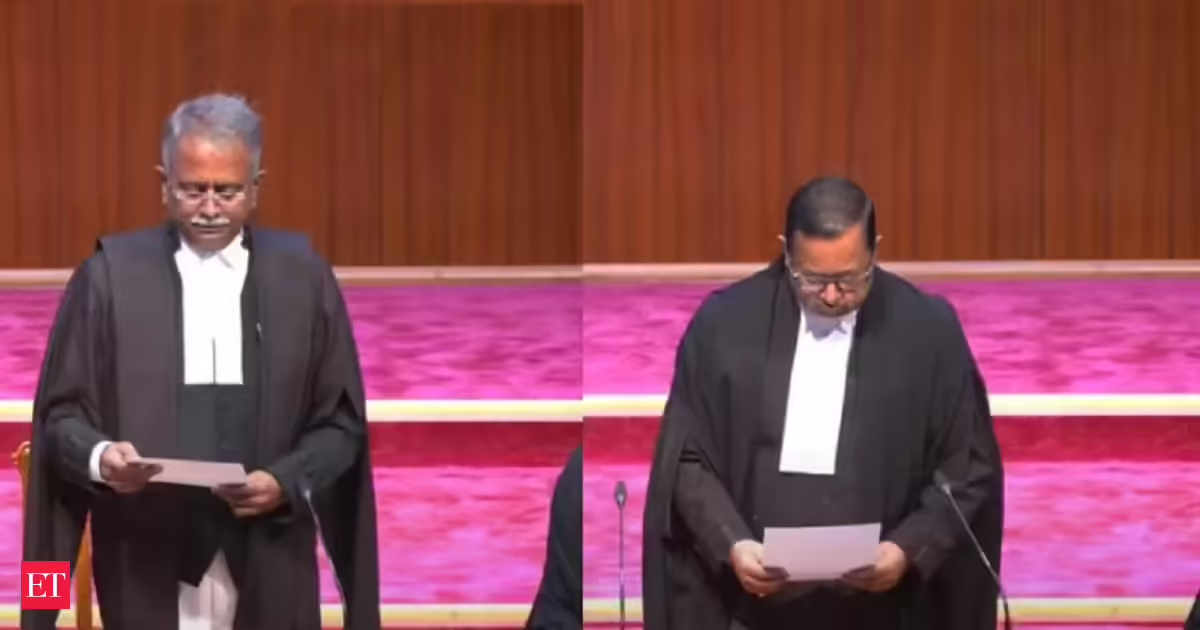
On May 17, the President promulgated an ordinance increasing the sanctioned strength of the Supreme Court from 34 to 38 judges. The move came just days after the Union Cabinet approved the Supreme Court (Number of Judges) Amendment Bill, 2026, stating that the addition of four judges would enable the top court to facilitate “speedy justice”. On May 27, the Supreme Court Collegium recommended the elevation of four High Court Chief Justices and senior advocate V. Mohana as judges of the top court. According to the National Judicial Data Grid, pendency before the SC currently stands at 93,966 cases. Is increasing the top court’s strength an effective way to reduce pendency? Prashant Reddy T. and Swapnil Tripathi discuss the question in a conversation moderated by Aaratrika Bhaumik.In Focus podcast | Is increasing the Supreme Court’s sanctioned strength an effective way to reduce pendency?
Was the ordinance route necessary to increase the top court’s sanctioned strength?Prashant Reddy: No. With Parliament set to convene within weeks, the government could easily have introduced the proposal through the ordinary legislative process. In any event, previous Bills increasing the sanctioned strength of the top court have often passed with minimal debate. In fact, in 2009, the government reportedly introduced a similar measure through a money Bill owing to its numerical disadvantage in the Rajya Sabha. Resorting to an ordinance for a measure of this nature deepens institutional scepticism and fuels unnecessary speculation about the motives of the move.