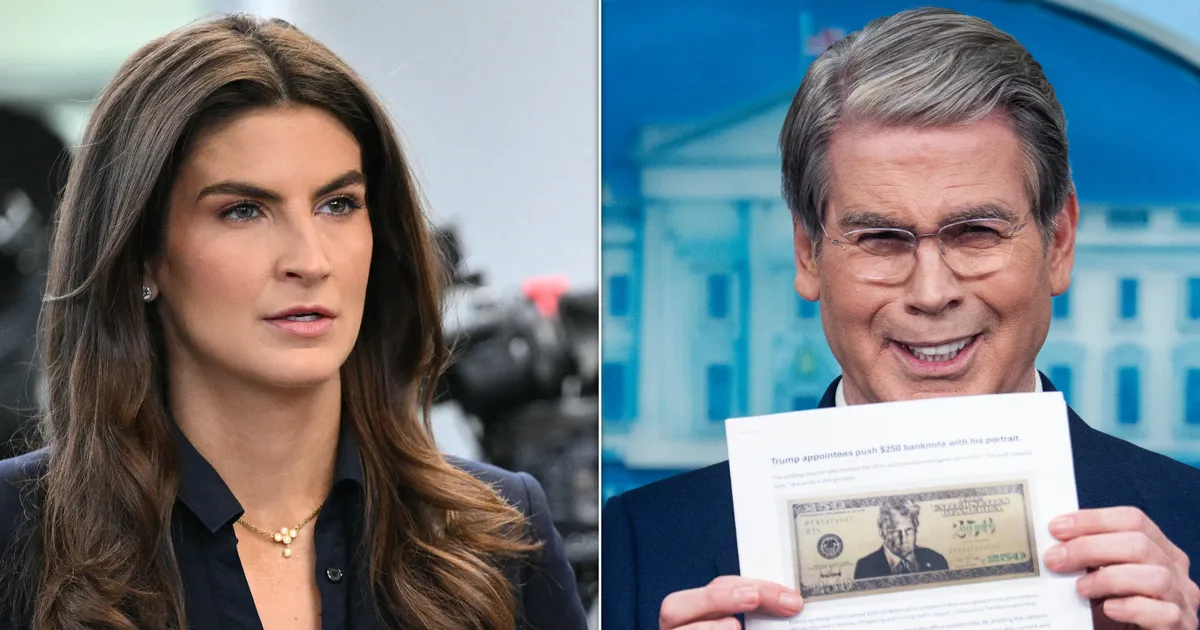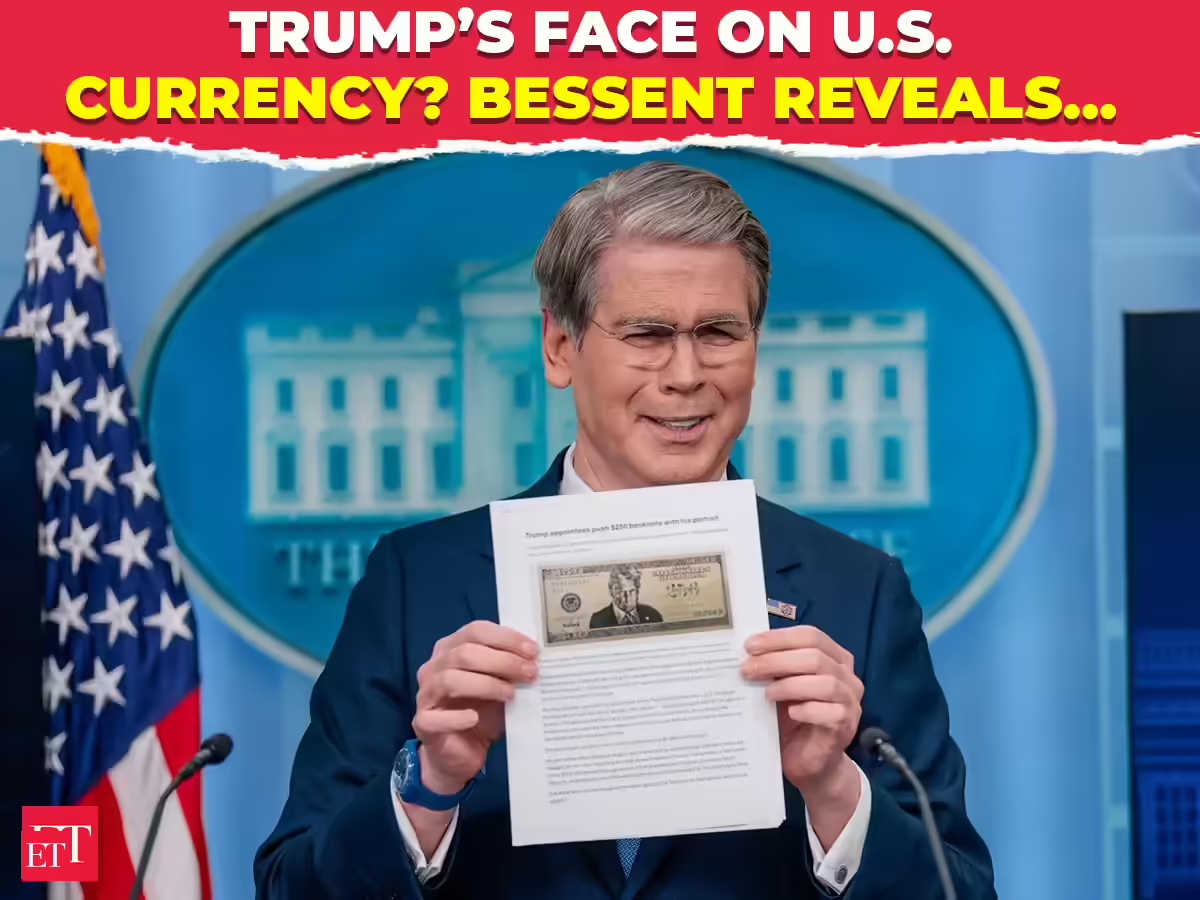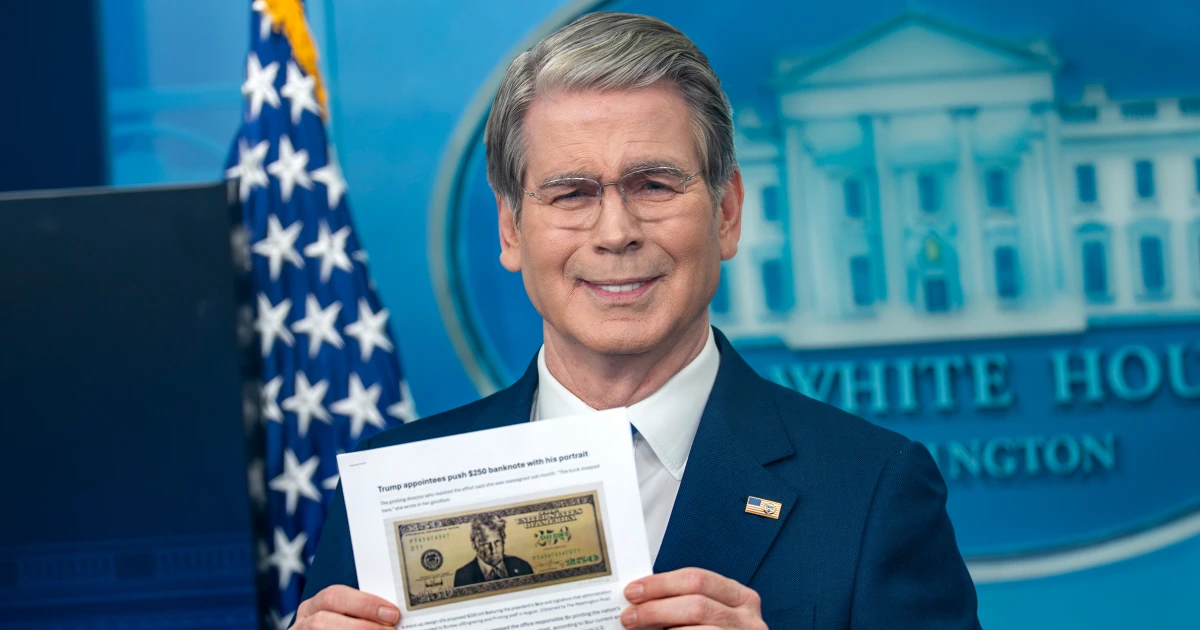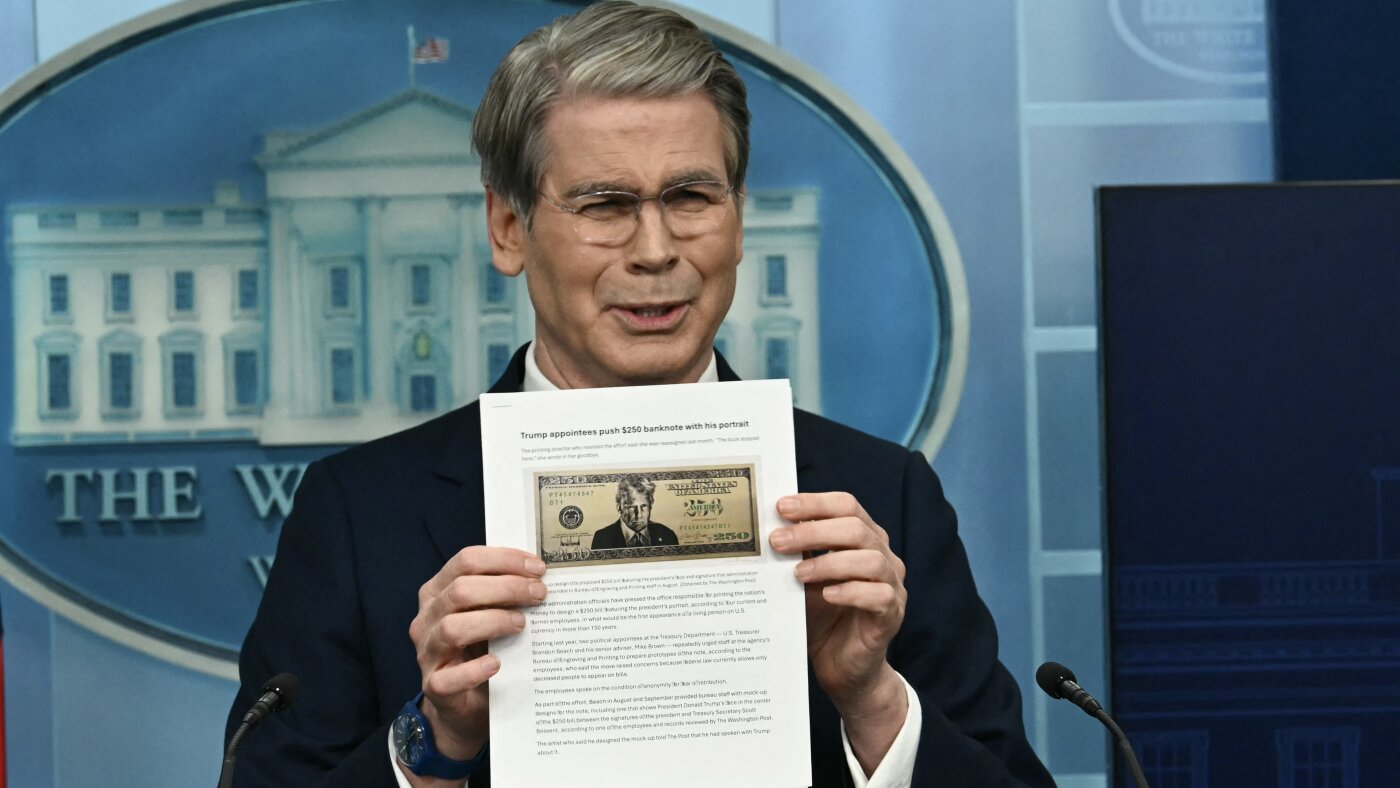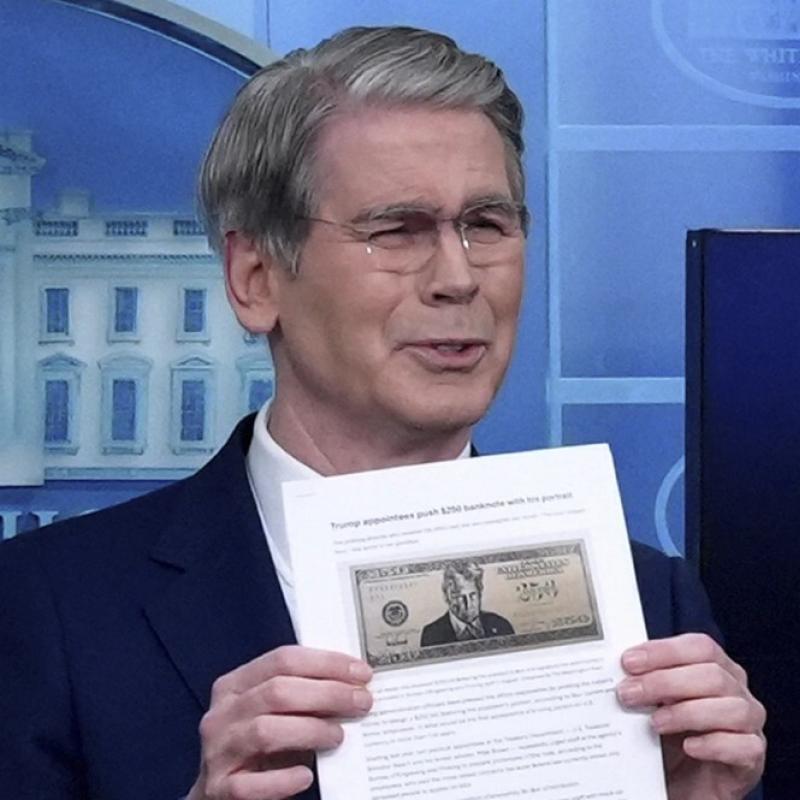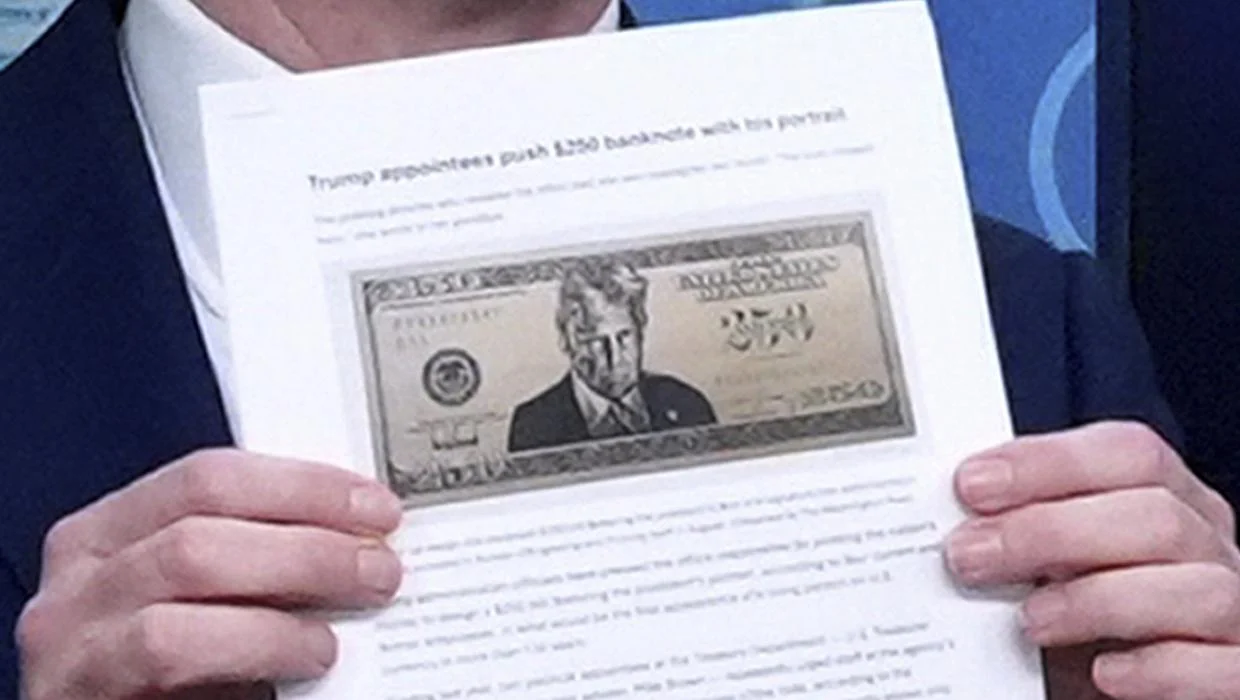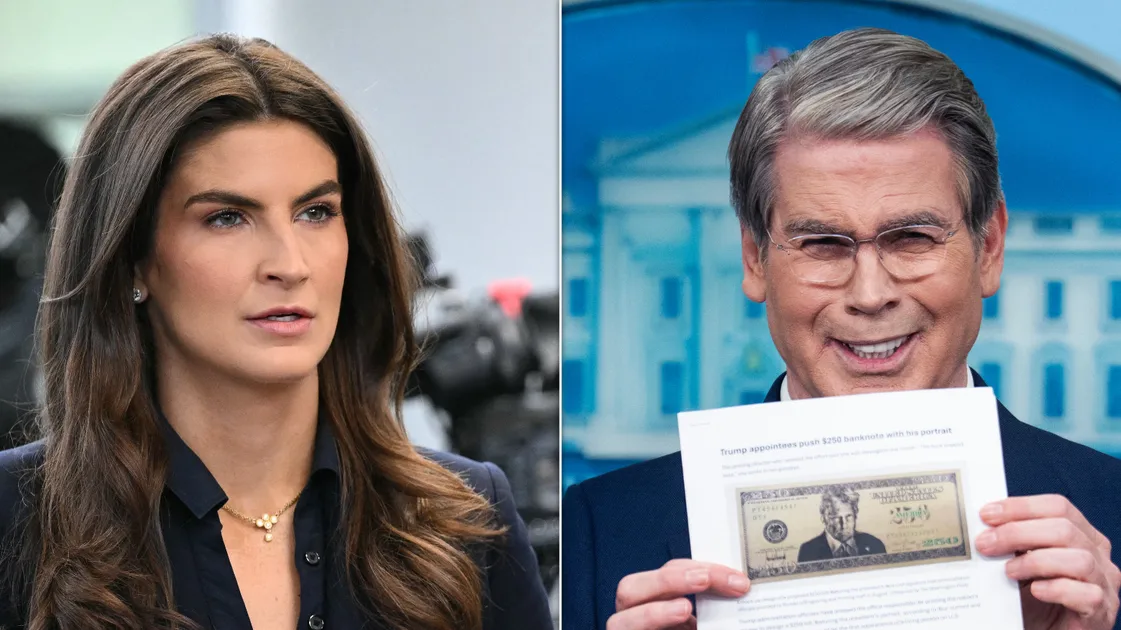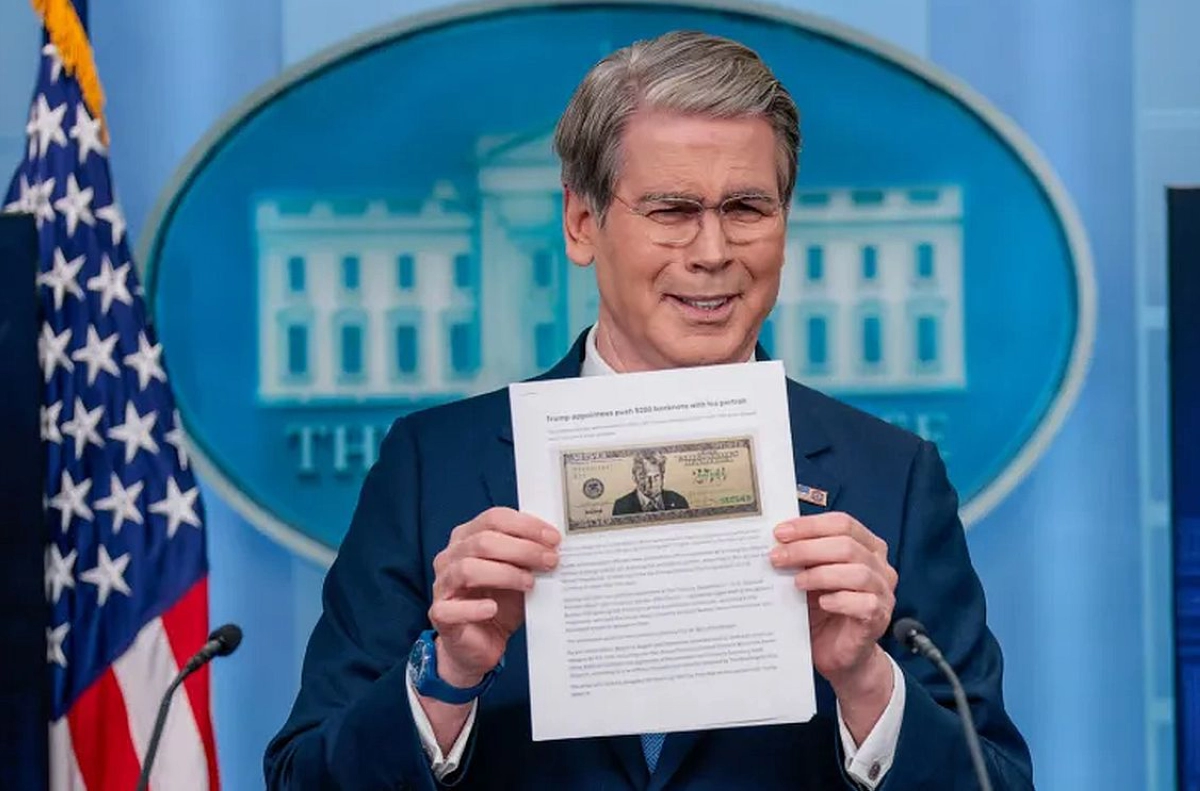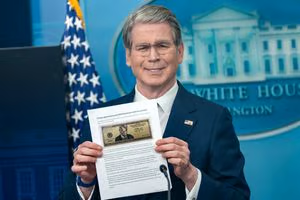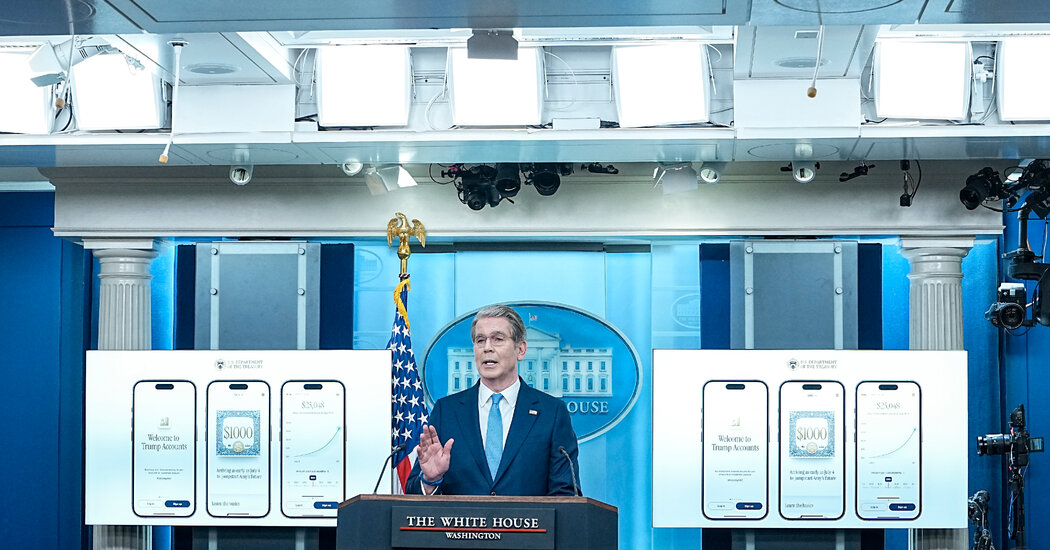
On the idea of a $250 note bearing Trump’s face, Bessent said that the Treasury needed to be ready for any possible legislation from Congress. As to the merits of such a project, the Treasury secretary said he did not see anything wrong with having Trump on the currency to honor the country’s 250th birthday.Bessent took a dig at Gov. Gavin Newsom of California when asked about his idea of imposing a 100 percent tax on anyone who take money from Trump’s “anti-weaponization” fund. “There’s no cure for stupid,” Bessent said of Newsom, who has become a personal nemesis.Bessent said that he believes inflation will fall after the Iran conflict is over. He also said that he had his first breakfast today with Kevin Warsh, the new chair of the Federal Reserve, and that he is confident that Warsh will balance inflation and growth at the central bank.ImageCredit...Haiyun Jiang/The New York TimesAt the White House press briefing, Treasury Secretary Scott Bessent predicted that oil and gas prices could “come down very quickly” after the Iran war ends, noting that “the oil market is going to be very well supplied on the other side of this.” But he would not say whether deal to end the war was nearing completion, or whether it would include sanctions relief for Iran.Bessent deferred a question about a newly created “anti-weaponization fund,” which could allow the Trump administration to dole out $1.8 billion of taxpayers’ money to the preident’s allies and supporters, to the Department of Justice.ImageCredit...Haiyun Jiang/The New York TimesTreasury Secretary Scott Bessent said that Treasury has been preparing a mockup of a $250 bill bearing President Trump’s face to be ready in the event that Congress passes legislation allowing the face of a living person to be on U.S. currency. He said that it cannot happen without an act of Congress.VideoCreditCredit...Associated PressInflationPrices in the U.S. are rising at the fastest pace in years.ImageCredit...Vincent Alban/The New York TimesA measure of inflation closely watched by the Federal Reserve accelerated in April to a three-year high, reinforcing the central bank’s budding support to consider raising interest rates if price pressures do not ease.The Personal Consumption Expenditures index rose 3.8 percent from the same time last year. It was the fastest annual pace since May 2023, when the Fed was in the midst of raising rates to tame a burst of inflation that had emerged in the wake of the pandemic.A measure of underlying inflation that strips out volatile food and energy prices also notched a multiyear high. That measure, “core” inflation, increased at an annual pace of 3.3 percent, the fastest since November 2023.On a monthly basis, inflation rose slightly less than expected. Overall prices jumped 0.4 percent and those excluding food and energy prices ticked up 0.2 percent.That was a welcome reprieve, but on the whole, the latest data, which the Commerce Department released on Thursday, underscored the difficult position that officials at the central bank are now in with price pressures intensifying because of the war with Iran.This month, the Consumer Price Index, another inflation gauge, also showed that consumer prices had risen at the fastest pace since May 2023.Consumers have started to moderate their spending in the face of resurgent prices, according to Thursday’s data. Spending, once adjusted for inflation, rose just 0.1 percent in April, as incomes flatlined and the savings rate dropped to the lowest level since June 2022.The Commerce Department also revised lower its assessment of growth in the first quarter, noting that the economy expanded 1.6 percent on an inflation-adjusted basis compared with its initial estimate of 2 percent.The war, which began in late February, has severely disrupted global energy markets, raising the urgency of a deal between President Trump and Iranian officials. No agreement has emerged, however, and renewed hostilities in recent days have dimmed hopes that a crucial shipping pathway, the Strait of Hormuz, will be reopened soon.The Fed typically ignores or “looks through” supply shocks because they historically tend to affect prices only temporarily. John C. Williams, president of the Federal Reserve Bank of New York, appeared to back this approach in remarks on Thursday. He acknowledged that continuing supply chain disruptions caused by the war were worrisome, but he estimated that the impact on inflation could peak in a few months.But other officials have begun to question whether the look-through approach is the right one, given that the war with Iran is the fourth shock in five years to push inflation further from the Fed’s 2 percent target. The U.S. economy has weathered a series of events that have raised prices, including the Covid-19 pandemic, Russia’s invasion of Ukraine and Mr. Trump’s global trade war.Since 2021, inflation has been higher than the central bank would like. Expectations about inflation in the next five or 10 years still reflect confidence that the central bank will eventually succeed in bringing inflation down to 2 percent. But the longer inflation stays above that target, the more likely that confidence could begin to ebb.With the labor market on firmer footing than just a couple of months ago, more Fed officials have embraced the possibility that rates may need to rise to get inflation fully under control.“I want to be clear about my risk assessment: The risks remain tilted toward higher inflation,” said Lisa D. Cook, a Fed governor, in remarks on Wednesday. “I am prepared to raise rates, if the expected disinflation does not appear in a timely manner.”That followed a speech last week from Christopher J. Waller, another governor, who made clear that he could “no longer rule out rate hikes further down the road if inflation does not abate soon.” That, he added, was “especially true if measures of inflation expectations, some of which have risen lately, show signs of becoming unanchored.”The specter of higher rates comes amid a leadership transition at the Fed. Kevin M. Warsh, whom Mr. Trump picked to replace Jerome H. Powell as chair, was sworn in to the top job at the Fed last week. Mr. Trump has long berated the Fed for not lowering rates quickly enough.Mr. Trump has hinted he will try to ease up on his pressure campaign now that Mr. Warsh is at the helm. At Friday’s swearing-in ceremony, which was held at the White House for the first time since 1987, the president said he wanted Mr. Warsh to be “totally independent.”But that leeway could quickly disappear, especially if the Fed begins to more seriously consider rate increases, which would make all types of borrowing more expensive.Traders in federal funds futures markets expect the central bank to eventually raise rates early next year.More Administration NewsA judge declines, for now, to block mail-in voting changes ordered by Trump.ImageA voter casting a mail-in ballot in June.Credit...Rachel Wisniewski for The New York TimesA federal judge on Thursday declined, for the moment, to block an executive order President Trump signed in March targeting mail-in voting and directing the creation of a federal database of citizens to help guide states on voter eligibility.The decision allows the Trump administration to continue pursuing measures to insert the federal government into the administration of elections that are otherwise managed by the states. The administration has proposed changes at the Postal Service and having the Homeland Security Department compile state-by-state voter lists using Social Security data and other information drawn from federal databases.In a 26-page opinion, Judge Carl J. Nichols wrote that it was premature for the court to intervene. He found that the Trump administration had yet to carry out much of the order, leaving most of the harms predicted by the lawsuit still hypothetical. He added that if evidence emerged that the changes were burdening state officials or sowing confusion, the Democratic-aligned groups who have sued to block the order could return to court.“The court recognizes that the Postal Service may ultimately issue a final rule that directly affects plaintiffs or their members, or that the government may develop state citizenship lists that omit specific individuals due to particularized flaws,” he wrote. “Plaintiffs may, of course, renew their motions if and when those future actions occur.”The ruling came as the Trump administration has moved aggressively since last year to compile voter roll data at the national level over the objections of state officials and voting rights organizations. Several federal judges have struck down efforts by the administration to request voter information from the states.A group of Democratic organizations and lawmakers had sued to stop the executive order, arguing that it was a violation of federal privacy law to compile a centralized database of eligible voters and also unlawful interference in state elections to circulate that data among local officials. The case combined three separate lawsuits brought by groups including the N.A.A.C.P., the League of United Latin American Citizens and the Democratic Senatorial Campaign Committee, and included Senator Chuck Schumer and Representative Hakeem Jeffries, the Senate and House minority leaders.“Mail-in voting is safe and secure, a hallmark of our free and fair elections,” Mr. Schumer said in a statement. “Trump’s order is not about election integrity. It is voter suppression, plain and simple.”During a hearing in May, lawyers representing the Democratic groups told Judge Nichols, a Trump appointee, that the risks of abuse were significant. They painted a dark picture of the coming election season, arguing that the Trump administration appeared intent on injecting chaos into the system and empowering low-level officials to act on the administration’s behalf in policing elections.The groups emphasized that the federal voter list, if created, would most likely be prone to outdated or faulty data, and warned that local officials could use the list to improperly disenfranchise legal voters. They also warned that the order would direct the Postal Service to work outside its legal mandate, forcing it into new a role monitoring voting.In court, the Justice Department appeared to partially acknowledge those concerns, telling Judge Nichols the lists were seen more as reference material for state election boards and acknowledging they would not be an exhaustive or up-to-date registry of valid voters.Stephen M. Pezzi, a Justice Department lawyer, said the government was still working to evaluate the order and had not started gathering the data it envisioned. Mr. Pezzi agreed to a request from Judge Nichols to inform the court if the government began taking steps to assemble the lists.But Todd Blanche, the acting attorney general, appeared to contradict that position during Senate testimony in May, indicating the Justice Department was actively working with the White House to carry out the order.Asked about Mr. Blanche’s testimony and the government’s progress, a spokesman for the Justice Department said, “The department has statutory authority to enforce our nation’s election laws, including through requesting state voter rolls to screen them for ineligible entries.”“It’s working with other agencies within the administration to implement the goals,” he said. “I think they are appropriate goals to make sure that we have free and fair elections, to make sure that those are implemented, whether it’s the D.O.J. that needs to implement them or some other federal agency.”In the order on Thursday, Judge Nichols appeared inclined to give the administration the benefit of the doubt until there were more concrete details about the lists. He wrote that it remained to be seen what state election officials might use them for, but that it was not clear the federal government’s compiling them was inherently unlawful.“The order does not mandate any action by a state once a list has been transmitted to it, and in any event, no infrastructure for compilation or transmission of the lists has been established; no list has been created or transmitted; and no state has taken any action with respect to any list,” he wrote.When Mr. Trump signed the executive order in March, he mused that the order could face legal challenges, but said he thought it was “foolproof.”“You may have to find a rogue judge,” he said while showing the signed order to journalists. “That’s the only way that can be changed.”The order requires the Postal Service to take its first steps to complying by May 30, issuing notice by that day of a rule-making process to adopt the changes.Mr. Trump has also called on the Postal Service to deliver only ballots of voters deemed eligible. Postal and election experts denounced that as an illegal overstep of presidential authority.Dell gets a $9.7 billion defense contract, and Trump’s portfolio stands to benefit.ImageMichael and Susan Dell pledged in December to donate $6.25 billion to kick off the “Trump accounts” program that creates special investment savings accounts with tax benefits for American children.Credit...Doug Mills/The New York TimesPresident Trump earlier this year purchased more than $1 million in the stock of Dell Technologies, a transaction that is drawing scrutiny after the Pentagon this week announced a $9.7 billion contract with the Texas-based computer company.The sequence of events illustrates the complications that emerge when a sitting president continues, even if through financial advisers, to buy and sell publicly traded stocks like Dell.In the first three months of this year, Mr. Trump’s investment portfolio executed more than 3,600 trades, a mandatory disclosure form shows, buying and selling shares in big banks, manufacturers and tech giants, among other companies.The document shows a Dell stock purchase of $1 million to $5 million in February, and smaller amounts in the months since. (The document includes ranges in some cases, rather than specific amounts.)The Trump family has argued that the president does not personally control the trading, saying these are automated trades placed by outside brokerage firms.“This structure was intentionally designed to maintain a clear separation between President Trump and the independent third-party investment managers overseeing the accounts and avoid even the appearance of any conflict of interest,” the Trump Organization said in a statement earlier this month.But this Dell stock purchase draws new attention to the inherent problems precipitated by the Trump family’s widespread investments since Mr. Trump returned to the White House. They include the family’s move into military drone manufacturing, cryptocurrency, mining and the predictions market, even as Mr. Trump oversees policy and government purchase decisions for those same sectors.While outside advisers handle his financial accounts, they are not in a traditional “blind trust.” Rather, the president can still be aware of the moves for his investments.The White House did not immediately respond on Thursday to a request for comment.Mr. Trump also went out of his way in February to praise Dell Technologies and its founder, Michael Dell, at an event in Georgia that took place nine days after Mr. Trump’s purchase of more than $1 million in Dell stock.The Georgia event took place after Mr. Dell and his wife pledged in December to donate $6.25 billion to help kick off the so-called Trump accounts program that creates special investment savings accounts with tax benefits for American children.At the event, Mr. Trump celebrated the donation by the Dell family and went on to endorse their computer products. “Go out and buy a Dell computer,” Mr. Trump said.The Pentagon contract, announced on Wednesday, gives Dell Federal Systems, a subsidiary of Dell, the right to oversee purchases across the Defense Department for Microsoft software, services and licenses — a “blanket purchase agreement” that the government estimated is worth $9.69 billion.As president, Mr. Trump is exempt from a conflict of interest law that prohibits federal employees from taking actions in their official roles that benefit their own financial interest. He also is not required, as other federal workers generally are, to sell off financial holdings that might create a conflict of interest.Robert Weissman, co-president of Public Citizen, a nonprofit group that has criticized the Trump family’s continued business activity, said the Dell stock purchase provides further evidence of the conflicts that have emerged in Mr. Trump’s second term.“It is impossible to know where personal profit making ends and policymaking starts with this president,” Mr. Weissman said.
Trump Administration Live Updates: Bessent Faces Reporters in White House Press Briefing
The Treasury Secretary’s appearance comes as one measure of inflation accelerated to a three-year high, and as the administration’s handling of the economy threatens to exact a political price in the midterms.
2,643 words~12 min read