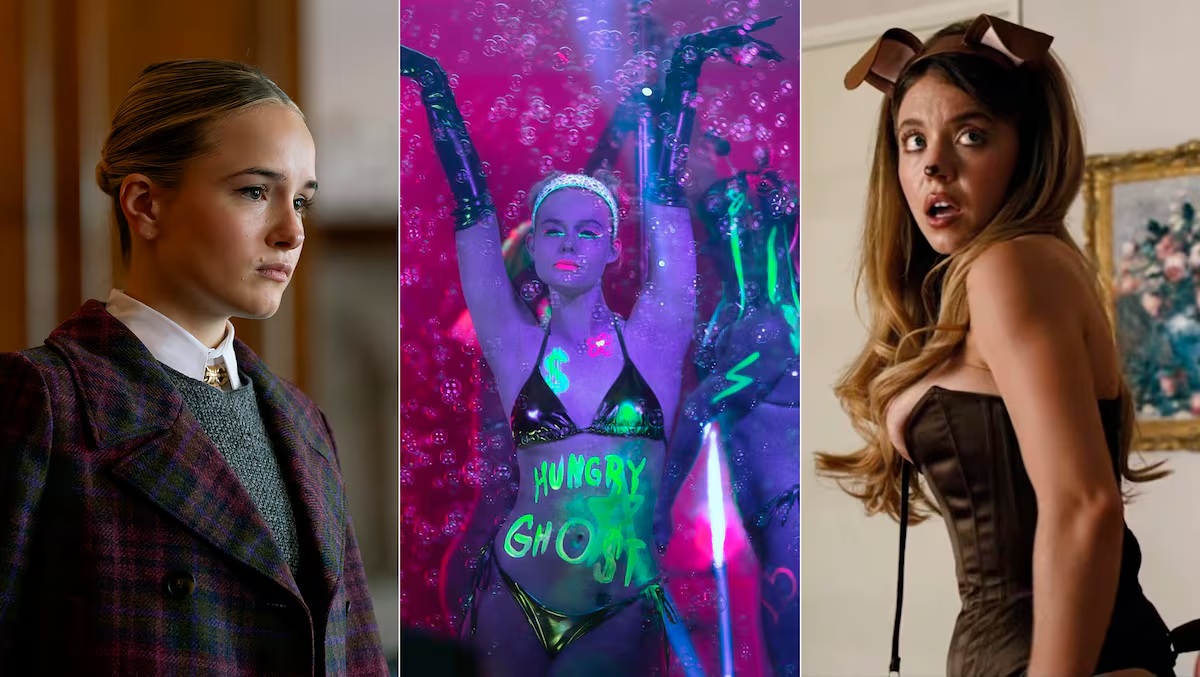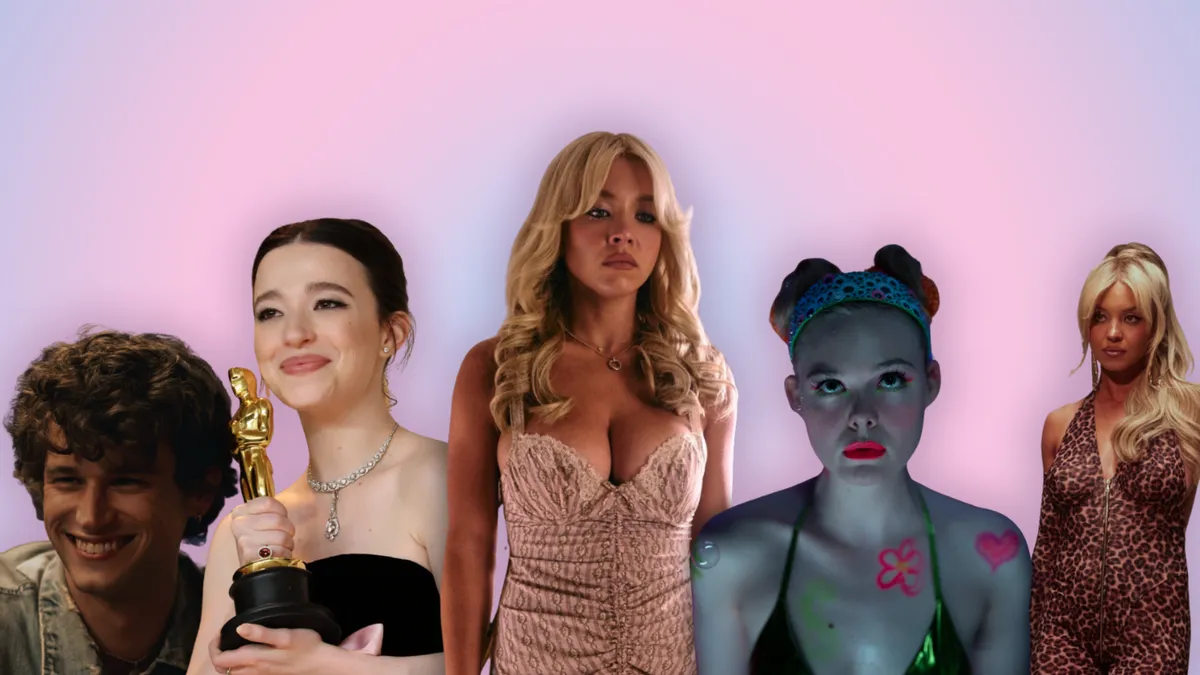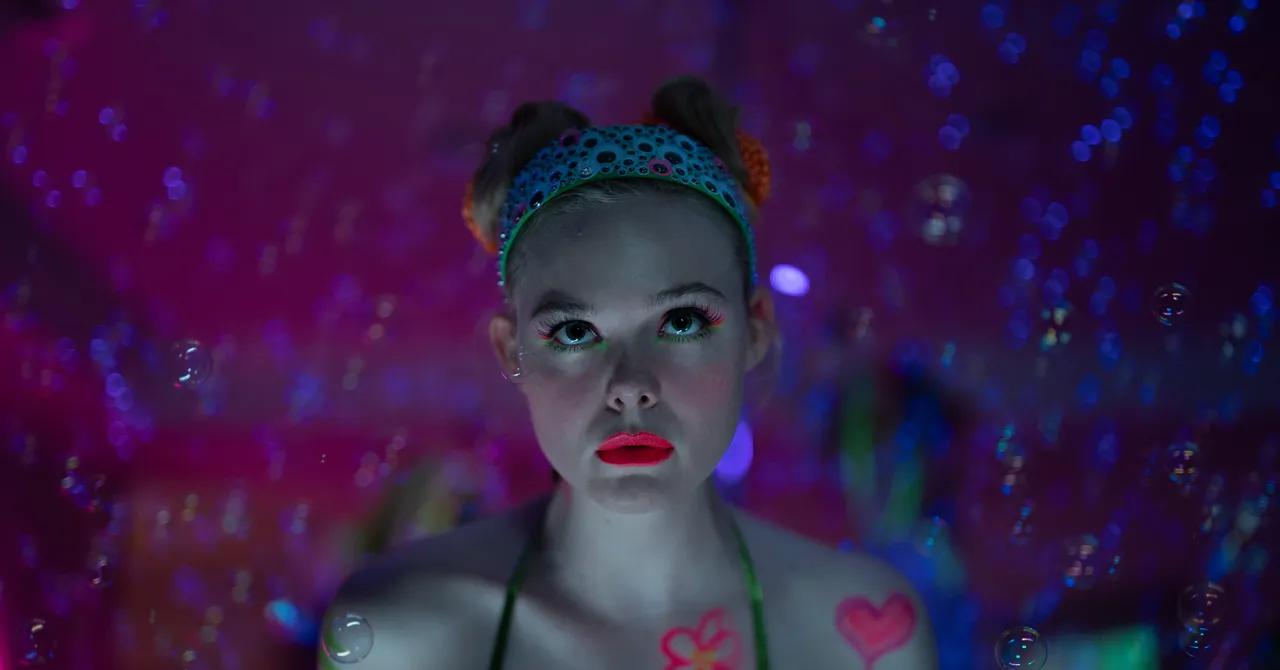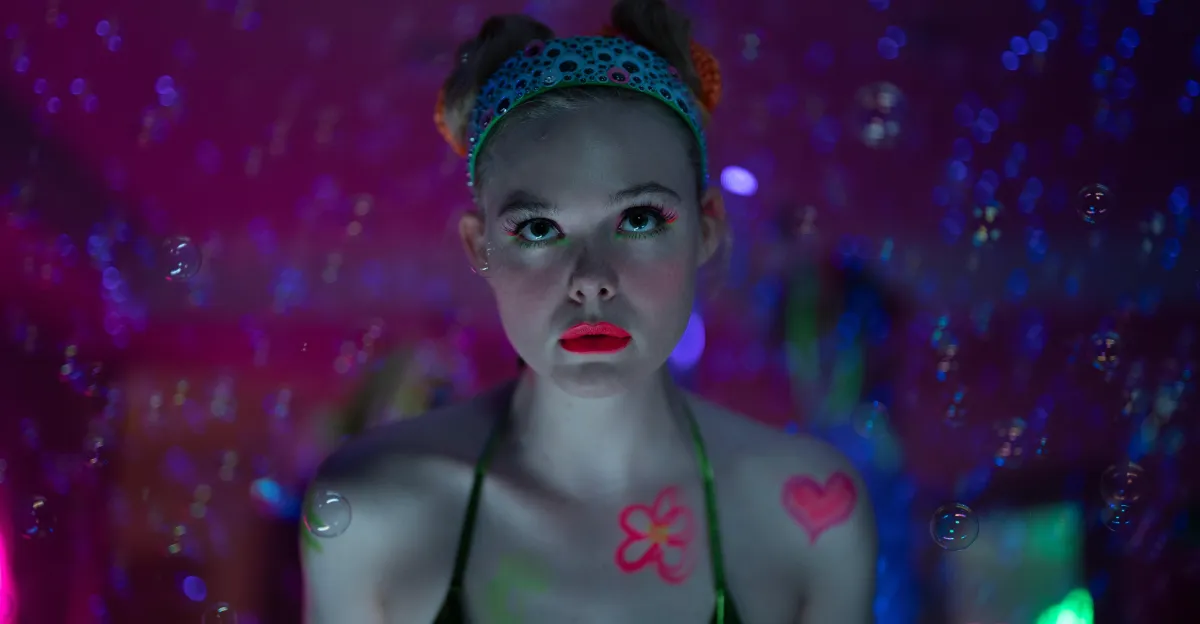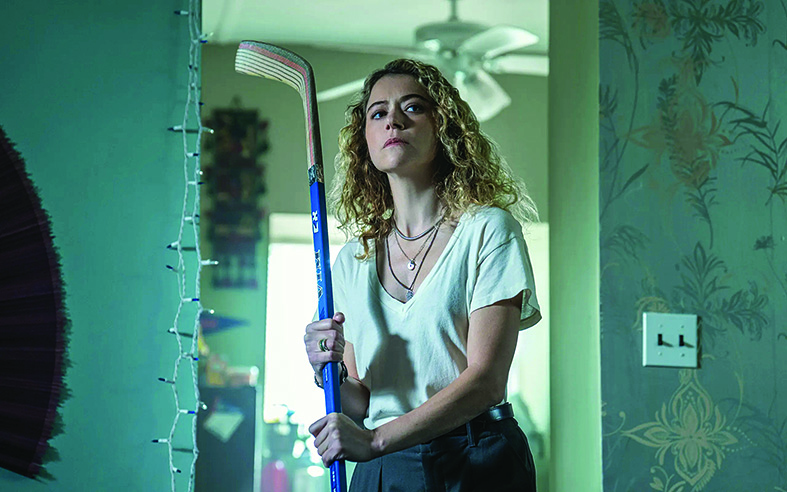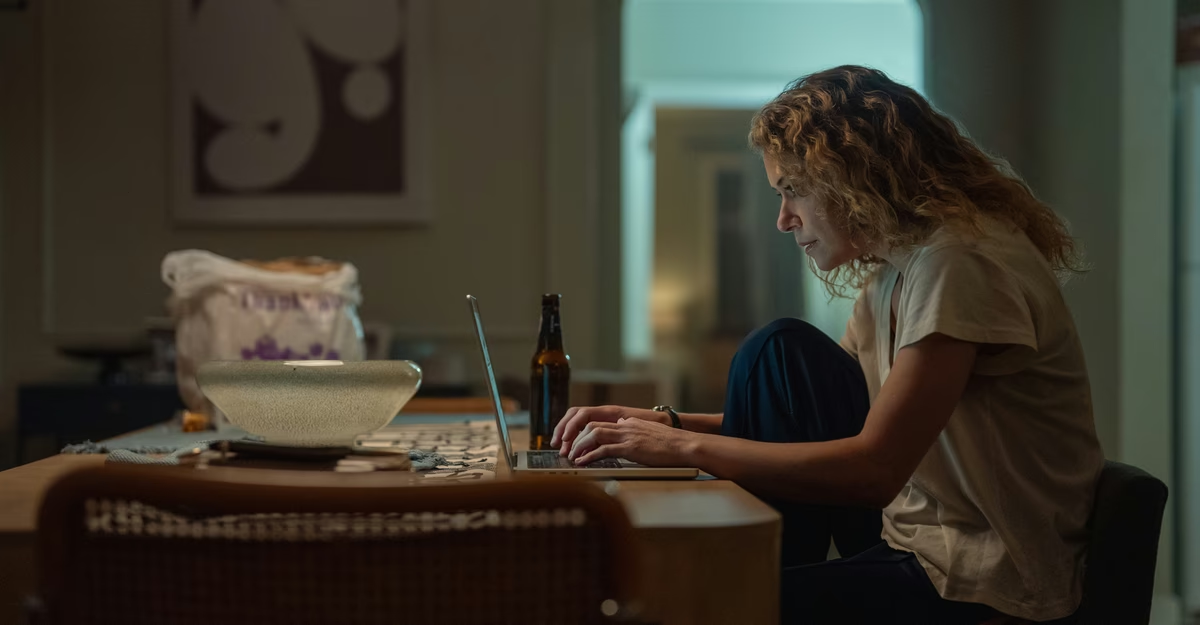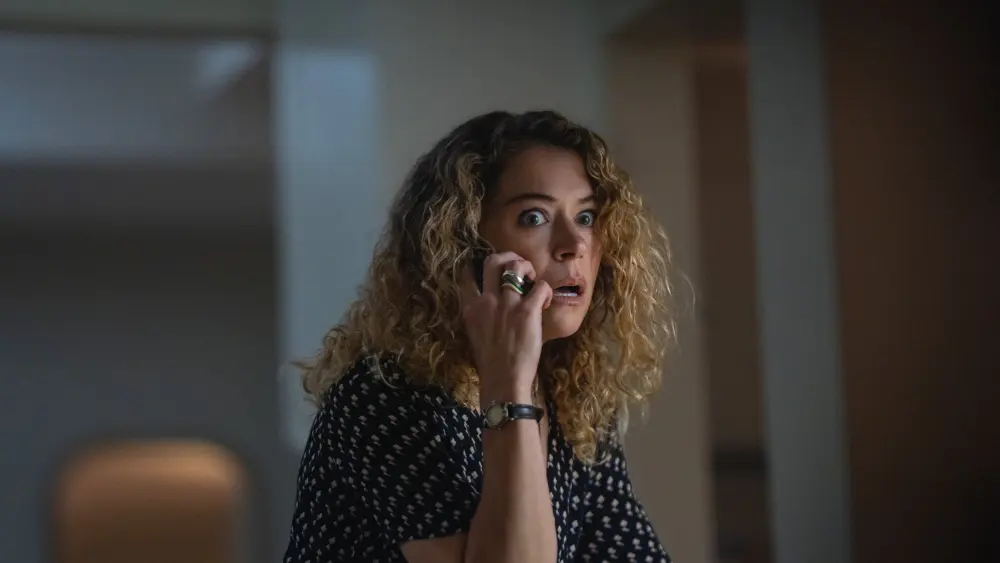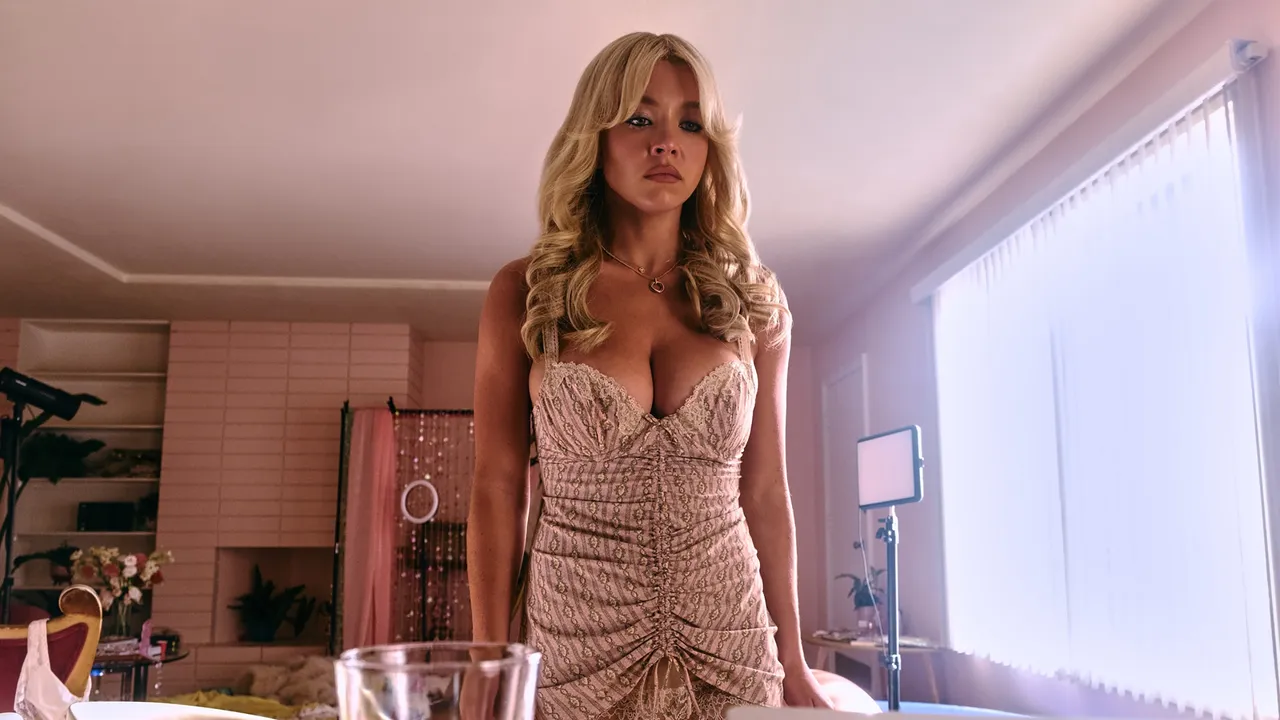
In the new Apple TV dramedy “Maximum Pleasure Guaranteed,” a divorced mother in the midst of an increasingly ugly custody dispute is revealed to be the perfect customer for web-based sex work. In the course of a single session, the harried Paula (played by Tatiana Maslany) gets a hot, younger guy to listen to her complain about her ex-husband, offer feedback on her home-decorating ideas, and coax her into a climax—all in a few short minutes. When Paula’s relationship with this camboy, named Trevor (Brandon Flynn), is inevitably brought up in the custody battle, Paula defends their chats in the relatable yet deflating terms of efficiency: Trevor’s companionship could be neatly scheduled between work tasks and parenting obligations. “Maximum Pleasure Guaranteed” doesn’t exactly break new ground in its depiction of online sex work; later, Trevor tries to scam Paula, and ends up dead, launching her on a search to find out what happened. Still, the show hinges on an under-acknowledged facet of the modern internet: it has made paid intimacy a thoroughly ordinary part of our lives.Notably, “Maximum Pleasure Guaranteed” is one of three shows tackling digital sex work this spring. The other two, “Euphoria” and “Margo’s Got Money Troubles,” both center on young women and the economic circumstances that push them toward adult content creation. “Euphoria,” now in its third season, treats the endeavor with the voyeuristic alarmism that its creator, Sam Levinson, has always brought to the series, the first two seasons of which followed a group of sexy-sad teens engaging in a wild array of risky behavior. But its portrayal of the subject is no more shallow or unrealistic than what we get from David E. Kelley’s lauded “Margo’s Got Money Troubles,” in which a nineteen-year-old single mom finds something akin to self-actualization by making sexually suggestive videos. In this respect, the two shows are flip sides of a very thin coin.“Euphoria” signalled more than once in its previous seasons that it aimed to tell a story about girls who grow up and grow apart. The current season, set five years after the girls’ high-school graduation, scatters its characters across California, then reunites them through their involvement in or proximity to sex work, which is posited as their generation’s prevailing vice. The show’s protagonist, Rue (Zendaya), whose drug addiction caused her to lose Jules (Hunter Schafer), the artsy love of her life, now finds her again in Los Angeles, living in a penthouse apartment paid for by a plastic-surgeon sugar daddy. Rue herself works at a strip club wrangling dancers, but harbors aspirations to “go legit” one day, and expresses unease at the compromises built into Jules’s setup. Across town, their former classmate Cassie (Sydney Sweeney) has become an adult model, and is seeking the aid of her former best friend, Maddy (Alexa Demie), who’s found a vocation in talent management, to boost her profile. Their friendship fell apart after Cassie began secretly dating Maddy’s ex-boyfriend, Nate (Jacob Elordi), and so the blurry nature of their resumed association—is Maddy her friend again, or just her “internet pimp”?—is one of the few sources of genuine tension in an anemic, meandering season.Much of the emotional potency of the show’s début season came from Levinson’s canny, perhaps even prescient, channelling of Zoomer doomerism. Multiple story lines channelled the anxiety that the internet may be uniquely bad for teen-age girls, who hooked up with suspect men, got catfished, and had their nudes leaked. Even a relatively positive plotline, in which a heavier girl named Kat (Barbie Ferreira) found a measure of sexual approval online that she couldn’t get from her peers at school by briefly dabbling in financial domination, was, at least from a parental perspective, horrifying.In Season 3, such perils are compounded by the economic malaise affecting Gen Z-ers in their twenties. Even Rue’s childhood friend Lexi (Maude Apatow), who appears to be the only main character to emerge from the time jump with a college degree, has no one’s idea of a good life, spending nearly all her waking hours fetching lunches and coffees as a showrunner’s apprentice. (She also doesn’t think much of Rue’s aborted side gig as a rideshare driver, an occupation that she believes will be extinct when self-driving cars take over the roads.) Meanwhile, Maddy’s long hours, as a lowly paid assistant to a Hollywood talent manager, seem no less brutal—and at least Lexi is spared the humiliation of cleaning up after clients’ dogs. The closest Maddy comes to success is a brief stint as the “career architect” of a fledgling OnlyFans model—a role her boss makes her quit for its closeness to the “porno people.” Despite the overripeness of Levinson’s approach to sex work, it’s a natural convergence point between the show’s wariness about technology and its gig-economy pessimism.But, on “Euphoria,” porn and prostitution are still in their digital gold-rush era. Levinson has traded in the girlie neon that was the first season’s visual signature—and that the artist Petra Collins has claimed that she contributed to the series, without acknowledgment—for a super-saturated Western motif. (Between the increased violence and the hyper-stylized borrowings from old movies, this season has a very Tarantino vibe; it feels like a copy of a copy.) The snakes and cowboy hats are mostly found at the strip club where Rue works, but OnlyFans, the show implies, is the real Wild West. Lexi’s Hollywood, by contrast, is a hermetic and hierarchical system; the show’s treatment of sex work is most interesting when it suggests that the entertainment industry’s snooty exclusion of the OnlyFans crowd is a sign of its timidity and its self-regard. “Euphoria” itself employs a former porn actress, Chloe Cherry, who brings a distinctive look and an often amusing naïveté to her portrayal of the balloon-lipped Faye, a drug mule turned moll.But the show’s implicit and explicit denunciations of the stigma attached to sex work are blunted by its simultaneous embrace of hoary tropes about the profession. Levinson traces Cassie’s OnlyFans journey in detail, but the character’s increased screen time is not accompanied by greater insight into her psychology. Cassie exemplifies pretty much every generic insult one might imagine about women who take their clothes off for money: she’s materialistic, lacking in values, and, as Rue puts it, “so desperate for attention she’s willing to humiliate herself.” Cassie goes on podcasts to promote her OnlyFans account, declaring that men are society’s real victims and that Democrats are “retarded,” but it’s utterly unclear what she actually believes, or how she feels about espousing those talking points. Over and over, Levinson squanders opportunities for humanization or interiority in favor of provocation. One gets the sense that he is less interested in telling a story about a character’s journey into adulthood than he is in using her—and Sweeney’s conservative-coded celebrity—as a vehicle for rage bait.It could certainly be argued that “Euphoria” isn’t the place to find well-rounded depictions of anything. Still, what strengths it once had have dwindled, leaving mere spectacles of shock and ew, such as the gross-out shots of Rue and Faye swallowing golf-ball-size bags of fentanyl before crossing the border—made even more nauseating when you know that the prop bags Zendaya and Cherry put in their mouths were actually lubricated with K-Y Jelly—or the pornographic montage showing Cassie on all fours, dressed as a dog, lapping water from a bowl on the floor. The earlier seasons at least had the structure of a coming-of-age narrative to support story lines that might have seemed sensationalistic; now the characters’ wayward attempts at self-empowerment through sex curdle into simplistic morality tales, which portend impending punishments of bloody harm and never-ending debt. The bids for timeliness hardly matter; we’ve heard this story before.Given the unwaning popularity of OnlyFans—several prominent Hollywood actresses, along with countless non-famous people, have joined the site in just the past two months—we were probably overdue for a series like Apple TV’s “Margo’s Got Money Troubles,” which sets out to empathize with the creators on the platform and provide a glimpse at the variety of content actually on offer. The young Margo (played by Elle Fanning) is an inverse of Maslany’s overwhelmed Paula on “Maximum Pleasure Guaranteed”: a new mom in urgent need of a work-from-home job that would provide a reprieve from having to find child care for her son. She’s not desperate for attention but for a way to juggle motherhood and a livelihood.But Margo’s burgeoning career occupies a surprisingly small portion of the show. Much of the run time is dedicated to her relationships with her status-conscious mother (Michelle Pfeiffer), a Hooters waitress turned Bloomingdale’s clerk, and her estranged father (Nick Offerman), a retired wrestler who wants to start over with his daughter. Margo also has to contend with her baby’s negligent father (Michael Angarano), who was previously her English professor; his family’s attorney promises her a trust for the child if she will abandon her education and stop asking for money. What’s more, his mother (Marcia Gay Harden) implies that if there was a transgressor in the fling, it wasn’t her married, thirtysomething son but the college student who must’ve arrived on campus ready to seduce.In other words, the show stacks the deck in Margo’s favor, lending it a preaching-to-the-choir quality that’s well-meaning but never lets you forget its agenda. (Perhaps the viewers most in need of convincing are the executives at Apple, which continues to disallow the OnlyFans app on its App Store.) Margo is so plucky that she could win the grudging approval of a pastor stepdad, and that is exactly what she does with her mother’s prim groom. Even the story lines meant to illuminate the day-to-day difficulties of content creation on OnlyFans primarily illustrate her quirkiness and ingenuity. The site has no real search function, so new creators have little chance of being randomly discovered; many collaborate with established creators to get noticed. Margo eventually persuades two models with bigger followings, KC (Rico Nasty) and Rose (the actor, stripper, and strip-club organizer Lindsey Normington), to film shorts with her. In their videos, she appears as a green-skinned alien who has recently landed on Earth, with a “Barbarella” mini-dress and an insatiable appetite for Sun Chips.“Margo” ultimately presents this work as an engine of pure self-optimization, which is no less of a fairy tale than what we get from “Euphoria”—albeit the happy kind rather than the sort with ogres and trolls. By the season’s end, Margo’s new job even brings her closer to her parents by reminding her mom of the body positivity she instilled in Margo as a young girl and convincing her dad that she’s followed in his footsteps as an entertainer. Margo, who begins the series with a single, unsupportive friend, gains three better ones, who also happen to have the skill set to elevate her content. Her dreams of becoming a writer are transmuted into elaborating an online persona, providing her with a creative outlet. (“All sex work is art,” one of her new friends reassures her—an intriguing if grandiose claim that the series never bothers to make persuasive.) Perhaps most improbably, the platform allows her to survive financially, even though, according to Siri Dahl, an adult performer and sex workers’ activist, the typical creator makes only a couple hundred dollars in the entire course of their OnlyFans career. “Margo” gives its audience an OnlyFans model who’s easy to root for, but at the expense of a nuanced narrative about modern sex work, which, for all of pop culture’s fascination with the topic, remains hard to find. ♦
The Stories That TV Tells About Online Sex Work
“Euphoria” and “Margo’s Got Money Troubles” are wildly different but equally unrealistic.
1,919 words~9 min read