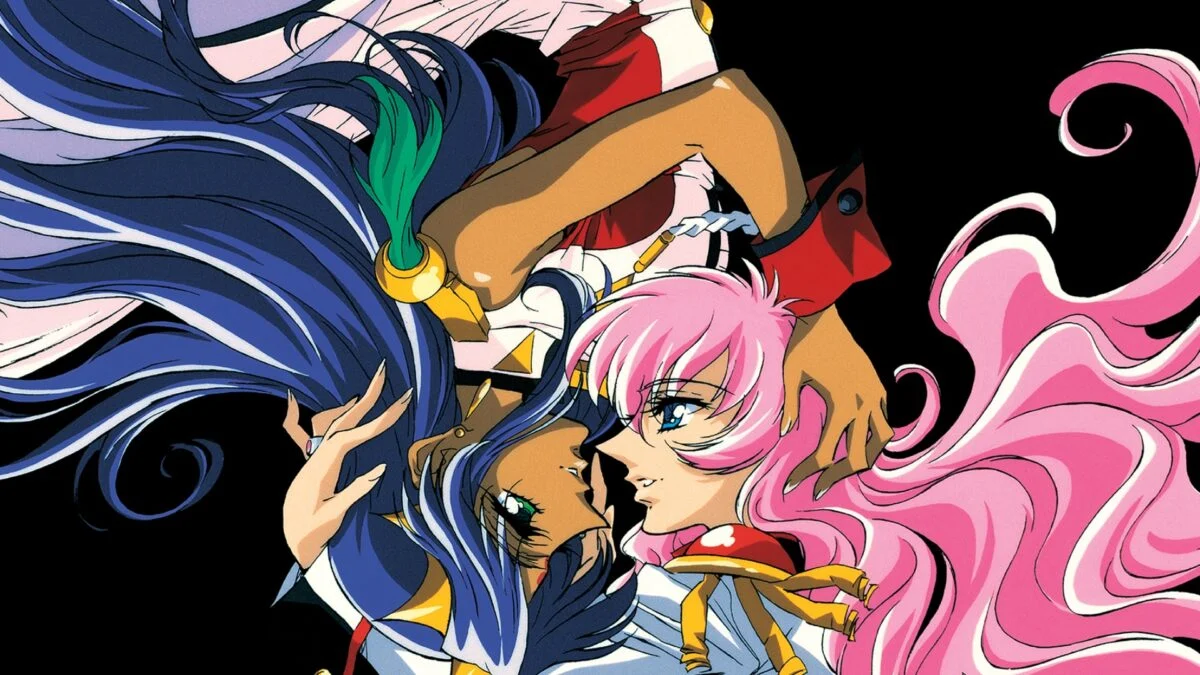
Whenever a movie releases in theaters, there’s always that tug-of-war over whether it’s worth making a trip to see it or if you’re better off just streaming it from the comfort of your home. Allow us to reach out from behind your screen, cup your face in our hands, and tell you that if you love anime, you should make time to go see Adolescence of Utena expeditiously next month. GKIDS has established itself as an entertainment company putting in the work, bringing imaginative anime films from the past and present to Western audiences, ranging from certified classics to hidden gems, to home video and limited-time theatrical runs. Its latest announcement of the Revolutionary Girl Utena movie, Adolescence of Utena, coming to theaters in June, adds yet another feather to its cap. Directed by Kunihiko Ikuhara (Sailor Moon), written by Yōji Enokido (Evangelion), with art by Shichiro Kobayashi (Angel’s Egg) and music by J.A. Seazer, Adolescence of Utena is the 1999 film re-imagining of the classic shojo series Revolutionary Girl Utena. Like its anime predecessor, Adolescence of Utena follows Utena, a tomboy who enrolls in a prestigious academy with the goal of becoming a prince. Upon entering the academy, she gets caught up in a series of duels among its students fighting over Anthy, the “Rose Bride.” What follows is a series of battles between Utena and Anthy’s would-be suitors as the two grow closer and fight to free themselves from a world in desperate need of a revolution. Sometimes a revolution starts by magical-girl-transforming your gal pal into a sword to fight the patriarchy. © J.C. Staff/GKIDS © J.C. Staff/GKIDS © J.C. Staff/GKIDS © J.C. Staff/GKIDS Saying Revolutionary Girl Utena is one of those out-there anime is a bit of an understatement. It’s is awash in visual metaphors, often delighting in spelling them out explicitly, even going so far as to employ YouTube thumbnail-style arrows to draw attention to them as its characters talk around or get to the heart of their issues with one another. And despite the show’s flowery, unassuming appearance, those issues delve into heady subjects, including interpersonal relationships and abuse. But it’s the show’s unflinching approach to gender politics, via unabashedly queer shojo sword fights, that makes the series such a classic, with its impact felt today in cartoons like Steven Universe and anime like Mobile Suit Gundam: The Witch From Mercury.
You Should Race to Your Local Theater to See 'Adolescence of Utena'
GKIDS is bringing the eclectic 'Revolutionary Girl Utena' movie to the big screen for two nights only this June.
691 words~3 min read