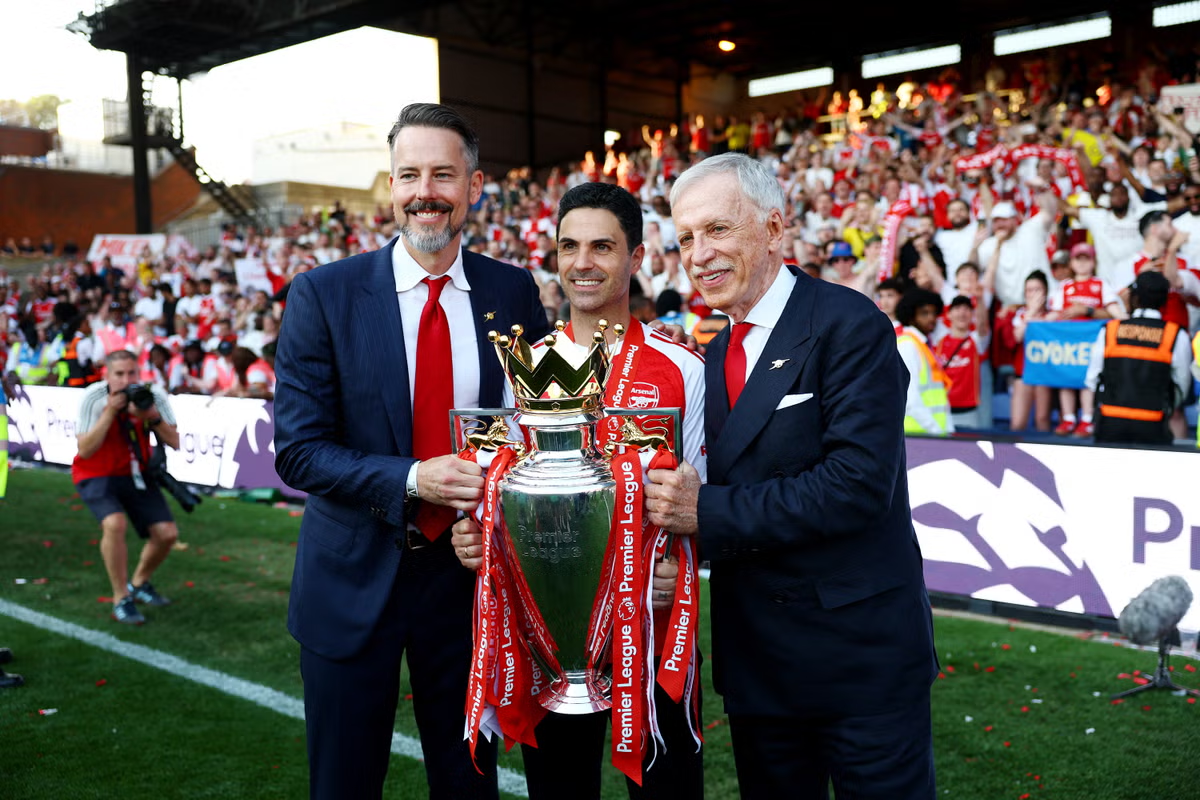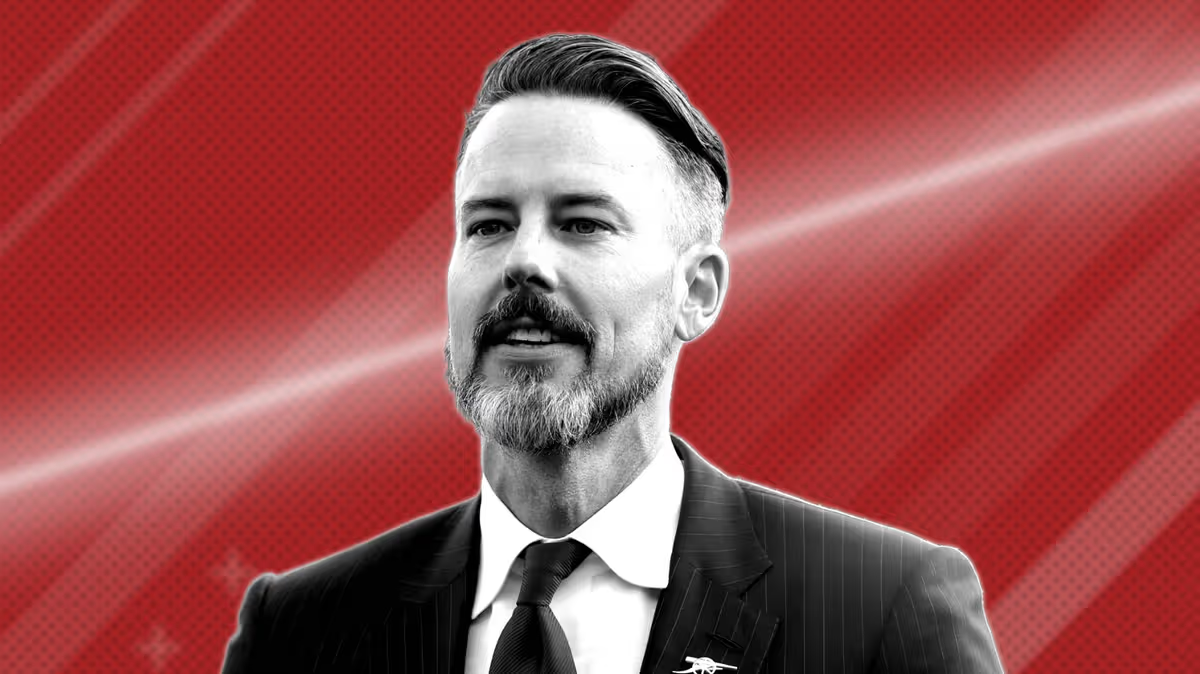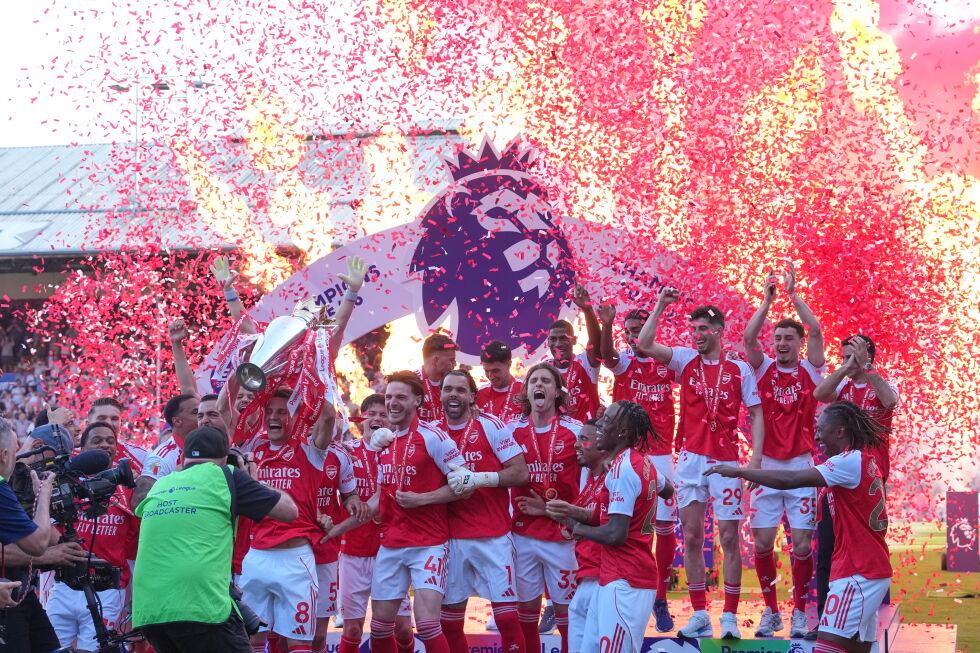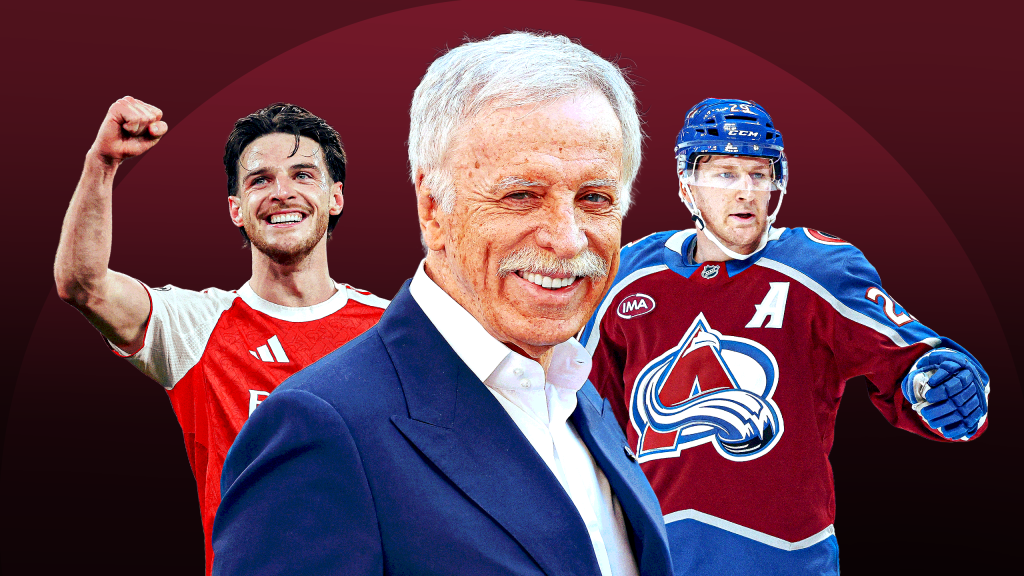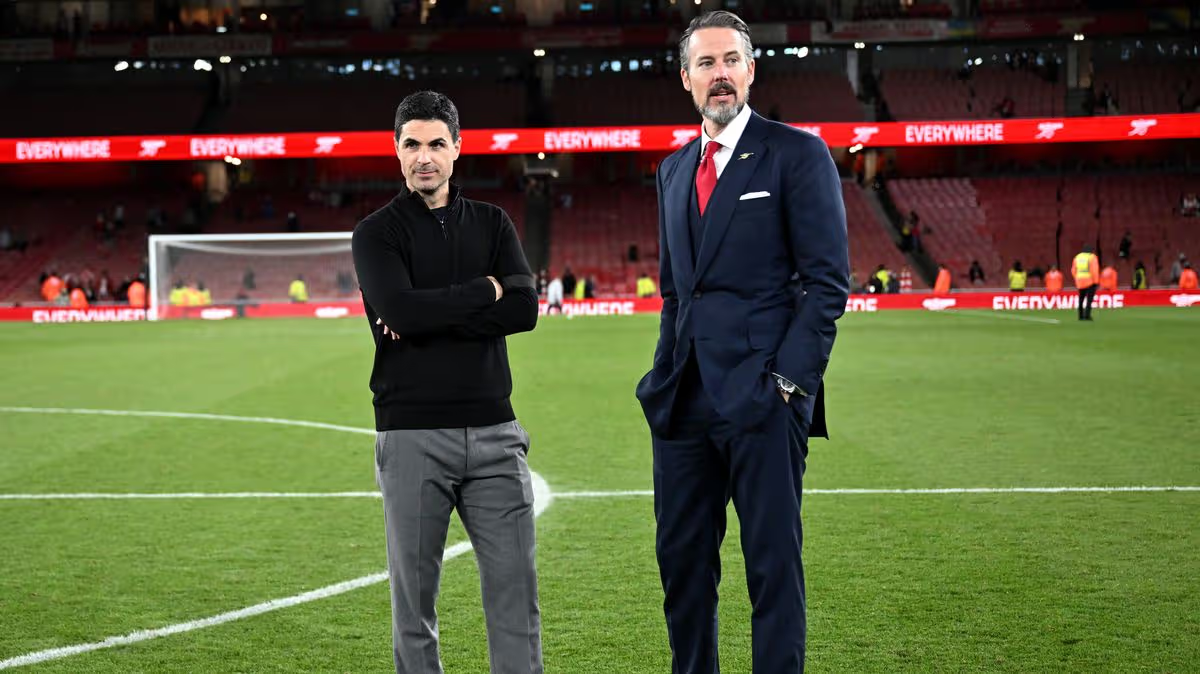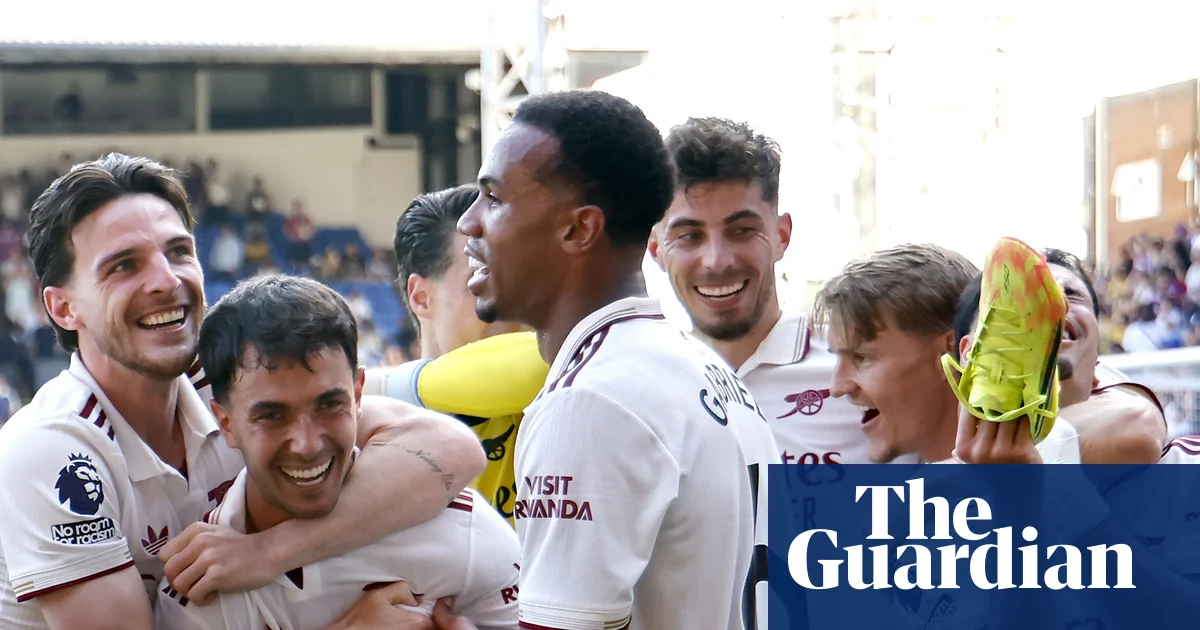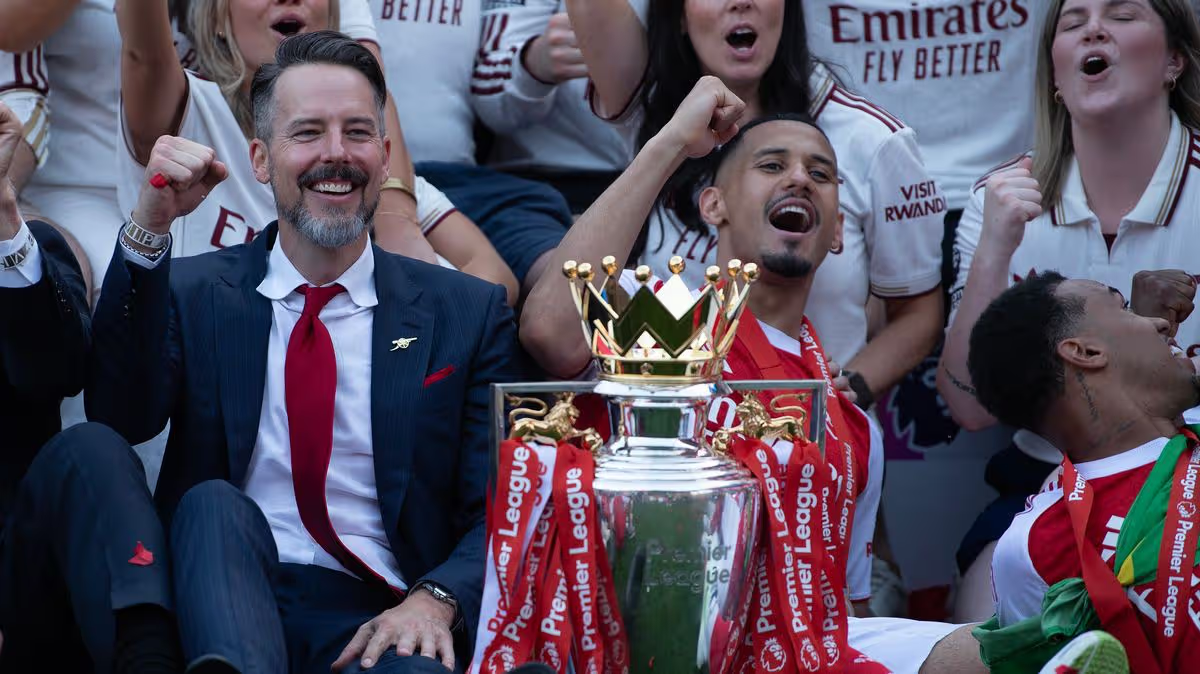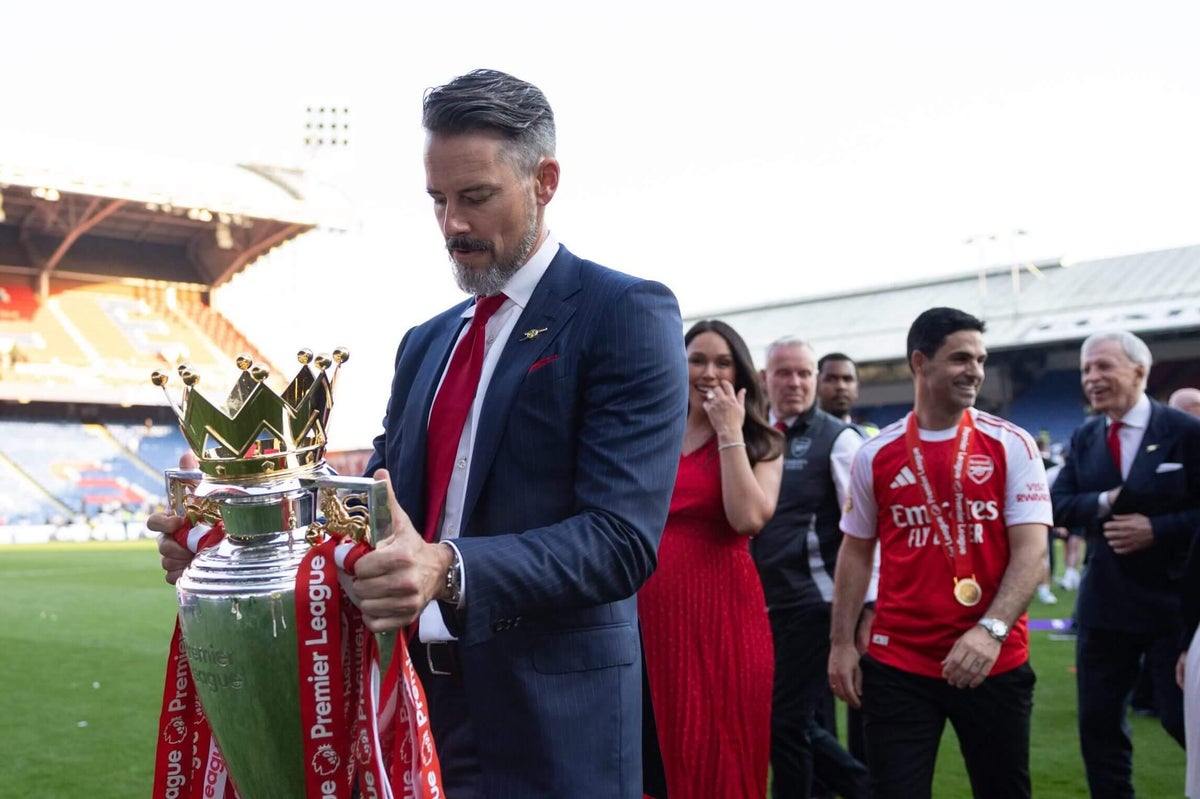
As Arsenal endured the agonising wait for a decision on West Ham’s stoppage-time equaliser, co-chair Josh Kroenke suffered like any other supporter.“I was on my hands and knees in my living room,” says Kroenke. “I just kept saying to myself, ‘I thought he held his hand’. It was a moment where I think every Arsenal supporter worldwide held their breath.”And then… exhale. The video assistant referee Darren England instructed on-field official Chris Kavanagh to review the monitor, and the goal was overturned. Arsenal won the game — and then, the Premier League title.Kroenke lived every moment of the run-in, either in person or remotely. He watched the 2-2 draw with Wolves on February 18 by himself, wishing he “were with someone else, at least to talk to”.But when Max Dowman became the youngest Premier League goalscorer in March, the emotions were very different. “We had just adopted a puppy,” Kroenke laughs. “So when Max went on his run, I scared the hell out of the puppy by jumping up and yelling at the television. That dog peed on the floor right there next to me!”Kroenke was at the Etihad when Arsenal were beaten 2-1 by Manchester City in April. “I thought Declan’s mentality was spot on: ‘It’s not done’,” the 46-year-old says. “I think our group still believed, even if the rest of the world had started to move on. Being in that dressing room after that match, I think the players all looked at each other and were like, ‘We can still do this’.”When Arsenal beat Burnley 1-0, Kroenke was in the directors’ box. He flew back to the U.S. the next morning, landing just as Bournemouth scored against Manchester City to put Arsenal within touching distance of the title.“I got back to my home in Denver. I flew through the door and actually went into my bedroom and turned it on,” says Kroenke. “I don’t think anybody else wanted to experience the energy that I was having in that moment in time. But when we did win, there was an unexpected outpouring of emotion for me.“My first phone call was to my dad, my second was to Mikel (Arteta). I figured he wouldn’t answer right away because he was probably doing exactly what I was doing at that moment, which was celebrating and crying with your loved ones. But a few minutes later, he called me back, and we had a great moment.”He says he wished he had been at the training ground with the rest of the squad, but within minutes, he saw them all via a video call. “I just sat there and was in such an emotional state as the phone was going around, and I was seeing everyone’s faces,” he says.Kroenke may have been riding the emotional rollercoaster along with other fans, but in many other respects his experience is wildly different.Alongside his father, Stan, he is Arsenal’s co-chair, as well as the heir to the Kroenke Sports & Entertainment sporting empire and the Walmart family inheritance. When Arsenal were awarded the Premier League on the final day at Selhurst Park, it was father and son who carried the trophy out onto the pitch.(Michael Regan/Getty Images For Premier League)“I didn’t know the exact protocol of how the trophy was presented,” says Josh Kroenke, speaking to a group of reporters at Arsenal’s training ground this week. “But I just said, ‘It would mean the world to me if I could carry it out with my father’. And if it wasn’t both of us, I wanted it to be him (Stan) carrying it out because of everything that we’ve been through over here in England.”That moment — the Kroenkes parading the Premier League trophy in front of a frenzied travelling support, as well as the joy of fans pouring on to the streets of Islington to celebrate Arsenal’s first title in 22 years — represents the culmination of what Josh calls “a journey beyond belief” for his family and his club.“Those were powerful images for me to get halfway around the world,” says Kroenke. “It was great to see people come together for a singular moment like that. We’ve all come from different parts of the world, different walks of life, but if you’re an Arsenal supporter, everyone is united.”At least, now they are. The greatest concentration of fans congregated on the same stadium concourse where they had gathered to protest against KSE’s ownership in 2019 and the proposed European Super League in 2021. “They were hanging us from lampposts,” quips a still-hurt Kroenke.Since then, however, KSE has gone from vilified to vindicated, having delivered on its promise of bringing major trophies back to Arsenal. “I knew we were a sleeping giant that we needed to awaken in some way,” says Kroenke.Stan Kroenke first invested in Arsenal in 2007, before assuming full control in 2018. The protests of the following summer saw supporter groups aligned under the banner of #WeCareDoYou, with an open letter to the Kroenkes criticising the club’s “passive ownership” and stating: “Our club feels like an investment vehicle.”Josh Kroenke believes that the difficult period was characterised by a lot of “heavy lifting” behind the scenes after the Kroenkes assumed full ownership, including the transition after the departure of “legendary person and manager” Arsene Wenger in May 2018 and after chief executive Ivan Gazidis joined Milan in December of that year.“I think for a club of our stature, change is going to be healthy — but that was way too much change in way too short a period of time,” says Kroenke. “We had to really react to that over the 2018-19 season, to try to regain our stability. We were almost straddling strategies at the time. We had been out of the Champions League for a year or two, we were trying to bring some younger players into the squad, but not get too inexperienced to keep pushing for the league.”While Kroenke says he still admires former manager Unai Emery, the Europa League Final of 2018-19 was an undoubted low point.“I flew all the way to Baku for the worst 45 minutes of that season in that second half,” he says of the 4-1 defeat by Chelsea. “Seeing that happen was the first time I came back from that trip and told my dad that we really need to embrace where we are. ‘Now that we have 100 per cent of the club, we might need to take a step back to go forward at some point’.”The #WeCareDoYou movement that followed forced Arsenal’s owners into further self-examination.“I personally wrote the letter we published in response,” says Kroenke. “It was a moment of reflection, and even though it was painful at the time, it brought me closer to the supporter base as well.”Arsenal fans outside the Emirates Stadium to protest against the European Super League in 2021 (Wiktor Szymanowicz/Future Publishing via Getty Images)He says he had lunch with Ben Winston, now an Arsenal board member, so Winston could explain some things to him “from a supporter’s perspective”. What followed was a series of apologies.“We are all humans, we all make mistakes, and it is one on a grand scale that really ignited a lot of emotion in people,” says Kroenke. “But hey, we’re still people. We made a mistake. Can we sit down and talk about it?”Kroenke attended supporter meetings to try to meet the criticism head-on. “Fortunately, it was in Covid and I was doing this all on screen where they couldn’t throw tomatoes at me!” he laughs. “I think we all looked each other in the eyes and hopefully they understood I wasn’t just trying to pay them lip service… Hopefully, here we are seven years later, and people know that we’re really invested emotionally, financially, and time-wise.”But what did taking “a step back to go forward” look like?“I used that phrase once at lunch with our previous chairman, Sir Chips Keswick, who was a big mentor of mine,” says Kroenke. “And he kind of smiled and agreed, then he just looked at me and went, ‘Bloody hell, don’t get relegated’.”Yet after pivoting from Emery to Arteta, Arsenal did suffer a relegation of sorts. Two consecutive eighth-place finishes saw them drop out of European competition altogether.But, with the benefit of hindsight, Arsenal were playing the long game: building a team full of young players designed to peak in their projected ‘win window’.“I had a great conversation with (former Arsenal defender and academy manager) Per Mertesacker after the final in Baku,” says Kroenke. “I made a comment about Virgil van Dijk, who had arrived at Liverpool a year or two before. I said, ‘How do we get one of these guys into our system?’”Mertesacker explained that unless Arsenal were prepared to pay £100million, they shouldn’t even think about the likes of Van Dijk. Undeterred, Kroenke asked the former German international who he considered the best young defender in Europe.“He turned without hesitation and said, ‘William Saliba’.”Within a matter of months, Saliba had signed for Arsenal. It would be three years before he made his Premier League debut, and Kroenke admits to fretting over whether the signing would get his opportunity. “I was sitting over in America laughing, going, ‘Please let this kid work out!’,” he says.William Saliba has certainly ‘worked out’ for Arsenal (Julian Finney/Getty Images)But he did not intervene, leaving it to the staff whom he credits as being at the centre of Arsenal’s revival.“If you knew anything about Mikel Arteta from his playing days and then transitioning to Pep’s staff (at Manchester City), it’s that he was a kind of madman when it came to football.“The conversations with Mikel were all about the club culture and reinventing that. Mikel really embraced that.”There were times when that culture was tested, however.“Mikel has different metaphors — whether you’re in the boat or you’re out of the boat. Sometimes we had people that not only weren’t in the boat, but were underneath the water with a rope trying to pull us back. We had to figure out who those people were, and we had to snip that rope along the way.”Then came the Covid pandemic, with Kroenke unable to fulfil one of his “early promises” to Arteta to be in London as much as he could. The sudden loss of matchday revenue then prompted conversations about a Super League.“You rationalise it in your mind, and now you can look back on it and say, ‘Wow, that was a crazy moment, what were we thinking?’ But you’re thinking from a place that you’ve never been before,” says Kroenke.But, as painful as the pandemic was, the circumstances did at least offer some respite for a young manager in his first job, as well as a first trophy when Arsenal lifted the FA Cup in 2020.“There was something about Mikel having a little bit of ‘space’ during Covid when there weren’t fans around,” says Kroenke. “To not have that extra pressure of fans being on top of you at different points in time when we were going through different growth phases was probably something which, looking back on, I think we can say, ‘Maybe that was a little bit of a benefit’.”Arsenal emerged from the pandemic stronger. Tim Lewis joined the board and brought an additional layer of ownership oversight. Liberating the club from the stadium debt freed up budget for the squad. In time, Arsenal would break that £100million barrier, paying a club record £105m to sign Declan Rice from West Ham in 2023, then a British transfer record fee.“I remember being walked through the deal for the first time,” says Kroenke. “My eyebrows raised because I didn’t know if we were in that phase to go after a player like that just yet.“So I asked Mikel a couple of pointed questions about how we might use him — which I never really ever do — because I felt this deal should be what I refer to as ‘plug and play’. He should fit right into the starting XI and hit the ground running.The signing of Declan Rice signalled a shift in Arsenal’s outlook (Mike Hewitt/Getty Images)“But also, if we are going to be paying this much, who is the person we are getting? Because this better be a leader as well.“It was a big moment for us for sure. I don’t think that type of deal would have been possible prior to 2018.”The arrival of established players such as Rice, Kai Havertz and David Raya pushed Arsenal back into contention for the Premier League. Even after three consecutive second-place finishes, the Kroenkes did not lose faith. Josh Kroenke draws a parallel with another of KSE’s sporting interests — the NFL’s LA Rams.“Our LA Rams coach Sean McVay made the Super Bowl in his second year (held in Atlanta in 2019),” he explains. “We lost. We qualified for it again in 2022. The Super Bowl was in Los Angeles — LA hadn’t hosted a Super Bowl in nearly 30 years — and we were playing in our own stadium that my dad built. That’s a lot.“I told Sean that the failure in Atlanta was going to give us the experience and allow us to win. Our guys locked in in a different way. I saw our group come together in a way that made me think, ‘We’re really going to do this in our own building’.”Arsenal have now followed suit. “I had a good conversation with Bukayo (Saka) the other night where I told him how proud we are of everything,” says Kroenke. “I said, ‘Bukayo, you guys have been ready to win for a few years. The thing that no one really wants to acknowledge is that at the highest level, you have to have a teeny bit of luck. You’ve got to get the right whistle, you’ve got to get healthy players’ — which we hadn’t had. Failure is a great motivator, and sometimes you have to let people fail to succeed.”You have to invest, too. Arsenal recognised last summer as the moment to shift strategy; to build out the squad with real depth. “It was about allowing Mikel the freedom to rotate more,” explains Kroenke. “It was definitely more about quantity and making sure that we were, relatively speaking, deep at every position.”Spearheading that effort was a new sporting director, Andrea Berta. “When he first joined, I was at a dinner with Andrea and some friends. It’s not often I really ever do anything like this, but I went into Andrea, and I laid out our championship rings.”The inference was clear: the Kroenkes wanted to add the Premier League and Champions League to a collection that already included the Super Bowl, NHL’s Stanley Cup, MLS Cup and NBA Championship.For Arsenal, much of the focus was on a new No 9 — or, as it turned out, a No 14.“You had to be living under a rock to avoid the striker conversation,” admits Kroenke. “Viktor’s (Gyokeres) name emerged quickly. The conversations stemmed around looking at the history of the player and what he’s won, the mentality he might help bring to our group to get us across the finish line.”This season’s Premier League medal means Gyokeres has won his domestic championship in each of the last three seasons.“What you saw from him over the last few months has unlocked a different level of player, one that really fits,” says Kroenke.So what next?Planning is underway to update the Emirates Stadium, which turns 20 this summer. “We have several new members of the board that are plugged into that, who do those operations for us in the States,” says Kroenke. “They’re putting together a plan right now to renovate the Emirates.”It is also clear Arsenal want to use this title as a platform for more success, with Saturday’s Champions League final against Paris-Saint Germain in Budapest — the whole Kroenke family will attend — still to come.“Champions of England sounds pretty good,” says the co-chair. “And champions of Europe could sound even better.“We have very strong foundations in place to continue to build and try to sustain. Now we have all this, it’s about trying to stay at the top, knowing everyone is trying to climb the mountain after you.“Keeping Mikel around is (an) utmost priority. I think the good news for Arsenal fans worldwide is he’s enjoying the project, he’s enjoying being here and from his time as a player all the way up until now, he’s an Arsenal man through and through.“We’re going to look to strengthen because we know that teams around us are going to get better. If you’re not trying to continually evolve and improve, you’re standing still.”
Josh Kroenke interview: Arsenal, the Premier League title and a ‘journey beyond belief’
From vilified to vindicated, the Kroenke family have come full circle at Arsenal — and it may get even better yet
2,777 words~13 min read