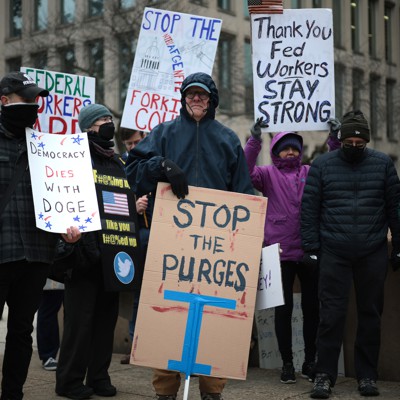
Thousands of fired federal employees are still unemployed or earning far less than before, according to a new survey examining the aftermath of the Trump administration’s 2025 probationary layoffs. The findings challenge claims that dismissed workers quickly transitioned into higher-paying private-sector jobs. Instead, many former federal employees say they continue facing financial hardship, worsening mental health, and unstable careers more than a year after losing their positions.The survey, conducted between February and March by former probationary federal employees, collected responses from more than 300 fired workers across 12 federal departments, 43 states, and one U.S. territory. The report was later published by 27 UNIHTED, an organization formed by former National Institutes of Health staff during the second Trump administration.Fired federal employees report long-term unemployment strugglesThe most common response when participants were asked how long it took to secure another job was simple: “still unemployed.” Around 80 respondents said they submitted more than 100 applications after losing their federal roles. The findings reveal how difficult the labor market has become for many former government workers, especially those abruptly dismissed during probationary periods.One former employee, Jacob Saunders, worked at the Centers for Medicare and Medicaid Services for just five weeks before being terminated. Nearly a year later, he still has not secured a full-time position. Saunders now works temporary gigs, coaches high school lacrosse, and sells products online to stay financially afloat.Saunders said many people wrongly assume federal workers can immediately replace their income after being fired. He explained that he applies for multiple jobs every day yet still struggles to land stable employment. His experience mirrors broader concerns raised throughout the survey about limited job opportunities and shrinking financial security.The Trump administration had argued in early 2025 that fired civil servants would find better-paying private-sector positions. However, survey data paints a sharply different picture. Among respondents who found new work, 49% reported earning “significantly lower” salaries than in government jobs, while another 19% said their income was simply “lower.”Judge ruled firings unlawful but employees say damage was already doneThe mass dismissals occurred during the Trump administration’s effort to reduce the size of the federal workforce. Thousands of employees in probationary periods lost their jobs across multiple agencies. Probationary workers generally have weaker civil service protections because they are either newly hired or recently promoted.In September 2025, U.S. District Judge William Alsup ruled the removals unlawful. Still, he declined to order reinstatement because of an earlier Supreme Court decision and because he believed many workers had already “moved on” with their lives.The survey directly challenges that conclusion. Many respondents said they continue dealing with financial instability, career uncertainty, and emotional trauma. Several also stated they rejected later offers to return to federal service because they feared future layoffs under workforce reduction programs.Saunders said accepting reinstatement no longer felt safe after already experiencing termination once. He questioned how employees could trust agencies not to repeat similar actions through other legal workforce reduction methods.Mental health crisis grows among former federal employeesThe survey also revealed widespread mental health concerns among fired federal employees. About 95% of respondents said they experienced new mental health symptoms after losing their jobs. Many described anxiety, depression, shame, and emotional exhaustion tied to prolonged unemployment and financial stress.Former United States Forest Service field ranger Liz Crandall said the emotional impact remains severe among many fired probationary workers. She explained that some former colleagues now require medication, loans, or additional support because of the financial and emotional strain caused by the layoffs.Crandall herself was dismissed despite working longer than one year because she had been hired under Schedule A, a federal hiring pathway for workers with disabilities that carries a two-year probationary period. Many workers recruited through similar pathways argue they would have retained protections under different hiring systems.Nearly 85% of survey participants also said agencies lacked transparency during the firing process. Employees described confusion, sudden notices, and managers who often did not know who had been terminated until after decisions were finalized.Crandall recalled the process as chaotic and unprecedented. She said even longtime conservative coworkers reacted emotionally because nobody understood what was happening inside agencies during the rapid layoffs.
Trump federal employee layoffs: Why are hundreds of fired government workers still unemployed one year after mass probationary firings?
More than 300 fired federal employees across 43 states say the 2025 Trump administration layoffs still haunt their lives. Many remain unemployed after submitting over 100 job applications. Others now earn far lower salaries than their former federal government jobs. The new survey exposes a deep federal workforce crisis, growing mental health struggles, and fears over weakened public agencies. Former workers say the mass probationary employee firings did not just cut jobs. They disrupted careers, financial stability, and trust in the federal system itself.
689 words~3 min read