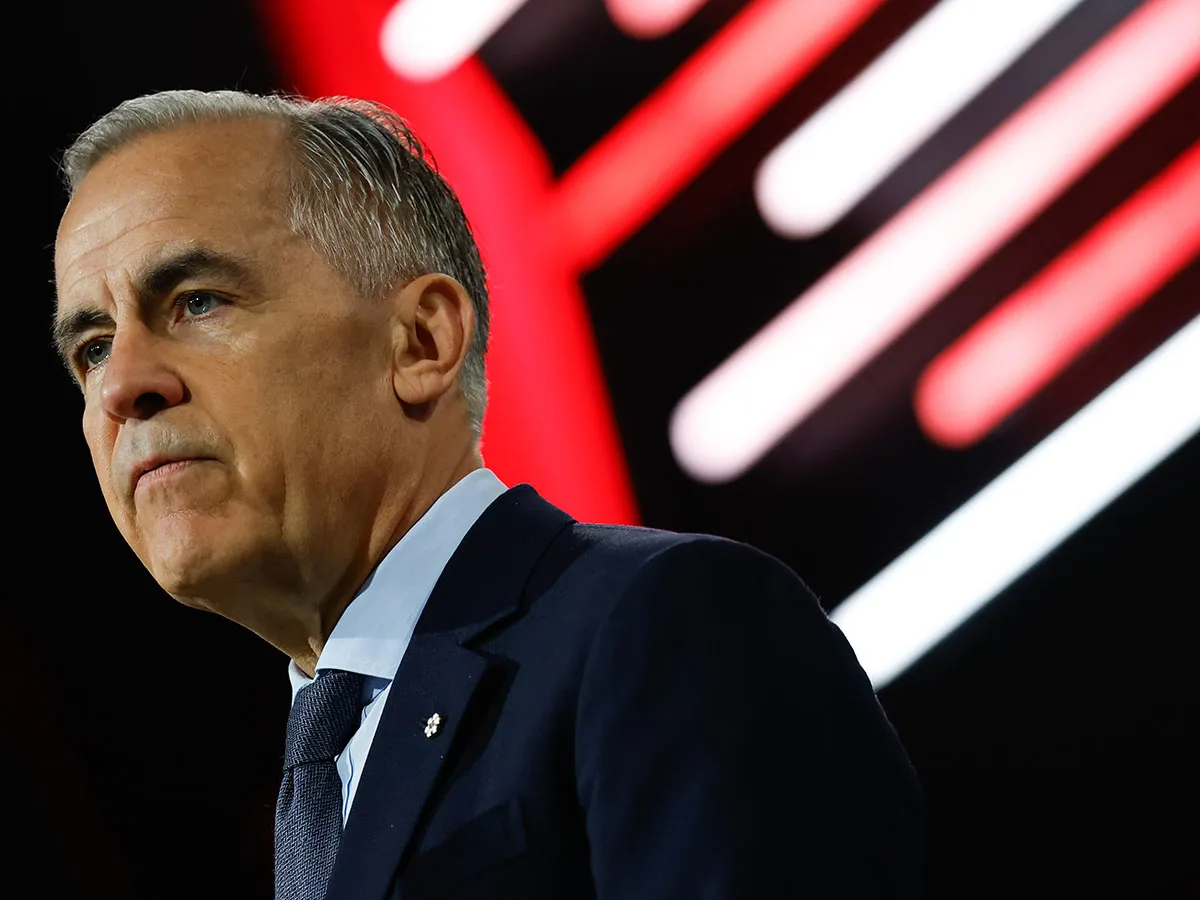
Skip to Content News Archives Economy Energy Oil & Gas Renewables Electric Vehicles Mining Commodities Agriculture Real Estate Mortgages Mortgage Rates Finance Banking Insurance Fintech Cryptocurrency Work Wealth Smart Money Wealth Management Investor Personal Finance Family Finance Retirement Taxes High Net Worth FP Comment Executive Women Puzzmo Newsletters Financial Times Business Essentials More Innovation Information Technology FP500 Podcasts Small Business Lives Told Tails Told Shopping Financial Post Store Obituaries Place a Notice Advertising Advertising With Us Advertising Solutions Postmedia Ad Manager Sponsorship Requests Classifieds Place a Classifieds ad Working Profile Settings My Subscriptions Saved Articles My Offers Newsletters Customer Service FAQ News Economy Energy Mining Real Estate Finance Work Wealth Investor FP Comment Executive Women Puzzmo Newsletters Financial Times Business Essentials HomeNewsEconomyOttawa on track to achieve NATO's 5% spending target by 2035, Carney saysTurning spending into long-term economic growth still a challenge You can save this article by registering for free here. Or sign-in if you have an account.Prime Minister Mark Carney speaks at CANSEC in Ottawa on Wednesday. Photo by HYUNGCHEOL PARK/PostmediaPrime Minister Mark Carney says the federal government is on track to meet the North Atlantic Treaty Organization’s target for defence spending of five per cent gross domestic product by 2035, but turning that into sustained economic growth may be a different challenge, according to defence industry watchers.Subscribe now to read the latest news in your city and across Canada.Exclusive articles from Barbara Shecter, Joe O'Connor, Gabriel Friedman, and others.Daily content from Financial Times, the world's leading global business publication.Unlimited online access to read articles from Financial Post, National Post and 15 news sites across Canada with one account.National Post ePaper, an electronic replica of the print edition to view on any device, share and comment on.Daily puzzles, including the New York Times Crossword.Subscribe now to read the latest news in your city and across Canada.Exclusive articles from Barbara Shecter, Joe O'Connor, Gabriel Friedman and others.Daily content from Financial Times, the world's leading global business publication.Unlimited online access to read articles from Financial Post, National Post and 15 news sites across Canada with one account.National Post ePaper, an electronic replica of the print edition to view on any device, share and comment on.Daily puzzles, including the New York Times Crossword.Create an account or sign in to continue with your reading experience.Access articles from across Canada with one account.Share your thoughts and join the conversation in the comments.Enjoy additional articles per month.Get email updates from your favourite authors.Create an account or sign in to continue with your reading experience.Access articles from across Canada with one accountShare your thoughts and join the conversation in the commentsEnjoy additional articles per monthGet email updates from your favourite authorsSign In or Create an AccountorHe said his government is “working towards” spending 3.5 per cent of gross domestic product on major defence investments. This includes a new submarine fleet and the newly announced plans to purchase Saab’s GlobalEye airborne early warning aircraft.The promise is part of his commitment to NATO’s Defence Investment Pledge, which aims to bring Canada’s defence spending to five per cent of annual GDP: 3.5 per cent on direct military spending and 1.5 per cent on critical defence infrastructure.Get the latest headlines, breaking news and columns.By signing up you consent to receive the above newsletter from Postmedia Network Inc.A welcome email is on its way. If you don't see it, please check your junk folder.The next issue of Top Stories will soon be in your inbox.We encountered an issue signing you up. Please try again“A strong, resilient defence industry requires fundamental rethinking of our approval and production targets,” Carney said in his keynote speech at the CANSEC security conference in Ottawa on Wednesday. “Thanks to you … we are now building again.”The prime minister said that rather than checking items off a pre-existing defence wish list, the government wants to ensure the $81.8 billion in spending over five years that was outlined in November’s budget has long-term benefits for the Canadian economy.“There’s a series of other investments that we can make that will help protect Canadians. We need to help our allies, but we can do that in a way, given that the industry is changing rapidly, that maximizes the Canadian benefit,” Carney told reporters after his speech.Economists have called the recent push to expand Canada’s defence sector one of the most significant financing initiatives in the country’s history, providing a “once-in-a-generation opportunity” to invest in the economy.Analysts from CIBC Capital Markets said in a recent note that the Defence Industrial Strategy and the Defence Investment Agency (DIA) could accelerate deployment and anchor supply chains.“The federal government’s unified economic resilience and national security mandate is translating into tangible structural change,” the analysts said. “The formation of the DIA addresses long-standing procurement bottlenecks by consolidating authority, enabling independent capital deployment and introducing alternative contracting models such as early down-selection and sole sourcing.”The analysts, however, said the investments have to extend beyond traditional forms of defence.“The investment requirement extends beyond defence assets into enabling infrastructure, including housing, utilities, and logistics, particularly in the North,” they said.David Perry, chief executive of the Canadian Global Affairs Institute, said he wants more details about the spending from Carney. He said the government has not provided projection details on how they’ll get to the five per cent GDP target, something the Parliamentary Budgetary Officer also flagged in a Feb. 5 report.“They mean what they say, and so far they’ve been delivering on it in terms of spending,” he said.But he said a lot of people are still skeptical about how they hit the previous defence spending target of two per cent of GDP.“However, myself and lots of other people are really skeptical about how they’re going to be able to reach (two per cent of GDP on defence spending), because that announcement didn’t come until halfway through June.”Perry said the DIS is trying to maximize economic returns by increasing defence exports, investing in Canadian intellectual property and growing smaller companies domestically, which would in turn boost Canada’s economic productivity and labour market.“The government needs long-term plans to continuously make purchases in some kind of forecasted predictable way over time, and not just create opportunities for the next five years that then go away after 20 years,” he said. “They need to create opportunities where companies can grow, scale, export, and rely on their home market to buy from them.”Christyn Cianfarani, chief executive of the Canadian Association of Defence and Security Industries, said any funding commitment needs to go beyond the current Liberal government.Defence industry leaders have been calling on the Canadian government to use the sector as an economic driver for years, but it will take a long time for Canadians to see the benefits from the investments, she said.“Carney has baked the investments into the government’s fiscal framework, which means he is thinking beyond his own term as prime minister. The challenge will be to see it go through successive governments, because this is going to be a generational sort of plan,” she said.“We would hope that this starts a national conversation in Canada. The investments that we are making today need to stay in the fiscal framework for successive governments to come. That is the only way it’s going to work.” Join the Conversation This website uses cookies to personalize your content (including ads), and allows us to analyze our traffic. Read more about cookies here. By continuing to use our site, you agree to our Terms of Use and Privacy Policy.
Ottawa on track to achieve NATO's 5% spending target by 2035, Carney says
Prime Minister Mark Carney says the federal government is on track to meet the NATO’s target for defence spending by 2035. Read more.
1,247 words~6 min read