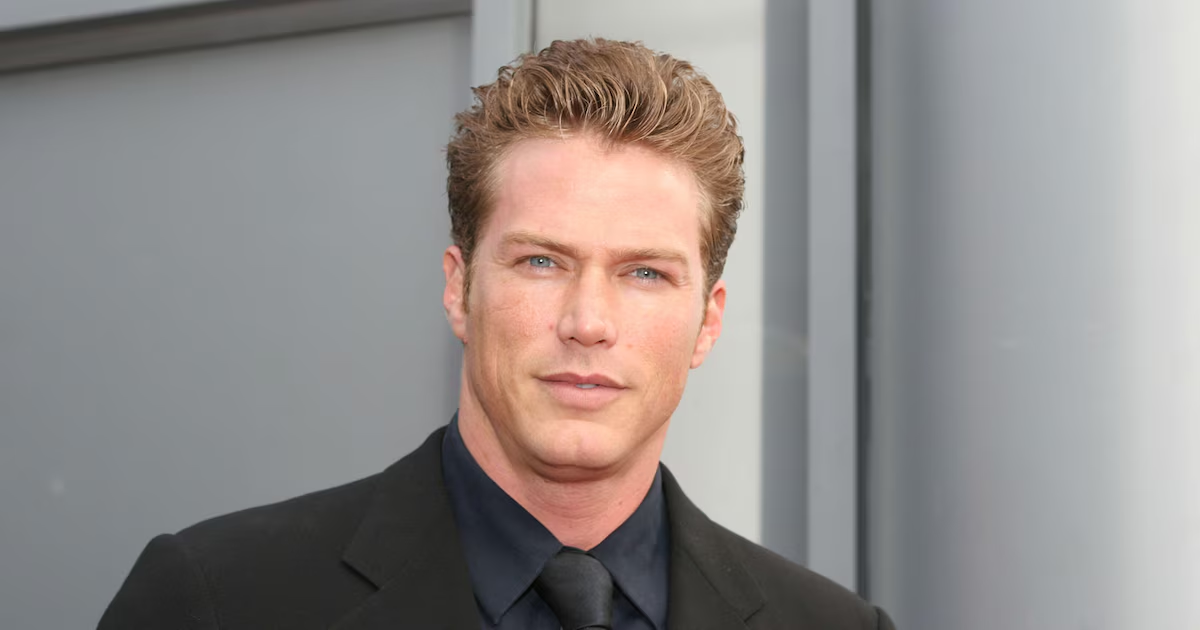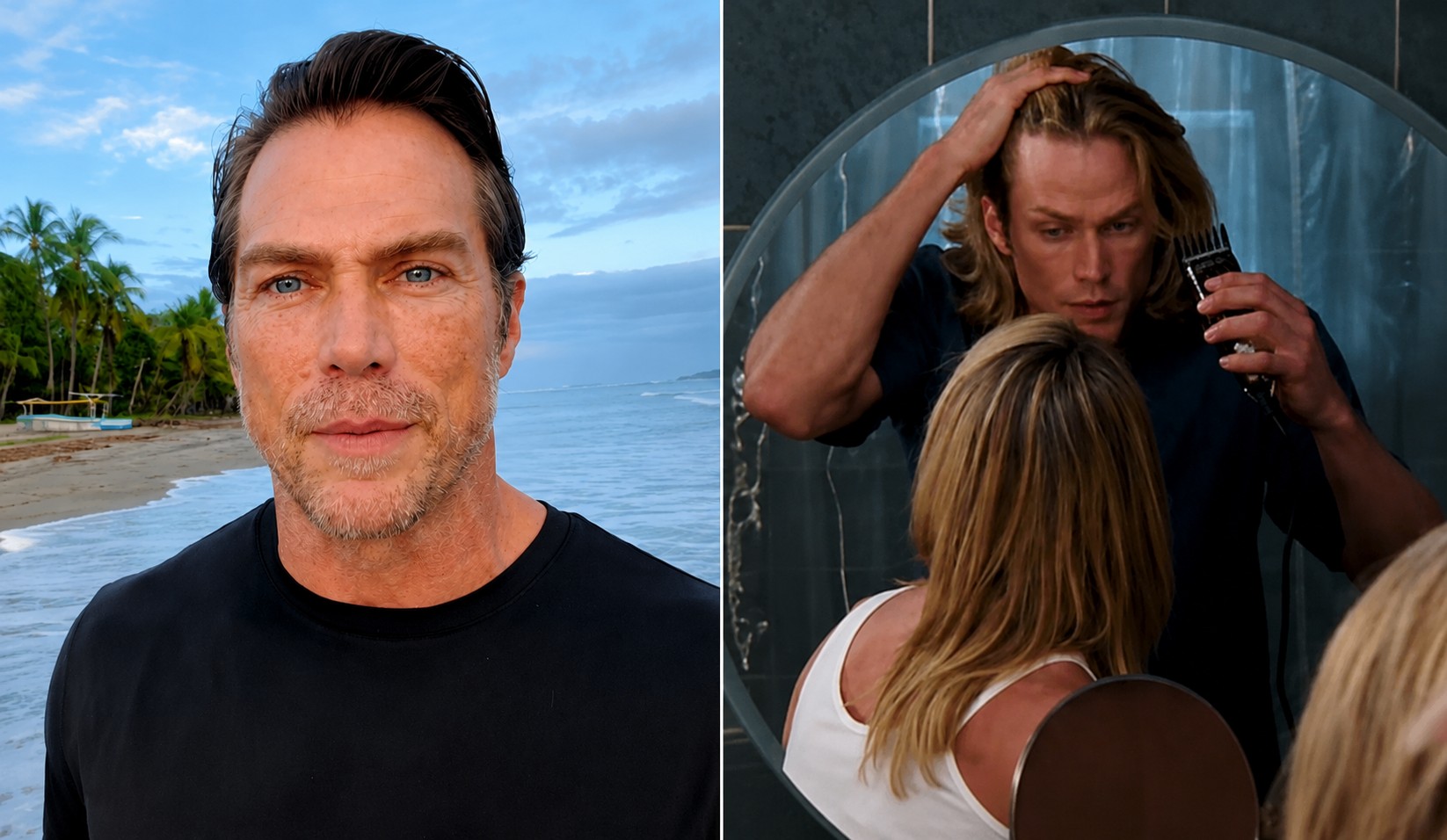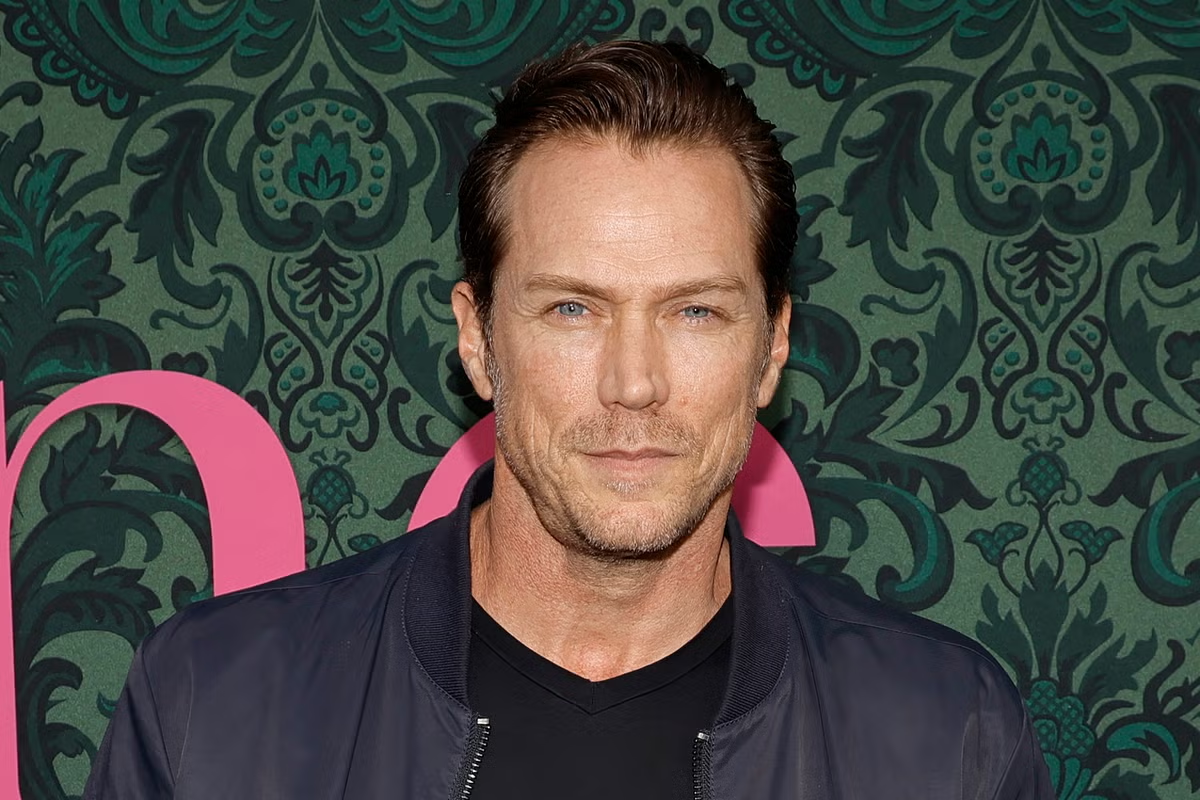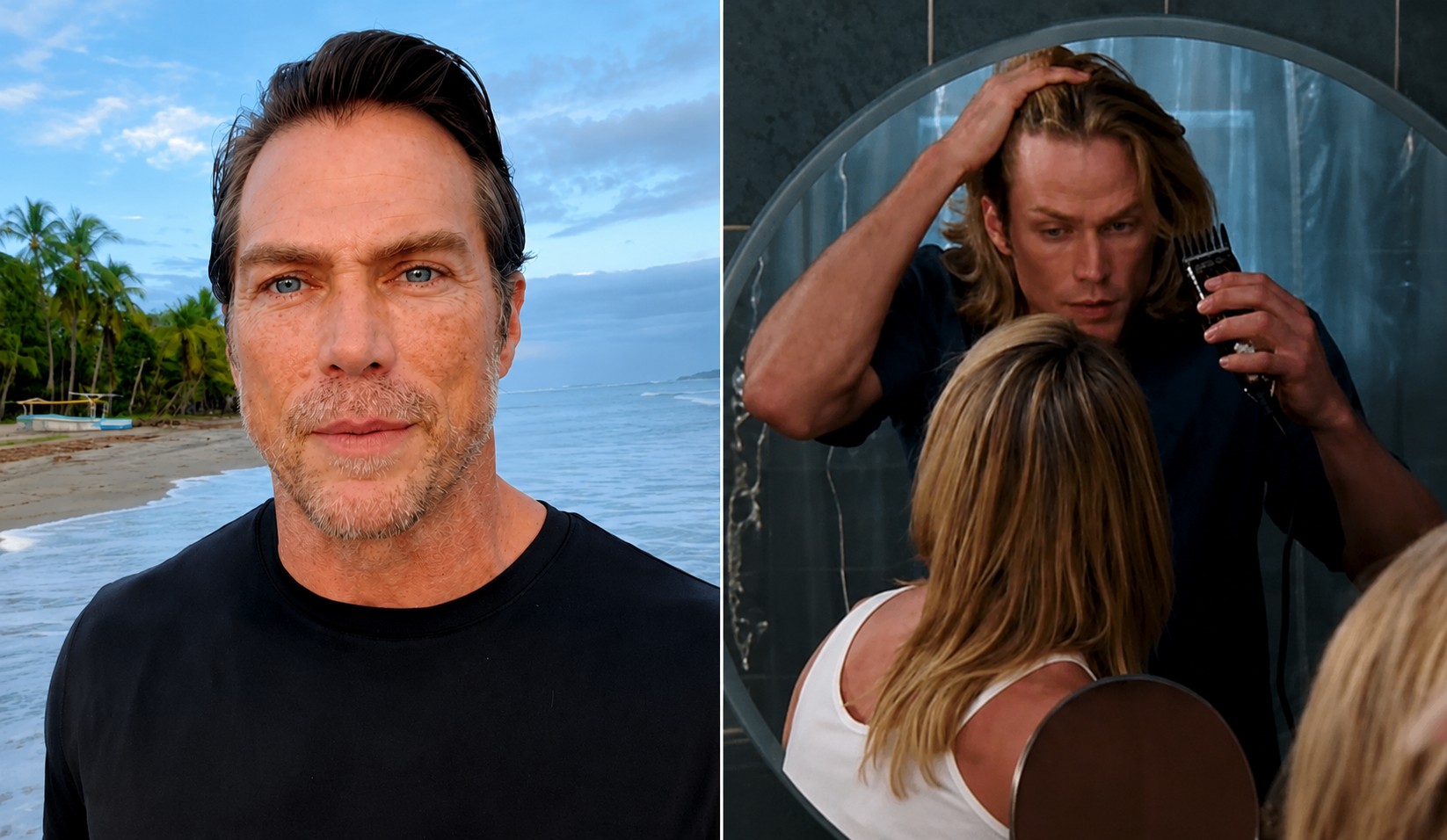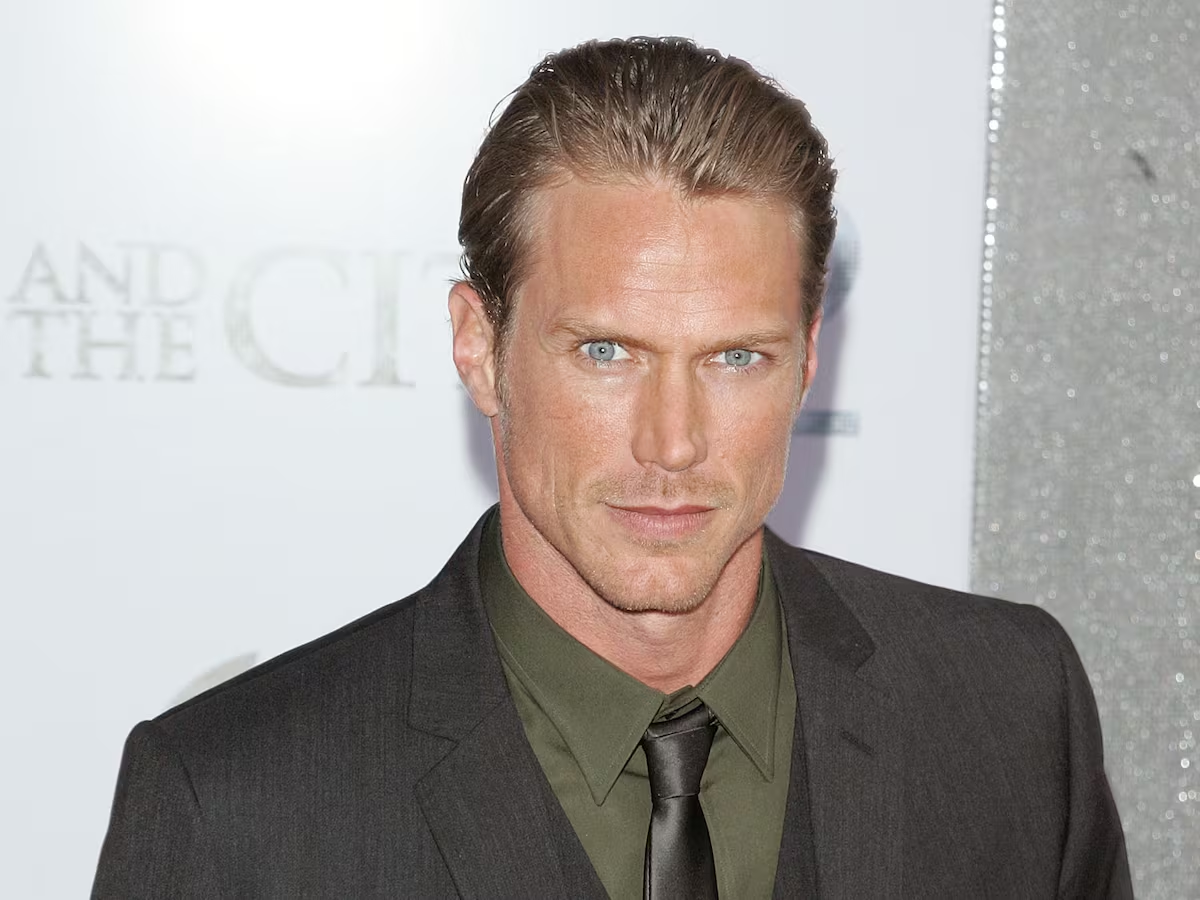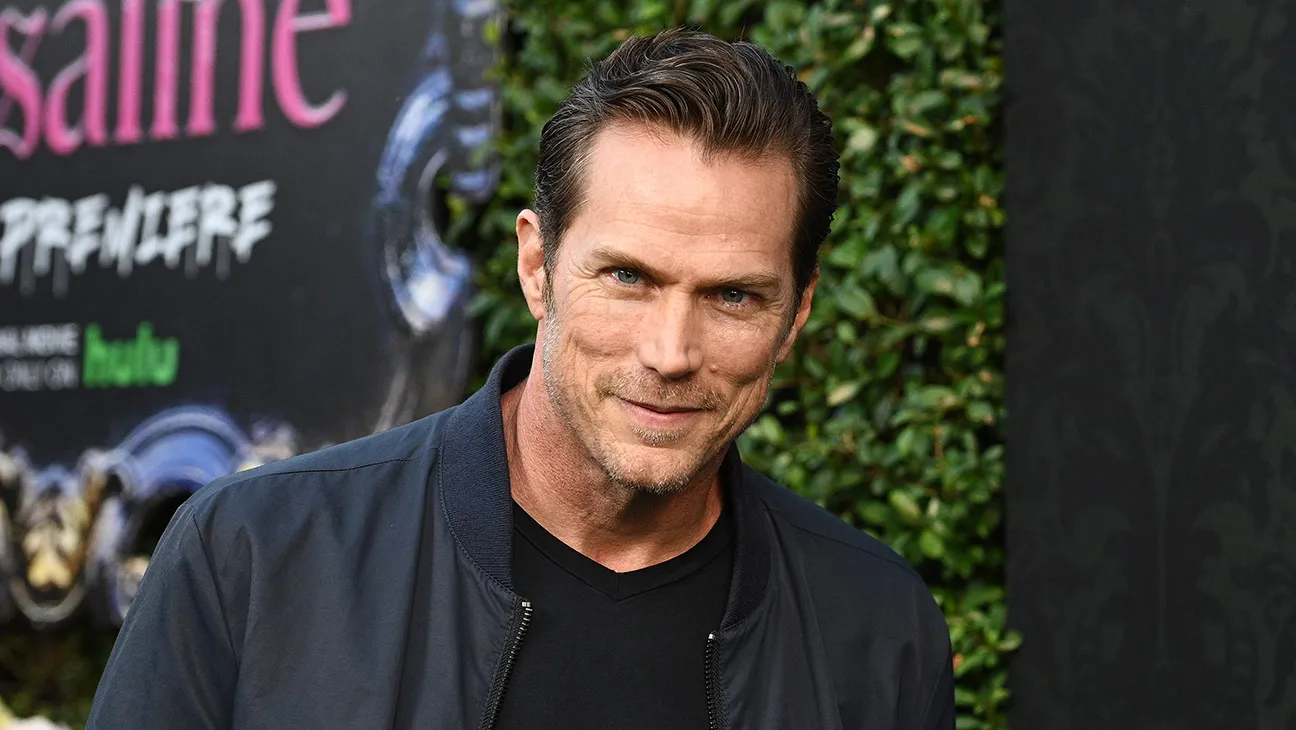
For years, Jason Lewis existed in the culture less as a person than as an idea.
Tall, blond, improbably symmetrical, he arrived at the tail end of Sex and the City as Smith Jerrod, the younger man who adored Samantha Jones with such patient, uncomplicated devotion that he almost seemed engineered in a laboratory to stabilize the psychic damage of Manhattan dating culture. He was less a boyfriend than a fantasy correction: Women wanted him, men wanted his abs, HBO wanted another season.
Before Sex and the City, Lewis belonged to the last great era of male supermodels, when fashion still manufactured masculine mystique at industrial scale. He worked constantly, appearing in campaigns and magazines at a moment when male beauty was becoming its own form of celebrity currency. By the time he arrived on HBO as Smith, he already carried the strange unreality of someone audiences had spent years looking at before they ever heard him speak.
And then, more or less, he disappeared.
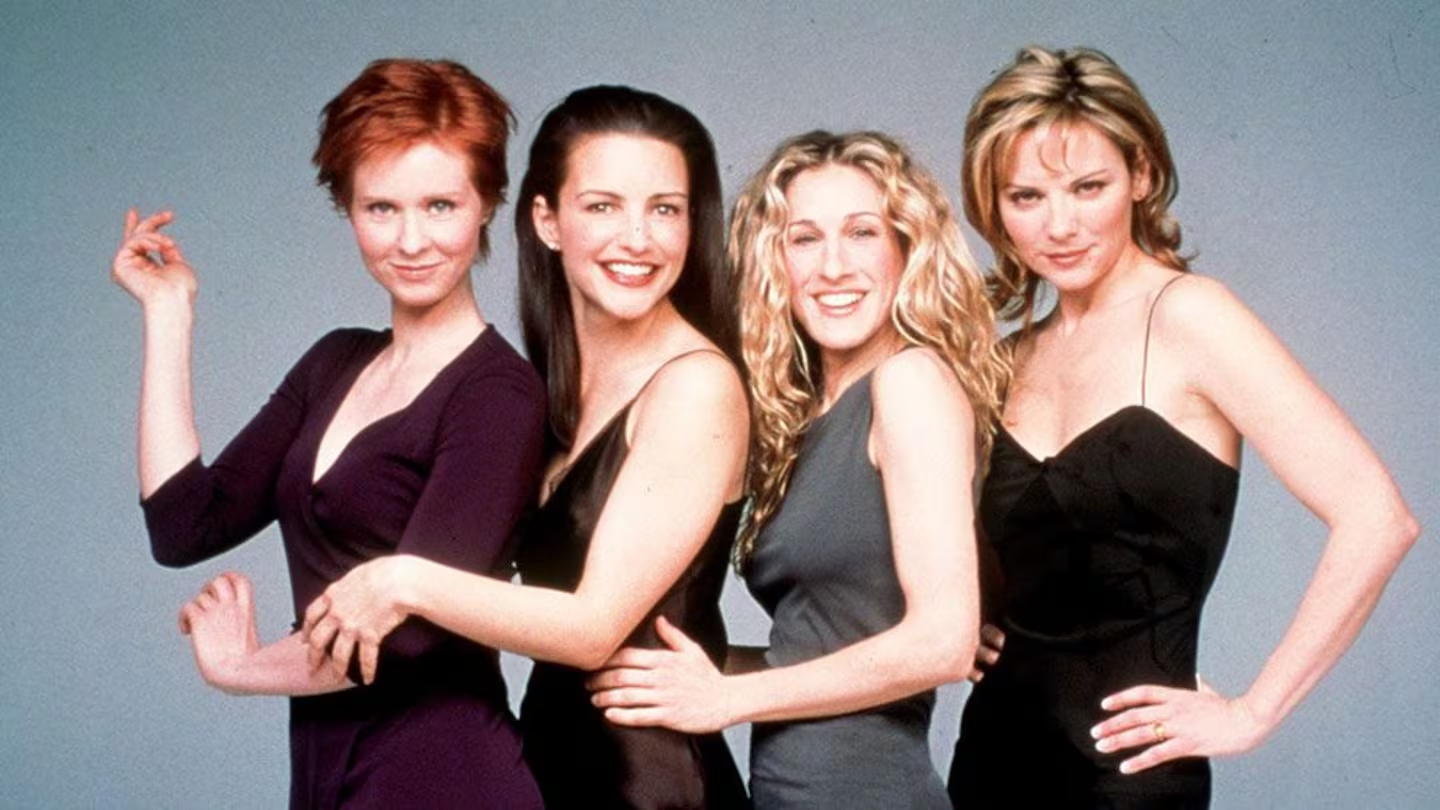
Not entirely, of course. There were roles, appearances, the occasional resurfacing. But Lewis never seemed particularly interested in remaining trapped inside the machinery of celebrity maintenance. He was not asked back to appear in And Just Like That… and seemed perfectly happy with that turn of events. (“As much as I appreciate the flattery, the conversation is about the girls,” he said at the time.)