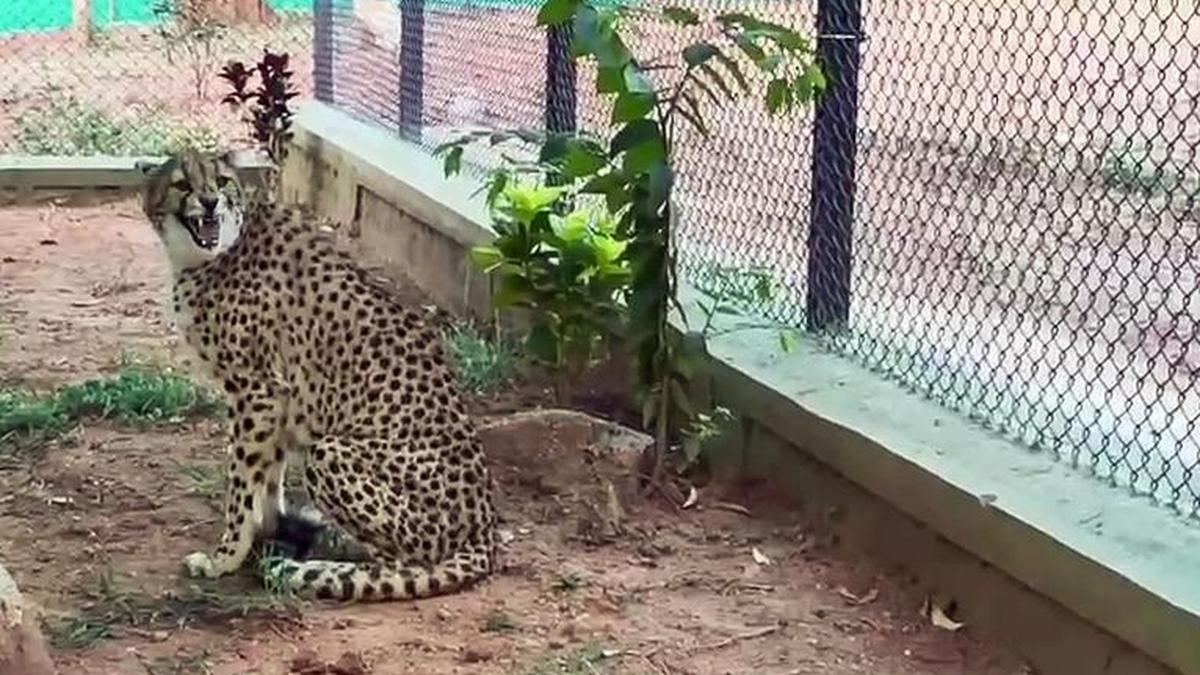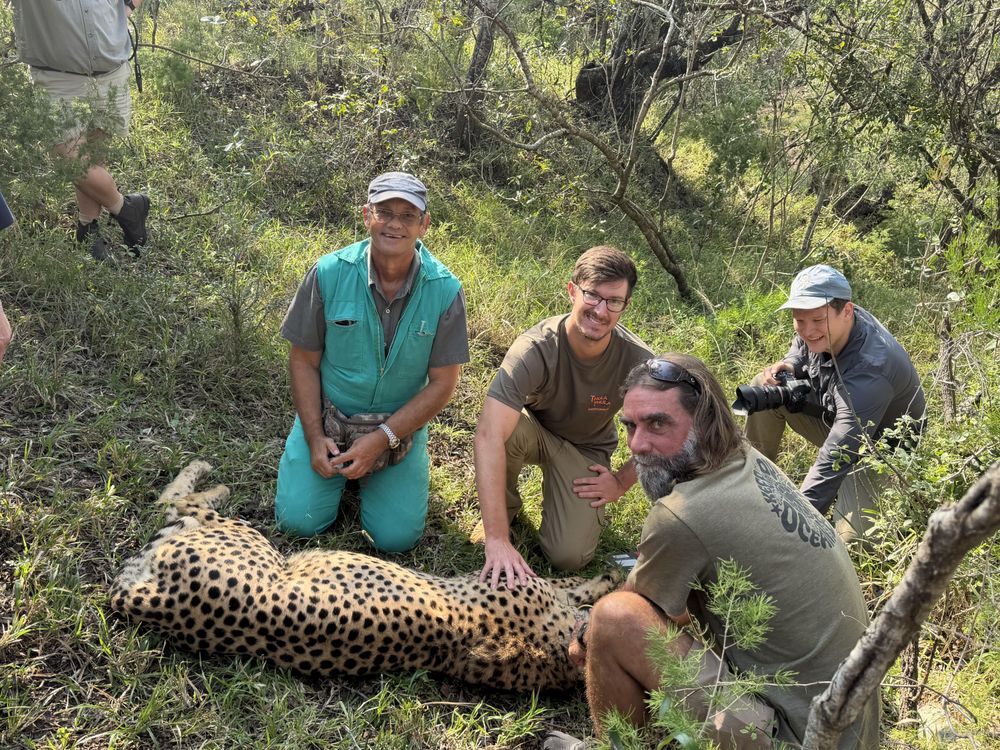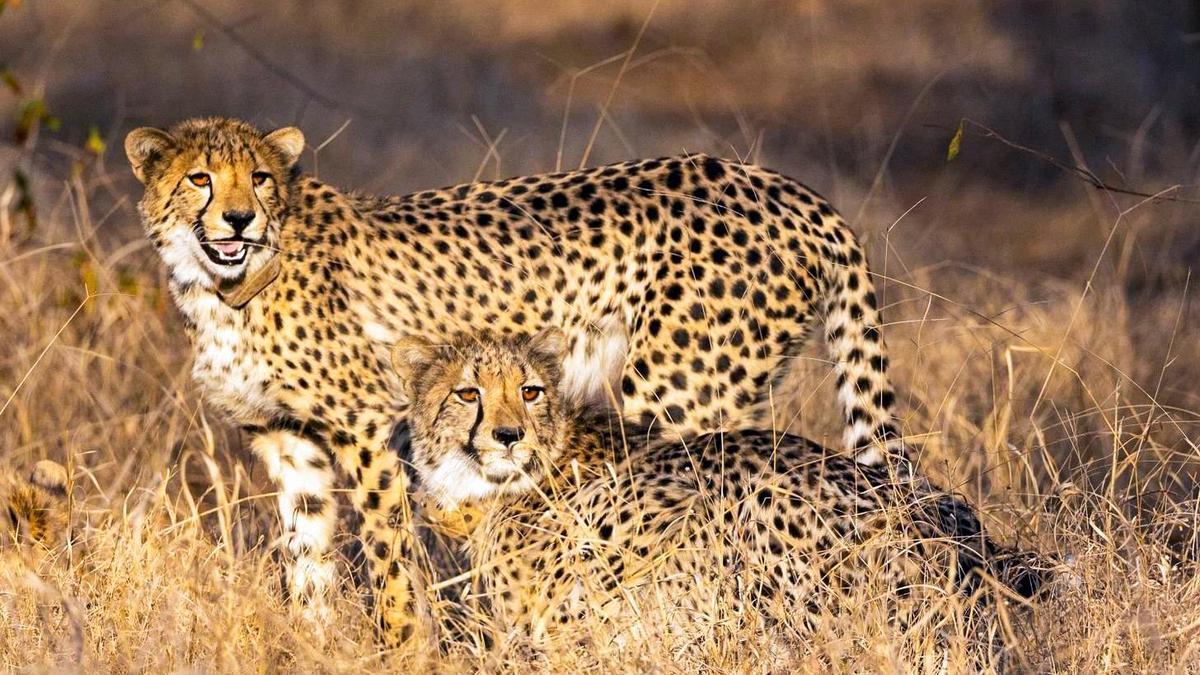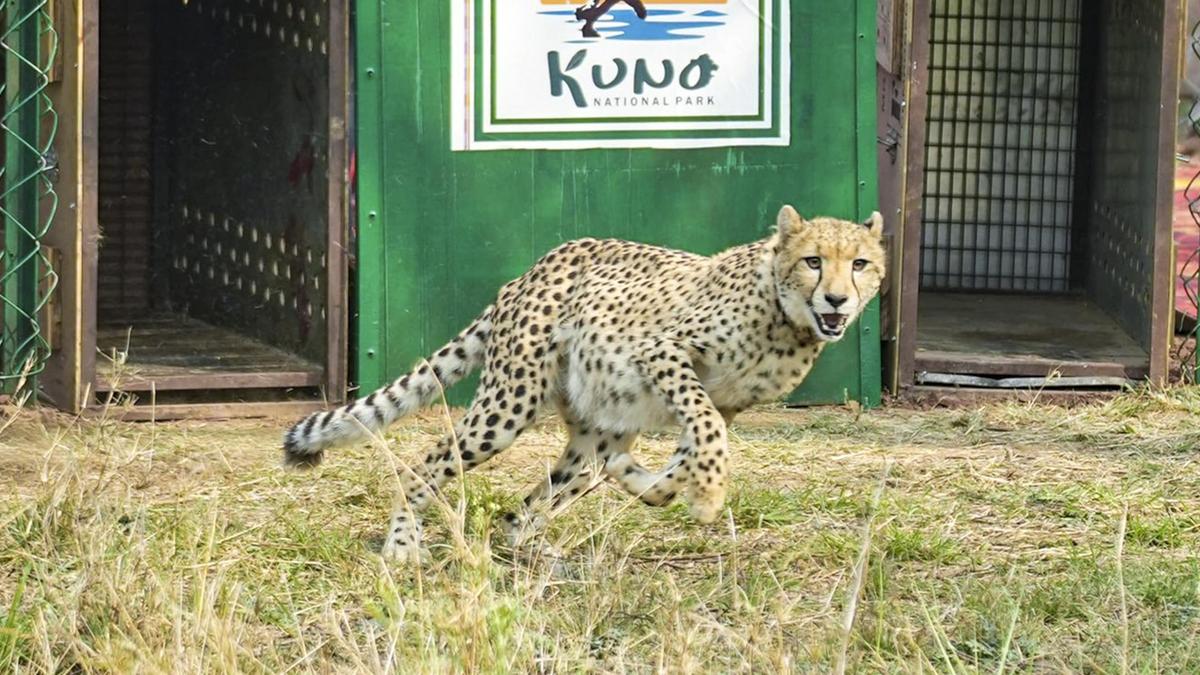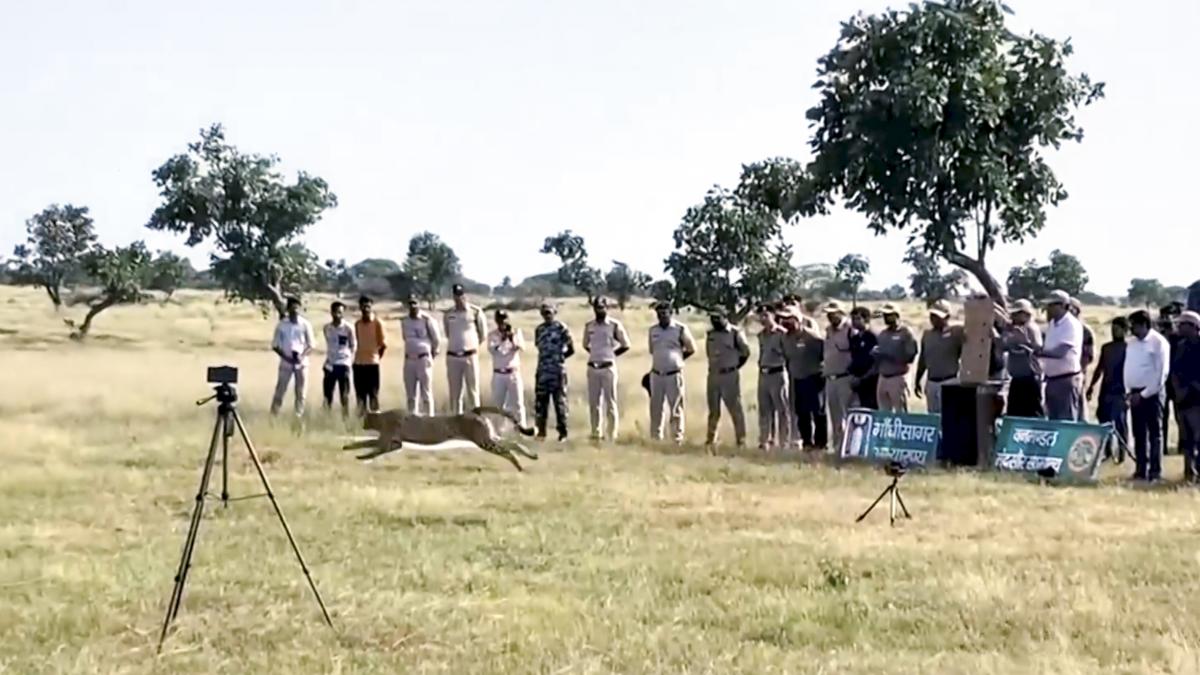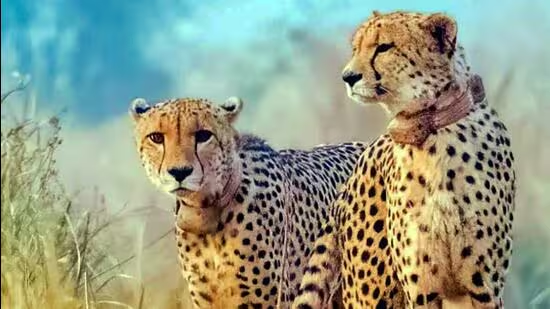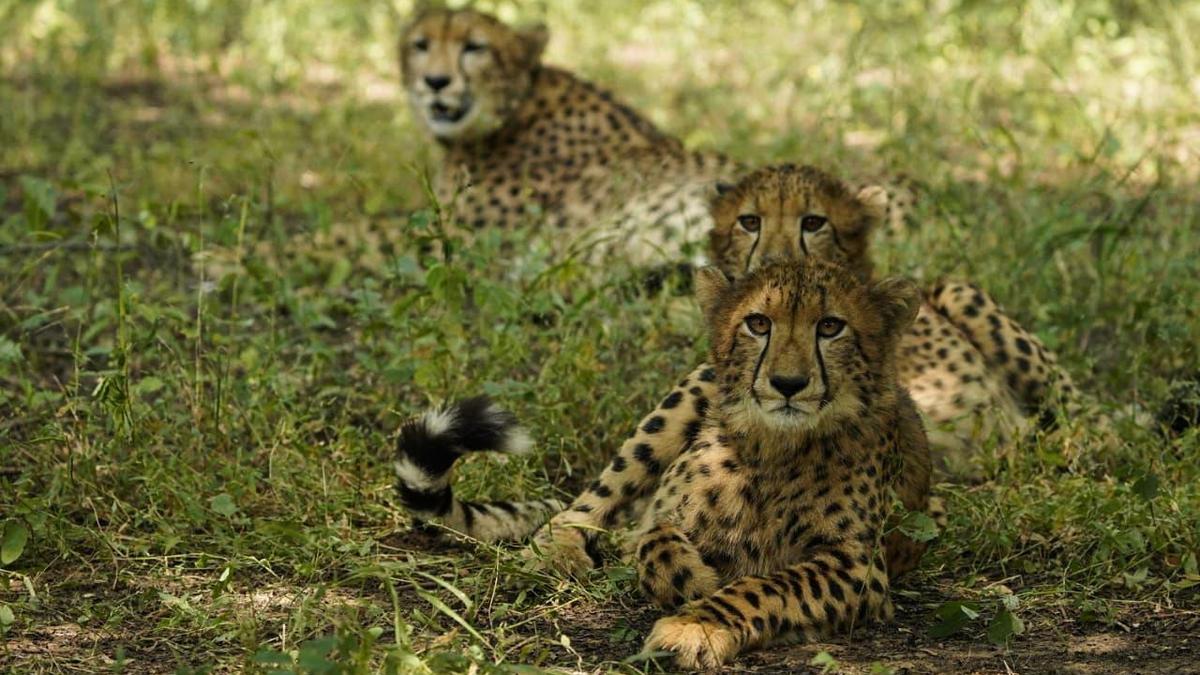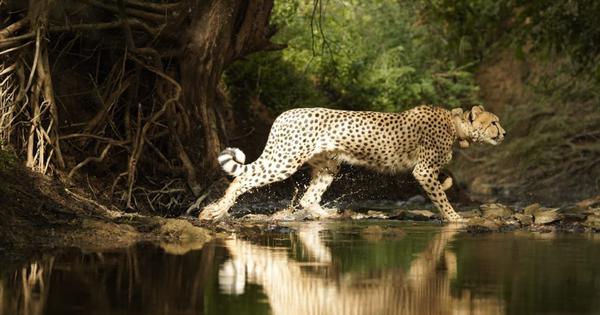
Project Cheetah is entering unchartered territories. And quite literally so. Early this April, a young male cheetah, KP-2, travelled over 150 km from Kuno National Park into Ranthambore Tiger Reserve in neighbouring Rajasthan, leaving a trail of suspense in its wake.Though it was not the first time that KP-2 had undertaken long-range travel, the latest dispersal brought the young cheetah deep into the tourist zones of Ranthambore Tiger Reserve. It also led to a rare “triple sighting” for tourists in the landscape where three big cats – a tiger, a leopard and a cheetah – were seen within the same area.KP-2 wandered around Ranthambore for over a month, trying to establish its territory. According to the latest reports, it was eventually caught and brought back to Kuno a few days before Madhya Pradesh Chief Minister Mohan Yadav’s visit to the national park earlier this month.KP-2 and its three siblings, all males, are sub-adults in their exploratory stage. Its sibling, KP-3, had also left Kuno recently and moved to the Dholpur area of Rajasthan, according to press reports.India’s ambitious wildlife programme, Project Cheetah, introduced African cheetahs into the country decades after the extinction of the Asiatic cheetah in India. Officially launched in September 2022, the goal of the project is to establish a free-ranging cheetah population in India while also using the species as a flagship for restoring and conserving open natural ecosystems such as grasslands, scrublands and savanna-like habitats.Daring walk into the wildKP-2 moved cautiously, which was unsurprising given that Ranthambore Tiger Reserve is an extremely risky landscape for a cheetah because of the high density of tigers and leopards. As per the latest census released in 2022, Ranthambore holds close to 70 tigers and Kuno National Park, which is part of the Ranthambore-Mukundara-Kuno landscape, did not report any tigers.A cheetah does not stand much chance in a landscape dominated by apex predators such as tigers and leopards, which made KP-2’s movement highly risky. Moreover, according to Dharmendra Khandal, conservation biologist at Tiger Watch in Ranthambore, the landscape itself is different.“Ranthambore has much sparser vegetation than Kuno and the terrain is hilly and undulating,” he says. With a notable population of apex predators, Khandal says he believes that KP-2 would eventually move away (from Ranthambore).KP-2 is one of the 18 cheetahs at Kuno that have been released into the wild as part of the project’s effort to gradually acclimatise them to free-ranging conditions. Recently, four one-month-old cubs of a female cheetah, KGP-12 – all five released in the wild – were predated upon, according to a press note issued by the field director of the Cheetah Project in Kuno. This has reduced the number of cheetahs currently in the wild to 14.The exploratory nature of the collared KP-2 and its siblings, which are being continuously monitored like the other free-ranging cheetahs, acts as a harbinger of things to come, exposing multiple flaws in planning and execution, lack of space, habitat issues, and lack of effective management plans.Why would free-ranging cheetahs be rescued?In at least three other recent instances, cheetahs that wandered into nearby forests were tranquilised and brought back to Kuno National Park. KP-2 itself had previously been brought back twice after leaving the park boundaries in an attempt to establish territory.The cheetahs are under constant surveillance. They are radio-collared, and each animal is assigned a three-member forest department team, a forest guard, a tracker and a driver, to continuously monitor its movement. When they leave Kuno, they are often caught and returned. Management also becomes more complicated when animals cross into neighbouring states because of jurisdictional issues.Press notes issued by the field director on such instances of tranquilisation and return describe the animals as being “rescued”, raising larger questions about long-term cheetah management – What do officials actually mean when they say these animals are being “released into the wild”? And if the goal is to eventually establish a free-ranging population, what exactly are the cheetahs being rescued from?Rewilding animals with a large home range, such as cheetahs, comes with the inherent risk of them moving into adjacent forested areas or even wandering into human habitations along forest edges, raising the question whether the authorities did not anticipate what is evidently the natural dispersal behaviour of these cats.Inadequate habitat for large-ranging animalsThe fastest land animal in the world, a cheetah has a much larger home range than other big cats such as tigers and lions. While an adult male cheetah has a home range of 13-26 square kilometres, which may go up to 130 square kilometres, a female cheetah, which is solitary, can range across 833 to 958 square kilometres.“When cheetahs are translocated, they are known to move across areas as vast as 1,000 square kilometres,” says Ravi Chellam, wildlife biologist and conservation scientist.This means that Kuno National Park, with a size of about 748 square kilometres, can just about hold one female cheetah or five to six male cheetahs. The size of the entire Kuno Wildlife Division is 1,235 square kilometres.“Cheetahs occur at very low densities; in excellent habitats, there may be one or two cheetahs per 100 square kilometres. That can fall as low as 0.025 animals per 100 square kilometres if the habitat is poor,” Chellam elaborates. The density of lions and leopards can go up to 12 or 15, according to him. Tigers, on the other hand, occur at densities varying from eight to 18 animals per 100 square kilometres depending on the habitat.The cheetah movement into nearby forests makes even more sense when one considers the location of Kuno National Park. Located in Sheopur district of Madhya Pradesh, Kuno is connected by viable wildlife corridors to five surrounding tiger reserves – Ranthambore Tiger Reserve, Ramgarh Vishdhari Tiger Reserve, Mukundra Hills Tiger Reserve, Dholpur-Karauli Tiger Reserve, as well as Madhav Tiger Reserve in Shivpuri. “So wherever KP-2 chooses to move, similar threats exist,” points out Dharmendra Khandal.“Cheetahs generally prefer flatter, open habitats because of the way they hunt,” says Chellam. “In East Africa, they occupy savannah ecosystems such as the Serengeti National Park and Maasai Mara National Reserve. In Namibia, many populations survive in desert landscapes.”African cheetahs prefer antelope-sized prey weighing around 20-30 kilograms. “The problem in India is not only the lack of space but also the lack of quality habitat and prey,” Chellam highlights.Acclimatising to Indian conditionsThere are currently 53 cheetahs in India, with the majority in Kuno National Park. About 39 of them are still in enclosures. The numbers fluctuate with mortality and new births.The first imported cheetah died in March 2023, less than a year after arriving from Namibia under Project Cheetah. Since then, several animals and cubs have died.Only one cheetah, KGP-12 has bred and littered in free-ranging conditions in Kuno, according to a post on X by Minister of Environment, Forest and Climate Change Bhupender Yadav on April 11. However, KGP-12 recently lost all her cubs to predation. The other cheetahs have bred in enclosures.As per information released by the forest department, the cheetahs hunt on their own and sometimes prey on livestock as well. This raises concerns that residents of the villages in Kuno may eventually turn hostile towards the animals if livestock predation continues.So far, Kuno National Park does not appear to have a long-term management plan to deal with the unanticipated turns the project is taking. The third annual report outlining the progress of the project, slated for release in September 2025, has still not been made public. One of the goals of the project was to restore open natural ecosystems which are ideal habitats of the animal. “India must stop categorising open natural ecosystems as ‘wastelands’. The action plan itself says that the real purpose of Project Cheetah is to conserve these ecosystems, much like Project Tiger helped conserve forests,” Chellam suggests.The discourse around KP-2’s daring move exposes a deep and festering question around India’s flagship wildlife project: Without adequate habitat or prey base, and with more cheetahs expected to arrive from Africa, what direction will the project take in the years to come?This article was first published on Mongabay.
India’s male cheetahs are wandering far beyond Kuno, raising questions about rewilding project
Authorities did not anticipate what is evidently the natural dispersal behaviour of these big cats.
1,363 words~6 min read