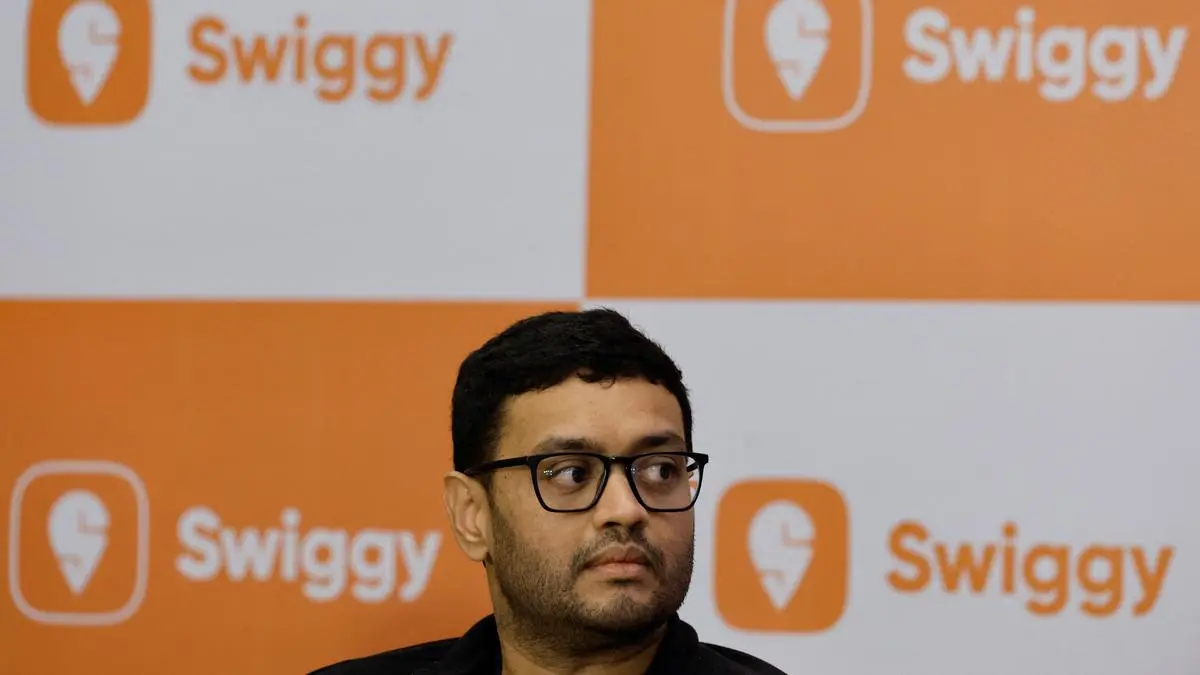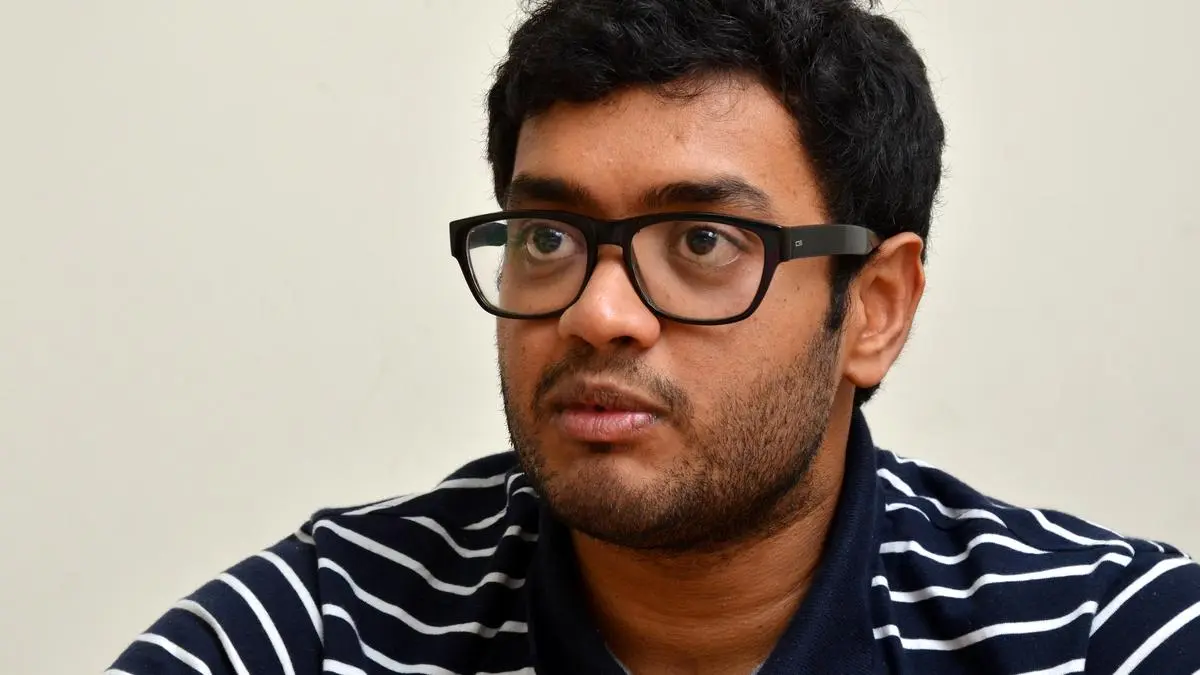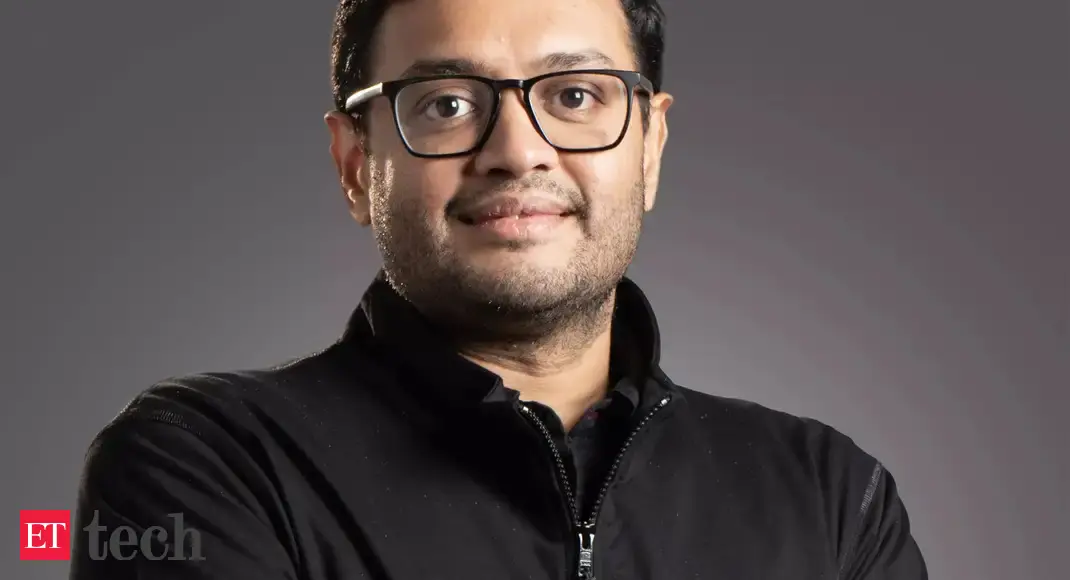
Swiggy group CEO Sriharsha Majety explains the outlook for the quick commerce industry, the shareholder vote hurdle and more, in today’s ETtech Top 5.Also in the letter:■ Anthropic strengthens India team■ Kissht Q4 report■ GCCs favour freshersETtech Interview | Quick commerce industry unlikely to sustain as many players as today: Swiggy's Sriharsha Majety Sriharsha Majety, group CEO, SwiggyAs competition in quick commerce intensifies, Swiggy group CEO Sriharsha Majety told us the market is unlikely to support the current crowd of players. In an interaction, he laid out Swiggy’s quick commerce strategy, how he views competition, and what comes next.Edited excerpts:On market dynamics: Market structure is ultimately a consequence of market size. Food delivery, a relatively small market, has supported two players and is attracting new entrants. Quick commerce is an $80-100 billion category, so it can definitely support more than two or three players. That said, it is also unlikely to sustain as many players as exist today.On Swiggy being M&A target: We have three businesses, two of which are already profitable or on the path to profitability and accelerating. Following the QIP, we have over Rs 15,000 crore in the bank. As a business, I think we can do even better, but I can’t imagine where this imagery even comes from.On the IOCC hitch: For us, the amendment was one important step towards eventually getting IOCC status, and you know the benefits we’ve talked about. If we become an IOCC, it will offer a lot of operational simplicity. It’s a long-term priority. We’re fairly confident about addressing any concerns investors might have, and we’ll work on it and come back soon.Read the full interview here.Rising AI adoption to drive $23 billion into India's data centres by 2030: Report India may need 650,000 to 700,000 GPUs in its data centres over the next five years, opening up a $23 billion investment opportunity, according to Avendus Capital.Data decoded:India’s data centre capacity is set to grow at a 26% CAGR over the next five years.AI-led infrastructure demand will almost triple India’s built data centre capacity from 1.6 GW in 2025 to 5 GW by 2030.Developers currently have an active pipeline of over 3 GW, including 1 GW of AI-focused data centre capacity.This buildout will require nearly $25 billion in capital investment over the next five years.Returns and funding: Avendus estimates that large-scale GPU deployments can generate equity IRRs of more than 28% at current capex and pricing levels. It also expects around $5 billion in deal activity from this theme over the last three years, spanning IPOs, public markets, and structures such as REITs.A 62% rise in BPM deal value belies fears of AI dominance Pure-play business process management (BPM) firms just posted their strongest quarter in years for annual contract value, with deal sizes climbing 62% year on year in early 2026.What's the news: BPM providers outperformed engineering services and IT services, which were flat and down 7.7%, respectively.Clients continue to buy BPM, but they increasingly want partners who can combine process, technology and data to deliver measurable outcomes. Deep, industry-specific expertise in sectors such as healthcare, banking and insurance is giving firms such as Genpact, EXL and Firstsource an edge.Anthropic strengthens India team, appoints Sangeeta Bavi to lead startups Anthropic has named Sangeeta Bavi as head of digital natives, startups and growth for India, adding to a string of senior hires by the AI company in the country.Details:Bavi will spearhead efforts to expand the adoption of Claude among Indian startups and mid-sized businesses.She previously served as chief operating officer at YourStory, where she drove operations and revenue growth.Before that, she was the director of startup business at Microsoft India, where she helped build its startup division from scratch.India focus: India has emerged as a key market for Anthropic, accounting for about 7.2% of global Claude usage, and ranking as the company’s second-largest market. Anthropic is also gearing up to open its first Bengaluru office to expand local teams and enterprise adoption.Other recent India hires:Irina Ghose, former Microsoft India MD, was appointed India head in January.Former Google executive Amlan Mohanty joined in April to lead policy and external affairs.Kissht revenues jump to Rs 619 crore in Q4, net profit at Rs 82 crore Ranvir Singh, founder & CEO, KisshtKissht posted a strong first outing as a listed company, with operating revenue surging 67% year-on-year to Rs 619 crore for the March quarter of FY26. Net profit rose 52% to Rs 82.2 crore, marking its first quarterly earning since listing earlier this year.Asset quality improves: The digital lender sharply improved asset quality, with gross NPAs dropping to 2.12% from 2.9% a year earlier. Net NPAs after provisioning stood at 0.29%, helped by tighter underwriting and operational efficiencies.Customer base expands: Kissht’s active consumer base climbed 71% to 3.2 million, while assets under management (AUM) surged 73% to Rs 7,066 crore, led largely by growth in personal loans.Focus on lending mix: The company continues to build its book through a mix of loan against property and unsecured personal loans, with nearly Rs 6,500 crore of its AUM currently coming from personal lending.Fresh capital deployment: Kissht, operated by OnEMI Technology Solutions, recently raised Rs 850 crore through a fresh issue of shares. It plans to deploy a significant portion of this capital into its NBFC arm, Si Creva.GCCs to hand out more jobs to freshers Global capability centres (GCCs) are set to keep hiring freshers aggressively this financial year, with intake likely to rise 12%, even as India’s broader IT services hiring market stays muted, according to a TeamLease study shared with ET.Key findings:GCC entry-level salaries may jump nearly 50% to Rs 7.5 lakh in FY27.Meanwhile, fresher pay at IT services firms is expected to hold flat at Rs 4.5 lakh.The pay gap between GCCs and traditional IT firms is widening.Firms, including Goldman Sachs and JPMorgan Chase, say campus hiring remains active.Tell me more: The report, based on 30 companies across tier-I and tier-II IT firms and GCCs, said fresher hiring at GCCs rose to 140,000-150,000 in FY26.Growth came from nearly 100 new GCCs as well as expansion at existing centres. The study also found that 23% of lateral movement from IT firms to GCCs is being backfilled through fresher hiring, while tier-2 expansion is opening up new campus talent pools.
Swiggy CEO on quick commerce space; India’s data centre surge
Swiggy group CEO Sriharsha Majety explains the outlook for the quick commerce industry, the shareholder vote hurdle and more, in todays ETtech Top 5.
1,046 words~5 min read