In January, the Trump administration, with a bipartisan group of governors, US Secretary of Energy Chris Wright, and Secretary of the Interior Doug Burgum, urged PJM to “temporarily overhaul its market rules to strengthen grid reliability and reduce electricity costs for American families and businesses by building more than US$15 billion of reliable baseload power generation.”
In a decision released later that month, PJM’s plan did have some overlap with the requests made by the officials. As part of its decision, PJM announced it would be initiating a “Reliability Backstop Procurement”.
PJM’s decision continued, “Over the longer term, the Board does not view it as desirable for PJM to serve as the procuring authority to long-term commitments resulting from backstop procurement. Accordingly, any such procurement should be viewed as a transitional measure intended to facilitate the timely integration of new supply, while options for a more durable mechanism are evaluated as part of the broader market review directed below.”
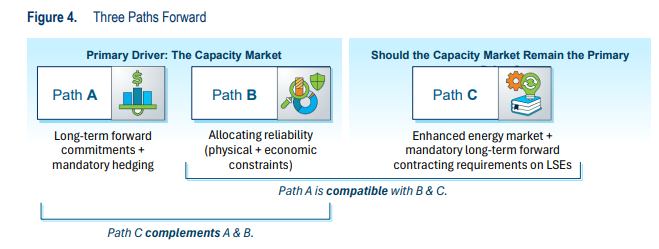
On 6 May, the grid operator released its whitepaper, “Powering Reliability Through Market Design,” laying out three distinct pathways for reform, each with different implications for how the nation’s largest wholesale electricity market will procure resources, manage costs, and integrate new technologies like battery energy storage systems (BESS).