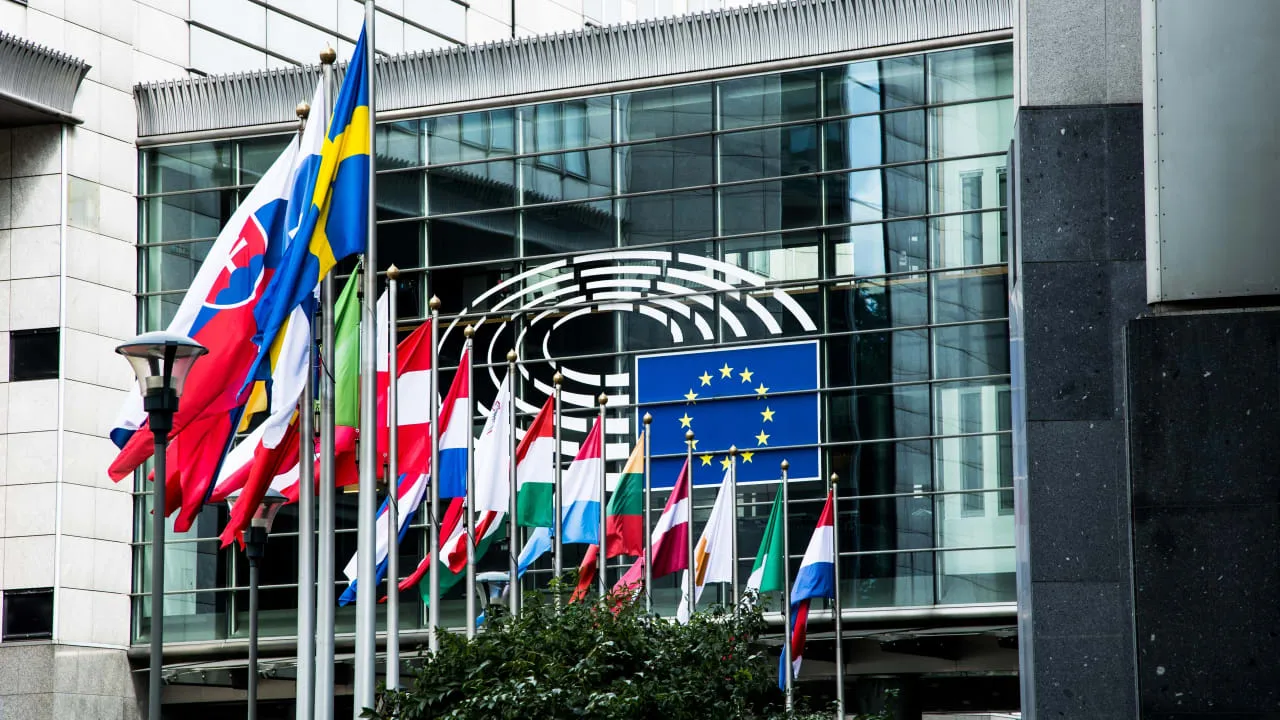
BySHARON PARDOMAY 28, 2026 15:00A report published last week by Israel’s Association of University Heads (VERA) documents a 150% rise in efforts to exclude Israeli institutions from Horizon Europe, the European Union’s (EU) flagship research program.More than 1,100 boycott complaints were recorded in six months alone. The authors warn that the damage may become irreversible without intervention.The figures confirm what many of us have been experiencing quietly for almost three years. This is not simply pressure on Israeli universities; it is a sorting of scholars by passport, and it undermines the very principles European academia claims to defend.I study Europe. For years, I taught students about reconciliation after war, democratic values, human rights, and the promise of intellectual exchange across borders. I wrote about Mediterranean relations and EU foreign policy. I believed that scholarship could transcend nationality and political conflict.An illustrative image of a number of European Union member states' flags leading up to the EU flag at the European Parliament headquarters in Brussels, Belgium. (credit: SHUTTERSTOCK)Then came October 7.The Hamas massacre shattered Israeli society in ways that many outsiders struggle to grasp. The wars that followed deepened suffering across the region and fractured old certainties everywhere. Since then, another reality has taken shape, beyond missiles or demonstrations, but devastating in its own way: the quiet academic boycott of Israelis.No academic journal editor writes that Israelis are unwelcome. No conference organizer issues a formal declaration of exclusion. Instead, it arrives through an endless sequence of small disappearances.You submit an article to a European journal. Within minutes comes a desk rejection. Five minutes is apparently sufficient to determine that years of research are unworthy of peer review. The article may have nothing to do with Israel or the Middle East, but the answer is still immediate.The discovery that every European colleague has been invited to an international project meeting except you is painful. A Horizon Europe research consortium that once welcomed Israeli participation suddenly becomes inaccessible. Colleagues who once spoke enthusiastically about cooperation now avoid association with Israeli researchers and institutions altogether.Then come the personal betrayals, which cut far deeper than institutional exclusion.In one case, a colleague for whom I once wrote a recommendation letter so he could avoid compulsory military service in Greece later joined protests where shouts of “Hamas, Hamas, Hamas, all the Jews to the gas” could be heard. Another scholar, whose immigration process I once supported, has circulated social media posts glorifying Hezbollah.Others adopt more polite forms of rejection. Senior scholars decline to write recommendation letters for Israeli colleagues seeking promotion. They are suddenly “too busy.” Some are more direct: they cannot support academics connected, in their words, to genocide.There is little room for political complexity or individual conviction. It does not matter that many Israeli academics have spent years opposing their own government, protesting the wars, the occupation, settler violence, and policies they believe are destroying both the Israeli and the Palestinian future.I have attended conferences where an Israeli academic presenting a paper unrelated to the conflict was interrupted by someone shouting “genocider.” Biography, politics, and moral conviction disappear instantly beneath a national label.Eventually, the external boycott becomes internalized. You stop sending articles to leading journals because rejection feels predetermined. You stop applying to academic conferences because humiliation becomes exhausting. Self-censorship gradually replaces ambition.Yet something unexpected also happens.Freed from the illusion that the academy stands apart from politics, many of us reconnect with society itself. We work with communities harmed by violence, join efforts against extremist settlers attacking Palestinians in the West Bank, and fight policies carried out in our names but against our consciences.And amid the hostility, unexpected solidarities emerge.Iranian scholars living abroad have reached out with compassion and encouragement. They speak openly against authoritarianism in Tehran and destructive policies in Jerusalem alike, insisting that a different future remains possible. Colleagues abroad sent kind messages after Iranian missiles struck the Ben-Gurion University of the Negev campus, where I teach.Under a boycott, you discover who your real friends are. You also discover something uncomfortable about Europe.Europe’s academic institutions often pride themselves on openness, dialogue, and intellectual pluralism. Yet too many European academic spaces now operate according to an unreliable moral litmus test.Israelis are judged not by what they write, teach, or believe, but by nationality alone. Academic communities that rightly insist on distinguishing between governments and citizens increasingly fail to make the distinction when the citizen holds an Israeli passport.Europe knows from its own history the dangers of turning intellectual life into a test of political purity.This damages far more than Israeli academia. Science and scholarship depend on exchange. Excluding Israeli researchers harms European innovation, Euro-Mediterranean cooperation, and the global circulation and synergy of ideas. Israel remains deeply connected to Europe economically, culturally, and socially.The VERA report warns that Israeli universities could find themselves permanently outside the world’s most prestigious scientific networks. Yet the damage would ripple beyond Israel. Europe’s research institutions weaken themselves when political conformity becomes a prerequisite for intellectual legitimacy.One day, the wars will subside. Some of the colleagues who remained silent today will reappear, proposing edited volumes, conference panels, and collaborative research grants, and they will behave as though nothing happened.Perhaps that is the way institutions survive. Institutions forget quickly. Individuals do not.Academic communities, like societies themselves, are ultimately judged not only by whom they exclude in moments of anger, but by whom they are willing to hear again once the anger fades.Still, despair is a luxury the Middle East cannot afford. The boycott has forced many Israeli scholars out of academic enclosure and into deeper engagement with society. It has made some of us better teachers, more attentive citizens, and more morally serious human beings, precisely because exclusion compelled us to reconsider what academic life is for.Galileo Galilei is said to have whispered after his trial, “E pur si muove.” And yet it moves. The earth continued to move despite denial and persecution. Perhaps we can as well.The writer is a Senior Fellow at the Jewish People Policy Institute (JPPI) and a professor of European studies and international relations in the Department of Politics and Government at Ben-Gurion University of the Negev.Follow us on Google
Israeli academia faces growing EU boycott, harming global innovation | The Jerusalem Post
The Hamas massacre shattered Israeli society in ways that many outsiders struggle to grasp. Since then, another reality has taken shape: the quiet academic boycott of Israelis.
1,024 words~5 min read