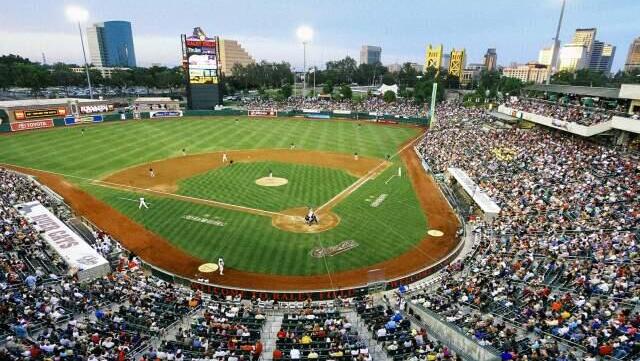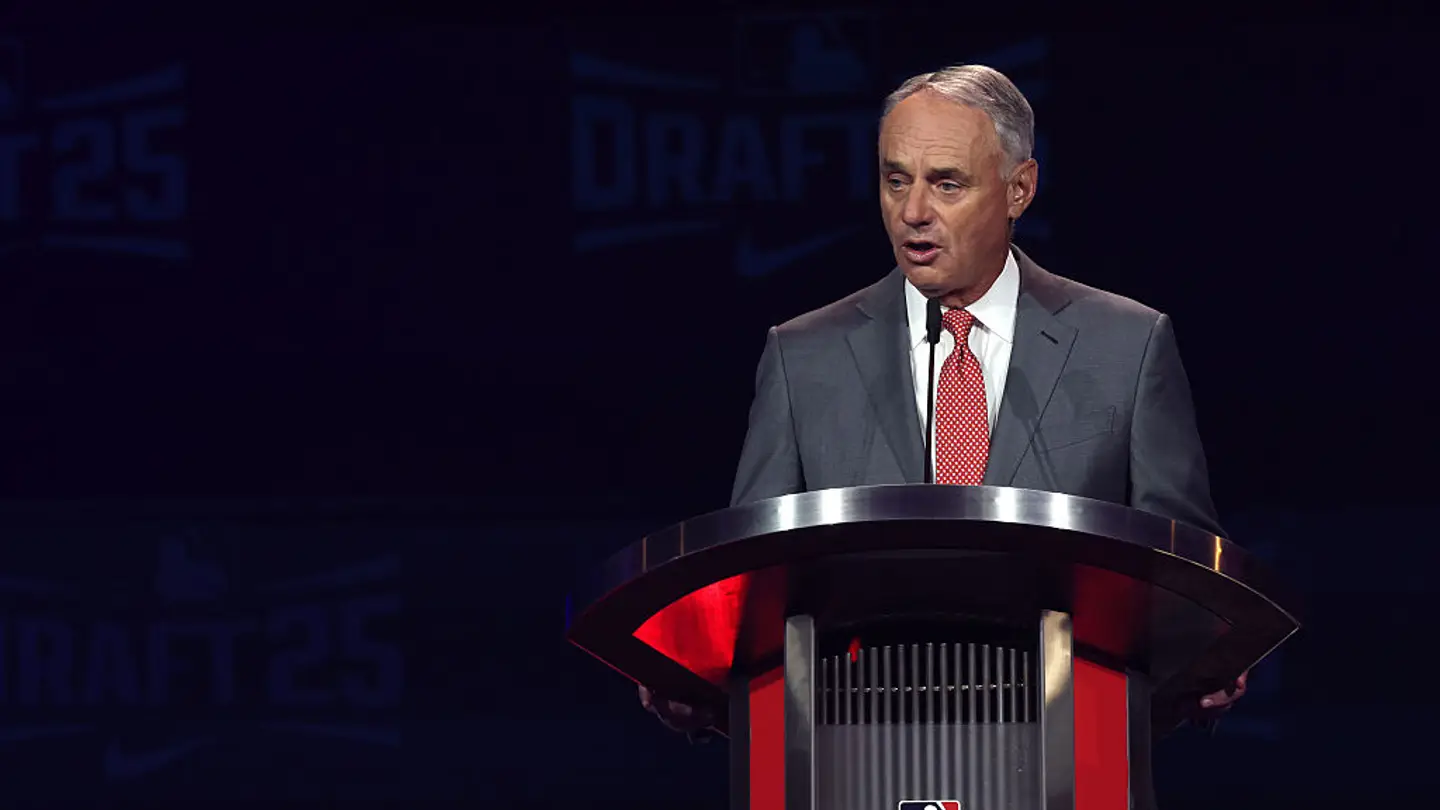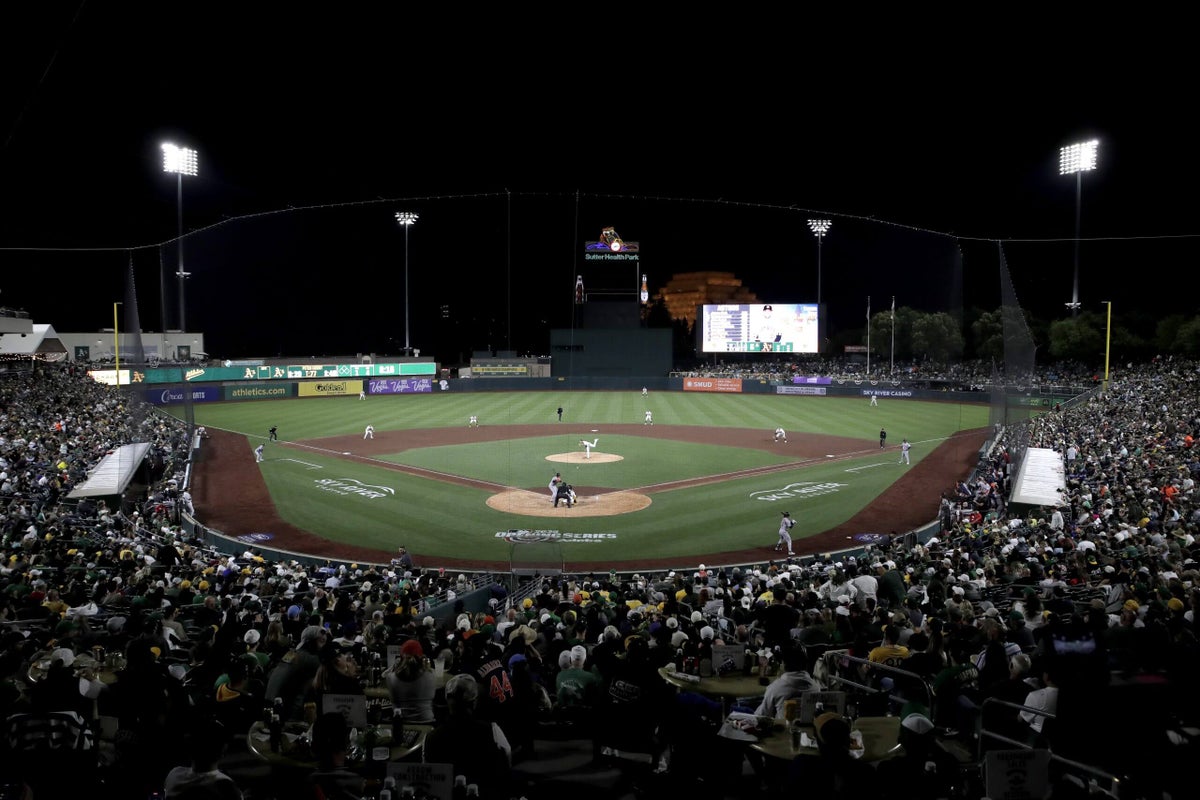
When the itinerant Athletics chose the Sacramento area as their temporary home, local officials hoped the team’s stay would serve as a showcase for Major League Baseball — as proof that California’s capital region should someday host a team full-time.However, nearly halfway through the A’s three-year stay, they haven’t drawn well. In fact, since the club arrived to Sutter Health Park, a minor-league stadium in West Sacramento, they’ve sold the fewest tickets in the big leagues.But a group of local business leaders and mayors are undeterred.Thursday marks the formal launch of Sacramento’s campaign to both catch Major League Baseball’s eye, and a deep-pocketed owner to run the team.“It’s true that Sacramento will be perceived as an underdog,” said Mark Friedman, chairman of Fulcrum Property, a local real-estate developer, who said he’s contributing $150 million to the project in land and equity. “But when the facts come out, I think we’ve got not only a strong argument, but a winning case.“We’re the biggest city that doesn’t have a team. We’re bigger than half a dozen that do. We’re the largest television market that doesn’t have a team.”Currently overseeing a 30-team circuit, MLB commissioner Rob Manfred hopes that, by 2029, he and his owners will have selected two cities to host expansion teams: one in the eastern half of the continent and the other out west. The competition Sacramento faces in the western market is steep, with cities such as Portland, Ore., Vancouver, Canada, and Salt Lake City among those in the running.“There’s a lot of markets in the United States — in North America, quite frankly, Canada and Mexico — that would like to have Major League Baseball,” Manfred said Wednesday in a televised interview on ESPN.Sacramento’s group, which has dubbed itself the “Sacramento Pitch,” says it has assembled $800 million in land and private investment, and envisions building a stadium in the same area the A’s play now, West Sacramento. It’s technically a separate city from Sacramento and in a separate county, and sits a short walk across the Sacramento River.Friedman said the United Auburn Indian Community and Shingle Springs Band of Miwok Indians are committing $250 million each. The group also says it has access to $1 billion in public money.While it’s common for municipalities that are courting teams to offer up taxpayer money, economists also frequently suggest it’s bad math to subsidize pro sports teams.Help wantedOverall, Sacramento still has a long way to go, and significantly more capital will be needed from a yet-be-identified lead investor. That individual is expected to come from outside the market, and will need to arrive with perhaps billions more at the ready. There will be a hefty expansion fee the other owners charge a team that newly joins MLB.In 2021, Manfred floated fees in the range of $2.2 billion. This was after Steve Cohen purchased the New York Mets for $2.4 billion, but before the San Diego Padres sold at $3.9 billion in May to a group led by Kwanza Jones and José E. Feliciano.Friedman, who once owned a share of basketball’s Sacramento Kings, said that, while the Kings and owner Vivek Ranadivé plan to invest in the new MLB project, they don’t want to head up the operation.Fifty acres in West Sacramento are targeted for a new stadium and surrounding mixed-use developments, in an area that includes the ballpark the A’s play in now. The Kings own that stadium, Sutter Health Park, as well as its regular tenant, the Sacramento River Cats, the Triple-A club of the San Francisco Giants.“We may elect to build a new stadium next to the existing stadium, and then tear that one down, or we may choose to tear down the existing stadium and build a new one on the same site,” Friedman said. “We just haven’t gotten to the design part of this, and are waiting until we bring the lead investor on, because that person will undoubtedly want to place their stamp on what the project looks like.”The current would-be investors in a Sacramento ballclub believe that publicity and a wide search will ultimately help their goal for someone with deep pockets.Without a lead buyer at this point, Sacramento could trail other cities’ expansion efforts, but Barry Broome, head of the Greater Sacramento Economic Council, framed the search as an advantage.“The competing markets already have their lead investors,” Broome said. “We think we can attract a higher-standard lead investor. It would be a veteran ownership group that already owns a major-league sports team or two, that have clear track records … versus local owners that don’t have a global footprint.”The goal is to find an investor by the end of the calendar year.“We already have people calling us,” he said. “We’re going to be able to compete with Salt Lake’s proposal, and we will exceed Portland’s proposal and other competitive markets.”A changing sceneThat Sacramento is in the conversation at all reflects how much the area has grown over time.“What I tell people a lot of the time is, there’s not one specific great reason why you wouldn’t have been to Sacramento, but once you get there, you fall in love with it,” former big leaguer Derrek Lee, a Sacramento native who hit 331 home runs over a 15-year big-league career, said. “It’s just grown so much, it’s hard to even describe. The El Dorado Hills out to Roseville, we have real suburbs now, which didn’t really exist when I was growing up.”Three decades ago, there were rumors that one ownership group vying to buy the A’s, then based in Oakland, would try to move the team to Sacramento. Kevin McClatchy, a Sacramento native and member of the McClatchy publishing company, was part of that ownership group, which wound up buying the Pittsburgh Pirates instead.Now out of baseball, McClatchy denies that he wanted to bring the A’s to Sacramento in the 1990s. But the possibility of a team in Sacramento feels more realistic to him now.“I think the Kings have somewhat shown people that Sacramento can easily support a professional franchise, but I think it’s come into focus more recently,” said McClatchy, who is lending his expertise to Sacramento’s bid, but does not plan to come on as an investor. “Things have changed dramatically.”The West Sacramento region boasted a population estimate of 56,216 people, according to 2025 U.S. Census data, while the capital proper had 536,449 people.Though attendance is up at Sutter Health Park, it still lags behind MLB’s other 29 clubs. (Ezra Shaw / Getty Images)How MLB’s owners would judge the city and media market is to be seen, including how much weight they would put into the attendance figures produced by the A’s or even the River Cats. This year, the A’s are averaging 10,676 tickets sold nightly, about 1,200 more than 2025.“I don’t think you can compare the support for a team that’s a Triple A team, or a major-league team that’s on loan, to a team that is going to be part of Sacramento’s identity,” McClatchy said. “It’s a great baseball town, and probably I would even say a better baseball town than a basketball town.”To be seen, too, is whether baseball’s owners want to again navigate California politics. While many fans have questioned the sincerity of the effort that A’s owner John Fisher and MLB made to keep the A’s in Oakland, MLB officials also grew frustrated by the process.To Kevin McCarty, mayor of Sacramento, the situations are distinct. He called Sacramento “shovel ready.”“The amount of excitement that I get around Sacramento is amazing,” McCarty said.Public moneyMartha Guerrero, mayor of West Sacramento, said the public funding for an MLB team would primarily come from tax increment financing, which relies on property taxes, with smaller amounts coming from hotel fees and other sources.“What’s unique here in West Sacramento is our share of property taxes is much higher than most jurisdictions,” Guerrero said. “What we do is we borrow against future growth from the property-tax value to fund the public infrastructure and other improvements.”Guerrero said she doesn’t expect that the matter would be voted on.“I get what people may say, ‘Hey, it’s a billion dollars you can grab and put somewhere else,’” she said. “But it’s an economic development tool that we’ve been using for years, and we take careful consideration.“It does not impact our general fund.”Speaking to The Athletic recently about the Kansas City Royals’ efforts to get a new stadium, economist J.C. Bradbury said that whether subsidies come from a general fund or not doesn’t change the overall concern.“Economists have been studying the economic benefits of stadiums for five decades, and they consistently find that they are bad public investments,” Bradbury said.Time and again, elected officials have come to believe that sports teams will transform their areas.“People have been sleeping on Sacramento,” Broome said. “We’re going to become the stars of California, because we got a healthy, sustainable economy. I think people are going to find out that the Sacramento region is the hidden gem on the West Coast.”
Sacramento group launches bid for Major League Baseball’s expansion efforts
That Sacramento is in the conversation reflects how much the area has grown over time. However, there are significant hurdles it must clear.
1,499 words~7 min read