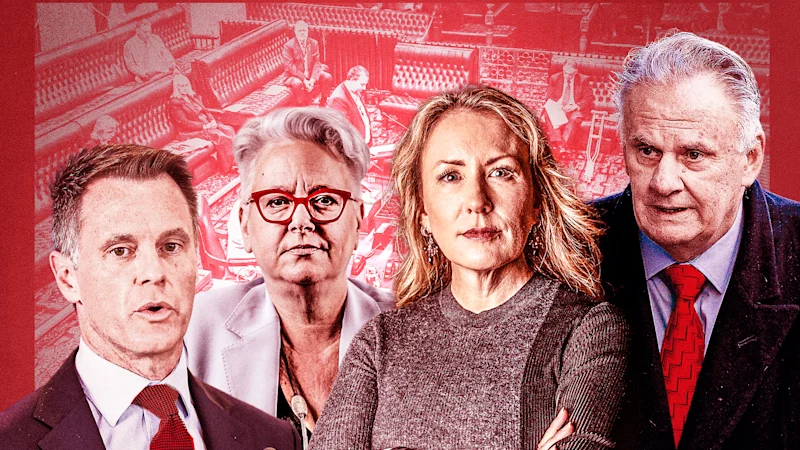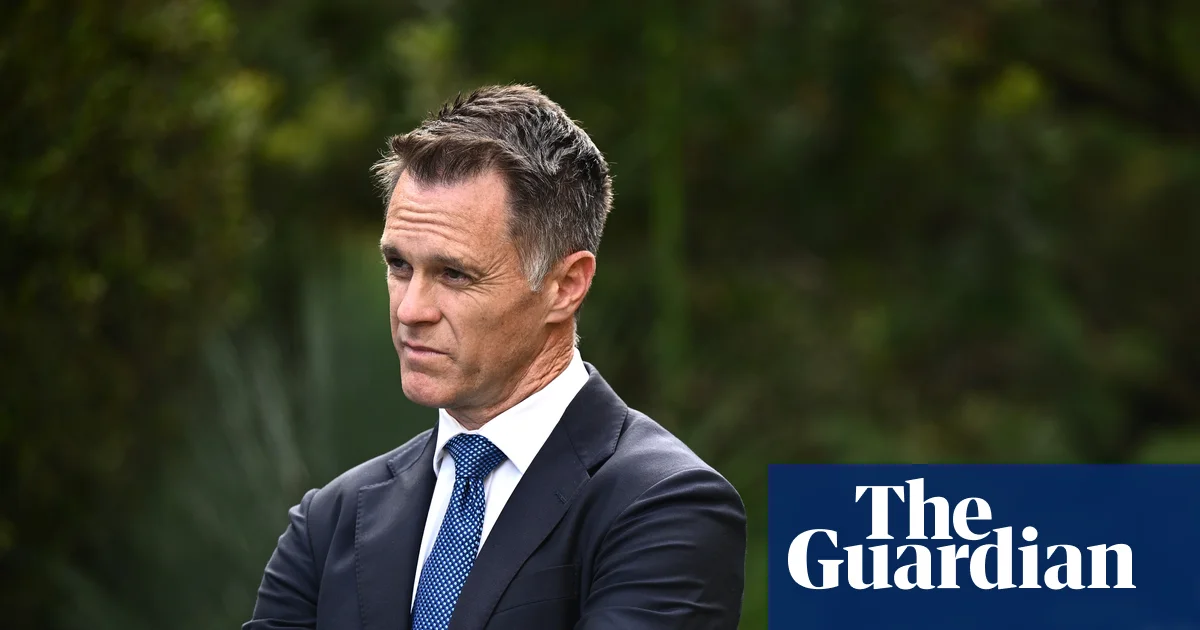
The New South Wales upper house this week suspended the government’s leader in the Legislative Council, Penny Sharpe, for 14 days.But, like beheading a hydra, two more ministers appeared in her place to answer questions for NSW Labor.One of them, the deputy leader, John Graham, was subsequently expelled on Thursday. If the pattern continues, who could be next?And what’s this serpentine drama really about?The short answer is: the state government’s refusal to release documents.The longer version points to how the Minns government has found itself unable to pass a raft of legislation 10 months before the next state election in March.While Sharpe and Graham were suspended this week, it was the premier, Chris Minns, in the lower house, who was cast as the villain.Sign up for the Breaking News Australia emailMinns is accused of paring back scrutiny powers without fear of consequences – amid persistent speculation he will step down after the 2027 poll.Sharpe’s four suspensions this year, totalling 24 days, follow the government’s refusal to release documents relating to a historical sexual assault allegation against former NSW Labor general secretary Jamie Clements, a friend of the premier, after a parliamentary call for papers by independent member Mark Latham.In 2015, Clements was accused of intimidating and trying to kiss a Labor staffer. He denied the allegation and was never charged. An apprehended violence order was applied for against Clements in 2016 but the application was withdrawn after he agreed to stay away from the woman for 12 months.So why would the opposition and crossbench combine to suspend Sharpe over a 10-year-old allegation?The upper house reviews legislation but also has two special functions: holding parliamentary inquiries and compelling the release of government documents.The premier says an unlikely alliance is abusing those powers to promote “conspiracy theories and political agendas” by seeking documents about long-closed investigations; dragging his staffers before inquiries; pursuing the arrest of his chief of staff for refusing to appear at one probe; and recommending other staffers be considered for prosecution.During debate on Tuesday, Greens MLC Sue Higginson said the government’s refusal to release documents related to a “woman who is out there in the community who would like to see this matter pursued to the fullest extent possible – and the documents produced and provided”.The NSW opposition leader in the Legislative Council, Damien Tudehope, told the ABC on Wednesday that Sharpe’s suspension was “important in terms of the principle of transparency, because it’s not only this document”.Graham’s suspension on Thursday, after a motion brought by Greens member Amanda Cohn, related to the government’s decision not to release the long-shelved Sackar review of controversial hate speech laws.Last month, the government returned a five-page document containing letters from senior public servants and chiefs of staff in the offices of the premier, attorney general and police minister. They all said no documents were lawfully required to be provided.The government has said the Sackar review is “cabinet in confidence” and will be released once a policy position on its contents is agreed.Latham’s involvement has drawn condemnation from the Labor particularly after a court ordered the one-time federal Labor leader to pay $100,000 compensation to independent MP for Sydney Alex Greenwich. The court found Latham had vilified and sexually harassed Greenwich. Latham has said he intends to appeal.Labor’s refusal to release these documents follows a separate court decision in favour of the premier’s chief of staff, James Cullen, which removed upper house’s ability to compel witnesses to appear before parliamentary committees. Since that December ruling, there have been multiple non-appearances at inquiries by big tech companies, key individual witnesses and at least one government department.Minns says the government will not move to restore the power before the high court hears a legal challenge which is scheduled for September at the earliest.The opposition and crossbench argue the upper house is key to parliamentary integrity. Calls for papers can lead to parliamentary inquiries, which can lead to independent investigations, which can lead to prosecutions and criminal convictions, they note.They have tried to restore the witness compulsion powers by adding them to unrelated pieces of government legislation – “poison pills” in the government’s words – which Labor has not supported.This accounts for some of the more than 20 government bills held up in the upper house, where the government is in the minority.Minns has bristled at the upper house moves targeting him, at a time when the premier appears exhausted after an intense period after December’s Bondi terror attack that killed 15 people at a Hanukah event.Already this year, Minns has faced a court defeat over controversial protest laws, been forced to downplay rumours of a falling out with the prime minister, and ignited speculation that he intends to step down after the 2027 election. (He told a press conference in March he would not be premier in 2032, but later backtracked on those comments.)Palestine Action Group celebrates after NSW supreme court strikes down anti-protest law – videoStreets ahead in the polls as preferred premier over the Coalition leader, Kellie Sloane, the premier has made an increasing play to the right on issues outside state government control.This month, in the same week he criticised federal Labor for a lack of income tax changes, especially for those in the top bracket, he said “biological differences between people who were born male and people who were born female … needs to be reflected in the law”.Labor sources say the premier’s desire to move on after contesting the 2027 election was being discussed by MPs well before the Bondi attack. His office this week insisted he’d serve a full term if elected next year.A question at a tense press conference days after Sharpe’s third suspension drew a laugh from the premier. Asked if he could move to abolish the troublesome upper house, as his Labor forebears Jack Lang and Bob Heffron attempted, Minns replied: “No, look, it’s a democratic chamber.”“I take issue with some of the outrageous allegations, personal attacks, attacks on family and friends,” he said at the time. “But that’s part of the game.”
Expulsions, allegations and ‘poison pills’: behind the drama holding up NSW parliament
Labor’s leader in the upper house, Penny Sharpe, and deputy leader, John Graham, have been suspended after the government’s refusal to release documents
1,007 words~5 min read