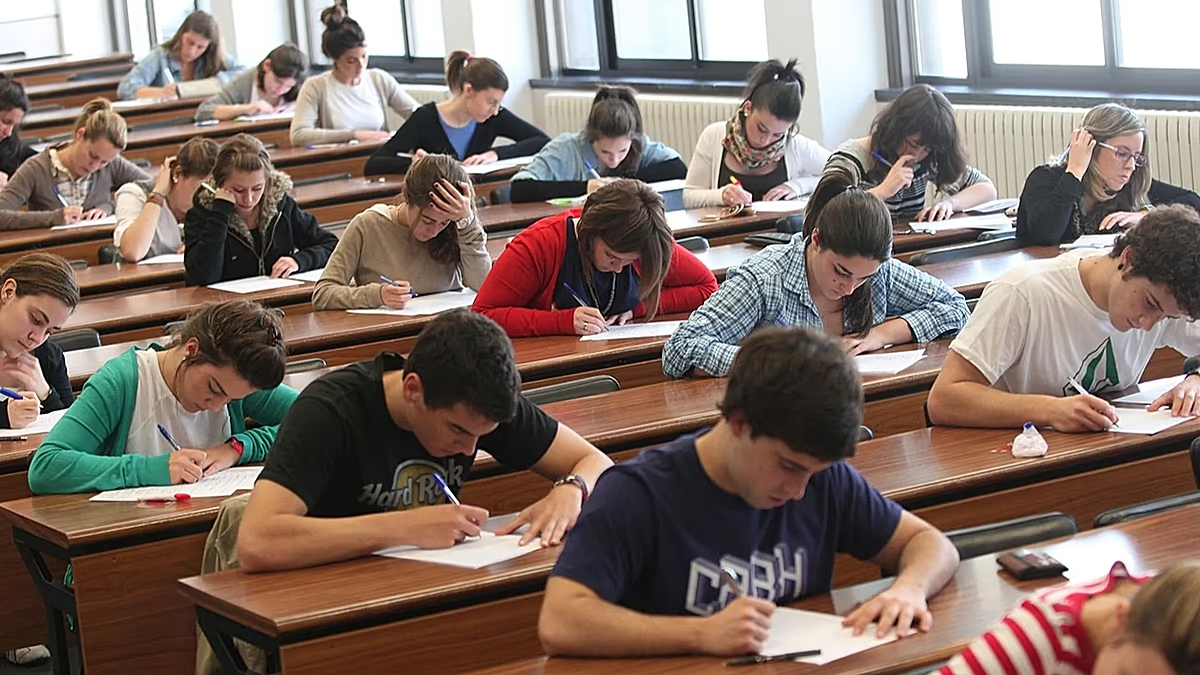
Stanford University will require proctors at all in-person exams starting this fall, ending a century-old tradition of student self-policing as AI sharpens cheating concerns.
Stanford's Faculty Senate has voted unanimously to permit proctoring following a multi-year pilot study by the Academic Integrity Working Group (AIWG), Stanford Report said. The university's Board on Conduct Affairs, Undergraduate Senate, Graduate Student Council and Office of the President all approved the policy last month, according to Stanford's Office of Community Standards.The shift dismantles a defining feature of Stanford's Honor Code, which students themselves drafted in 1921. The original code required instructors not to supervise exams and asked students to report each other for academic dishonesty, the Office of Community Standards said. In practice, that mutual policing rarely happened, faculty later acknowledged."The entire basis for the system was this idea that students would rat each other out, and that had been broken here for a long time," Brian Conrad, a mathematics professor and member of both the AIWG and its predecessor Committee of 12, told The Stanford Daily.The 2020-2021 academic year saw 393 honor code violations at Stanford, none of which were reported by students themselves, the newspaper reported, citing university data. That was a sharp jump from the 136 violations recorded in 2018-2019, of which only two were student-reported.Jennifer Schwartz Poehlmann, AIWG co-head and a senior lecturer in chemistry, said students frequently came to her in distress after witnessing peers cheat but felt unable to act."Because the class was large, they often did not know the student's name or would feel uncomfortable being a witness, so there was nothing we could do," The Stanford Daily reported.