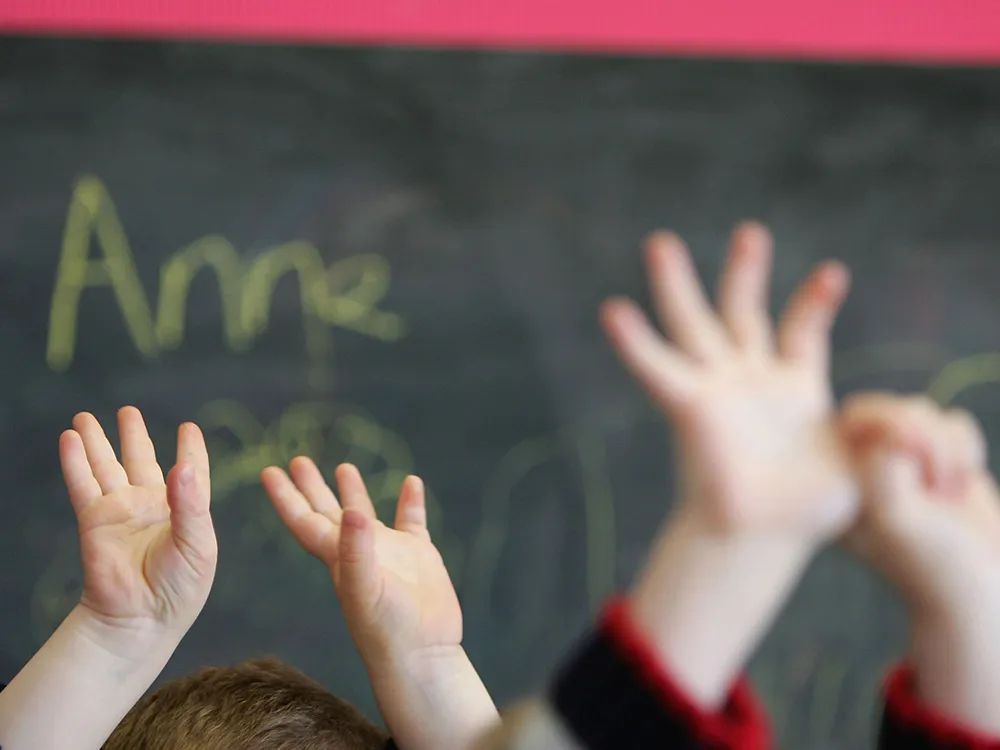
Skip to Content Subscribe Our Offers My Account Manage My Subscriptions FAQ Newsletters Canada Canadian True Crime Canadian Politics Health World Israel & Middle East Financial Post NP Comment Longreads Puzzmo Diversions Comics NP News Quiz New York Times Crossword Horoscopes Life Eating & Drinking Style Sponsored Play for Ontario Travel Travel Canada Travel USA Travel International Cruises Travel Essentials Culture Books Celebrity Movies Music Theatre Television Business Essentials Advice Lives Told Tails Told Shopping Buy Canadian Home Living Outdoor Living Tech Style & Beauty Kitchen & Dining Personal Care Entertainment & Hobbies Gift Guide Travel Guide Deals Savings National Post Store More Sports Hockey Baseball Basketball Football Soccer Golf Tennis Driving Vehicle Research Reviews News Gear Guide Obituaries Place an Obituary Place an In Memoriam Classifieds Place an Ad Celebrations Working Business Ads Archives Healthing Epaper Manage Print Subscription Profile Settings My Subscriptions Saved Articles My Offers Newsletters Customer Service FAQ Newsletters Canada World Financial Post NP Comment Longreads Puzzmo Diversions Life Shopping Epaper Manage Print Subscription HomeLifeParentingOne-third of Canadians still approve of spanking children, while 53% think it's wrong to yell: new pollA new report shows that 53 per cent of Canadians think using physical punishment, such as spanking, to discipline children is unacceptableLast updated 18 minutes ago You can save this article by registering for free here. Or sign-in if you have an account.A new Leger report found that six in 10 Canadians experienced corporal or physical punishment as children. Photo by Christopher Furlong /Getty ImagesA new Leger survey shows that “a slight majority” of Canadians believe childhood corporal punishment, such as spanking, is unacceptable. While 53 per cent say physically punishing children is wrong, 40 per cent think it’s appropriate at least in some situations.Enjoy the latest local, national and international news.Exclusive articles by Conrad Black, Barbara Kay and others. Plus, special edition NP Platformed and First Reading newsletters and virtual events.Unlimited online access to National Post.National Post ePaper, an electronic replica of the print edition to view on any device, share and comment on.Daily puzzles including the New York Times Crossword.Support local journalism.Enjoy the latest local, national and international news.Exclusive articles by Conrad Black, Barbara Kay and others. Plus, special edition NP Platformed and First Reading newsletters and virtual events.Unlimited online access to National Post.National Post ePaper, an electronic replica of the print edition to view on any device, share and comment on.Daily puzzles including the New York Times Crossword.Support local journalism.Create an account or sign in to continue with your reading experience.Access articles from across Canada with one account.Share your thoughts and join the conversation in the comments.Enjoy additional articles per month.Get email updates from your favourite authors.Create an account or sign in to continue with your reading experience.Access articles from across Canada with one accountShare your thoughts and join the conversation in the commentsEnjoy additional articles per monthGet email updates from your favourite authorsSign In or Create an Accountor“We were a little bit surprised that a fairly sizable portion of the Canadian population will still physically discipline their child and feel that’s OK. It’s probably not the same degree as it was a generation ago, but a bit of it still exists, for sure,” says Andrew Enns, executive vice president of Leger’s Central Canada operations.Six in 10 Canadians say they experienced physical punishment as children, with the highest likelihood in older respondents (68 per cent among those aged 55 and older), according to Leger’s Use of Corporal Punishment on Children report.Canadians who were physically punished in their own childhoods are more likely to find all of the disciplinary actions and behaviours toward children tested in the report more acceptable than those who weren’t. For example, 51 per cent of those who received physical punishments condone yelling at a child, 45 per cent consider slapping a child on the hand, arm or leg acceptable, and 43 per cent agree with spanking.“In some respects, there’s a little bit of, ‘I recall when I was a child receiving corporal punishment, and I turned out OK, and therefore I’m bringing some of that mindset forward,’” says Enns. “We see degrees of what’s acceptable and not acceptable in terms of physical punishment, like hitting a child in the head or something like that. Those forms are unacceptable. With spanking, which is probably the most common for a lot of the older generation, there’s a more sizeable portion of the Canadian population or parents that still find that reasonable.”Overall, roughly one-third of respondents approve of spanking (32 per cent) or slapping a child on the hand, arm or leg (35 per cent).In addition to the Canadians who were disciplined physically as children (52 per cent), the report found that acceptance of corporal punishment is significantly higher among Albertans (55 per cent) and men (46 per cent). Quebecers (64 per cent) and women (59 per cent) are more likely to consider it unacceptable.Non-physical disciplinary measures, including removing privileges (88 per cent), using timeouts (81 per cent), and sending a child to their room to calm down (78 per cent), are largely accepted by Canadians.“Where there’s a physical interaction, then you start to see a real drop off,” says Enns, adding that even yelling at a child has mixed acceptance, with 53 per cent of Canadians considering it out of line.When it comes to witnessing physical punishment in public, 18 per cent of Canadians say they would intervene directly, and 20 per cent would report the incident without active involvement. At 21 per cent, parents are more likely to say they would step in, while 36 per cent of respondents say they wouldn’t take action because it’s none of their business, a share that’s even higher in men (42 per cent).Globally, 70 countries and states have banned all corporal punishment, but Canada isn’t one of them. Section 43 of the Criminal Code allows parents, caregivers and teachers to use minor, reasonable force on a child. It states, “Every schoolteacher, parent or person standing in the place of a parent is justified in using force by way of correction toward a pupil or child, as the case may be, who is under his care, if the force does not exceed what is reasonable under the circumstances.”In 2004, the Supreme Court of Canada studied section 43 in the case of the Canadian Foundation for Children, Youth and the Law v. Canada. It found that the law was constitutional but “significantly narrowed” its application and provided guidelines, including restricting the use of corrective force to children older than two and younger than 12.Under the guidelines, parents and caregivers may use only “transitory and trifling” physical punishment. “For example, spanking or slapping a child hard enough that it leaves a mark or bruise would not be considered ‘transitory and trifling’ and would not be reasonable,” according to the Department of Justice Canada.Using objects such as belts or rulers isn’t allowed, and neither is striking a child’s face or head. Teachers aren’t permitted to apply force or physical punishment, but may be allowed to use “reasonable force,” such as in removing a child from a classroom.Evidence shows that aversive strategies like physical punishment, yelling at or shaming children aren’t only ineffective in the long term. According to the World Health Organization, corporal punishment is linked to a range of negative outcomes for children, including taking a toll on physical and mental health, impairing cognitive and socio-emotional development, and leading to increased aggression and perpetration of violence.The Leger report found that Canadians widely believe physical forms of punishment, especially hitting a child with an object (91 per cent unacceptable) or slapping a child in the face (92 per cent unacceptable), are beyond the pale.“There are certain things that we’ve brought forward that we still say are OK, but then there are certain things that universally, we’ve all come to the same conclusion, even if we had it as a child ourselves,” says Enns. “Now that’s just off limits.”The online survey of 1,525 Canadians aged 18 or older was conducted between May 8 and 11, 2026. A margin of error cannot be associated with a non-probability sample in a panel survey. A probability sample of the same number of respondents would have a margin of error of no greater than plus or minus 2.51 per cent, 19 times out of 20. Get the latest from Laura Brehaut straight to your inbox Join the Conversation This website uses cookies to personalize your content (including ads), and allows us to analyze our traffic. Read more about cookies here. By continuing to use our site, you agree to our Terms of Use and Privacy Policy.
One-third of Canadians still approve of spanking children, while 53% think it's wrong to yell: new poll
A new report shows that 53 per cent of Canadians think using physical punishment, such as spanking, to discipline children is unacceptable.
1,434 words~7 min read