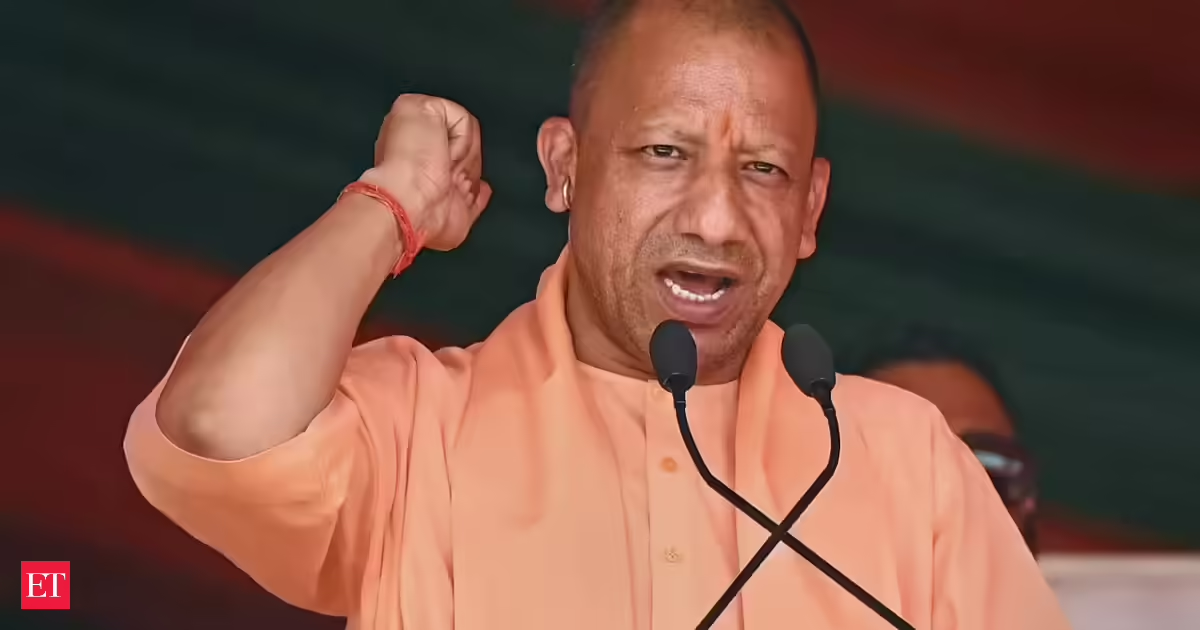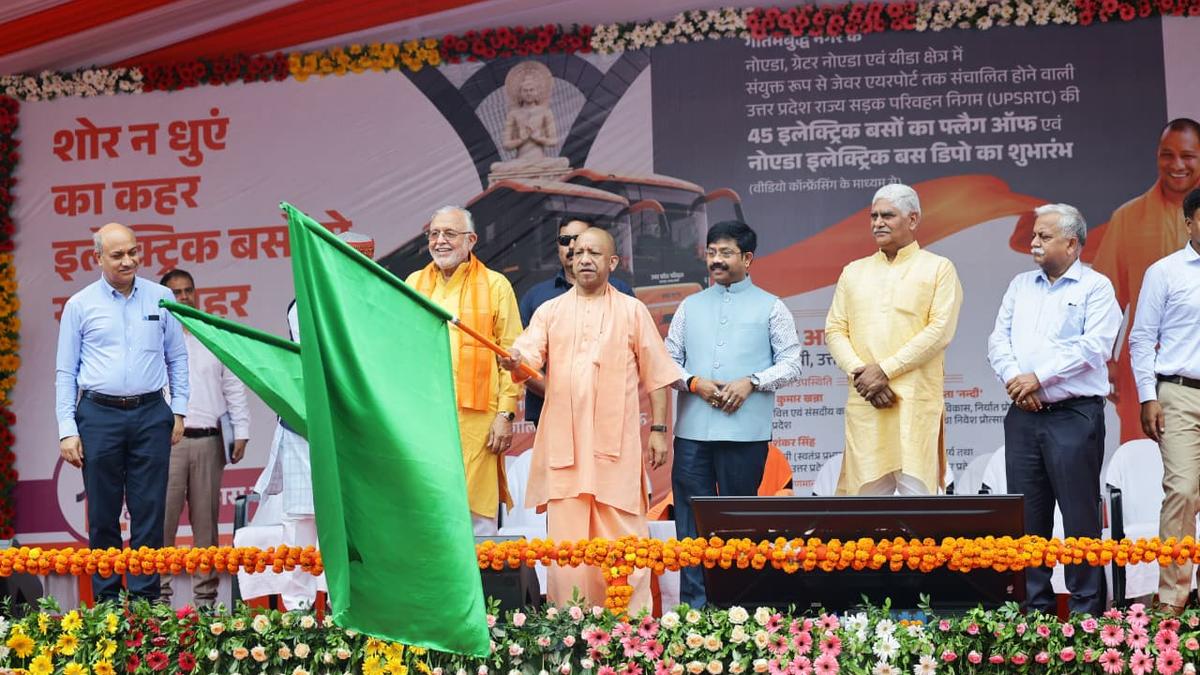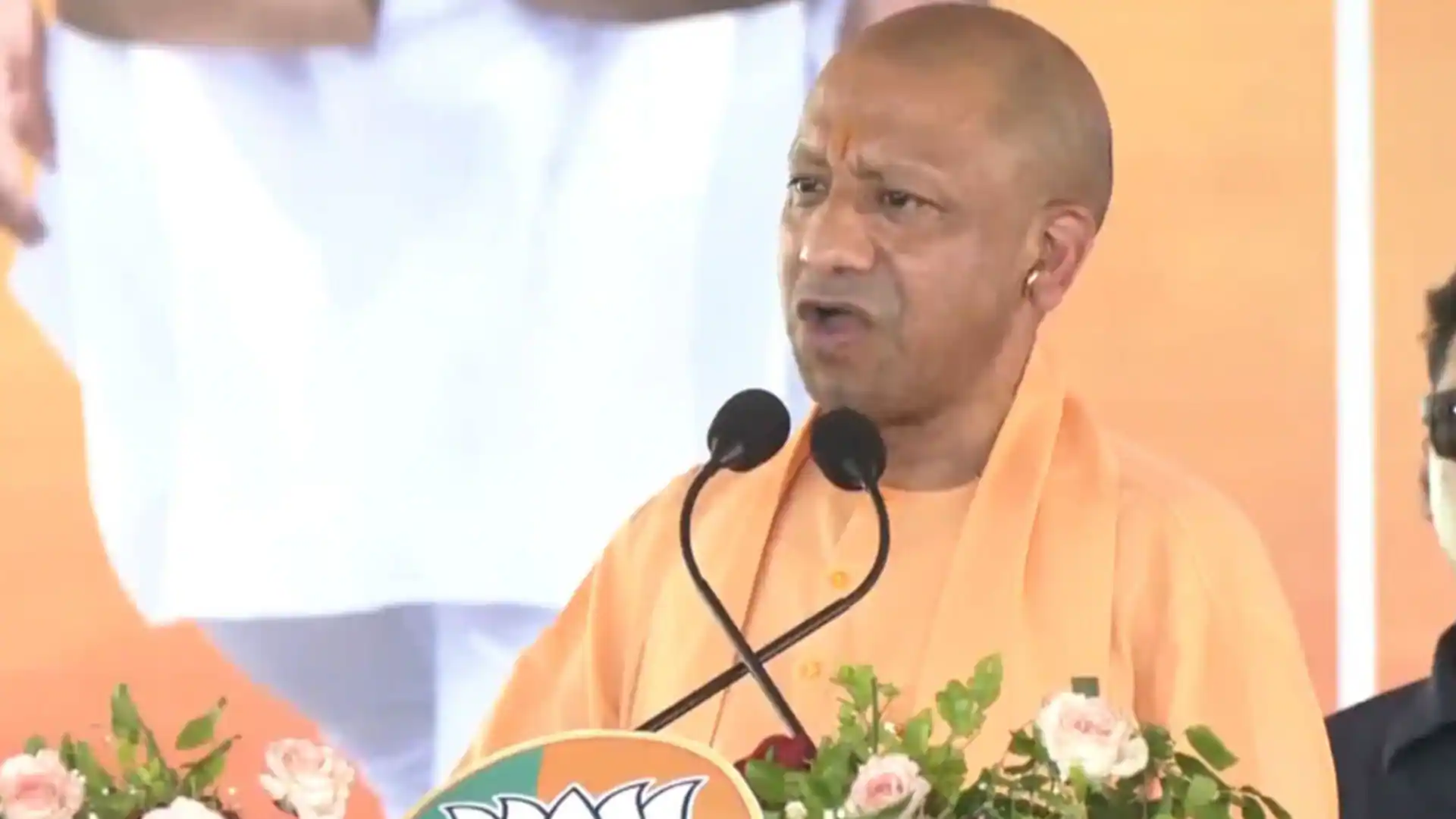
Chief Minister Yogi Adityanath
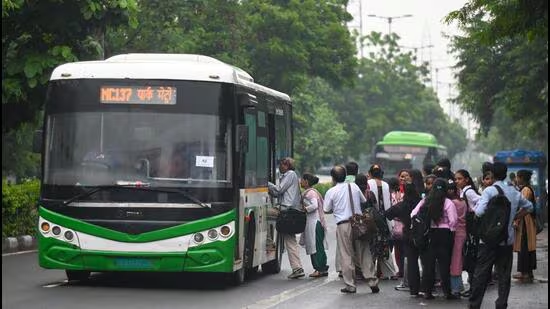
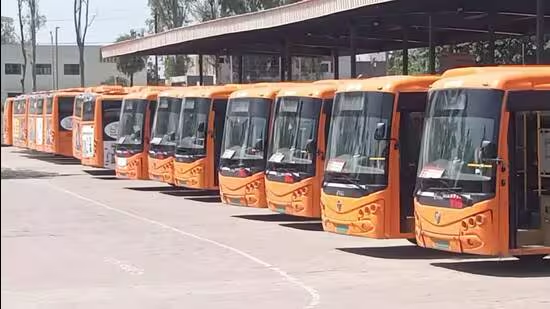
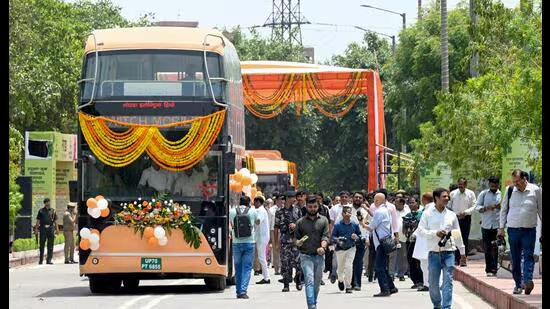
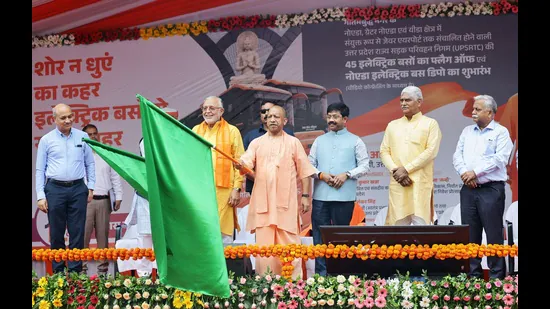
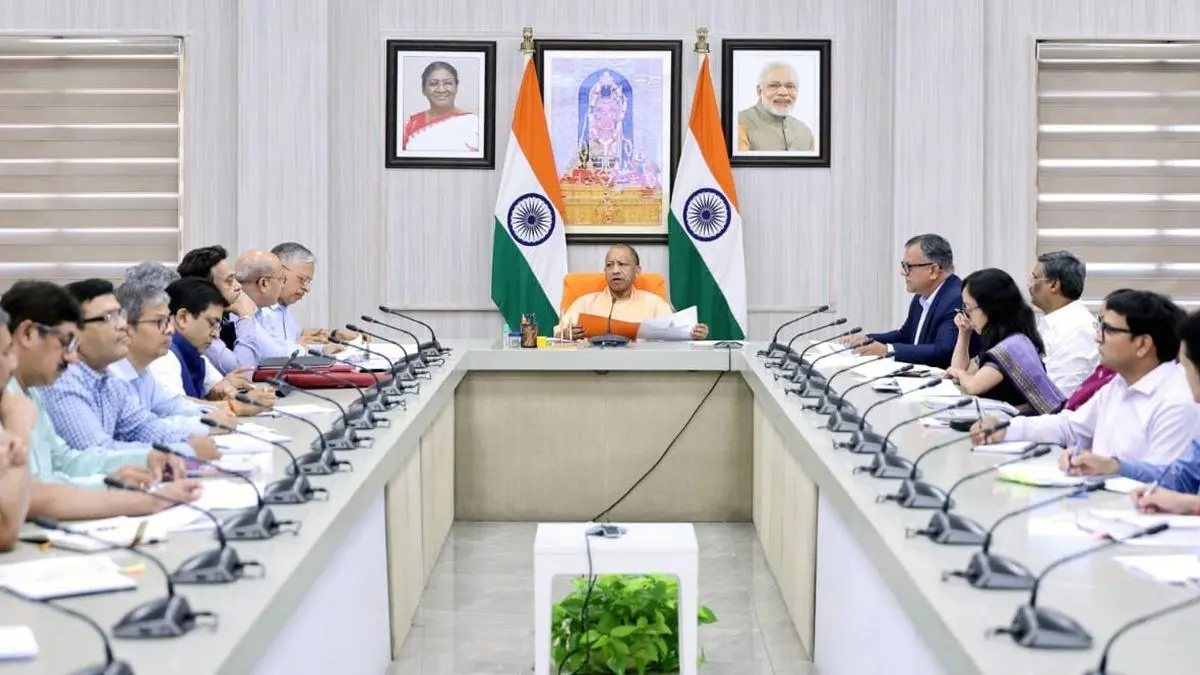
Uttar Pradesh has begun rolling out electric buses for the upcoming Jewar International Airport, with the first 110 buses expected to connect the airport with metro stations, Noida, Greater Noida and key residential and commercial hubs ahead of flight operations starting June 15.Officials are also planning to scale the network to 500 electric buses across the Yamuna Expressway Industrial Development Authority (YEIDA) region, the industrial and infrastructure corridor surrounding Jewar airport, signalling the start of a much larger statewide electric public transport expansion that could eventually see 4,000–5,000 e-buses operating across Uttar Pradesh over the next few years.Accelerating e-buses in the StateWhile chairing the fourth meeting of the State Transformation Commission on Thursday, Chief Minister Yogi Adityanath said the public transport system around Jewar Airport should be fully strengthened before flight operations begin from June 15.The Jewar rollout marks a strategic shift in Uttar Pradesh’s EV roadmap. Unlike earlier municipal deployments focused largely on reducing urban pollution, the new push is increasingly being tied to airport mobility, industrial corridors and expressway-linked connectivity.The transition is significant because Uttar Pradesh’s EV growth story has so far been dominated by low-speed L3 electric rickshaws. While the State has nearly 15.5 lakh registered EVs, among the highest in India, much of that growth came from informal and localised mobility networks.Industry estimates indicate that when existing municipal fleets, PM-eBus Sewa allocations and upcoming regional projects are combined, Uttar Pradesh could eventually operate between 4,000 and 5,000 electric buses over the next three to four years.Three layer expansion for electric busesThe expansion is unfolding across three layers. First is the existing municipal base. Under earlier FAME-II allocations and State transport programs, Uttar Pradesh deployed around 740 electric buses across cities including Lucknow, Kanpur, Agra, Varanasi, Meerut and Ghaziabad. Additional procurement over the last 18 months is estimated to have pushed the operational footprint beyond 1,200 buses.Second is the Jewar–YEIDA expansion, where the airport-linked network is expected to integrate metro connectivity, airport transfers and industrial worker mobility.The third and potentially biggest growth driver is the Centre’s PM-eBus Sewa scheme, which aims to deploy 10,000 electric buses nationally.Because Uttar Pradesh has one of the country’s largest concentrations of cities with populations above three lakh, cities including Lucknow, Kanpur, Ghaziabad, Gorakhpur, Jhansi, Ayodhya and Firozabad have secured allocations under the scheme.Industry estimates suggest Uttar Pradesh alone could receive between 2,500 and 3,000 additional electric buses through Gross Cost Contract (GCC) tenders currently under implementation.The changing bottleneckBut while procurement numbers are accelerating, the real bottleneck may increasingly shift towards charging infrastructure and power readiness.During the review meeting, the Chief Minister reiterated the State’s target of developing 10,000 EV charging stations by 2030. Currently, around 2,500 charging stations are operational across Uttar Pradesh.For electric buses, however, public charging stations alone are insufficient. Large fleets require depot charging, high-capacity substations and behind-the-meter infrastructure capable of supporting continuous commercial operations.Industry executives say the success of UP’s electric bus ambitions will depend on whether charging infrastructure scales as rapidly as fleet procurement.Airport as an EV AnchorThe push also aligns closely with the State’s larger industrial and logistics expansion strategy. Alongside the electric bus review, the Chief Minister directed faster land acquisition for multiple projects including the Agra-Lucknow-Purvanchal Link Expressway, Jewar Link Expressway and Jhansi Link Expressway.“Better connectivity would provide fresh momentum to industrial development, investment and employment generation,” the Chief Minister said during the review meeting.The meeting also reviewed logistics hubs, defence corridor investments and an agriculture export hub planned near Jewar airport.Published on May 28, 2026