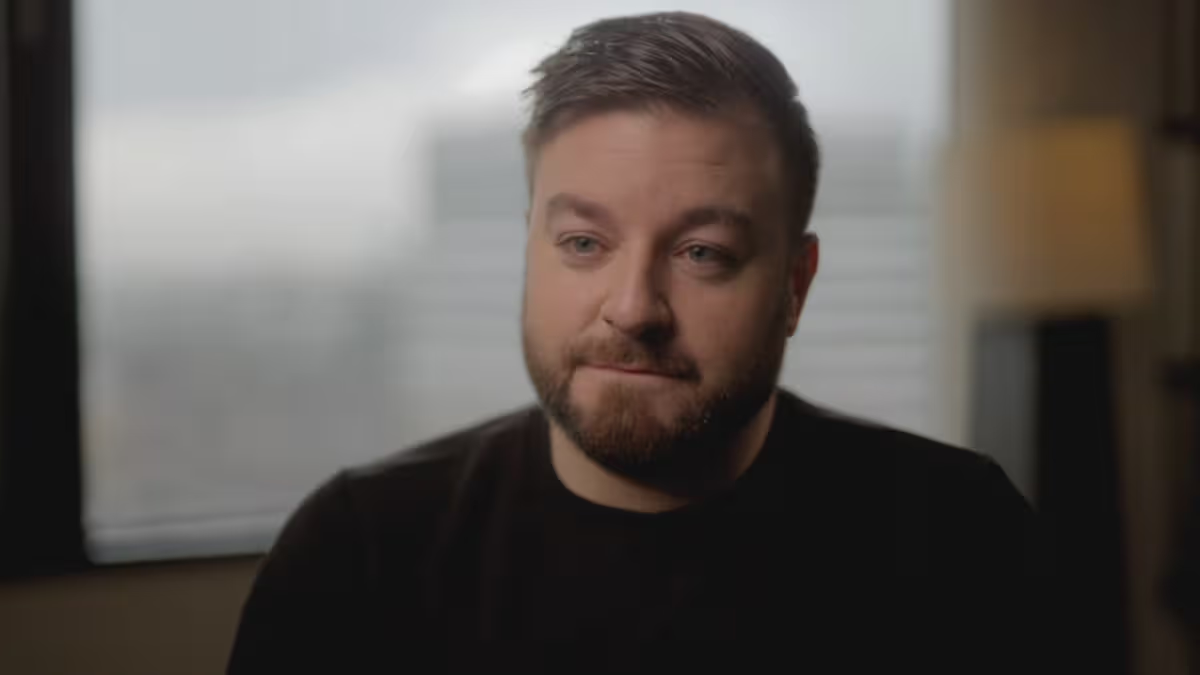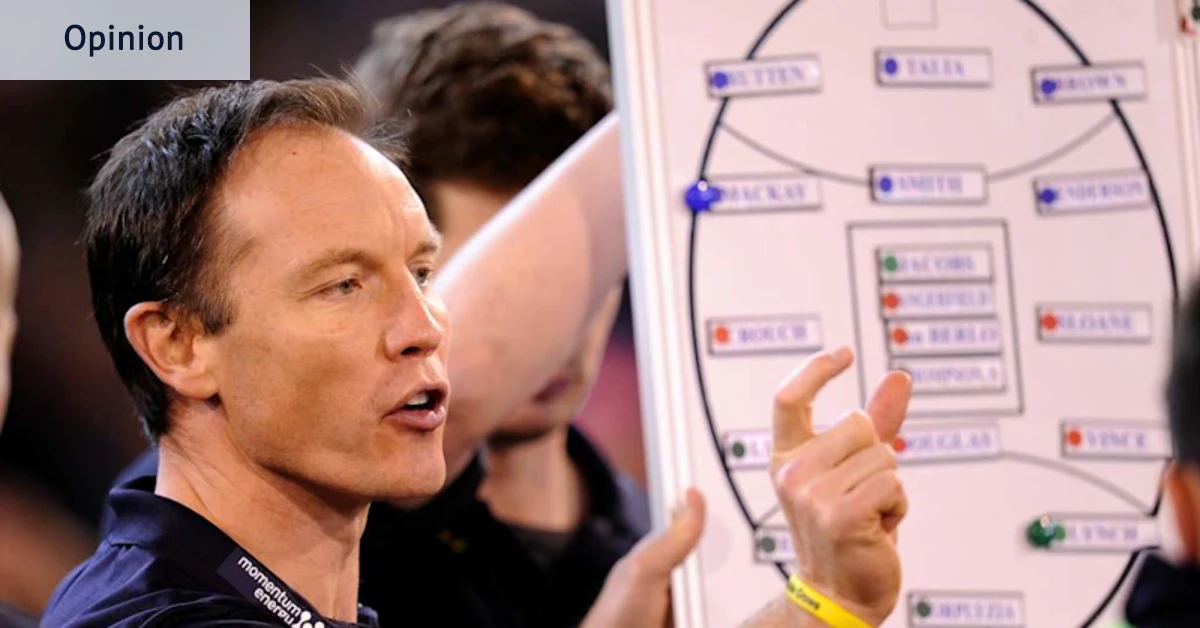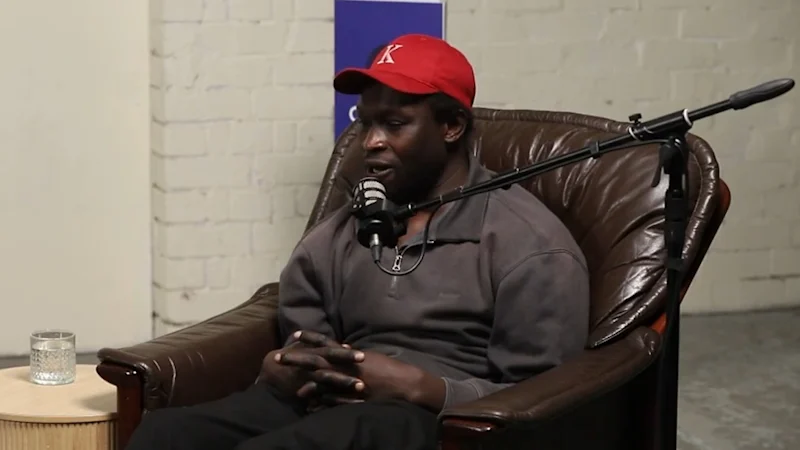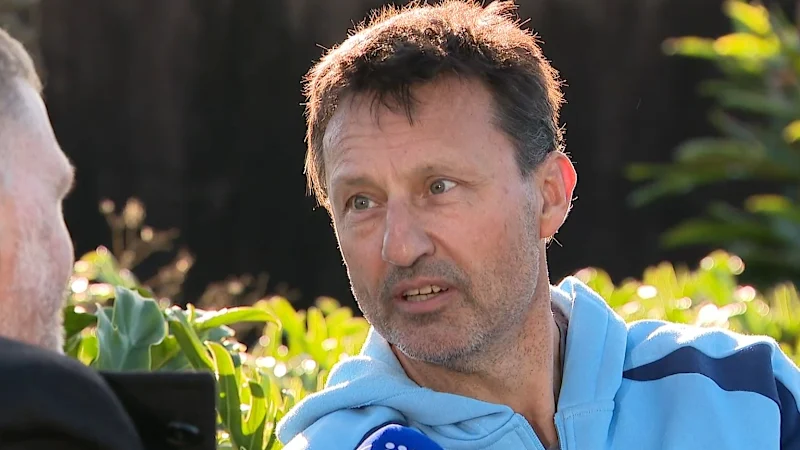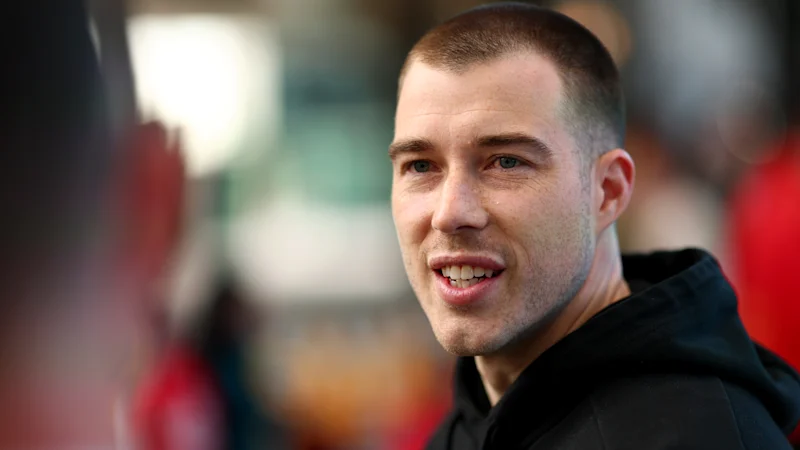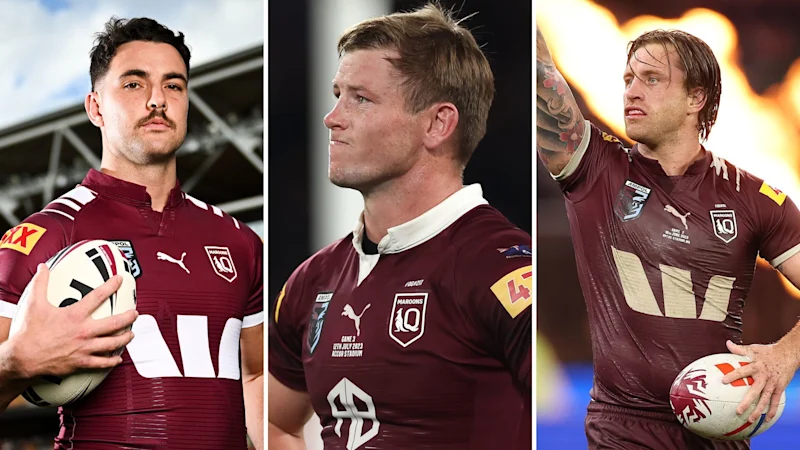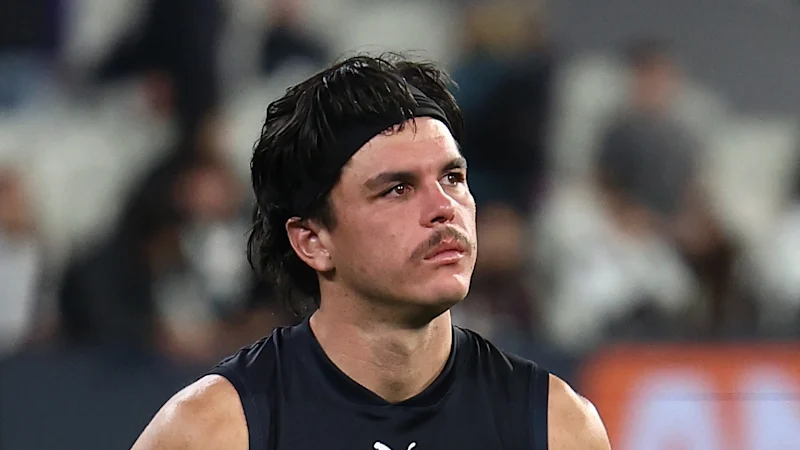
May 28, 2026 — 7:00pmMitch O’Leary looks into his phone camera, his face wet with tears as the sound of a footy match plays on a television off-screen.“I have struggled with anxiety and panic attacks and things like that, depersonalisation, for a good chunk of ... since I was probably 12,” he says.“I just wanted to jump on here and say it’s OK to feel that way, you’re not a burden to anyone.”Lachlan Buttigieg (left), Zach Goldfinch (middle) and Mitch O’Leary (right) are among the young men who have opened up about their own private battles since Elijah Hollands’ on-field mental health episode.@lachlansmotivation / @zachsfootyhub / @jumbleteethIt is a message as much to himself as it is to the roughly 200,000 social media followers he shares the video with – something he’s been thinking about doing since seeing AFL player Elijah Hollands’ own mental health issues play out on the public stage.The Carlton midfielder was thrust into the centre of a media maelstrom after he suffered a mental health episode during a prime-time game against Collingwood in April.O’Leary, a Gold Coast-based influencer and former amateur footballer, said it was important Hollands not be left standing alone.“I thought the best thing I could do is just be vulnerable as well; show it’s OK to not be OK,” he said.In regional Victoria, country footballer Lachie Buttigieg had also been seeing videos of Hollands pop up in his feed.Having battled his own demons for years, it hit home.“There were days I just struggled to get out of bed. I remember I took a week off work because I was struggling that bad … I just thought there was no point keeping going,” he recalled.“When you’re at your lowest, it’s like you’ve got a million thoughts rushing through your head all the time … I can’t imagine going through that so publicly.”He reached out to Hollands’ family for permission to run the Halls Gap half-marathon in Elijah’s honour, raising money for the Black Dog Institute. Buttigieg said he was surprised and humbled when he heard from the Carlton star’s dad Ben, who spoke to Elijah and gave his blessing.Ben said the family appreciated Buttigieg’s “courage, generosity and heart”.“His efforts represent far more than a physical challenge, they represent empathy, awareness and the willingness of a young person to stand beside someone else during difficult times,” he told this masthead.“We have been overwhelmed by this same spirit of support from across the community … Mental health impacts individuals, families and communities in profound ways, and acts like this help create important conversations while reminding people they are not alone.”Former footballer Ben Hollands (centre) with sons Ollie (left) and Elijah (right) at the 2025 Carlton club championships.Jonathan Di MaggioO’Leary and Buttigieg are among a number of young men who have opened up about their private battles since Hollands’ on-field mental health episode, which saw the 24-year-old later admitted to hospital.Black Dog, a leading mental health research institute, said it had also observed an increase in community sports clubs reaching out to ask how they could better support the mental health of players and coaching staff.“When something like this unfolds in front of hundreds of thousands of people, it has the power to shift a national conversation,” executive director and chief scientist Sam Harvey said.Whether young players have got the message that it’s OK not to be OK, sentiment remains mixed.Some have said the framing of Carlton’s punishment – a $75,000 fine for “bringing the game into disrepute” for allowing Hollands to play almost four full quarters – could cause players with mental health issues to feel like burdens or make clubs more likely to view them as high-risk recruits.Sydney-based amateur footballer and content creator Zach Goldfinch, who also posted about his mental health following Hollands’ episode, said it could go either way.“There is such a stigma around mental health, not just in the AFL men’s league but in sport in general,” he said.“I hope it doesn’t stop clubs from taking leaps of faith with players … though I do think you’ll probably see more of a reservation around players wanting to join [a club] if they feel like their mental health programs aren’t up to scratch.”Three-time All Australian Matthew Richardson says he has observed a positive shift in discussions around mental health since he retired from the AFL.Justin McManusThree-time All-Australian Matthew Richardson said there was still work to be done to make sure players felt comfortable to open up – but things were moving in the right direction.“When I was in my 20s … it was a bit of a harden up sort of attitude,” said Richardson, an ambassador for men’s mental health program The Male Hug, which operates the volunteer-run 1800MYBUDDY hotline.“The generation below me, I think they’re a lot more willing to open up … Even my generation now are starting to. Like my good group of mates, we check in on each other more than we ever have, even being able to just tell each other that you love each other … It’s gotten a lot better, but there’s still a long, long way to go.”Richardson said he would like to see the league introduce a dedicated mental health round – an idea supported by O’Leary, Buttigieg and Goldfinch, as well as AFL players such as Geelong star Bailey Smith.Geelong star Bailey Smith is among those who have called on the AFL to introduce a dedicated mental health round.AFL PhotosThe league has not indicated plans to pursue this, but announced it would mandate a full-time psychologist for all AFL and AFLW clubs, among other initiatives, after its investigation into Hollands’ situation – however recent reports indicate they may be considering softening their stance on this. Thurgoona senior football team captain Mathew Howard said it’s the kind of support he’s keen to see extend down to semi-professional and amateur clubs.“We’ve got young kids that certainly aspire to get [to AFL level] but there’s a lot of pressure, probably more than ever before … and I feel like sometimes they probably get to the AFL, and they’re already burnt out,” he said.“A good starting point could be to have welfare officers mandated for each club at the country level.”The AFL announced this week it would provide those aged 15 to 25 with free access to a digital mental health platform, via the AFL PLAY website, which contains self-directed programs and access to a live chat with a qualified mental health practitioner.Support is available from Beyond Blue on 1300 22 4636, Lifeline on 13 11 44, MensLine Australia on 1300 78 99 78.From our partners
How Elijah Hollands’ health battle inspired a wave of young men to open up
It’s been one month since the young Blues on-field mental health episode, with amateur players around the country now showing their solidarity by opening up about their own private battles.
1,099 words~5 min read