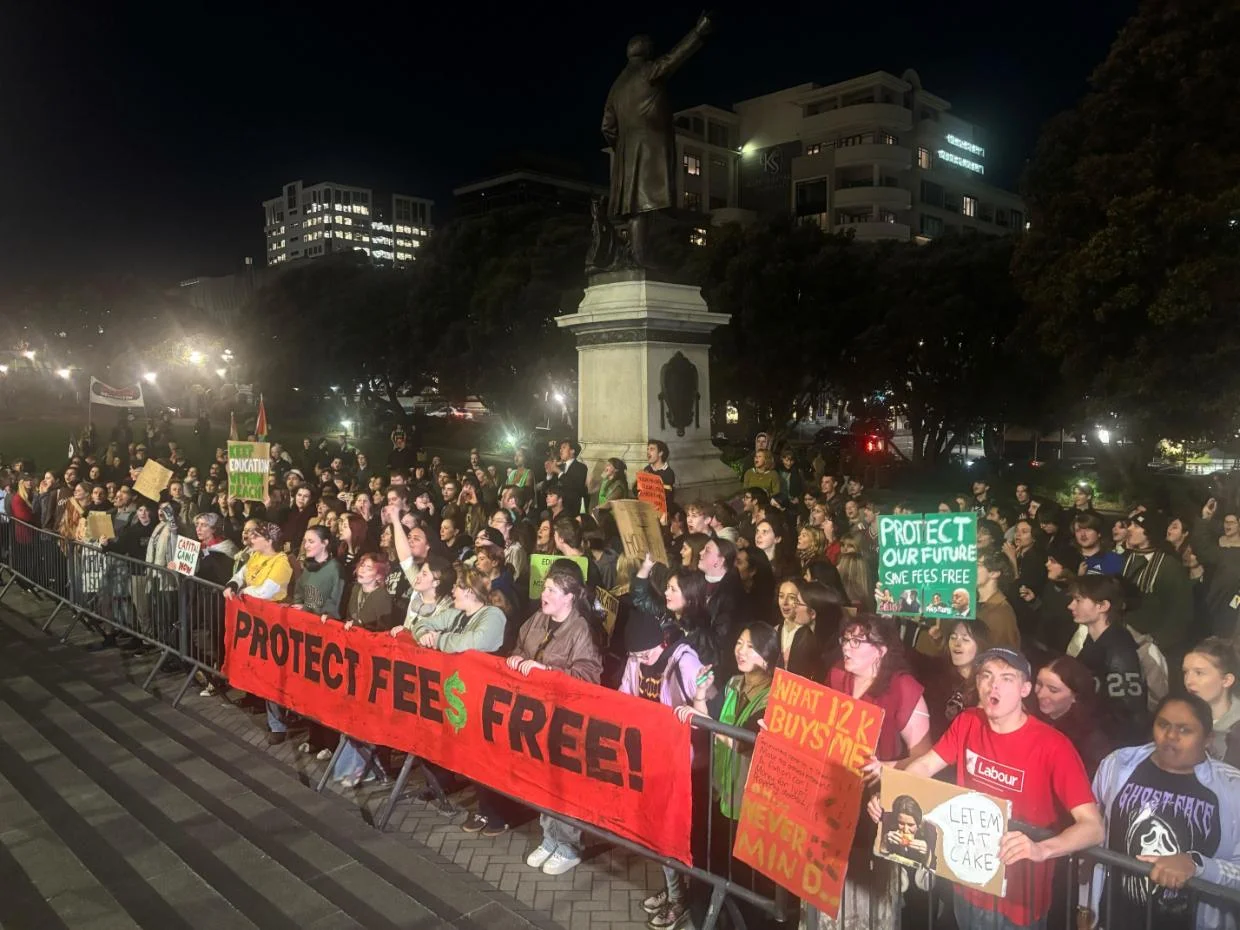
Less than half of the savings from the scrapping of New Zealand’s “fees free” system will be returned to tertiary education, in a budget that also transfers more of the cost burden to students.
Documents from the 28 May budget reveal that the government’s decision to cancel the free tuition scheme, revealed in early May, will save it about NZ$1.04 billion (£457 million) over the next four years. The bulk of the savings will be diverted into other “public frontline services”, with just 15 per cent earmarked for tertiary education.
That money – some NZ$156 million – will be spent expanding two programmes largely oriented around vocational education: Trades Academies, which deliver technical qualifications to senior school students, and the Youth Guarantee, which provides foundation training for adolescents and young adults.
The government will also spend an extra NZ$309 million to increase the number of publicly funded places at universities and colleges, and to boost teaching subsidies by 2 per cent. Tertiary institutions will also be allowed to increase their fees by up to 6 per cent, loading an extra NZ$36 million on to the government loan scheme.
With these combined concessions costing just over NZ$500 million, the budget changes represent a significant net loss to tertiary education, particularly universities. Meanwhile, with fees set to rise more steeply than subsidies, the balance of costs will shift more towards students.