in Art | August 28th, 2025 4 Comments
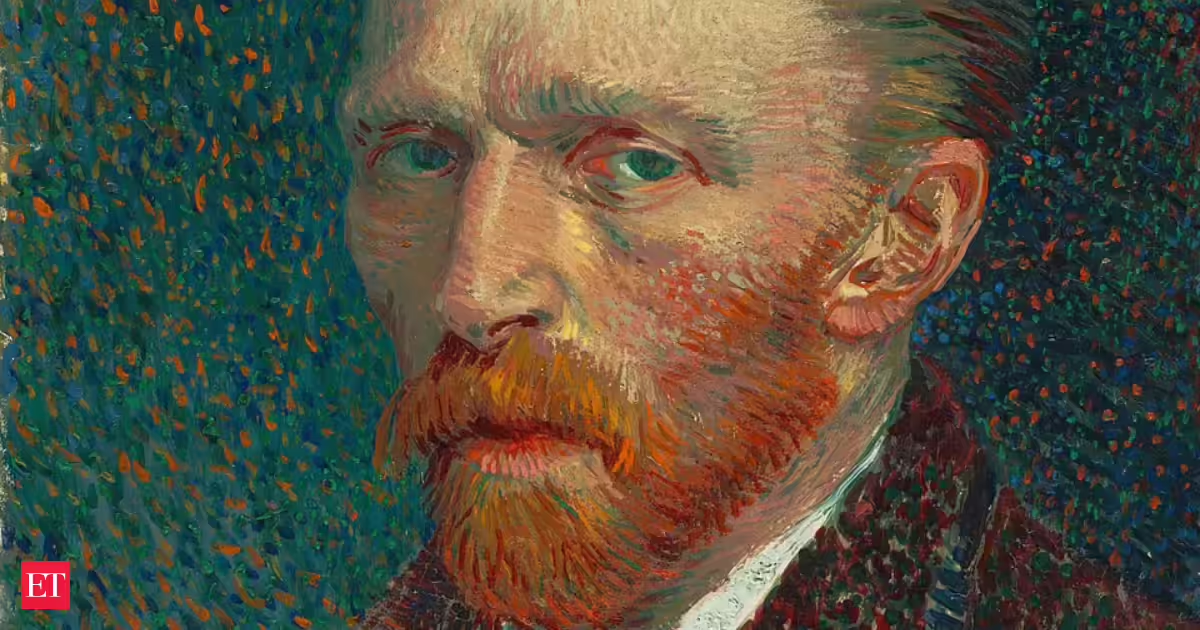
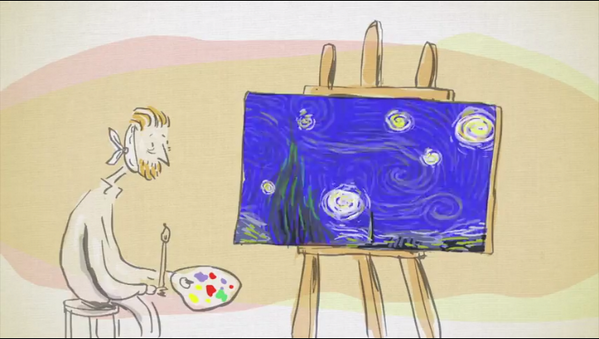
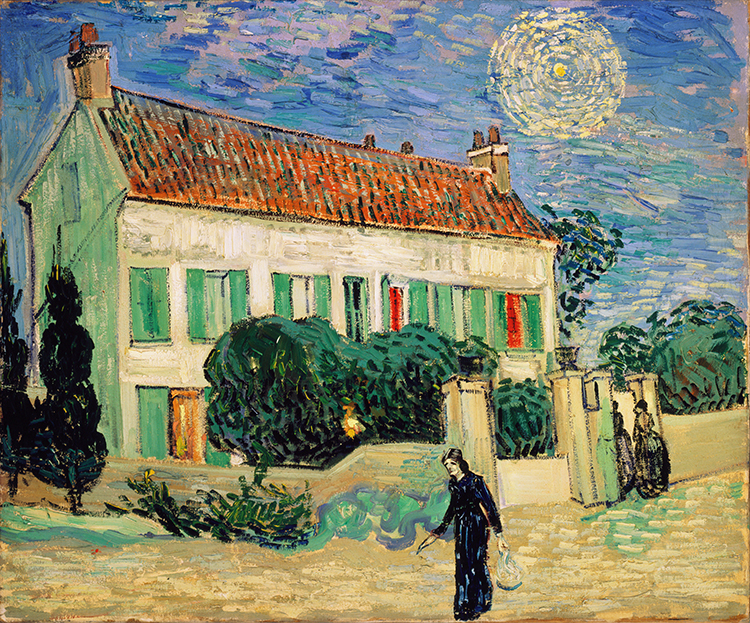
It gets dark before dinner now in my part of the world, a recipe for seasonal depression. Vincent van Gogh wrote about such low feelings with deep insight. “One feels as if one were lying bound hand and foot at the bottom of a deep dark well, utterly helpless.” Yet, when he looked up at the night sky he saw not darkness but blazing light: a full moon shines yellow from White House at Night like the sun, and peeks like a gold coin from behind blue mountains in Landscape with Wheat Sheaves and Rising Moon. The stars in Starry Night Over the Rhône appear like fireworks. We are all familiar with the blazing night sky of its sequel, The Starry Night.
It’s been suggested that Van Gogh saw halos of light because of lead poisoning from his paint, and that the Digitalis Dr. Gachet prescribed for his temporal lobe epilepsy caused him to “see in yellow,” the Van Gogh Gallery Blog writes, “or see yellow spots which could explain van Gogh’s consistent use of the color yellow in his later works.”
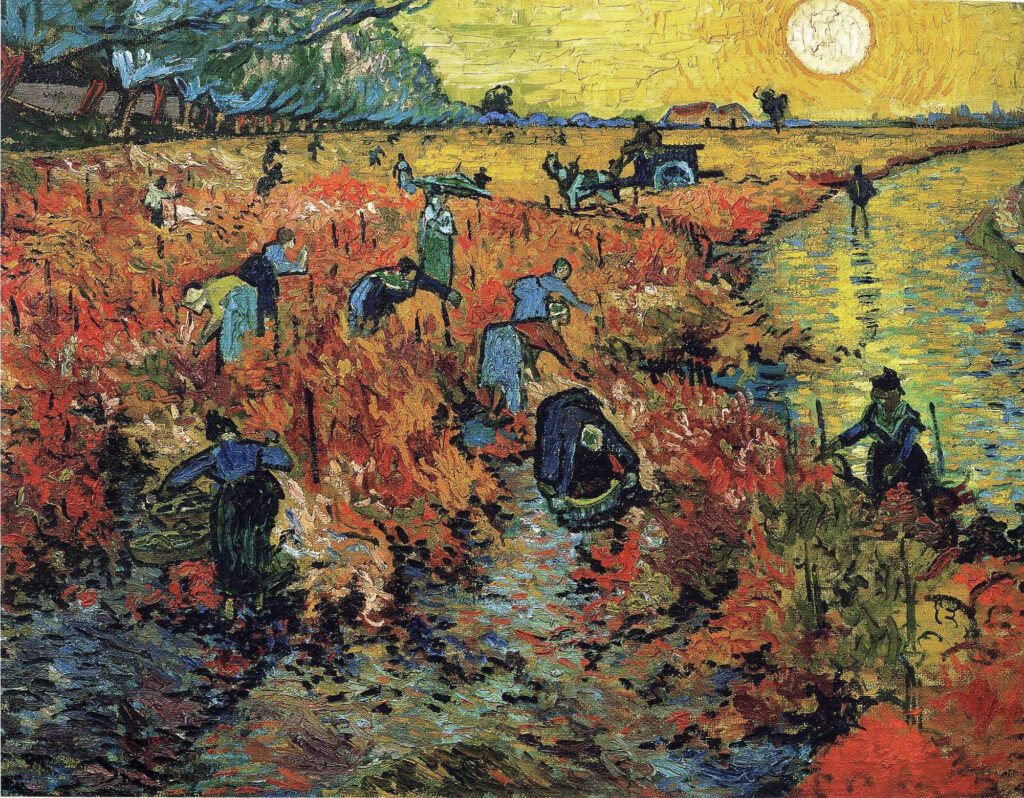
His most brilliant works date from this later period, during his time at the hospital at Arles, where he painted his famous bedroom. All of these paintings, and hundreds more, can be found in high-resolution scans at the new van Gogh resource, Van Gogh Worldwide, “a consortium of museums,” notes Madeleine Muzdakis at My Modern Met, “doing their part to bring the work of one of the world’s most famous artists to the global masses.”