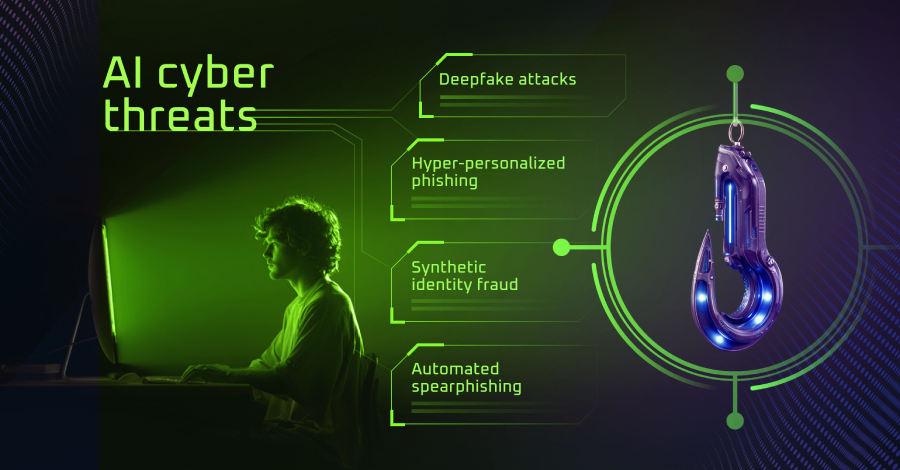
I recently came across a statistic that really hit home: 82.6% of phishing emails now use AI in some form (VIPRE/Keepnet, 2025). As a developer who's constantly sharing code snippets, assets, and documentation, this instantly made me think about one of our most common daily activities: file sharing. It's a key attack vector, and the rise of AI makes it more insidious than ever.
I've spent countless hours building tools and systems, and like many of you, I've had my share of "oops" moments when it comes to security. This isn't just a theoretical problem; it's a very real and present danger in our development workflows. We're often caught between the need for speed and convenience, and the imperative of robust security. But with AI in the mix, the stakes have just gotten a lot higher. I want to share some insights from my perspective on navigating this new, more hostile landscape.
1. The Shifting Sands: Understanding AI's Role in Phishing Attacks
The days of easily spotted grammatical errors and generic "Dear Sir/Madam" phishing emails are rapidly fading. AI has revolutionized the sophistication of these attacks. We're talking about:
Hyper-personalization: AI can scour public data, social media, and even leaked databases to craft highly convincing, personalized emails and messages. They know who you are, who you work with, and what your projects might be.