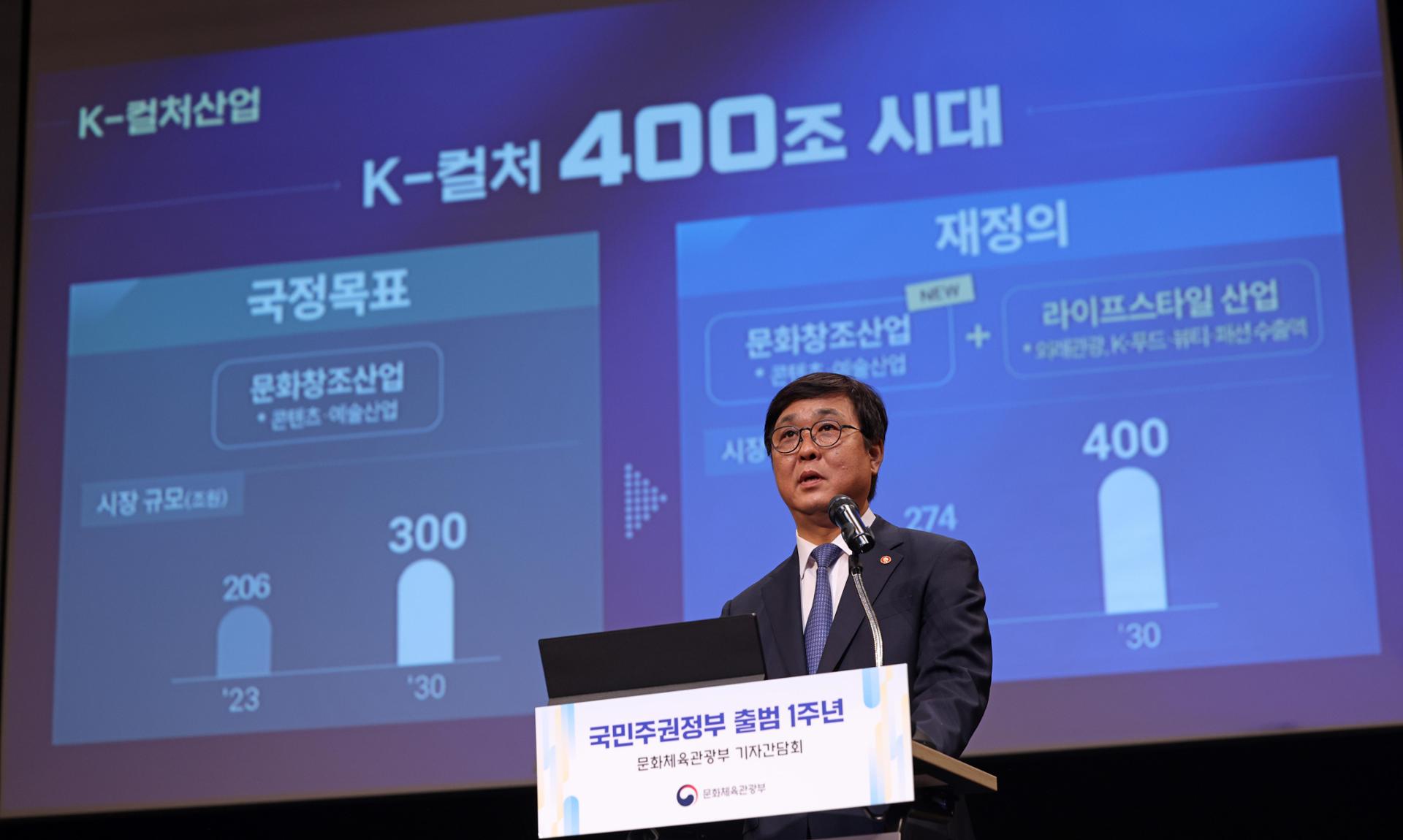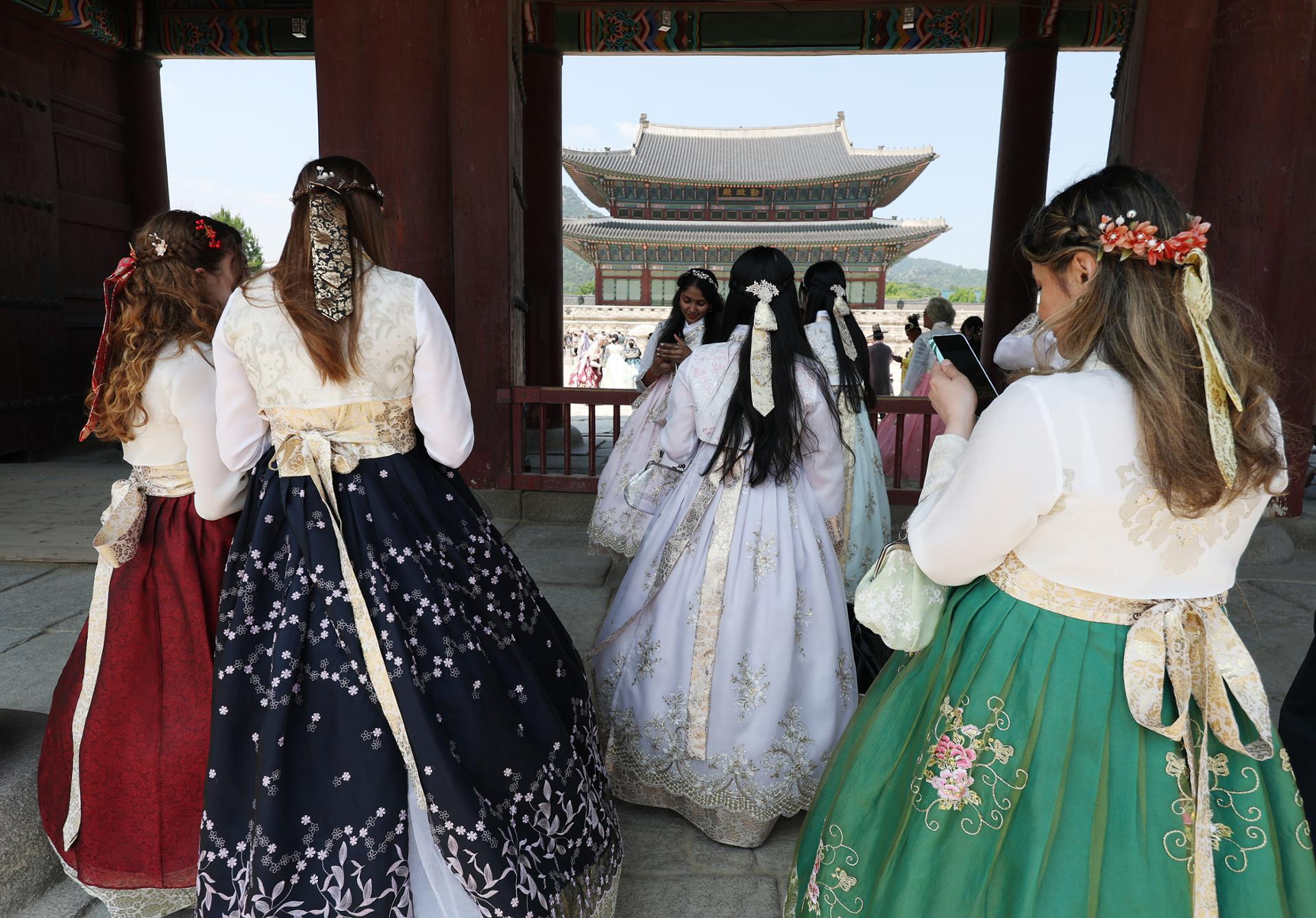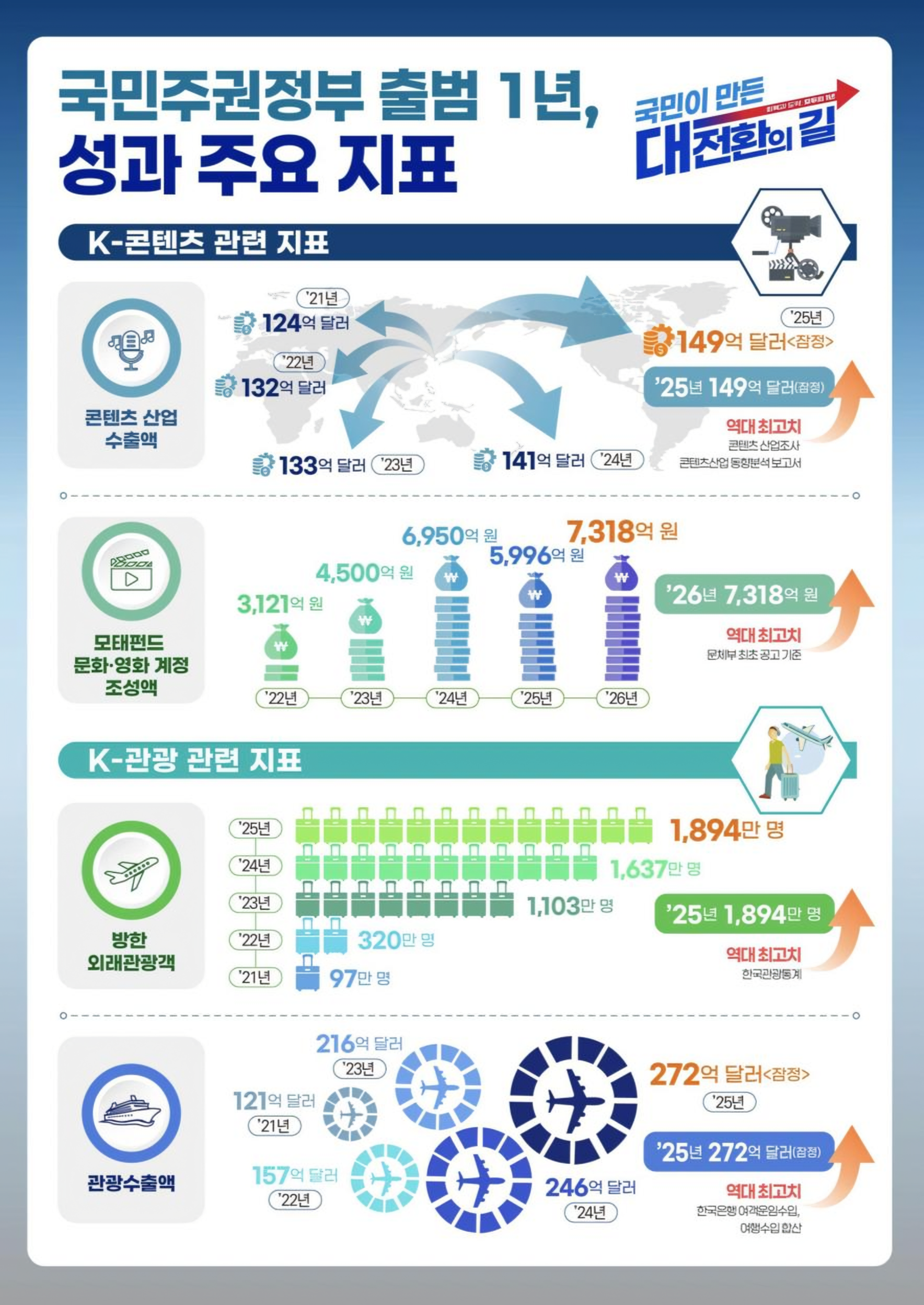
K-culture ambitions jump as Culture Ministry adds food, beauty and tourism to category Chae Hwi-young, the minister of Culture, Sports and Tourism, talks during a press conference at the National Museum of Modern and Contemporary Art, Seoul in Jongno-gu, Seoul on Thursday. (MCST) South Korea's Culture Ministry on Thursday raised its 2030 K-culture targets to a 400 trillion won ($265 billion) market and $110 billion in exports, up from previous goals of 300 trillion won and $35 billion, respectively.The ambitious figures reflect both Korean culture's continued global rise but also the ministry's expanding definition of what counts as K-culture.The ministry expanded the K-culture category this year to include inbound tourism spending and exports of Korean food, beauty and fashion — sectors previously excluded from cultural-industry statistics.Under the broader scope, K-culture exports reached $71.8 billion in 2025, placing the sector third among Korea's exporters after semiconductors and automobiles, according to the ministry. Roughly 80 percent of that figure comes from the newly added lifestyle categories; content and arts exports alone account for $14.2 billion, slightly up from $13.36 billion before the redefinition."K-culture is already one of Korea's top three core export industries earning foreign currency," Culture Minister Chae Hwi-young told reporters in a press conference held to reflect on the first year of the Lee Jae Myung government. He defended the broader category by noting that most foreign tourists come to Korea after exposure to K-culture and that overseas sales of Korean food, beauty and fashion products are driven largely by the same cultural pull."We cannot insist that the entire K-food, K-beauty and K-fashion industries are K-culture," Chae said. "But the export portion reflects demand created by foreign consumers' attraction to our K-culture."The new K-culture figures have not yet been adopted as Korea's official statistics. Chae acknowledged that the lifestyle additions overlap with sectors tracked by other ministries, such as K-food by the Agriculture Ministry and K-beauty by the SMEs Ministry. But he noted the Korea Culture and Tourism Institute is in talks with the National Data Agency on whether to formalize K-culture as a stand-alone industrial category.The redefinition also trimmed the legacy K-culture market: the older "cultural creative industry" shrank from 205 trillion won in 2023 to 191.2 trillion won in 2025 after the ministry removed items it considered "not really K-content," such as portal commerce.The new targets are central to the Lee government's bet on Korean culture as a core economic engine alongside semiconductors and automobiles. Chae said the ministry has shifted from a "support" to an "investment" framework, with plans to expand financial and tax incentives for cultural exports and to add cultural programming to Korea's official development assistance. Chae Hwi-young, the minister of Culture, Sports and Tourism, talks during a press conference at the National Museum of Modern and Contemporary Art, Seoul in Jongno-gu, Seoul on Thursday. (MCST) To support the targets, the ministry will launch a global K-culture festival branded "Phenomenon," starting with an awards-show edition in Korea in December 2027 and a touring overseas leg from spring 2028. It also plans to build K-culture performance centers in seven major international cities. Chae said details remain in early stages, with a fuller briefing planned this summer alongside J. Y. Park, co-chair of the Presidential Committee on Popular Culture Exchange.The new targets ride a documented run of overseas wins for Korean culture. Chae cited K-pop's strong showing at the recent American Music Awards, BTS' return to the stage as a seven-member group, and Korea's favorability ratings abroad -- at record highs, with respondents most often crediting K-culture for their interest. Inbound tourism rose 17 percent in the second half of 2025 from a year earlier and another 22 percent in the first half of 2026, according to ministry figures.'Another war'But behind the ambitious export target are unresolved structural questions.Chae acknowledged that Korean content's overseas growth has relied heavily on global streaming platforms — "a tremendous opportunity" for international reach, he said, but one that has left domestic creators in weaker negotiating positions on intellectual property rights.The ministry is now using government funds to help producers retain at least partial IP and has launched an emergency content-blocking system that took effect May 11 to combat overseas piracy, the minister said.A separate enforcement front opens in August, when an anti-scalping law takes effect. Chae said the ministry had spent recent months bolstering personnel and coordination so it could begin enforcement immediately. "When the law takes effect in August, another war begins, and we'll respond thoroughly," he said. Chae Hwi-young, the minister of Culture, Sports and Tourism, talks during a press conference at the National Museum of Modern and Contemporary Art, Seoul in Jongno-gu, Seoul on Thursday. (MCST)
Korea sets sights on W400tr K-culture market, $110b exports by 2030
South Korea's Culture Ministry on Thursday raised its 2030 K-culture targets to a 400 trillion won ($265 billion) market and $110 billion in exports, up from pr
779 words~4 min read