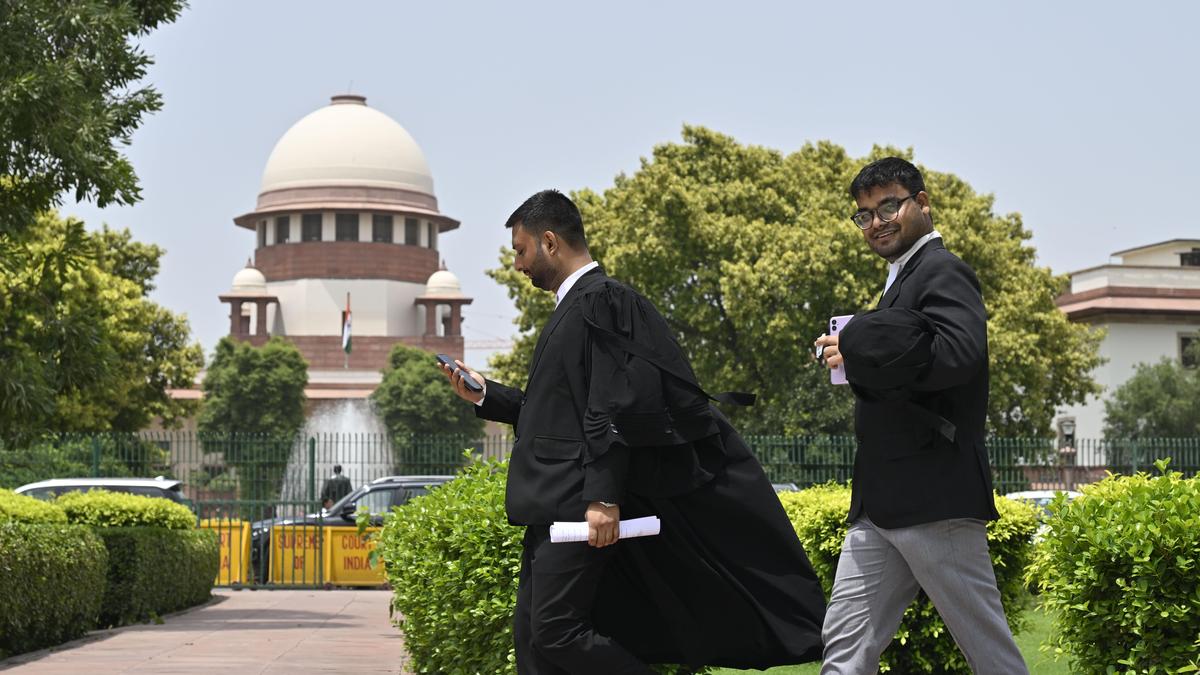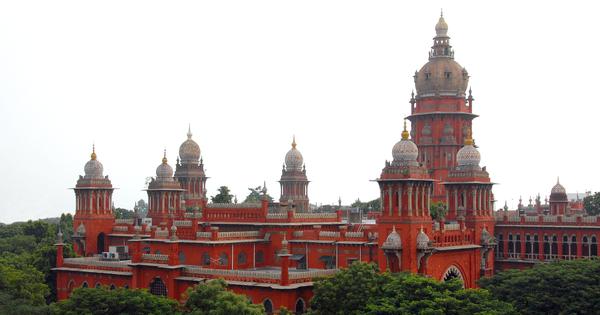
There is corruption in the judiciary and judges should not be treated as “holy cows”, the Madras High Court has remarked while refusing to ban a Tamil film for portraying the judicial system in an allegedly damaging manner, Live Law reported on Wednesday.The court was hearing a petition filed by an advocate, who claimed that the film Karuppu scandalised the judicial system. The petition sought directions to the state government and the Central Board of Film Certification to ban or regulate the film in theatres and on streaming platforms.The petitioner also argued that the film amounted to criminal contempt of court.Karuppu, which was released on May 15, was directed by RJ Balaji and starred actors Suriya and Trisha Krishnan. In the film, a guardian deity disguises himself as a lawyer to fight corruption in a court system that exploits a young girl awaiting a liver transplant.In its order on May 21, a bench of Justices GR Swaminathan and V Lakshminarayanan said that courts and judges are not above criticism, Bar and Bench reported. “None can deny there is corruption in the judiciary,” the bench was quoted as saying. “There were and are corrupt judges.”It added: “Judges need not be treated as holy cows. Justice is not a cloistered virtue; she must be allowed to suffer the scrutiny and respectful even though outspoken comments of ordinary men.”In his petition, the advocate said that a judge had been shown as being involved in bribery and consuming drugs in one of the scenes in the film, Live Law reported. Such scenes were against the Constitution and damaged the reputation of judges, the petition added. It also claimed that the director had criticised the judicial system without any application of mind.The bench, in its order, agreed that the portrayal of the judicial system in the film is “grossly exaggerated”, Bar and Bench reported.“But that is the way movies are taken in Tamil,” the legal news portal quoted the bench as saying. “The hero will single-handedly vanquish a dozen villains who surround him. Everything is melodramatic in Tamil cinema. Therefore, Karuppu should also be taken as one of a piece.”The High Court said that an artist is entitled to present a story in his own way, adding that artistic licence must be placed on a high pedestal.It also noted that the film had been cleared by the Central Board of Film Certification for public viewing, Live Law reported. When the film certification board did not view the film as contempt of court, a writ petition cannot substitute its opinion, the bench added.The bench also held that the makers of the film had not scandalised or lowered the authority of an actual court, the legal news portal reported.It added that the judges and lawyers of an imaginary court were portrayed as corrupt in the film and not the entire judicial system.Remarks by SC on ‘judicial corruption’The observations by the High Court came after the Supreme Court, on May 22, recalled its order barring three academics from all government projects for drafting a chapter about “corruption in the judiciary” in a now-withdrawn textbook.The chapter in question was part of a Class 8 social science textbook published by the National Council of Educational Research and Training. The chapter had listed “corruption at various levels of the judiciary” among the challenges that the judicial system faces. It was part of a textbook titled “Exploring Society: India and Beyond”.The educational body on March 10 apologised for the chapter and said that the entire book had been withdrawn. The apology came two weeks after the Supreme Court took suo motu cognisance of the matter and banned the publication and re-printing of the textbook.On March 11, the Supreme Court held that the three academics – Michel Danino, Suparna Diwakar and Alok Prasanna Kumar – either did not have “reasonable knowledge about the Indian judiciary” or that they knowingly misrepresented facts “in order to project a negative image of the Indian judiciary”.On May 22, the top court modified the “harsh” observations made in the March 11 order and expressed satisfaction that there was no malice on the part of the three academics in preparing the chapter.Edited by Sneha.
No one can deny there is corruption in judiciary, judges are not holy cows: Madras HC
The bench was hearing a petition that sought to ban the Tamil film ‘Karuppu’ for portraying the judicial system in a damaging manner.
695 words~3 min read