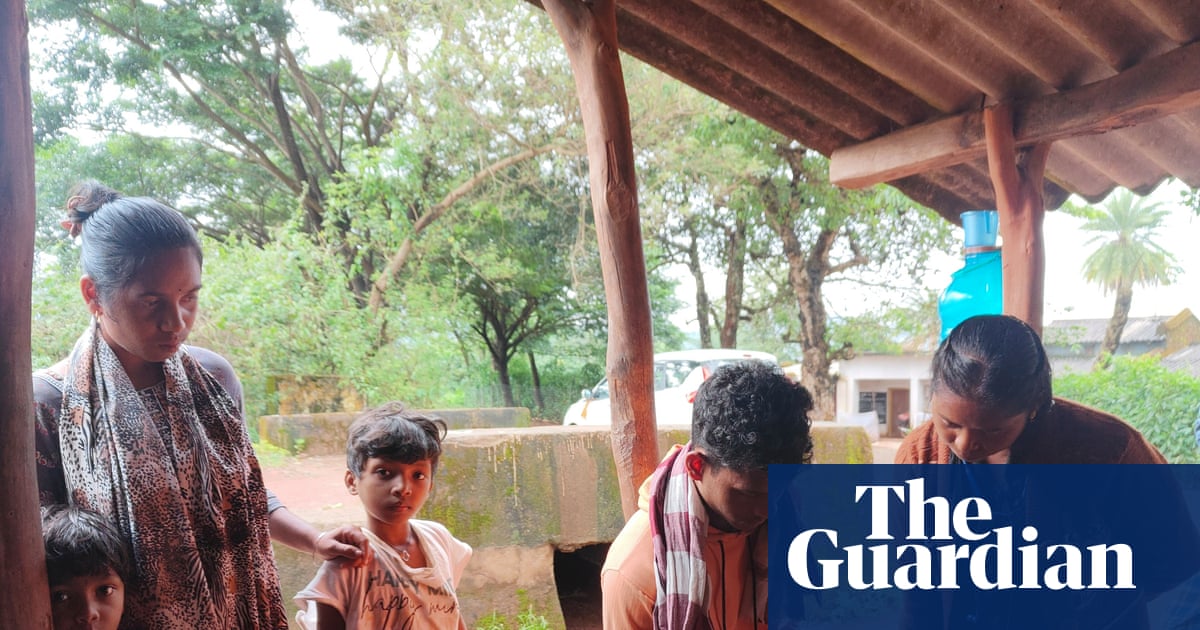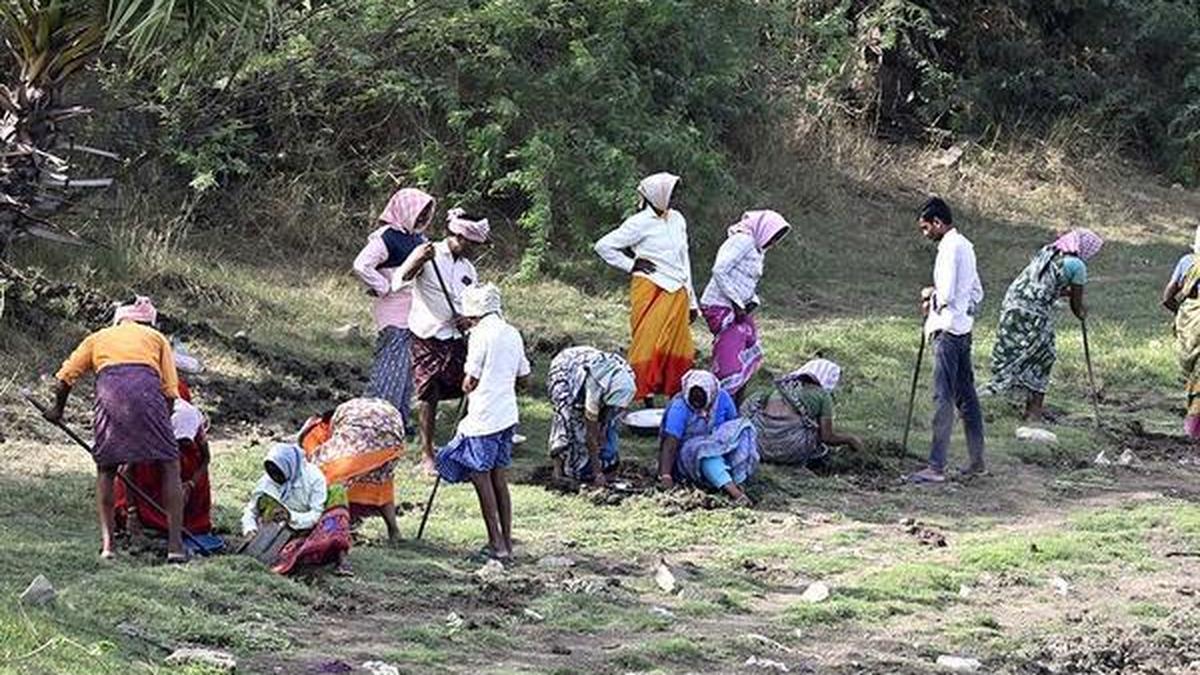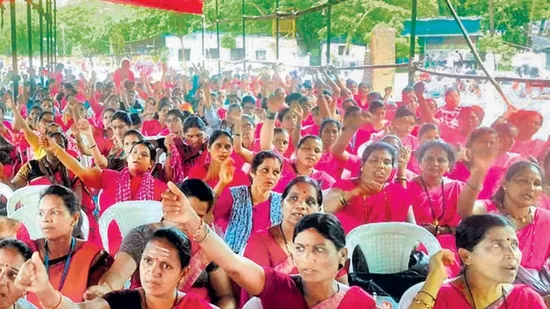
In August 2025, I made it a point to meet with Anganwadi workers (AWW) across several villages within the Achanakmar Tiger Reserve to learn more about their experiences with the Poshan Tracker app. Among the six workers I met, only one used the app herself. Among the AWWs of Bamhni, Atariya, Surhi (which has two centres), Mahamai and Jakadbandha, one worker said her husband manages the application using her login credentials and transcribes data from her handwritten records. All uploading has to be done from the top of the hillock behind her village when the network is good enough. She herself knows nothing about it. Four others say they do not use the app – their sons do the data entry. Only one worker stated that she enters the information in the app herself, but it takes a very long time due to the poor internet speed. When I met her, she was also busy verifying and entering data for women eligible to receive money under the Mahtari Vandana Yojana, a scheme under which eligible women over 21 years of age receive Rs 1,000 per month into their bank accounts. “The net result,” she tells me, her tone critical of the system, “is that I never get to see the children in the Anganwadi Centre (AWC). The helper handles them on her own and provides them with the snack and meal.” For me, this was another critical flaw in the push for digitisation; it diverts valuable time away from the children whose care, nutrition and education form the core mandate of the Integrated Child Development Services (ICDS) programme.Neither Santoshi nor the other six AWWs could show me the smartphones provided by the department for their use with the Poshan Tracker. Two said the phone had stopped working. The others were using their husband’s, son’s or personal devices while the department-issued phone had been repurposed for household use because the app was “heavy” and the tablets given to them had little storage, so much so that not even WhatsApp could be downloaded, which the workers used daily for routine coordination.As of September 2025, the ICDS programme covers almost 900 lakh beneficiaries, including children below six, pregnant and lactating women and adolescent girls across 14 lakh AWCs.Each Anganwadi caters to a population of roughly 1,000, with about 90 children below the age of six, of whom around half will be between the ages of three and six and eligible to attend the Anganwadi.Children between six months and three years do not attend the Anganwadi but receive monthly take-home rations (THR). Malnourished children get additional supplementation. Pregnant and lactating mothers, as well as adolescent girls, are also entitled to THR. Though anyone can enrol in the ICDS programme, one has to reside in the locality. Participation is largely self-selecting, with higher uptake among socio-economically disadvantaged households.The AWWs maintain nine registers for various activities: growth, food stocks, eligible couples, antenatal and postnatal cases, adolescent girls and the birth register. Digitisation began in 2016 with the common application software to simplify record-keeping and monitoring, and was replaced in 2021 by the Poshan Tracker app along with mandatory Aadhaar linkage. Physical registers are intended to be phased out following the rollout of the Poshan Tracker. However, only 66 of the country’s 780 districts (8.5%) have done away with all nine registers, as per the Poshan Tracker website.Since July 2025, the use of the facial recognition system linked to Aadhaar has been made mandatory for availing THR, with the stated objective of ensuring accurate beneficiary identification. For children eating hot cooked meals at the AWC, a “liveliness” proof has to be submitted to show that a live child is consuming the meal.In practice, this has resulted in the exclusion of individuals who are unable to complete the required verification processes, including possessing an updated Aadhaar, having a mobile number linked to Aadhaar, receiving OTPs and completing facial authentication. The most affected are the poorest and most vulnerable, who are least likely to have a mobile phone or essential documents like a child’s birth certificate. As a result, they are systematically excluded, as seen in this small Birhor community. The requirement of facial recognition as a prerequisite for registration in the Poshan Tracker and, therefore, for entitlement to rations, functions as an exclusionary mechanism for vulnerable women and children. Reports indicate that many poor women do not own mobile phones, and the numbers linked to their phones may be outdated or belong to their husbands. Poor internet connectivity, frequent server crashes and failed facial scans result in denial of rations to eligible beneficiaries.The Internet Freedom Foundation (IFF) has filed a Right to Information (RTI) request regarding safeguards to prevent exclusions resulting from failed facial recognition. As per the National Food Security Act (NFSA), 2013, supplementary nutrition for pregnant and lactating women and children under six is a legal entitlement, with no conditions of face recognition or proof of liveliness. The IFF has questioned the necessity for such validation that is intrusive when alternate, low-tech methods such as home visits or community verification are available.Data from the Poshan Tracker public dashboard for September 2025 indicates that, of a total of 950 lakh women and children eligible to receive supplementary food that month, less than 50% received the supplementary food for over 21 days in the month. In addition, 50 lakh beneficiaries are recorded as having “opted out”. It remains unclear whether they could not be registered in the system or that they voluntarily refused the supplementary nutrition.The number of children receiving supplementary nutrition at AWCs has been declining over time. Between 2016 and 2021, it fell from 82.9 million to 67.5 million. A further reduction is likely given the stringent documentation and verification requirements for digital enrolment, which create additional barriers to inclusion.It is important to consider persistent governance constraints, including vacancies in supervisor posts. As of 31 March 2022, one in three posts of child development project officers (CDPOs) and lady supervisors (LSs) remained vacant nationwide. In some states, the situation is critical. In West Bengal, a single LS may be responsible for looking after 92 AWCs, far exceeding the recommended 25. Unfortunately, supervision focuses on completing entries in the Poshan Tracker rather than on improving the quality of care and services at AWCs. The assumption that increased reliance on technology will, in itself, improve programme implementation on the ground is, therefore, not supported by these observations.Within the health sector as well, digitisation has been implemented to streamline data management, enable decision-making and improve service delivery. It received a boost during the Covid-19 pandemic, though the processes had begun much earlier. I will also assess the impact of digital technologies on the nutrition supplementation scheme under the TB control programme, entitlements within maternal and child health services and access to healthcare more broadly. It considers the usability of these systems for frontline health workers, inclusiveness for patients and the timeliness of service delivery. It also asks whether these interventions have contributed to reducing health inequities or, conversely, have reinforced existing disparities.Excerpted with permission from Staying Alive: Dispatches from the Margins, Ramani Atkuri, Pan Macmillan India.
Apps were meant to streamline Anganwadi data, but they’re depriving some workers of benefits
An excerpt from ‘Staying Alive: Dispatches from the Margins’, by Ramani Atkuri.
1,195 words~5 min read