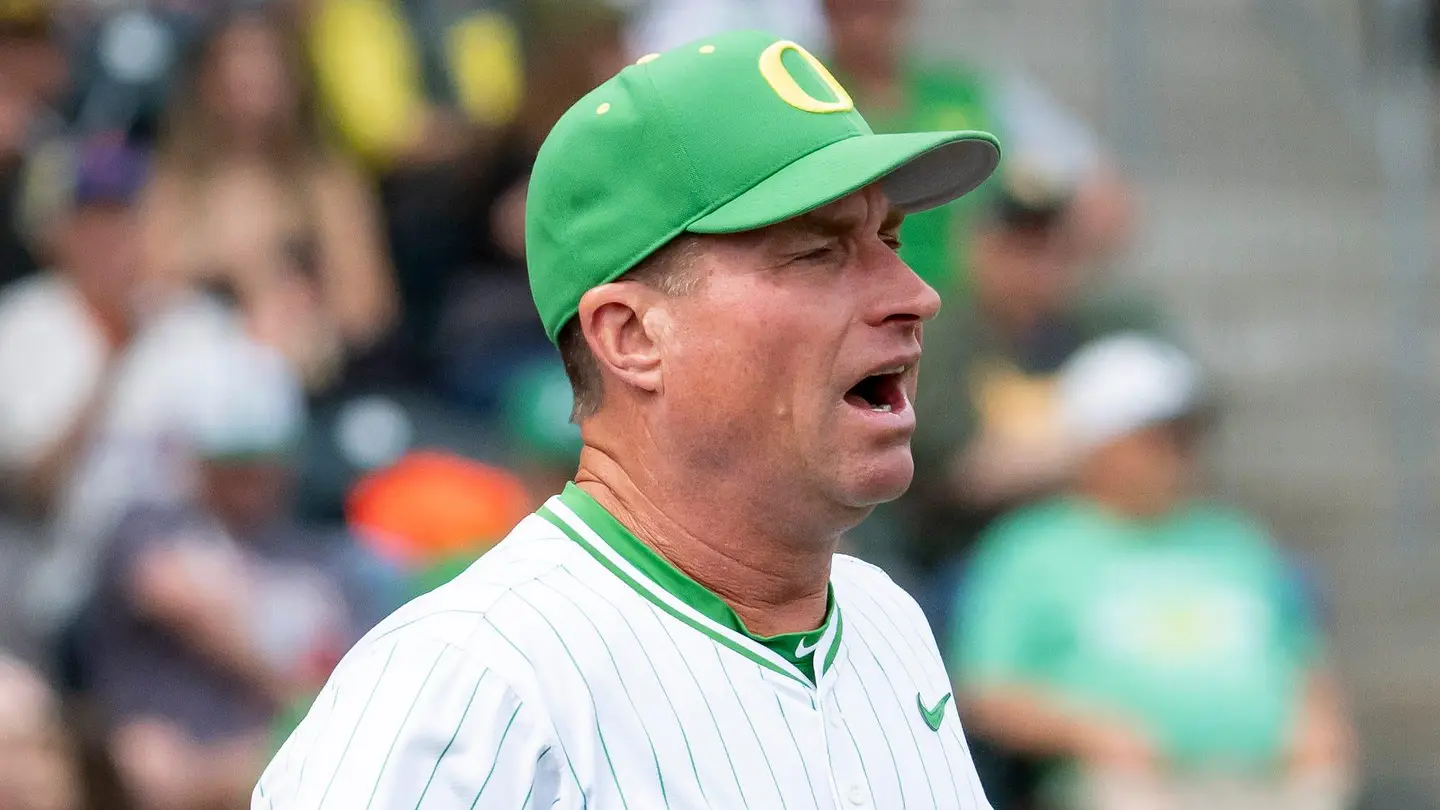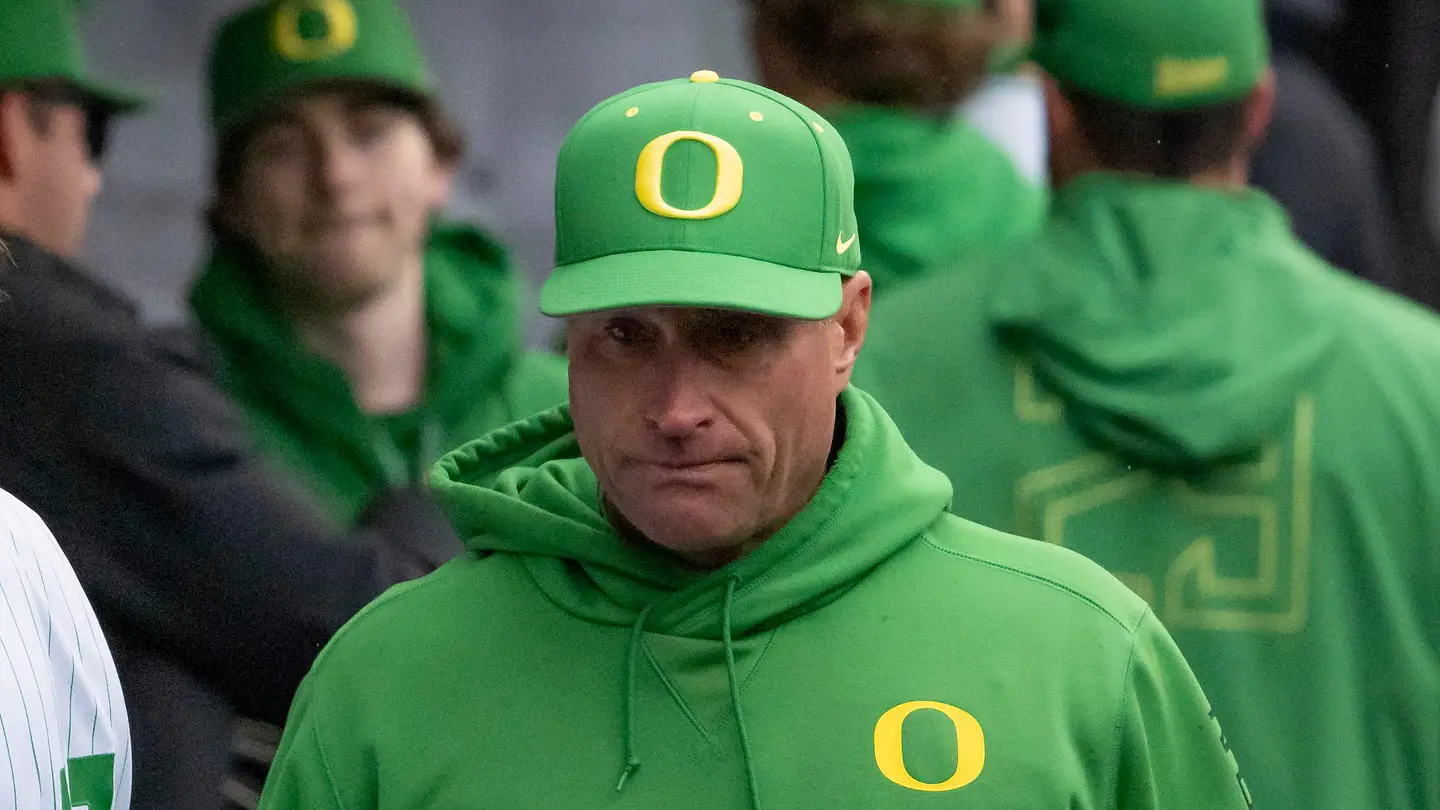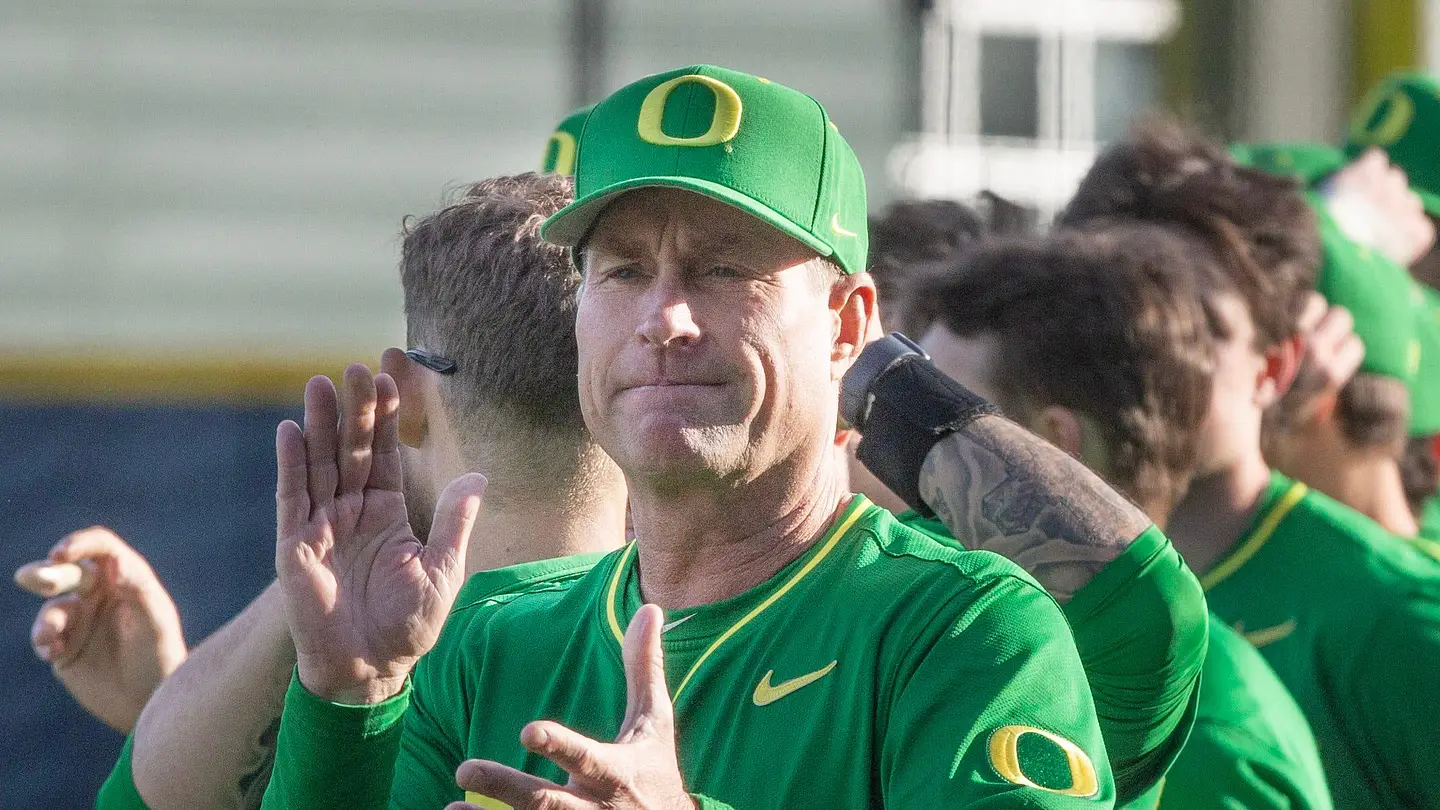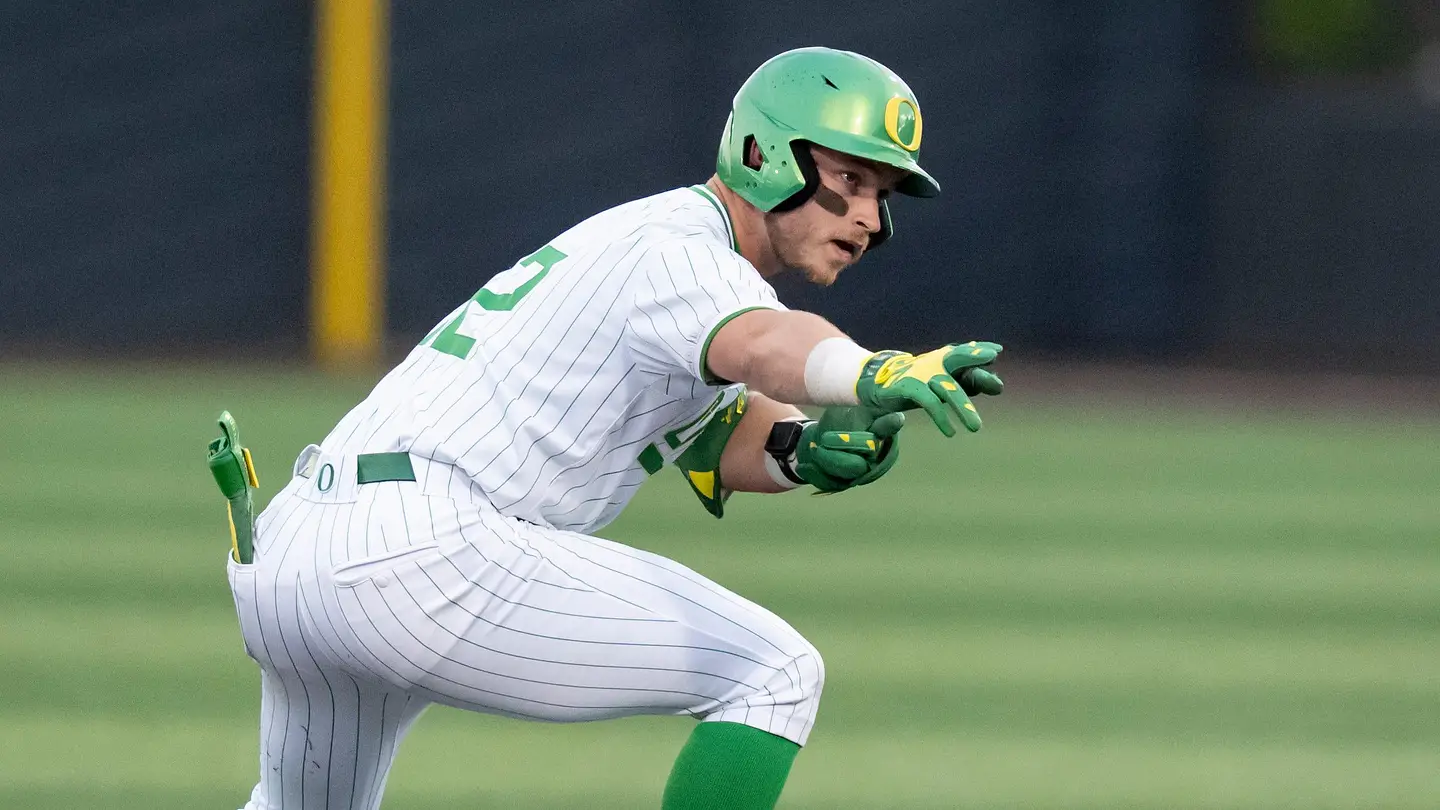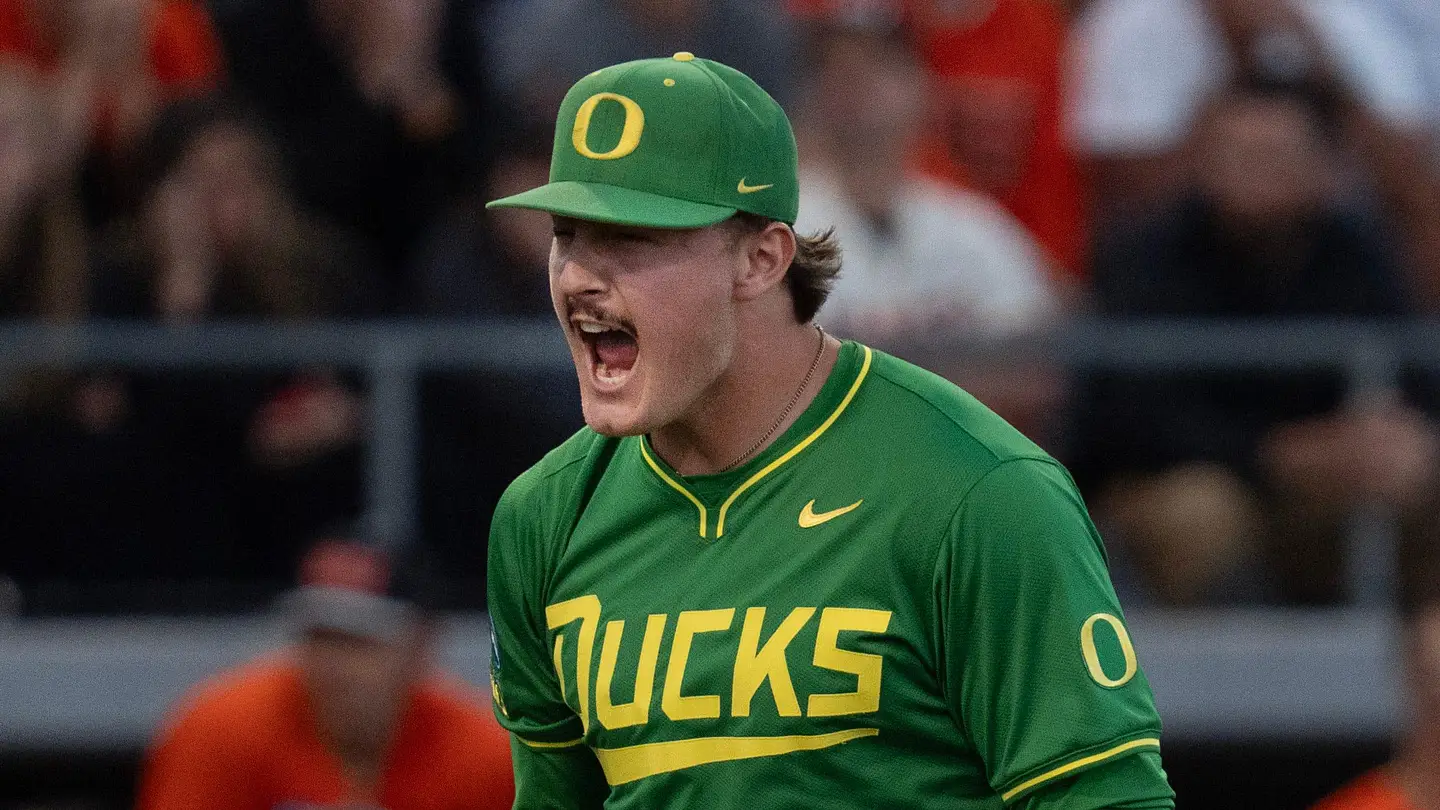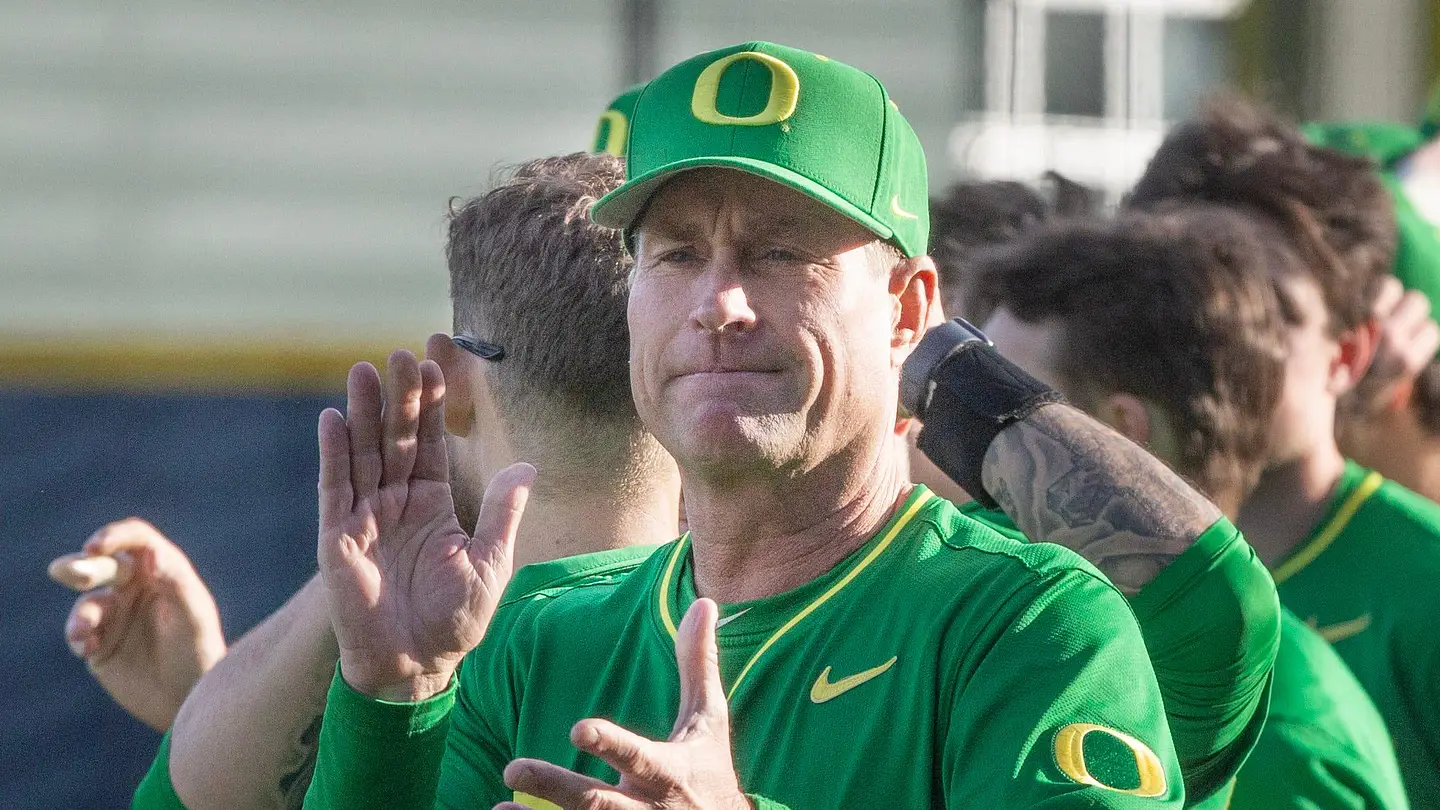
Oregon baseball's road to the College World Series runs through Eugene.After a 40-16 season in which the Ducks dropped just two regular-season weekend series, Oregon earned the right to host NCAA Regional play as the No. 11 national seed. The Ducks open postseason action May 29 against Yale in a regional loaded with familiarity and history.Joining Oregon at PK Park are in-state rival Oregon State and former Pac-12 foe Washington State, which creates a bracket packed with emotion, regional tension, and postseason stakes. The history between the Ducks and Beavers, along with the long-standing Northwest rivalry involving Washington State, gives this regional a different feel than most.Oregon infielder Ryan Cooney hits a double as the Oregon Ducks host the USC Trojans on May 14, 2026, in Eugene, Oregon. | Ben Lonergan/The Register-Guard / USA TODAY NETWORK via Imagn ImagesThe result could be one of the most intense atmospheres PK Park has ever seen.With everything on the line against several proven programs, Oregon enters the weekend with little room for error. The Ducks have the talent to make a postseason run, but surviving Eugene will require them to maximize what they do best while avoiding the mistakes that can end a season in a matter of innings.1. Lean Into the Power-Speed IdentityOregon's offensive identity has powered much of its success this season, and the Ducks will need that same aggressive approach to carry them through regional play.The Ducks enter the NCAA Tournament among the nation's leaders in power production, averaging 1.76 home runs per game and launching 100 homers up to this point. However, Oregon's offense is not built solely around long balls. The combination of power and pressure on the bases has made the lineup difficult to manage.USC’s Kevin Takeuchi, left, tags Oregon infielder Ryan Cooney as he slides to second as the Oregon Ducks host the USC Trojans on May 14, 2026, in Eugene, Oregon. | Ben Lonergan/The Register-Guard / USA TODAY NETWORK via Imagn ImagesSecond baseman Ryan Cooney has anchored the offense, batting .338 with 76 hits and 13 stolen bases. Jack Brooks has also been a threat on the bases with a team-high 16 stolen bases. Not to mention, Drew Smith has provided middle-of-the-lineup production with a team-high 16 home runs and 59 RBIs.The freshman class has elevated the lineup even further.Angel Laya, Brayden Jaksa and Naulivou Lauaki Jr. have combined for 36 home runs and 104 RBIs, giving Oregon production throughout the lineup rather than relying on one or two stars to carry the load.That offensive firepower showed up in Omaha during the Big Ten Tournament, where Oregon hit 10 home runs and nearly knocked off UCLA in an extra-inning championship.Oregon outfielder Angel Laya, center, and Oregon infielder Naulivou Lauaki Jr., left, celebrate a home run by Laya as the Oregon Ducks host the Oregon State Beavers on March 3, 2026, at PK Park in Eugene, Oregon. | Ben Lonergan/The Register-Guard / USA TODAY NETWORK via Imagn ImagesThe Ducks do not need to play perfect small ball to win. They are capable of erasing deficits with one swing.2. Protect the Bullpen AdvantageIf Oregon has a defining postseason strength, it may be the bullpen.The Ducks rank second nationally with eight shutouts and have consistently leaned on elite relief pitching to finish games. Oregon sits among the country's leaders in WHIP, hits allowed per nine innings and strikeout-to-walk ratio.Most importantly, Oregon's bullpen misses bats.Oregon pitcher Tanner Bradley throws a pitch as the Oregon Ducks host the USC Trojans on May 14, 2026, in Eugene, Oregon. | Ben Lonergan/The Register-Guard / USA TODAY NETWORK via Imagn ImagesThe Ducks average 11.1 strikeouts per nine innings out of the bullpen, giving coach Mark Wasikowski multiple high-leverage arms capable of escaping jams and protecting narrow leads.Regional games often become battles of bullpen management, and Oregon is built to win the final innings. If the Ducks hand over a lead in the seventh inning or later, they have repeatedly shown the ability to shut games down.But that advantage only remains valuable if Oregon manages it carefully.3. Get Length From the Starting RotationThe Ducks' bullpen dominance also highlights one of their biggest concerns entering the regional.Oregon depends heavily on relief pitching, meaning early exits from the starting rotation can quickly create problems across a double-elimination weekend.Oregon pitcher Cal Scolari throws a pitch as the Oregon Ducks host the USC Trojans on May 14, 2026, in Eugene, Oregon. | Ben Lonergan/The Register-Guard / USA TODAY NETWORK via Imagn ImagesIn several of Oregon's losses this season, opponents successfully pushed starters out early and forced the Ducks to use multiple bullpen arms before reaching late-game situations, and that can become really dangerous in a regional setting.If Oregon is forced to burn four or five relievers against Yale or in an early-round game, the pressure multiplies later in the weekend against deeper opponents.Managing that starter-to-bullpen bridge may be one of the most important factors of the entire weekend.4. Handle the Yale Bulldogs Before Looking AheadThe bracket conversation naturally centers around rival Oregon State, but Oregon's first priority must be Yale.The Ivy League champions enter Eugene with confidence and nothing to lose. While Oregon may hold advantages in talent, power and pitching depth, postseason baseball has a long history of punishing teams that look ahead.The Duck walks the stands as the Oregon Ducks host the USC Trojans on May 14, 2026, in Eugene, Oregon. | Ben Lonergan/The Register-Guard / USA TODAY NETWORK via Imagn ImagesThe Ducks' ideal approach is straightforward: score early, allow the starter to settle into the game and avoid exposing high-leverage bullpen arms unnecessarily.5. Embrace the Chaos at PK ParkHosting usually guarantees comfort; however, this weekend is very different.Oregon State fans, likely frustrated about not hosting, are expected to travel to Eugene in large numbers, while Washington State supporters will gladly embrace the spoiler role.That creates a unique atmosphere where PK Park may not feel entirely friendly.The Oregon State baseball team huddles before facing Xavier in an NCAA college baseball game at Goss Stadium on Friday, March 6, 2026, in Corvallis, Ore. | Kevin Neri/Statesman Journal / USA TODAY NETWORK via Imagn ImagesThe Ducks are an emotional, aggressive team that often plays its best baseball with energy and edge. After falling short in the Big Ten Tournament championship game, they enter the regional with unfinished business and a roster motivated to prove it belongs on the road to Omaha.If Oregon embraces the pressure, protects its pitching and continues playing to its power-speed identity, the Ducks have every opportunity to defend home turf and keep their College World Series hopes alive.Sign up to our free newsletter and follow us on Facebook, X and Instagram for the latest news. Add us as a preferred source on GoogleFollow
Five Keys Could Make Or Break Oregon Baseball’s Eugene Regional Run
Oregon baseball's road to the College World Series runs through Eugene. After a 40-16 season in which the Ducks dropped just two regular-season weekend series,
1,119 words~5 min read