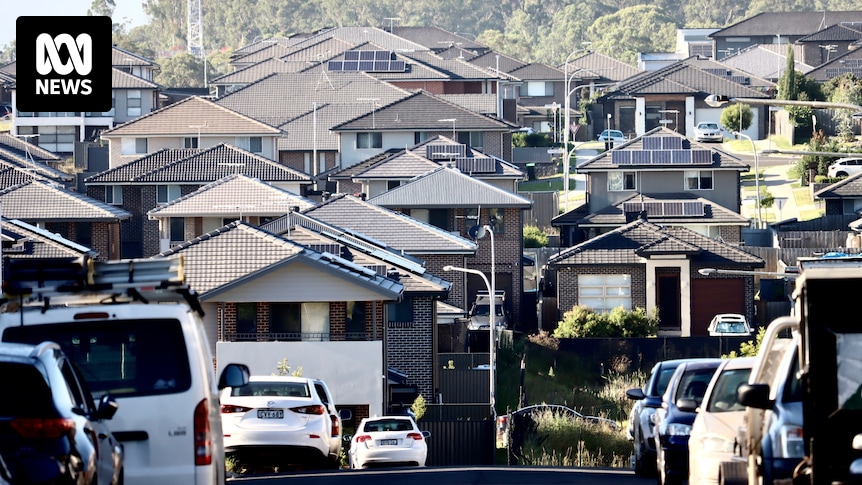
May 28, 2026 — 11:30amWealthy older Australians are using the nation’s negative gearing and capital gains tax laws to grab a greater share of the property market, research for the Reserve Bank has found, pushing up house prices at the expense of low- and middle-income earners.The analysis, released on Thursday, shows the tax system, which the federal government is overhauling as part of this month’s contentious budget, has been a key factor in leaving Australians with some of the highest levels of household debt in the world.Older and richer Boomers are cornering the rental market, research from the Reserve Bank has confirmed.Louise KennerleyTreasurer Jim Chalmers used the budget to unveil the biggest change to property tax laws in a generation, including restricting negative gearing to new properties and returning the capital gains tax concession to the pre-1999 system of only taxing inflation-adjusted increases in asset prices.The change to the capital gains tax has attracted sharp criticism, particularly from the start-up sector, while there have been warnings by some analysts that property prices will fall sharply as landlords sell up their rentals.In the analysis, senior RBA analyst Alexandra Michielsen said housing investors differed from owner-occupiers as they were primarily driven by high capital returns, which were aided by tax incentives such as negative gearing.She found that since the turn of the century, when the Howard-Costello government introduced a 50 per cent concession on capital gains tax, there had been changes in the make-up of the nation’s landlords while house prices had climbed.“Higher income investors have greater borrowing capacity and have benefited more from tax concessions such as negative gearing and capital gain discounts,” she found.“Rising property prices have lifted entry costs, making housing purchases harder for lower and middle-income households over time.”The Reserve Bank has for many years noted a connection between the tax system, changes in the property sector and the amount of leverage taken on by investors.Michielsen found the median age of housing investors had climbed from 45 to 51 between 1999-2000 and 2022-2023. The share of investors over the age of 60 had more than doubled, from 12 per cent to 28 per cent.“This shift reflects both broader population ageing and an increasing incidence of property ownership among older cohorts, with around 40 per cent of the change attributed to broader population ageing,” she found.This masthead revealed before the budget a surge in people in their 60s and 70s who hold rental properties.The RBA research noted that investor ownership has fallen among people aged under 50. Even among those in their 50s, ownership is up slightly on 1999-2000 but down sharply since 2010.Supporters of negative gearing have argued that most investors hold a single property. The research showed the share of people holding more than one property has climbed by 7 percentage points over the past 20 years.Higher-income earners are much more likely to hold an investment property than those on lower incomes. The top 20 per cent of all income earners hold almost 40 per cent of all properties.Over the past decade, investor activity has been “marginally skewed” to higher-income earners and away from those on middle incomes.Michielsen found many investors negatively geared their properties to take advantage of the tax system with the aim of capturing long-term capital gains to offset short-term losses.The large number of investors in the property market meant Australian households carried more debt than most other nations.“Unlike in many countries, households in Australia comprise a significant share of the investor base in the residential property market; this is one factor contributing to Australia’s relatively high level of household debt,” Michielsen noted.Cut through the noise of federal politics with news, views and expert analysis. Subscribers can sign up to our weekly Inside Politics newsletter.From our partners
How the Boomers grabbed the property market: RBA
Reserve Bank research shows older and richer Australians have pushed younger people on lower incomes out of the investor market.
623 words~3 min read