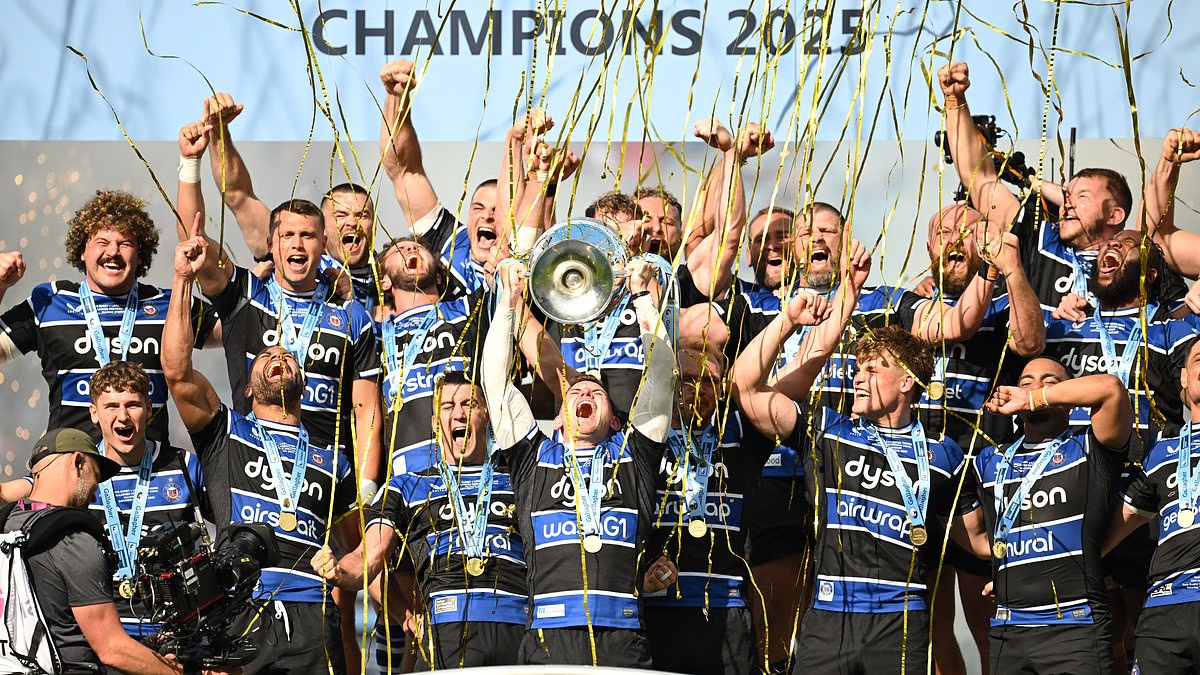
Towards the end of 2025, staff at Stonewood Capital Management started gathering information on English rugby clubs from 4,000 miles away, in their offices in Pittsburgh.Rumblings about investment in the sport made its way to the desk of their president, Kenn Moritz. Their investment portfolio has contained everything from gas pipelines to cemeteries and frozen dessert chains. They had no experience of rugby but Moritz wanted to know more about the trend.Red Bull, Dyson and Black Knight Sports, who own Premier League side Bournemouth, have all bought into Prem Rugby clubs in recent months and a whole host more financiers have made contact with the league’s chief executive, Simon Massie-Taylor.The Prem finalised their franchising model in February, scrapping promotion and relegation in favour of a system whereby the top club in the Champ can apply to join if they meet the required business criteria.Finances, infrastructure and fanbase are among the standards that must be met as the Prem aim to add two more clubs to the existing 10 for the 2029-30 season. The business model for top-flight rugby has been simplified, the threat of losing significant swathes of revenue through relegation removed and a shift in the market has been triggered.On a recent business trip to London, Moritz popped down to Richmond, south London, to watch a match. He was taken by the sport and earlier this month he became the latest figure to invest, putting his money into Champ outfit Cornish Pirates. Exeter are the latest Prem Rugby club to receive outside investment as the club reaps the rewards of its ringfencing Bath have had a significant investment from their biggest celebrity fan Sir James Dyson And earlier this season Red Bull made their first big splash in rugby by buying Newcastle‘I read a newspaper article about investment in the Cornish Pirates so I phoned up Sally Pettipher, the chief executive, and we had a long chat about what was going on in their environment and what was going on in English rugby,’ Moritz told Daily Mail Sport.‘As a private equity group, we’re always looking for interesting opportunities for investment. Most of what we do is industrial manufacturing companies and we’ve been doing that for 25 years.‘When I watched a little bit of rugby over the years, it was always really intriguing to me why this hadn’t caught on in the United States. It’s very akin to American football but players seem very accessible. They’re not covered in all this gear with helmets on. They’re just guys doing their thing.‘You look at France and they are much more successful with their community clubs. There’s a clear path to success if they get their ducks in a row. What is it that gets in the way for English clubs? You peel back the layers of the onion and realise there are political and cultural issues.‘A lot of Prem teams lose money and they have to be propped up by people with deep pockets. That’s not a sustainable model. That’s how football was 60 years ago in the United States. You had families who own it and throw money into it, but the organisations are not the most professional and it’s a question about what we’re going to do on Saturday rather than building franchise value.‘What was clear to me was the raw material is there. There’s a passionate fanbase. Of course we had heard about the investments in the Prem and we decided to make the investment because the future is there. You just need to throw a match on it and you’ll have a pretty raging fire.’The war in the Middle East has curbed investment from Saudi Arabia and Qatar. According to Exeter Chiefs owner Tony Rowe, the American market has shown the biggest appetite. ‘Apart from the good old National Lottery, we don’t invest too much money in sport in the UK,’ said Rowe.Rugby’s financial accounts have made grim reading in recent years. Clubs such as Wasps, Worcester and London Irish have been lost to bankruptcy and books have rarely balanced out. Cornish Pirates of the Champ are the latest club to receive American investment The Pirates celebrating in 2021 after beating Saracens, who remain the last team to be promoted to the Prem. No one else has met the promotion criteria Tony Rowe has welcomed the investment at Exeter Chiefs, where he has overseen two league titles and a European Cup‘In any new investment, we typically aren’t experts in that particular product,’ added Moritz. ‘What we can add is the value of our ignorance in certain ways. We don’t have sacred cows and we don’t have baggage around decisions that have been made in the past that can affect the way you think about things in the future.‘We have a blank slate we can use to approach it as a business investment and start asking questions that haven’t been posed for a long time. Sponsorship issues, developing facilities, how you staff. These things are the same for a sports franchise or a manufacturing plant.‘Part of the path forward for Cornish Pirates is to make sure they have a stadium facility that would allow them to gain entry to the Prem if that’s the path that’s chosen.’On Sunday, Bedford Blues will face a revived Worcester Warriors in the Champ play-off final, although neither club has applied yet for promotion. Bedford have sold all 5,500 tickets for the fixture but they do not meet the minimum stadium capacity threshold for the Prem – at least 5,000 seats with planning permission to expand to at least 10,001 in future.Bedford’s long-standing director of rugby, Mike Rayer, is among many who do not support the removal of promotion and relegation, although he appreciates the recent clarity. Universal Studios plan to open a multi-billion-pound entertainment destination in Bedfordshire in 2031 and he believes the American giants could be a potential long-term investor.‘First and foremost, we’ve got to maintain being sustainable, which we are,’ Rayer told Daily Mail Sport. ‘If you’re an investor it makes sense to look at a business that isn’t losing money – and there aren’t many of those around in professional sport.‘This game will eventually settle down a bit but over the past 20 years, the goalposts have moved several times. All sorts have gone on so it’s been increasingly difficult to plan short, medium and long-term. Maybe that will change now because this landscape looks like it’s going to stay the same for the foreseeable.‘We would take promotion this weekend but all we can do is accept our fate – we’ve had no control over that destiny but now we have a little bit of control. We’ve got to stand on our own two feet. Universal are moving into the area over the next five or 10 years and we’d be foolish if we didn’t speak to them. Universal Blues would have a nice ring to it.’ Worcester Warriors are back up and running but have not applied for promotion ahead of the Champ play-off final Worcester will face Bedford Blues (in white) in that final - but they also cannot yet meet the promotion criteria There will inevitably be negotiations about the value of P-shares when the Prem reaches its expansion phase. The membership shares are traditionally valued upwards of £10million, but there is no trading history to properly value them.A minimum spend on squad salaries is set to be introduced in the Prem and Rowe believes it will cost ‘somewhere between £50-100m’ to build a side with a stadium. Sale Sharks owners Simon and Michelle Orange sold their business for more than £1billion last year and they are ready to invest in developing a brand-new stadium.As Bath, Newcastle and Exeter receive cash injections, rival Prem clubs such as Leicester and Gloucester must think carefully about their own financial future so they do not get left behind.Big owners will bring big ideas. Newcastle are keen on driving brand awareness after their Red Bull rebrand and other clubs could explore renaming options to add commercial value. Chelsea FC owner Todd Boehly has pushed for an annual All-Star Game akin to those in the US – although rugby’s playing calendar is already stretched to its limits.Does Moritz believe it is a matter of time before rugby becomes more Americanised?‘I’m sure there are things that have done well in America that could help rugby, although it’s too early for me to form an firm opinion on that,’ said Moritz. ‘What we have done well in the United States is to market individuals. It’s amazing what the NFL draft has turned into. We had the draft in Pittsburgh last month and 800,000 came to watch it. They came to sit in a field and watch them pull out names. The amount of interest is astronomical and any time you can do something like that, then you immediately add value.‘I’ve seen bits and pieces of the Wrexham documentary and I certainly understand the parallels. Maybe we could make the Cornish Pirates an adopted rugby team in the USA. I recently finished watching Poldark and maybe we could interest some of those actors to get involved as representatives of Cornwall!‘People in the States play fantasy football. Famous soccer players also market themselves very well and I can’t see how much that happens in rugby. You have the passionate fanbase in rugby. The question is whether you can grow something that’s important to the casual fan.’Leicester Tigers are England's biggest club but need to consider their options to keep up with the teams welcoming outside investment American investors have noticed rugby's struggles to market its star players, such as Harlequins and England fly-half Marcus Smith (right)NFL superstar Tom Brady and his investment partners at Knighthead Capital Management have explored investing in rugby in Birmingham, after buying into the city’s football and Hundred cricket sides, while bankrupted clubs such as Worcester, London Irish and Wasps will not be offered a fast-track pass back into the top flight. The Prem’s preference is to first expand into untapped markets, such as Yorkshire and south-east England.‘Over the last few weeks there has been at least a call a day from people who are interested,’ Massie-Taylor told Daily Mail Sport. ‘There’s a whole group of global sports investors, institutions and family offices who are seeing value in sport and looking to have multiple investments across multiple sports.‘We’ve come a long way since four years ago, in terms of who or wasn’t interested in taking on Wasps, Worcester and London Irish. That was a very different market and quite a depressing one.‘Rugby is a big global sport. If you take out the Olympics and football World Cups, our World Cup is right up there in terms of global events. There are nine or 10 million people who follow rugby in the UK. Outside of football, the Prem is the biggest sports league in the UK by most metrics, certainly revenue.‘The Prem is very well established. You’ve got 150 years of narrative, which is important. There has been somewhat of a fad around start-up leagues and competitions but you want to back something that’s established with a reliable fanbase that can grow.‘People have seen the growth potential. If you wind back to 2019, the league had been growing at almost 10 per cent a year for a relatively long period of time. There was a lot of optimism around it and CVC Capital Partners saw the opportunity to come in and invest. History is pretty clear as to what happened after that but the thesis around the growth potential of the league hasn’t changed.‘What we’ve been doing in the background is making the foundations stronger so it appeals to investors – getting the foundational deals in place, like the Professional Game Partnership. It’s a proper partnership now and that’s a real tick for investors to know that you’ve got a proper partnership with your governing body and you’re all linked up. The supply chain of players and the academies are so critical to both England and the Prem.‘Long-term commercial partnerships are important so the fact we’re about to enter the first of five years with TNT Sports is key. Long-term deals with ITV and Gallagher all send the right signals. The salary cap is another important tick for investors because it shows there is financial control within the league. People want to win and this is a league that anyone can win. We could have seven different winners in seven years.’ NFL superstar Tom Brady and his investment partners at Knighthead Capital Management have explored investing in rugby in Birmingham, after buying into the city’s football and cricket sides ‘Over the last few weeks there has been at least a call a day from people who are interested,’ says Prem chief executive Simon Massie-TaylorOwners are happy with the ‘product’ on offer, with high-scoring games becoming the norm across the Prem. Daily Mail Sport understands at least one club owner has encouraged his director of rugby to adopt a more exciting brand of play. The removal of relegation, however, has triggered a backlash from critics, and the noise has not gone unnoticed by the executive board. With no threat of demotion, will teams still be competitive in the final weeks of the season when their play-off hopes are over?‘We had a couple of blowout fixtures a few weeks ago and everybody jumped to the conclusion that it was because of no relegation,’ said Massie-Taylor. ‘Essentially, we haven’t had relegation for a couple of years. Last season, there was one dead rubber. I do feel we could make Champions Cup entry more exclusive and more competitive so that is one element to look at.’Currently, eight of the Prem’s 10 teams qualify for European rugby’s top tournament, but that is likely to be cut back. Talks are underway to reduce the number of teams in the Champions Cup, which could be re-structured into an immediate knockout competition.As more money comes into the game, every element is likely to come under the financial microscope. Time will tell if the new investment delivers a healthy return.
Why US investors are pouring money into Prem Rugby clubs
SPECIAL REPORT BY NIK SIMON: 'Over the last few weeks there has been at least a call a day from people who are interested,' Prem rugby CEO Simon Massie-Taylor told Daily Mail Sport.
2,349 words~11 min read