The Supreme Court's Voting Rights Act decision had an immediate impact on this year's elections. More changes could be coming.Show Caption
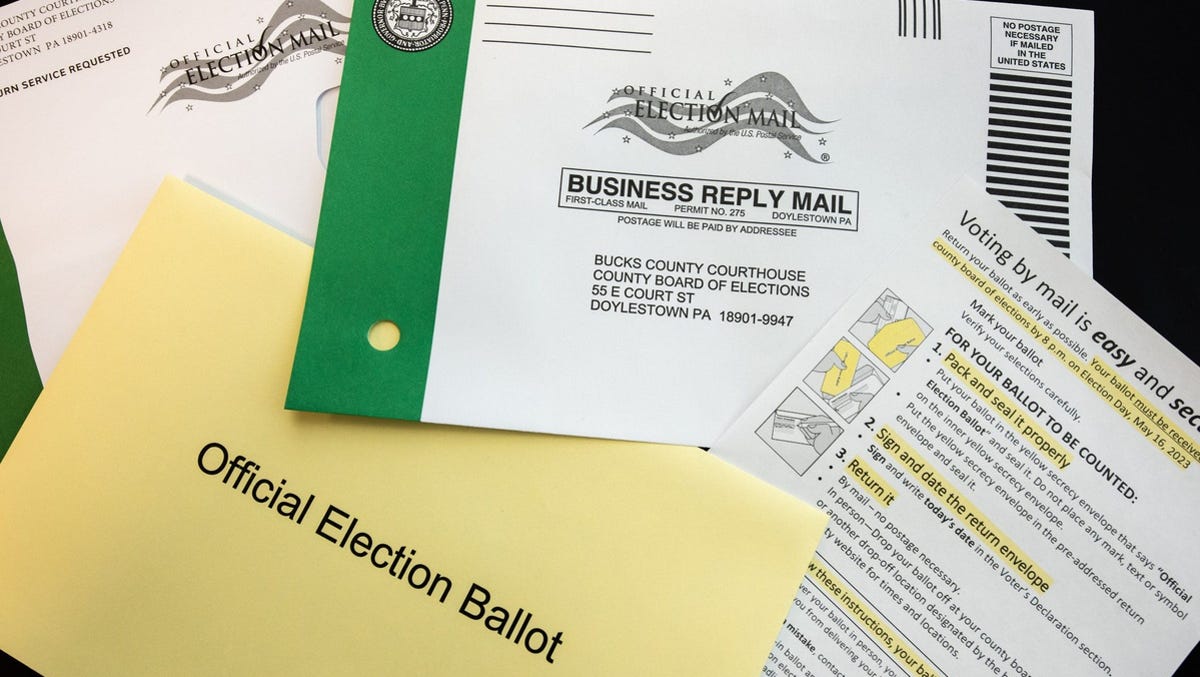
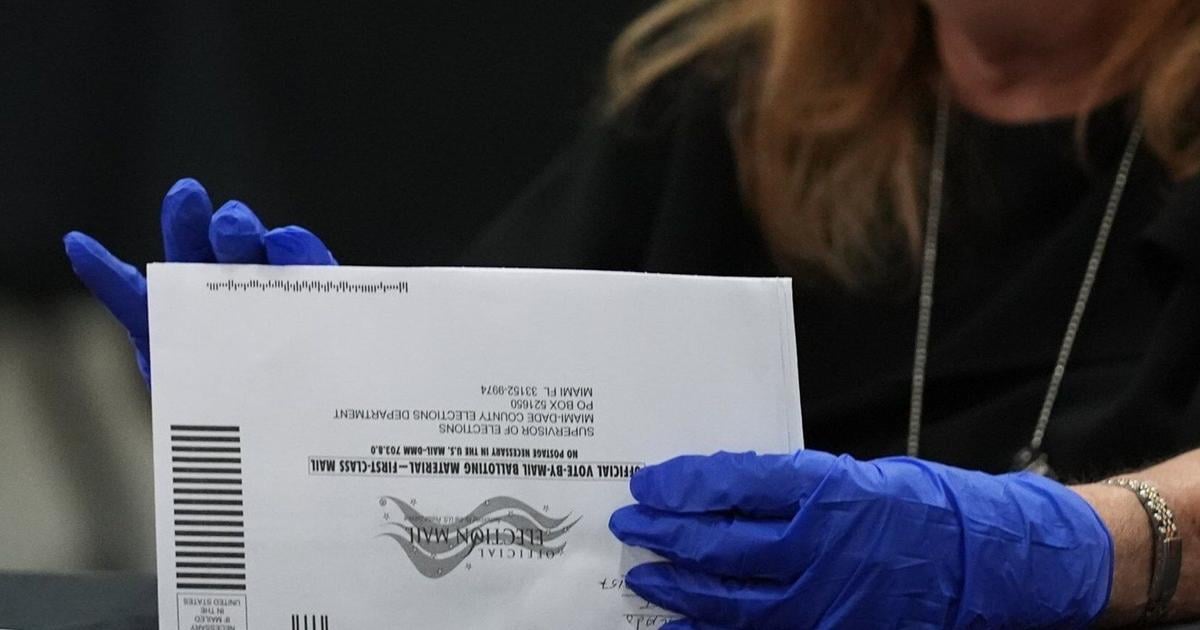
WASHINGTON − The Supreme Court may not be done disrupting this year’s elections.As the fallout from its recent decision weakening the Voting Rights Act continues, the court has two more election-related cases that could be decided in the next batch of opinions, set to be released May 28.At issue is when mailed ballots must be received to be counted and whether one of the last remaining checks on money in politics should be eliminated.It’s not the number of election-related cases the court is deciding that stands out to Rick Hasen, an elections expert and law professor at UCLA.“There have been terms where there have been lots of cases on elections,” he said. “What’s unusual about this is that they’re having an immediate effect on elections.”The changes to the Voting Rights Act prompted several southern states to redraw congressional maps even when voting on this year’s candidates had already begun.Alabama postponed party primaries for four of its seven House districts as it tries to eliminate a district with a significant Black population, a battle that is back at the Supreme Court.And depending on how the justices rule in other pending cases, there could be immediate shifts in campaign spending and in which ballots can be counted.Here’s a look at the potential fallout.'Seismic effects' from Voting Rights Act rulingThe court’s April 29 decision throwing out Louisiana’s congressional map for relying too heavily on race to sort voters made it significantly harder for Blacks and other racial minorities to argue that a map unfairly dilutes their voting power. That ruling “will have absolutely seismic effects on the 2026 and 2028 elections,” said David Froomkin, an assistant professor of law at the University of Houston Law Center whose expertise includes election law.“States across the south are already moving to eliminate minority opportunity districts that used to be guaranteed by the Voting Rights Act,” Froomkin said in an emailed response. “The long-term effect is hard to predict with confidence, because voters and parties can change their behavior, but the short-term effect is clearly to hand several House seats to the Republican Party.”The ruling had a big impact not just because of how the case was decided but also because of when it came down.If the decision had been issued earlier in the term, states like Louisiana and Alabama wouldn’t have had to postpone elections to take advantage of it. And a July decision would likely have come too late for most states to change maps before the November elections.“The fact that the Supreme Court did what it did, it had to know how disruptive it was going to be,” Hasen said. “If it would have been a month earlier or three months later, we wouldn’t be in this situation.”And the court isn’t done dealing with the repercussions.Alabama filed an emergency appeal on May 27 asking the Supreme Court to let it use a pro-Republican congressional map that a lower court said intentionally discriminates against Black voters.Grace periods for mailed ballotsIn a case argued in March, the Supreme Court is deciding whether to to strike down a Mississippi law allowing ballots cast by Election Day to be counted if they’re received within five days.More than a dozen states have similar laws. Additional states allow late-arriving ballots from military and overseas voters.Eliminating grace periods may not influence election results because relatively few ballots arrive late regardless of whether a state has a grace period, according to Daniel Thompson, a political scientist at the University of California, Los Angeles, and an expert on how election rules affect outcomes.But if the court backs the Republican Party's challenge to Mississippi's law, that could be a public relations win for President Donald Trump, who has long railed against mail-in voting as vulnerable to fraud, claiming without evidence that it cost him the 2020 election.Froomkin, at the University of Houston Law Center, said the case “has to be understood as part of a broader pattern of the Republican Party trying to undermine public confidence in election integrity.”Still, the decision could be problematic for states with grace periods, according to Richard Briffault, an election law expert at Columbia Law School.Because the Supreme Court can dictate changes only for federal elections, states could end up with different rules for ballots cast in state and local elections. Changing those rules to avoid confusion could require calling state legislatures back into session, he said.“I can’t imagine the states won’t do it,” Briffault said, “but if they don’t, it would be a gigantic mess.”And Justin Levitt, a law professor at Loyola Marymount University, said a decision ending grace periods could drop a “chaos bomb” on the counting of military and overseas ballots.Levitt said he can’t think of a legal reason why a decision ruling out grace periods for regular absentee ballots shouldn’t also apply to late-arriving ballots from military and overseas voters.“Maybe that fact will help the Justices who might be a bit more inclined to let further electoral disruption rest for the moment,” Levitt wrote on Election Law Blog.If the court does rule out grace periods for federal races, election administrators are going to need huge educational campaigns to inform voters of the importance of returning ballots on time, Hasen said.Because it usually takes voters a few election cycles to figure out such changes, he added, some will probably not get the message this year and will lose their vote.While that’s unlikely to have an overall impact on election outcomes, Briffault said, “in any one election, it might.”“Obviously in a close election, there will be fights about every vote,” he said.GOP challenge to campaign finance rulesA case argued in December gives the Supreme Court a chance to continue chipping away at campaign spending and contribution limits.Republicans – including Vice President JD Vance – are challenging a more than 50-year-old rule capping how much parties can spend in coordination with candidates.A decision lifting that cap could benefit the GOP, at least in the short run, because Democratic candidates have not relied on as much financial help from political parties as they’ve been better at attracting small-dollar donations.But Briffault doubts the decision will be a game changer because parties already have other ways of spending huge amounts of money to help candidates.And while the Republican Party has considerably more cash on hand right now, Froomkin said, parties have ebbs and flows in fundraising.Hasen said the bigger disruption could come if the court sides with the GOP in a way that changes the standard for reviewing the constitutionality of campaign contribution limits.“That probably wouldn’t affect anything for 2026,” he said, “but could have a big effect down the line.”