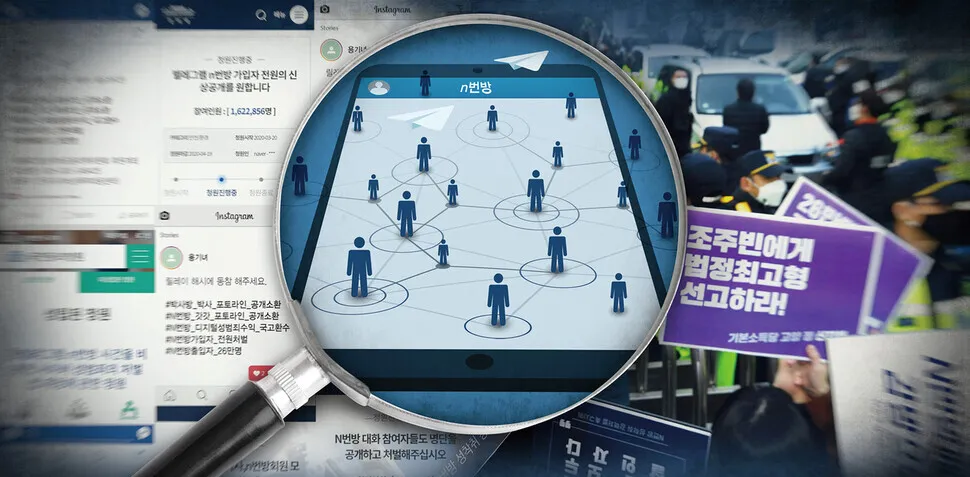
2004 alleged gang-rape of actress gains renewed attention, as mother fights on This combination of images show a National Assembly petition for an investigation into the 2004 gang-rape of an actress (above), and the name of a YouTube channel run by the victim's mother Jang Yeon-rok. (Image created by Park Ji-young/The Korea Herald) The #MeToo movement pulled back the curtain on toxic work cultures in the entertainment industry — exposing how powerful men exploited women behind the scenes. In the United States, the fall of Harvey Weinstein became a defining moment, leading to convictions and a broader reckoning in Hollywood.But in South Korea, there is a case that never reached that point.In 2004, a 29-year-old female graduate student claimed she was gang-raped while working as an extra and sexually harassed by multiple TV staff members. She later withdrew her complaint and died by suicide. Her younger sister died soon after. Their father passed away within weeks. All this while none of the accused men was ever brought to trial.More than two decades later, it remains one of the most disturbing scandals in Korean broadcasting — a case defined not only by alleged violence, but by systemic failure and the collapse of an entire family.Abuse and deathThe alleged assaults took place between August and November 2004. The victim, surnamed Yang, was then a graduate student working part-time in television. She accused four men of rape and eight others of sexual harassment. The suspects were all staff members at the broadcasting station where she worked, including a coordinator responsible for hiring extras.Yang had been a high-achieving student. The TV gig was part-time work arranged by her younger sister. She was at the top of her class as an undergraduate, and had won academic scholarships.According to Yang's mother Jang Yeon-rok, her behavior began to change dramatically after one day.Both Yang sisters showed up for the gig that day, but the younger sister went back home because it was too hot. The older sister, the victim, chose to stay, saying, "I won't get paid if I go home. I'll stay. I wouldn't be doing anything at home, anyway."After that, Yang became increasingly unstable — pacing anxiously, muttering names, and expressing violent thoughts. At one point, she reportedly said, “I should kill them.”This led to her being admitted to a mental hospital, and the revelation of the horrible abuse she was subjected to. The enraged mother called the chief coordinator of the extras, but he responded by saying he would “make (Yang) a whore" by badmouthing her at work.The psychological damage inflicted on Yang was extensive, to the point where she told her own mother, "Crazy b----. I'll kill you," according to the hospital records. The smart, model student had turned into a scarred creature of pent-up rage, with nowhere to direct her anger. This screenshot of local broadcaster JTBC's coverage of the 2004 gang-rape of an actress shows the victim (center) appearing on a TV show. (JTBC) In December 2004, Yang filed for criminal charges against the suspects, but she ultimately dropped the charges on July 25, 2005.When asked why by her doctors, the medical records state that she simply said, "It's too hard."Her mother said Yang’s father tried to talk Yang out of dropping the charges, but the chief coordinator, one of the accused men, threatened to kill her mother and daughter. The mother Jang said she was also assaulted by the man, who faced no charges for the alleged attack.Evidence and testimonies indicate secondary abuse by not only the suspects, but also the police officers. It was alleged that some of the officers verbally assaulted Yang, and told her to draw the suspects' penises, including specific size and color.Yang was forced to be in the same room as the suspects during the investigation, as the suspects contradicted her testimony. It was also alleged that one officer pressured her to drop the charges, saying, "this does not constitute a crime for an adult."Yang's father, who initially persuaded his oldest daughter not to give in, eventually accompanied her to the police to drop the charges.Years after the incident, at 8:18 p.m., Aug. 18, 2009, Yang threw herself from a building to her death. A memo left by her showed that her suicide was thoroughly planned: She would visit the site for an inspection during the day, and go there to die at night."As quickly as possible," and "(They) pushed me to do this," "Suicide is the only way to live. I no longer have a reason to live," were the words left in the memo. Whether it was by coincidence or intentional, the repeated number 18 is euphemistically used in place of a Korean swear word, as its Korean pronunciation is similar.Less than a week later on Sept. 3, Yang's younger sister, who got the TV gig for her, took her own life in the same manner. "I miss my sister so much, so I'm going. Mom, you avenge (her). You can do it," she said in a note, according to their mother.The Yang sisters' father, who at first urged his daughter to keep fighting, suffered a stroke on Nov. 3 of that year and died. All that remained was the mother, who keeps fighting to this day for an apology and a thorough investigation into the atrocities that took her entire family.Mother's lone fightThe case was never legally ruled as a rape in a criminal trial, due to the victim dropping charges. But it is widely recognized as a tragic case of the state failing to protect a victim of horrendous acts of sexual violence and exploitation.Even some of the court rulings acknowledge this, although the victim's mother Jang never received any compensation due to the statute of limitations of the Civil Act."Based on the testimony of witnesses and the victim herself, there is reason to believe that she has been victimized by a sexual assault," the Seoul Central District Court said in its 2015 ruling. Although the court rejected the lawsuit filed nearly a decade after the alleged attack and over four years after the victim's death, it stated that "it does not appear that (Yang) wrote her diaries out of delusion."In 2018, one of the suspects filed defamation charges against Jang for exposing his name. But the court ruled in favor of Jang, making a statement that is widely seen as an admission of guilt on the state's part."The court cannot help but feel a deep sense of frustration and sadness at the pain suffered by the mother and daughter, which was amplified by the disastrous failure of the state system," the court said in the ruling.The government in 2018 held a funeral and memorial service for Yang and her sister, nine years after their deaths. The ceremony took place at the National Medical Center, where then-Gender Equality Minister Jung Hyun-baek paid her respects.“The ministry will make sure such a tragedy does not occur again, so the deaths of these two will not have been in vain,” Jung told reporters after meeting the sisters’ mother.Jang, since 2019, has been posting the faces, current names and other personal information of the suspects on YouTube. The channel itself has been blocked from public access, but videos uploaded years ago are still available on the platform.She was 52 years old when she lost her entire family, and now, in her 70s, is fighting multiple charges of defamation brought by the suspects. This video posted by Jang Yeon-rok, the mother of the actress believed to have been gang-raped by TV staff in 2004, shows a man she accuses of being one of the perpetrators of the crime. (YouTube) Justice still not servedDespite exposing the faces and names of those held responsible, Jang has yet to see any of the suspects brought to justice by the law. While public shame has been brought on some of the suspects, they have not been subject to criminal punishment or ordered financial compensation for their alleged crimes.It was found in 2020 that several suspects were working as production staff at a subcontractor for a major broadcaster, although they were promptly fired after the revelation.Local broadcaster JTBC had contacted the suspects in its coverage of the tragedy, but none of them admitted guilt or offered condolences for the deaths. One suspect said it was "revealed to be groundless," while another said Yang was found to be a "kkotbaem" -- literally "flower snake," a Korean slang term for women who lure men into sexual relationships to extort money."I made an advance (on Yang), and she consented. I was actually having an affair, and I have regrets as a husband," another suspect was quoted as saying. "I don't know if (Yang) was hurt or not, it didn't seem that way.""It was all done legally, what more do you want me to say?" said the man who initiated the sexual assault, saying her death had nothing to do with him. This announcement on the National Assembly homepage states that the petition for an investigation into the 2004 gang-rape of an actress was submitted to the parliamentary Security and Public Administration Committee on Jan. 8. (National Assembly) In December 2025, a petition calling for a reinvestigation of the case was submitted to the National Assembly, and it was referred to the parliamentary Security and Public Administration Committee on Jan. 8. The speed at which the petition received the required 50,000 signatures indicates that strong anger against the case persists to this day.It remains to be seen whether the committee will appoint a special counsel and hold a parliamentary hearing as requested. But the wheels are turning to reveal the whole truth about the heinous crime that occurred in 2004, one that eventually destroyed a promising young woman and took her life, along with those of her younger sister and father.
True Crime (14) Korean TV's worst #MeToo case never reached trial
The #MeToo movement pulled back the curtain on toxic work cultures in the entertainment industry — exposing how powerful men exploited women behind the scenes.
1,636 words~7 min read