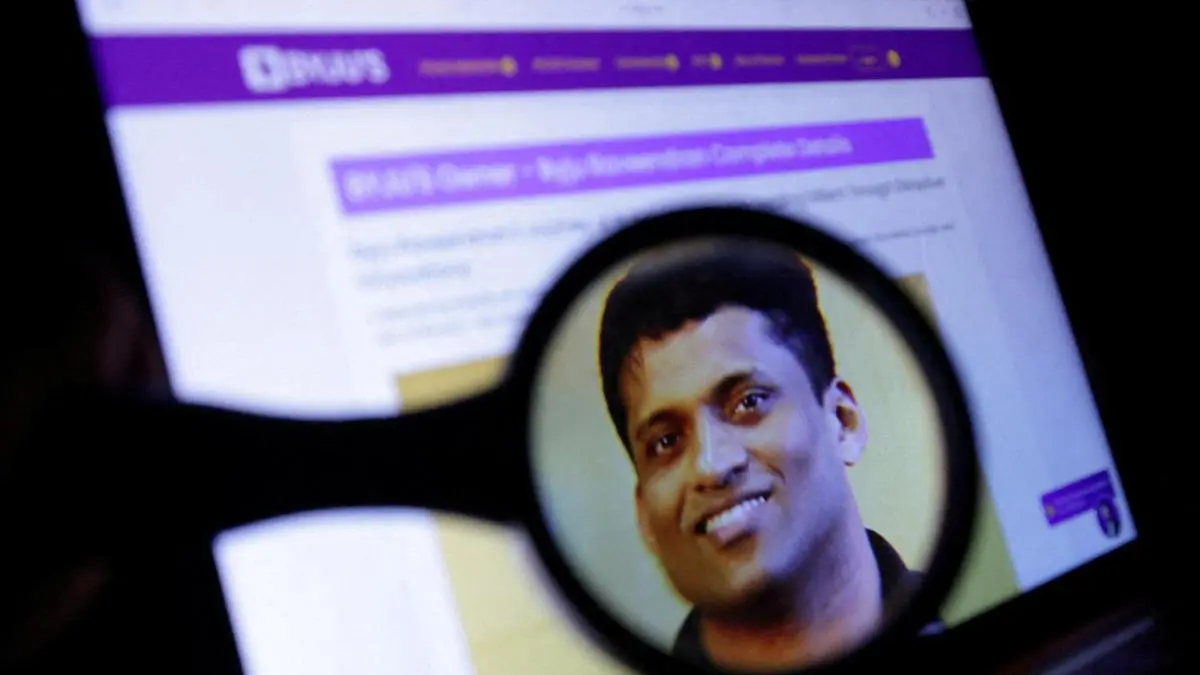
SINGAPORE - The founder of failed Indian technology firm Byju’s was sentenced to six months in jail by a Singapore court for contempt, according to people familiar with the matter.Byju Raveendran was ordered to serve jail time after the court said he had disobeyed multiple orders related to his assets dating back to April 2024. It’s the first time a judge has threatened to imprison the once high-flying entrepreneur, who founded one of India’s highest-profile tech start-ups before a post-Covid slump pummelled the business. He has been instructed to surrender himself to officials, pay costs of $90,000 and provide documents proving his legal ownership of Beeaar Investco, a corporate entity that held shares in a related company.The threat of jail time is the latest blow to a founder who is now facing claims from foreign investors around the world, including in the United States where lenders are fighting to claw back losses from a US$1.2 billion (S$1.5 billion) loan that soured.Raveendran didn’t immediately respond to a request for comment. It’s unclear whether he is in Singapore or elsewhere.“We are presently contemplating an appeal against the decision of the Honourable Court and to apply for stay of the order for committal,” Clarence Lun, a lawyer for Byju’s, said in a statement.Raveendran’s founding of educational technology firm Think & Learn – better known as Byju’s – turned him into a billionaire, making him one of the major success stories among a wave of Indian start-ups that have attracted capital from global firms. He is now being pursued in Singapore’s court system by a subsidiary of sovereign wealth fund Qatar Investment Authority (QIA), which participated in a funding round for the tech firm as it was cutting jobs and laying off staff. Qatar Holdings was represented by Drew & Napier in the matter. Byju’s Investments was represented by Fervent Chambers.QIA will continue to pursue the repayment of the debts owed to it and recovery on the award in its favour, a spokesperson said in a statement. The fund rejects Byju’s contention that this contempt order is a pressure tactic to reach settlement. While QIA, unlike Byju, intends to respect the confidentiality of discussions, no settlement appears achievable, the spokesperson said.
Singapore court hands Byju's founder his first ever jail term
Byju Raveendran founded one of India’s highest-profile tech start-ups before a post-Covid slump pummelled the business. Read more at straitstimes.com. Read more at straitstimes.com.
367 words~2 min read