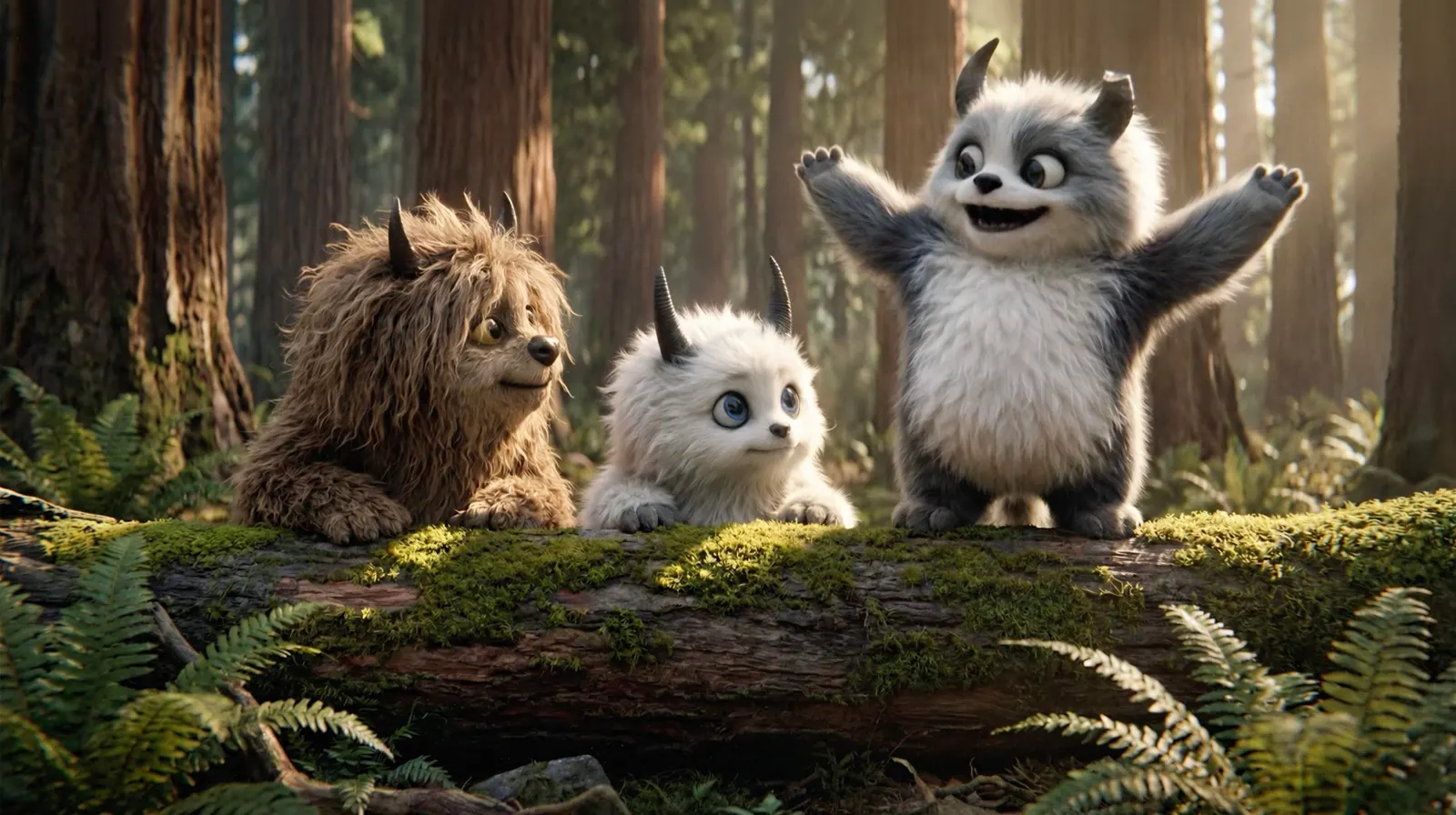
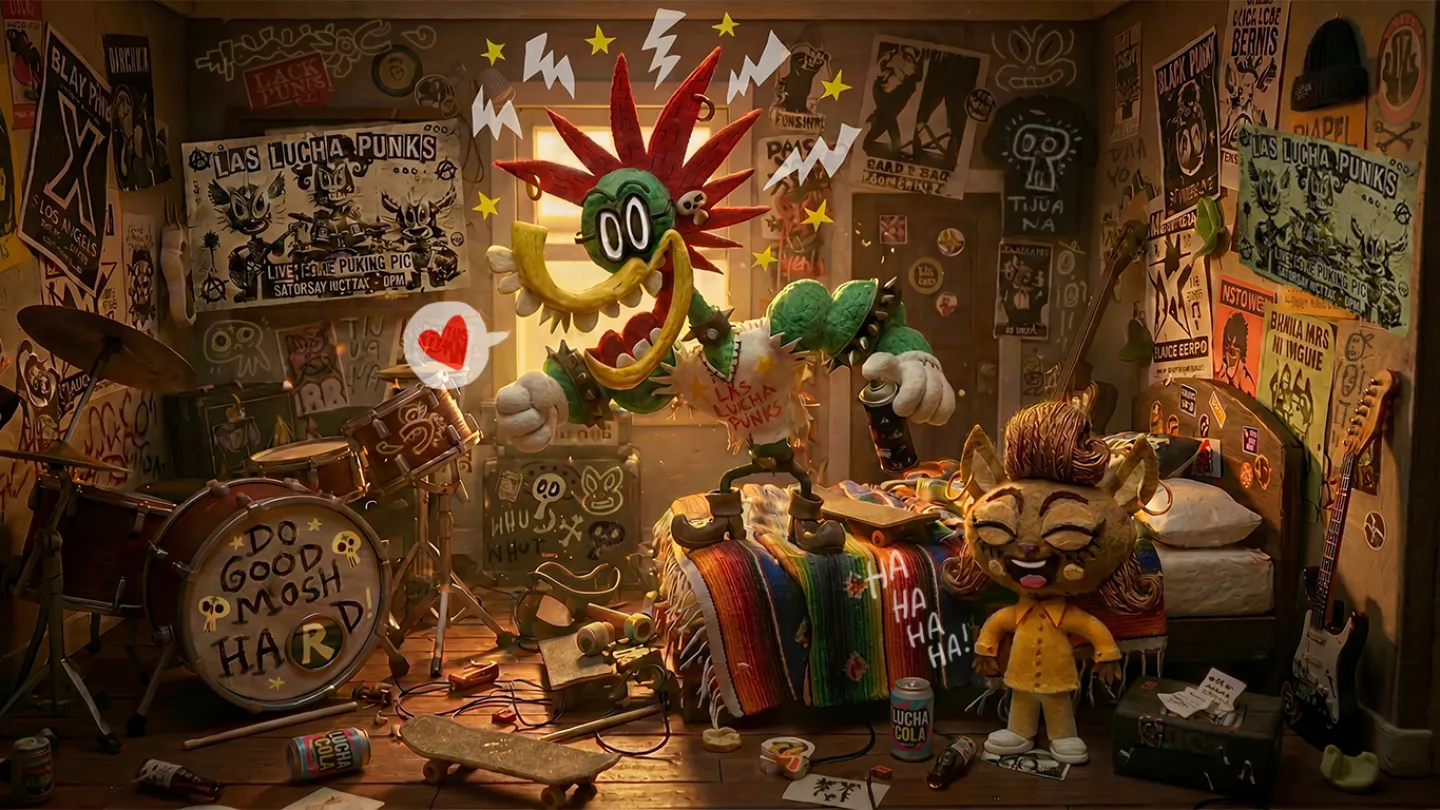
Hollywood’s first hybrid AI film, 'Terrarium', will be produced with Israeli company Artlist as a technology partner and financier, marking a major step for generative video as studios weigh AI’s creative potential against fears of industry disruptionA major step for Israeli company Artlist, and a smaller, more cautious one for the global film industry: the company announced Wednesday that it will invest in the production of the first Hollywood feature film created partly using AI.The project is not backed by Steven Spielberg but by horror producer Steven Schneider. Still, the planned film, Terrarium, will be a full-fledged Hollywood production and the first hybrid film of its kind: some scenes will be shot traditionally while others will be generated using AI, enabling visuals never before seen on cinema screens. The technology is also expected to cut production costs significantly.5 View gallery Bambi (Photo: Screenshot from an Artistlist advertisement)The deal is being unveiled Wednesday evening at a high-profile Artlist event in Los Angeles. Walking the red carpet is CEO Ira Belsky, a former resident of Israel’s Golan Heights, meeting Hollywood executives. If the industry responds positively, it could mark Artlist’s breakthrough into the spotlight as Hollywood’s newest rising star.For genre fans, Terrarium is written and directed by Emmy-winning filmmaker Jason Zada (The Forest, Focus Feature). Producer Schneider is known for horror hits including Blair Witch, Paranormal Activity and Insidious. The film also involves producer Christina Lee Storm and Secret Level Studios. Artlist will provide the AI platform, act as an executive producer and help finance the project.The production is breaking ground on one of Hollywood’s most sensitive questions: whether industry unions will cooperate with AI or trigger another shutdown. Terrarium has already been approved by the Directors Guild of America (DGA), and the Screen Actors Guild – American Federation of Television and Radio Artists (SAG-AFTRA), signaling that no jobs were eliminated. That is also Artlist’s message to studios: do not replace people — enable them to produce ten times as many projects with the same budget.Some still view Artlist as a catalog company offering stock footage, music and effects for video creators. But that is, as the company sees it, outdated thinking.5 View gallery Bear applying makeup (Photo: Screenshot from an Artistlist advertisement)Quietly over the past two years, Artlist has undergone a major pivot and now describes itself as an AI-based creative and technology platform.In practice, that means integrating leading video-generation tools such as Sora, Veo and Seedance, then layering its own AI tools on top to produce complete video sequences with the workflow tools directors and editors need.Many companies see AI as a threat. Some, including Israeli firms, have already been disrupted by it. Artlist’s former business model was among them: instead of paying 50 dollars for a music track, users can now generate one at virtually no cost using tools like Sono.But Artlist moved before that happened. It rebuilt both its product and market position. Rather than being threatened by AI, it turned into a threat to existing business models.The results came faster than even the company expected. In April, Artlist reported 300 million dollars in annual recurring revenue, 50% year-over-year growth and a 600% surge in new users within a single quarter, adding 4 million dollars registered users per month.The company’s headquarters sit inside historic buildings in Tel Aviv dating back to 1909, where teams now develop some of the world’s newest AI tools.Among them are AI Toolkit, which allows creators to use different video models like tools in a painter’s case, and Artlist Studio, which brings production, directing and editing workflows into a single platform. The company’s rapid growth strategy depends heavily on Hollywood adopting those tools.Its current focus is cracking the U.S. market. Part of that effort included a Super Bowl commercial produced in three days on a 5,000 dollars budget, intended to demonstrate that AI filmmaking is accessible to nearly anyone.5 View gallery Co-CEOs Ira Belsky and Itzik Elbaz (Photo: Artlist)A new Los Angeles-focused ad campaign is now rolling out, featuring billboards and television ads presenting Artlist’s technology as a tool for producing TV series for a new streaming channel — a sensitive proposition in today’s Hollywood climate.Asked how close the company is to landing a major deal with large production houses, Belsky said Artlist is already running proof-of-concept demonstrations with one of the industry’s biggest studios.“They’ve asked us to show how we would create AI shots for existing and future series,” he said. “We’re meeting with everyone from management to technical teams to present the full process.”On what studios want from AI, he cited a production delayed by an accident that needed expensive additions such as helicopter city shots and digital scene completions involving visible actors’ faces.“Yes, that’s 100% possible,” he said.Why Isn’t Hollywood Rushing Into AI?According to Belsky, the industry is balancing the desire to move forward with fears over labor and responsibility.“There are major internal concerns involving Hollywood unions, which are understandably worried about the future of employment,” he said.He added that tech-forward companies such as Netflix and Amazon Prime Video are developing their own tools, while traditional studios remain dependent on outside companies like Artlist.Asked whether a small Israeli company can compete in a crowded market, Belsky argued that most rivals target social creators and short-form content.5 View gallery Demonstration in Hollywood (Photo: Elliott Cowand Jr / Shutterstock.com)“We’re investing in technology and partnerships to build upward into a much larger market,” he said. “Hollywood content budgets are enormous. Netflix alone spends around 20 billion dollars on content.”In February, Chinese tech giant ByteDance released its AI model Seedance 2.0, stunning viewers with a demo video featuring what looked like a brutal fight scene between Tom Cruise and Brad Pitt that was difficult to distinguish from real footage.Days later, the Israeli-Portuguese “Dor Brothers” studio released a three-minute disaster film created entirely with the same AI tools, generating tens of millions of views within 24 hours.The reaction stemmed from a simple fact: not a single frame had been filmed. Everything was created on a laptop.Belsky said Artlist has long been connected to ByteDance’s API and stressed that model builders such as ByteDance, Google and Kling focus on developing AI models, not user applications.“They rely on companies like us to distribute their models,” he said. “We build the user experience. They focus on developing the technology.”Artlist was founded in Kibbutz Afikim in 2016 by four entrepreneurs: co-CEOs Ira Belsky and Itzik Elbaz, along with Eyal Raz and Assaf Ayalon. The original idea was to provide audio and later video assets for content creators in the emerging creator economy.5 View gallery From a video created by Seedance 2.0 (Photo: Screenshot)The company was profitable from day one but later raised more than 100 million dollars from investors including Boston-based Elephant Partners and investment giant KKR.Then came the company’s defining transformation.AI boosted some businesses and crushed others. Artlist realized its existing market was disappearing and decided there was no point resisting the shift.Asked when the company realized its former business would become an AI casualty, Belsky said the decision became clear six or seven months earlier.“We moved to 100% investment in AI tools,” he said. “Suddenly we saw traffic levels we had never seen before.”“This wasn’t about adding a feature or using AI to improve something. The entire essence of the product changed. Today we build AI-first native products. Without that, we would be having a very different conversation.”By mid-2026, Artlist employs 500 people and is growing rapidly, driven largely by professional video creators entering the AI era. Expansion into corporate video departments and film production could take the company far beyond its current scale. Belsky is targeting 500 million dollars in annual recurring revenue. He may be underestimating.
Israeli company Artlist powers Hollywood’s first AI-hybrid film
Hollywood’s first hybrid AI film, 'Terrarium', will be produced with Israeli company Artlist as a technology partner and financier, marking a major step for generative video as studios weigh AI’s creative potential against fears of industry disruption
1,280 words~6 min read