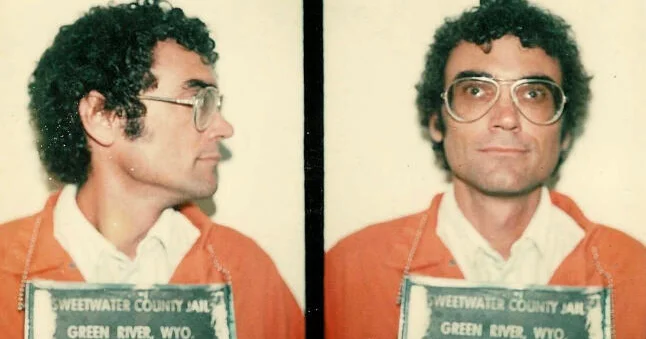
A few years ago, I reported the story of a Georgia man named Arthur Lee Cofield, Jr., who stole more money while behind bars—at least fifteen million dollars—than any other known inmate in American history. Cofield, who is short and stocky, with a tattoo on his neck that reads “Laugh now, cry later,” grew up in a suburb southeast of Atlanta, in modest circumstances. He had an impressive but brief career as a junior dirt-bike racer before he was caught trying to rob a bank, with another young man, when he was sixteen years old. Now thirty-four, Cofield has been a prisoner ever since that botched theft, sometimes in maximum security, although that didn’t stop him from creating an entertainment company, marrying a “pretty girl in a strip club,” as she described herself to me, and purchasing, under an alias, a four-and-a-half-million-dollar home in an upscale North Atlanta neighborhood, which he was gutting and finishing based on his own very exacting vision.Cofield stole those millions of dollars with the help of contraband cellphones, which were continually found in his prison cells over the years, including one hidden in the rolls of his stomach. He used them, and a few accomplices on the outside, to impersonate billionaires and gain access to their bank accounts. “Making millions from bed,” Cofield posted on Instagram, before his novel scam was discovered. In 2023, he was sentenced to more than eleven years for conspiracy to commit mail fraud and wire fraud, as well as conspiracy to commit bank fraud and identity theft. As I noted in my story, following his sentencing, the whereabouts of the vast majority of the money that Cofield had stolen—which he’d cleverly laundered through the purchase of gold coins—was not known. It apparently remains at large.Yesterday, Cofield escaped from a low-security satellite camp adjacent to the Federal Correctional Institution Jesup, in Georgia, as described in a Federal Bureau of Prisons report that was shared with me late last night. According to the document, Cofield’s absence was first noticed during a 4 P.M. “institutional standup count”; he remained missing at a bed count and at a third count that followed it. It is not known whether he is armed but he should be considered dangerous, the report notes. Cofield’s lawyer, Drew Findling—who was, for a time, Donald Trump’s lawyer in his Georgia election-interference case—declined to comment on the news when I reached him this morning. (A media contact at the Federal Bureau of Prisons declined to explain why Cofield was at a low-security facility, citing bureau policy.)One detail stood out from my story when I reread it today: a phone discovered in Cofield’s cell after his scheme had been discovered—which, according to a detective I spoke to, showed recent Google searches for “U.S. marshal uniforms.” The detective suspected that Cofield was plotting an escape.Read the original story »What Just Happened?Members of the Park Slope Food Co-op, a grocery store in Brooklyn, voted by a roughly two-to-one margin last night to boycott Israeli products. It was the culmination of a contentious period for the organization, which drew comment from local religious leaders and from Brad Lander and Dan Goldman, two Democrats running in the primary to represent New York’s tenth congressional district. We reached out to Marella Gayla, an associate editor at the magazine and a Co-op member, for a scene report.What was the meeting like last night?“It had a quality that you can only find on a nearly seven-thousand-person Zoom call, which is to say that it was baroquely inefficient, searingly passive-aggressive, riven with procedural manipulations, and occasionally inspiring. We’d gathered to vote on two proposals: first, a proposal to change the vote threshold required to pass a boycott from a super-majority to a simple majority; and second, a proposal to stop selling Israeli products, including peanut-butter puffs and a certain variety of bell pepper. I suspected that we were in for a long night when a member of the chairing committee started the meeting with a lightly anguished preamble about the experience of being on the chairing committee. A produce coördinator gave an admirably detailed update on stone fruit. When a member proposed a drastic amendment to the simple-majority proposal which would have derailed the rest of the meeting, we spent what felt like a lifetime voting on whether said amendment was germane to the matter at hand. (Verdict: no.) In the end, both proposals passed—the latter with sixty-seven per cent in favor, thirty-one per cent against. I can’t stop thinking about the remaining two per cent, who sat through a three-hour-plus meeting just to abstain. They’re really in it for the love of the game.”For more: Read about the Co-op’s past history of political conflict.Editor’s PickPhotograph by Yara Nardi / ReutersWhat the Pope Said About A.I.Leo XIV’s new encyclical, “Magnifica Humanitas,” presents a remarkable case for placing moral concerns—and not profit, or competitive advantage, or efficiency—at the center of any discussion of artificial intelligence, Jill Lepore writes. Read the story »More Top StoriesEverlane once embodied a hope that clothes could be mass-manufactured and high-quality. Now it’s owned by the fast-fashion giant Shein.Lewis and Clark’s crossing of the continent is America’s most famous camping trip. What was it all for?Ken Paxton easily defeated the incumbent John Cornyn in the Texas Republican Senate runoff. Will the Democrat James Talarico benefit in November?The most-clicked link in yesterday’s newsletter was reporting on new developments in the Alex Murdaugh murder case.
A Prison Escape in Georgia
From the daily newsletter: Charles Bethea reports on the latest news about a notorious fraudster named Arthur Lee Cofield, Jr.
906 words~4 min read