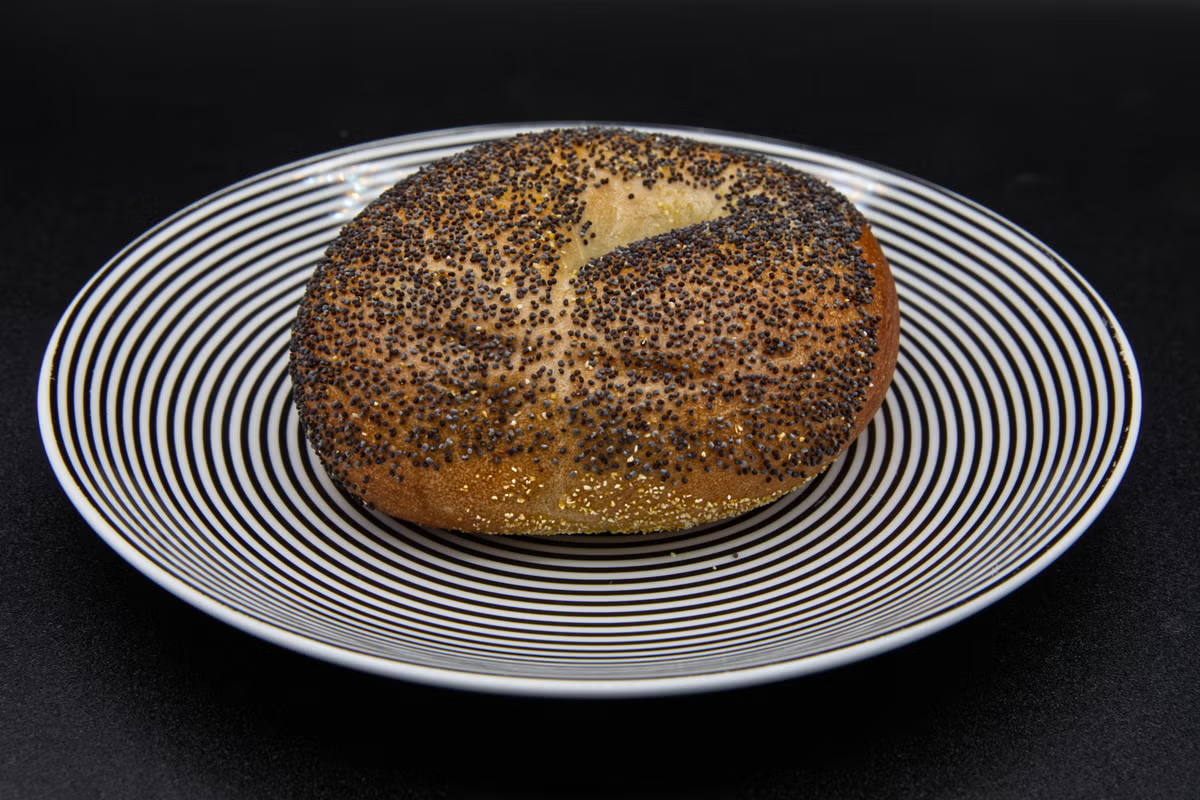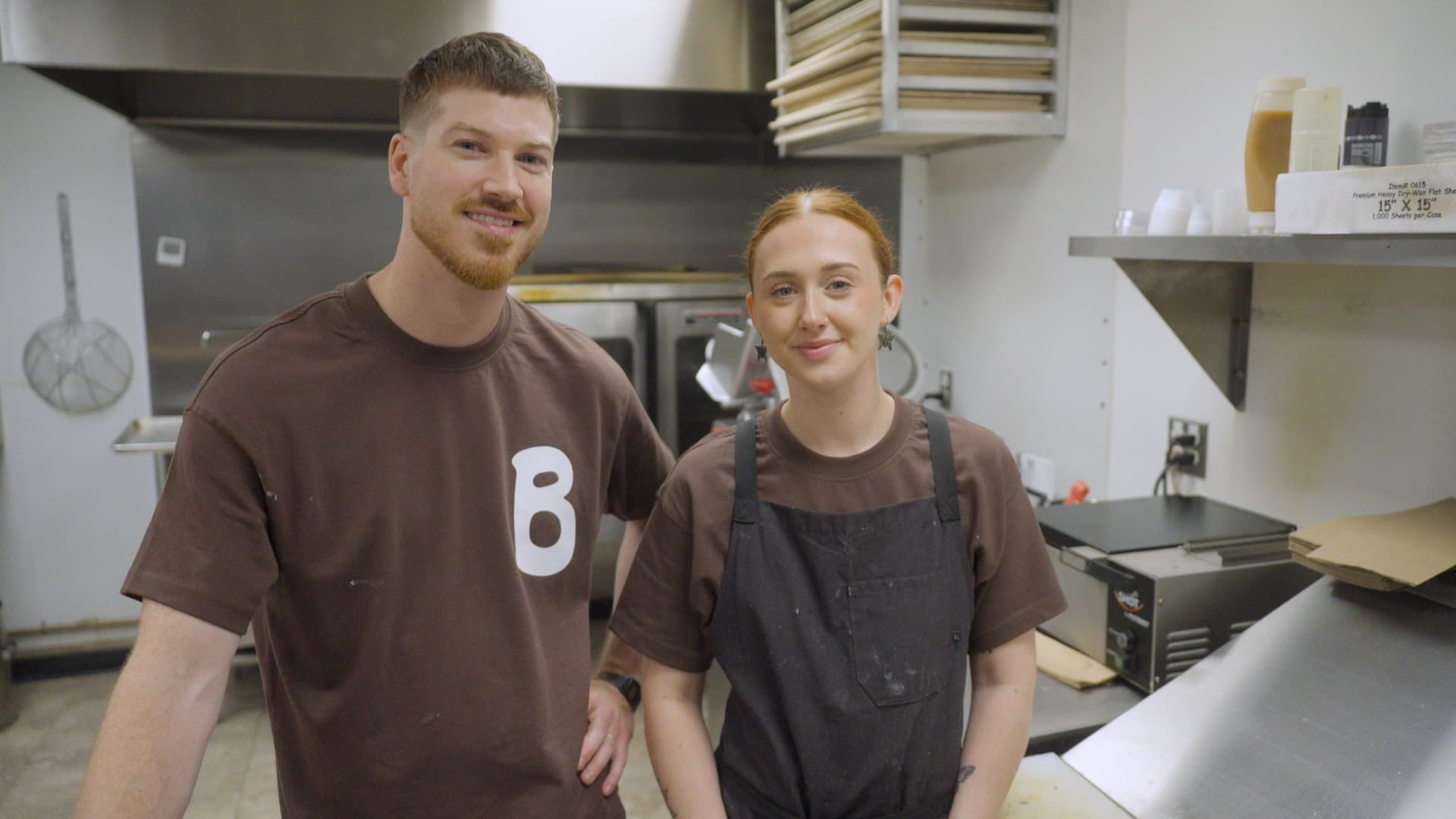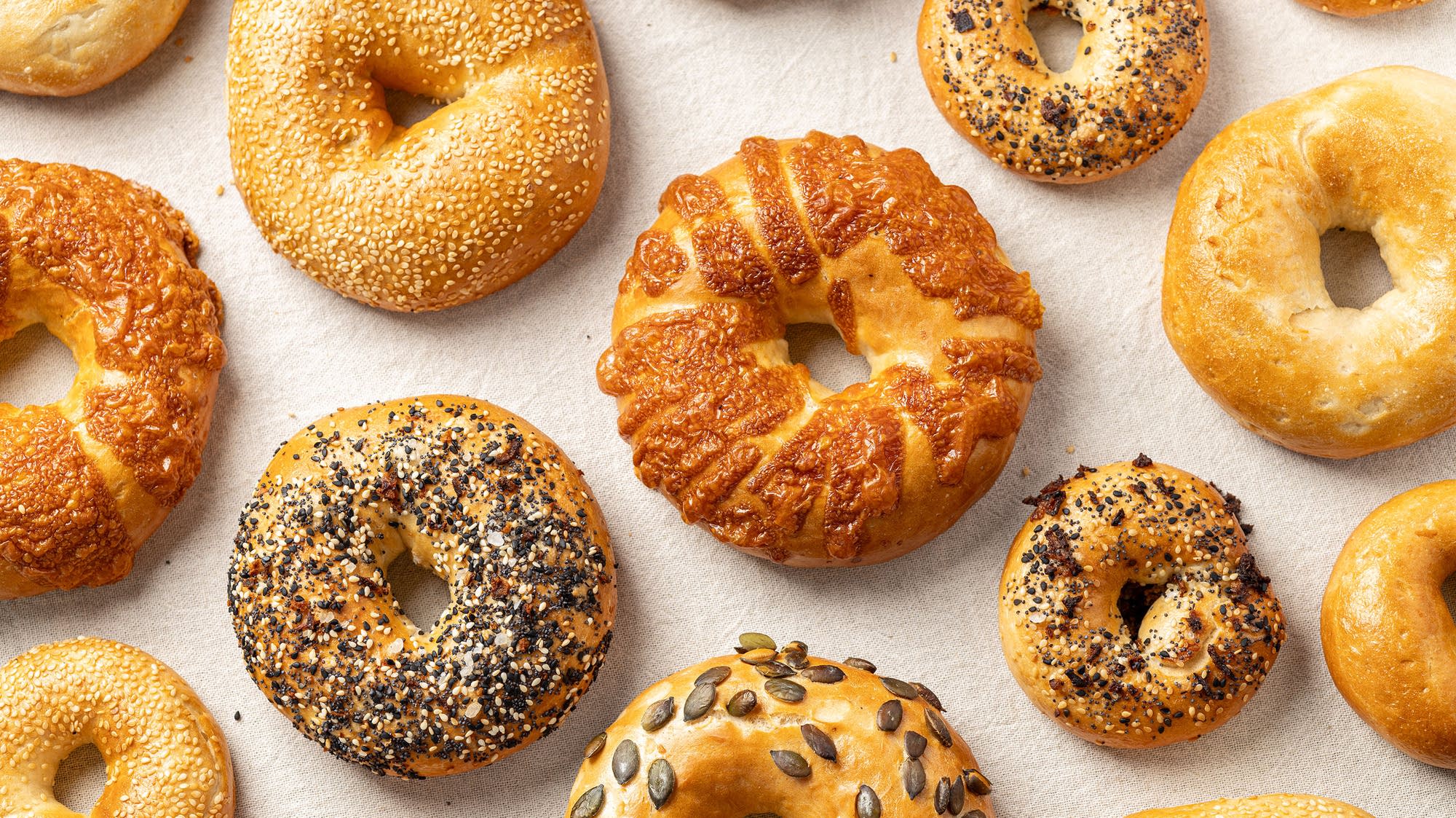
Outside of New York, bagels have been slow to garner the same sort of attention or cache of other viral foods. But that seems to be changing, especially on the West Coast. On a sunny spring morning in Southeast Portland, Oregon, a line was already starting to wrap around the block in front of Pipsqueak Bagels. “The bagels looked really good online, so we thought we would come give it a try,” said Regan Mandzij, who was here with her mom.It’s only 8:30 a.m., but the pair were some of the 40-or-so folks waiting in line for a weekend bagel. A line of customers waiting to order wraps around the corner in front of Pipsqueak Bagels in Portland, Oregon.Crystal Ligori/Oregon Public Broadcasting“We didn’t mind standing outside cause it’s warm out, but we did not know it was gonna be 45 minutes,” she said. A wait this long may seem unheard of for a bagel, but Sam Silverman explained the simple formula of flour, water, and yeast is much more than just its ingredients.“Even though the cost of the goods is relatively low, the amount of time and effort that goes into it is much higher than a lot of other foods,” he said. Silverman is New York's self-proclaimed bagel ambassador, president of Bagel Up, an organization he said is dedicated to “promoting bagels and the people, culture, and community behind them.” And these artisan bagels go way beyond your grocery store bagged variety. “To do bagels the right way, it's a minimum two-day process,” Silverman said. “You make and shape the dough by hand, and then the following day, after the dough has been allowed to cold ferment, it's then boiled, seeded, and baked.”Silverman said one of the reasons he thinks there’s been a rise in popularity outside of New York City is the amount of people who relocated during the pandemic. Pipsqueak Bagels owner Madilyn Gibbons hand-rolls bagels at her shop. On average, they sell around 1,500 bagels each day. Crystal Ligori/Oregon Public Broadcasting“The exodus of New Yorkers and Northeasterners who went to other places in the country and brought their standards for bagels with them was the perfect match for local entrepreneurs to fill that hole in the market,” he said. That includes entrepreneurs like Andrew Rubinstein, who noticed the bagel void even earlier. “I'd already been thinking about bagels in around 2016 — the fact that they just weren't what I thought were great bagels in the Seattle area,” he said. Rubinstein is the owner of Hey Bagel, and before he went brick-and-mortar last year, he was meeting people in parking lots to give them bagels. “I was baking out of a commissary kitchen [and] loading up my Ford Explorer with bags of bagels,” he said. “I would poach in grocery store parking lots, in transit centers, and people would come and have their clandestine pickups.”By then, there was already a buzz around bagels, potentially sparked by the viral baking frenzy that seemed to be everyone’s pandemic hobby. That’s how Connecticut’s PopUp Bagels started. Now, the company has expanded to 29 locations — growth largely funded by a $35 million investment by private equity firm Stripes. It’s something many artisanal bagel makers, like Madilyn Gibbons, are taking note of.“I have mixed feelings about it because when you start getting venture capital involved, I have an assumption that that will change things,” she said. “But maybe it could do really good things for the industry as well.”Madilyn Gibbons poses with more than 800 bagels that are in the midst of a 48-hour cold fermentation.Crystal Ligori/Oregon Public BroadcastingGibbons is the founder and owner of Portland’s Pipsqueak Bagel.“Bread has always been a part of my life,” Gibbons said while slicing off long strips of dough, deftly twisting sections into perfectly round bagels. “I come from a long line of bakers, and I would always give baked goods away to my neighbors, like challah or cakes, and it wasn't really until I started sharing bagels with people that they were like, ‘Man, those are really amazing. Are you selling those?’”Pipsqueak opened its doors in mid-April, after years of Gibbons doing farmers’ markets and bagel pop-ups. She’s grown her staff to about 10 employees, and business is going well. “On average, we're prepping around 1,500 [bagels], but on Mother's Day, we did 2,000, and we're selling through everything every day,” she said. “Ever since the day we opened, it's been lines around the block. It's been incredible.”And with high-profile features on the bagel business popping up in the New York Times and Wall Street Journal — plus the first-ever West Coast BagelFest last month — the bagel boom shows no signs of slowing down.
Why the bagel economy is on a roll
In Portland and Seattle, artisan bagel shops are drawing lines around the block and selling out daily.
782 words~4 min read