You launch your new autonomous AI agent. It is tasked with researching market trends, writing a comprehensive report, and saving it to your local directory.
Ten minutes pass. Your terminal remains completely silent.
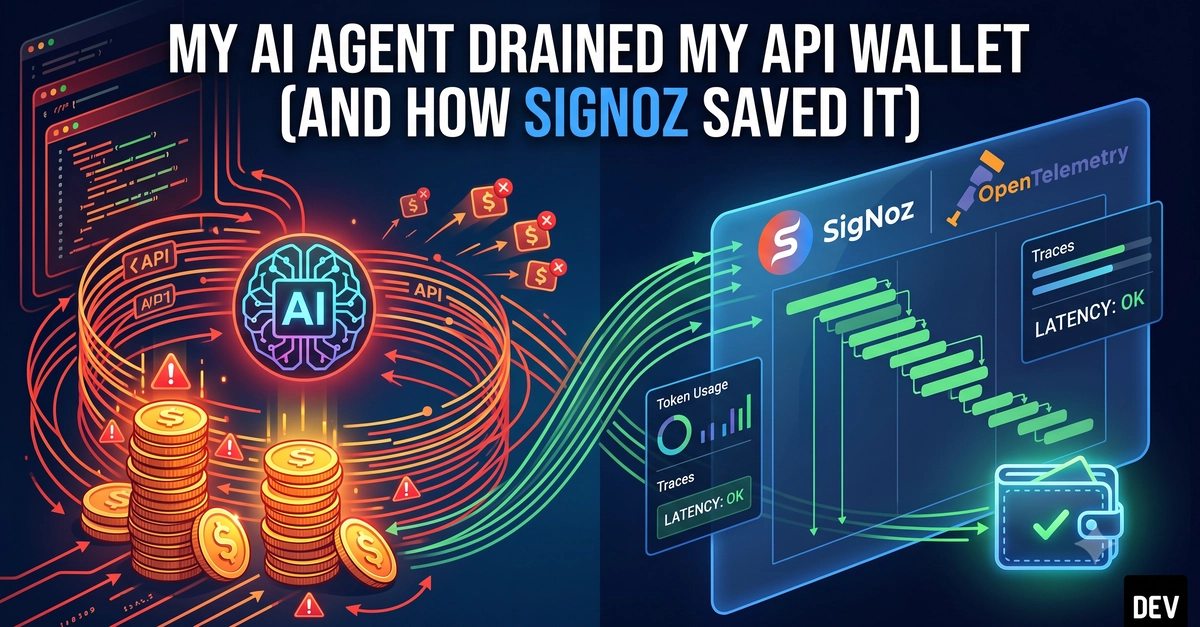
Is the agent stuck in an infinite loop? Has it burned through $50 in API credits? Or is it quietly executing the perfect strategy? Without eyes on the inner workings of your agent, you are flying blind.
As we transition from simple, deterministic LLM wrappers to dynamic, self-improving autonomous systems, we encounter a profound challenge: How do you observe, debug, and trust a system that is constantly changing its own behavior?
A static program is a blueprint; you can trace its execution path deterministically. An AI agent, however, is more like a living organism. Its "thoughts" (LLM reasoning), "actions" (tool calls), and "memories" (persistent state) are in constant flux. To manage this complexity, you need a central nervous system—a real-time observability layer.