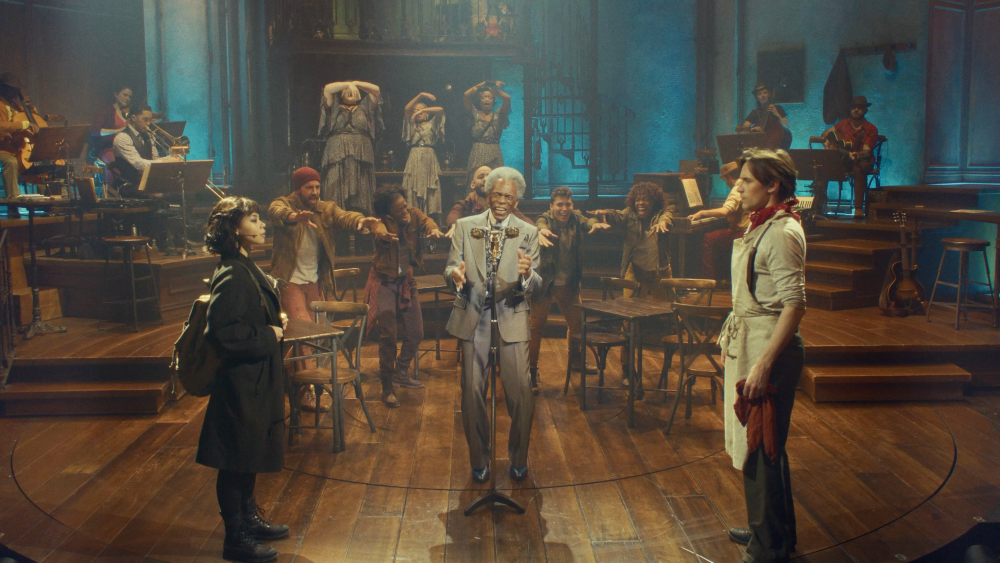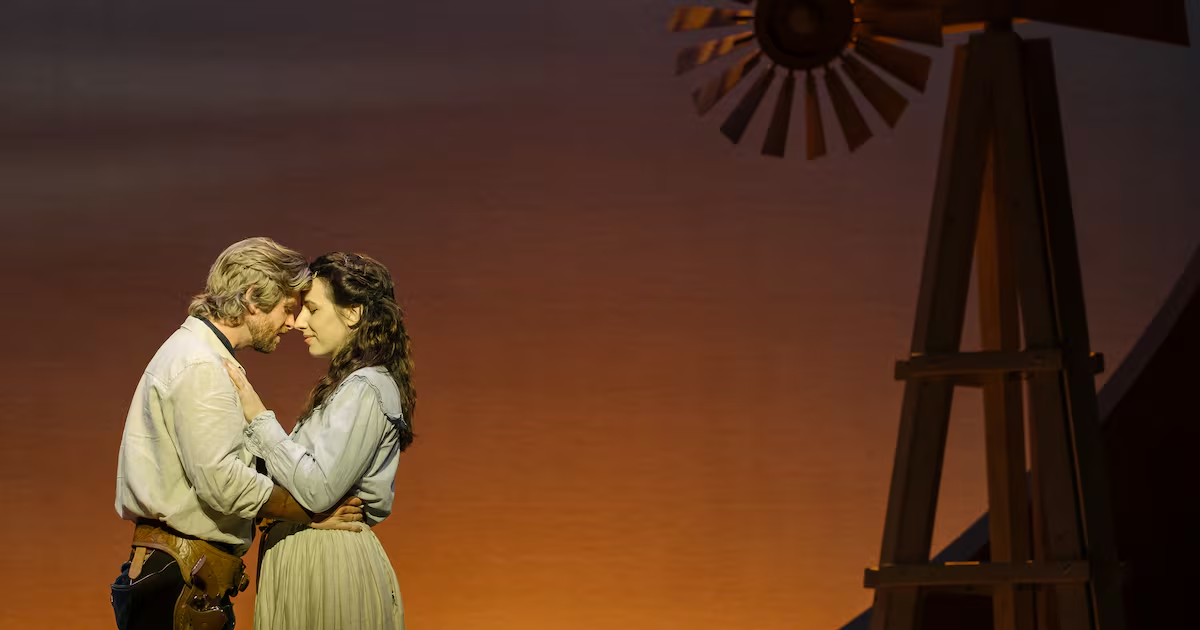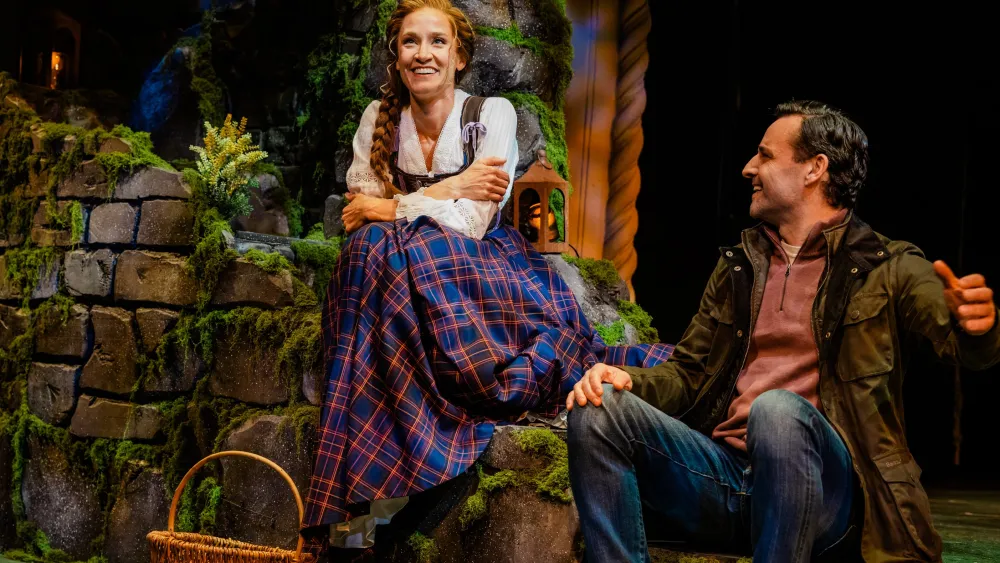
In the classic musical “Brigadoon,” the Scottish townspeople who inhabit the mysterious town of the title keep referring to “the miracle,” which confounds the two American travelers who stumble across it one dark and shroudy night. Our two Yank interlopers spend some time puzzling over what that supernatural secret might be, before all is revealed in a burst of fantastical exposition toward the end of Act 1.
At Pasadena Playhouse, where a revival of the 1947 musical is occurring, some of the audience may already have a different miracle in mind, unrelated to any mystical Scottish hokum coming up in the plot. That would be the miracle of how work this wonderful is continually being done in humble Pasadena, on a Broadway scale. (And “at popular prices!,” to borrow a phrase once used for cinematic road shows back in the ’50s, when the “Brigadoon” movie came out.) If some version of this should make it to Broadway — and it ought to — you’d be paying several times as much, in an auditorium at least a couple of times as large, to see what’s currently being realized as a perfectly intimate epic on the outskirts of L.A. The M-word doesn’t seem like so great an exaggeration.
The funny thing is that it was starting to look like the town of Brigadoon might actually pop up again sooner than anyone would see a Broadway revival happen. All right, so it’s not threatening to be a once-every-100-years pop-up just yet, but it has been 46 years since the Lerner-Loewe classic last got a big New York production, so we’re kind of bordering on a half-Brigadoon having ensued there. It’s easy to tick down some reasons for that. For one thing, nobody truly loves the 1954 movie, which is frequently recapped with the summary: “It just doesn’t work.” (I would also argue that it’s not actually terrible, but “not terrible” is not the recommendation you want for a Vincente Minnelli film starring Gene Kelly and Cyd Charisse.) But the Hollywood adapters couldn’t be blamed for everything that seemed inherently clunky or, by now, dated about the musical’s book, parts of which were bound to leave a contemporary audience grimacing a little between all the grins the score provokes.