The memo prompted criticism from some legislators and advocates for relying on an unrealistically high price of carbon and assuming that the state would rely solely on cap-and-invest to meet decarbonization goals.
The memo “plays into oil and gas industry arguments by presenting a cap-and-invest program with astronomical costs that no one has asked for and nothing requires,” said Elizabeth Moran, New York policy advocate for Earthjustice, which represents the groups that sued the state. The lawsuit, she added, was “over inaction — not about the substance, not about anything else, just needing to issue regulations.”
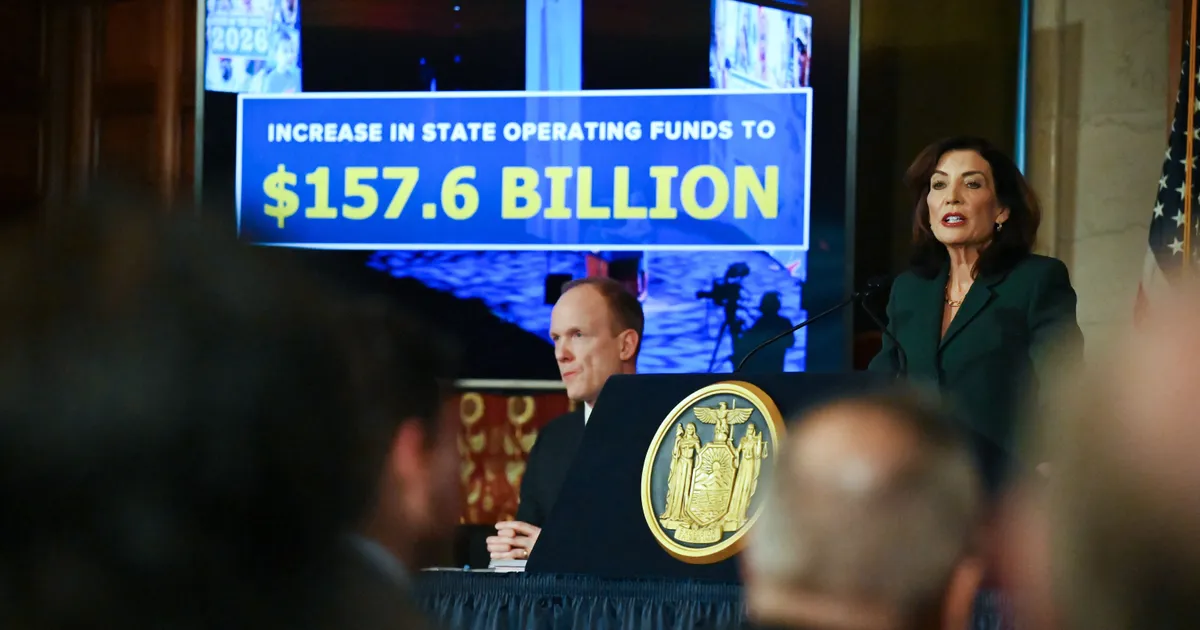
Hochul’s decision to pursue the climate law rollbacks via budget negotiations, which happen largely behind closed doors, was also controversial. While her proposal had the support of some business groups and Republicans, many legislators still supported the climate law in its original form.
Under the new legislation, New York has until the end of 2028 to issue rules to meet its 2040 goal. The climate law still mandates an 85% reduction in greenhouse gas emissions by 2050.
New York has a long way to go even to meet weaker targets: So far, the state has reduced emissions by only 14% from 1990, according to its official dashboard. It gets about 23% of its electricity from renewables — a figure that’s on par with the national average but reliant on older hydropower resources rather than newly built wind, solar, and storage.